














UA-56202873-1
Page 374

Retired businessman set to steer Singapore’s largest Sikh welfare outfit

1

By Asia Samachar | Singapore |

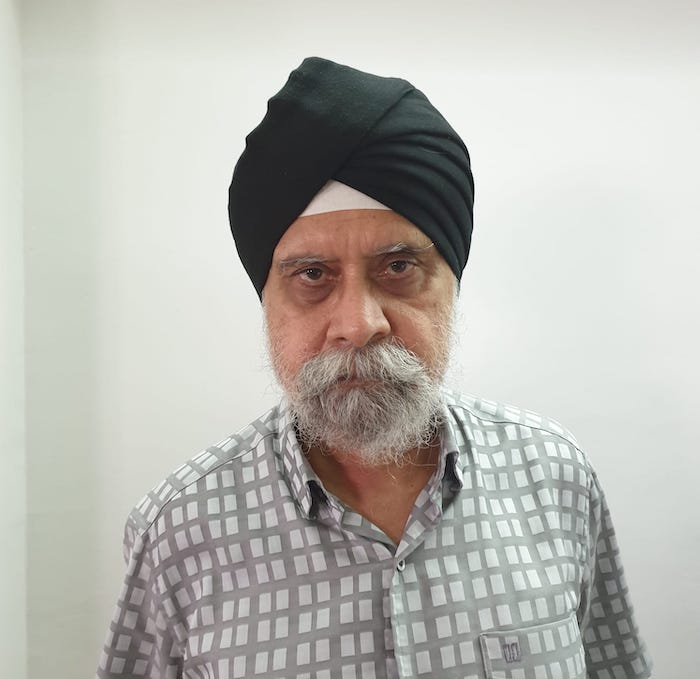
Retired businessman Harmit Singh has taken up the challenge to steer the largest Sikh welfare outfit in Singapore at a time when organisations are challenged to relook at their operations in the wake of the impact of the Covid-19 pandemic. Sikh Welfare Council (SIWEC) is no different.

“In the present Covid-19 situation, virtual outreach has become the default method of communication. I see digital platforms gaining even more usage going forward. SIWEC will have to adapt accordingly,” Harmit tells Asia Samachar in an interview.

As the new chairman of SIWEC, Harmit and the team are very much aware of daunting challenge that lay ahead. But they are determined to rise to the occasion.

“Emotional well-being is a new frontier for SIWEC that has become more prominent in this present Covid-19 situation. We are developing an initiative called Theek Thak to address concerns about emotional wellbeing, and to start a conversation about providing emotional support. This initiative will launch very soon,” he said.

Harmit took over the SIWEC leadership from Gurdip Singh Usma at the meeting in July.

Launched in 1995, SIWEC is one of the key Sikh organisations in Singapore. Over the years, SIWEC has evolved from only providing basis assistance to needy Sikh families to a more complete spectrum of services to the needy, not only within the Sikh community but the wider Singapore community.

The overall objectives for SIWEC was not just to provide immediate support, but more to assist these families to graduate from being “needy” to make them financially more independent by working with all other agencies to find suitable job for its clients, advising clients to find tenants to rent out their rooms to ease the financial dependency and providing medical support through Medical Social Workers (MSW) in order to enable the client to be fit for work, according to its website.

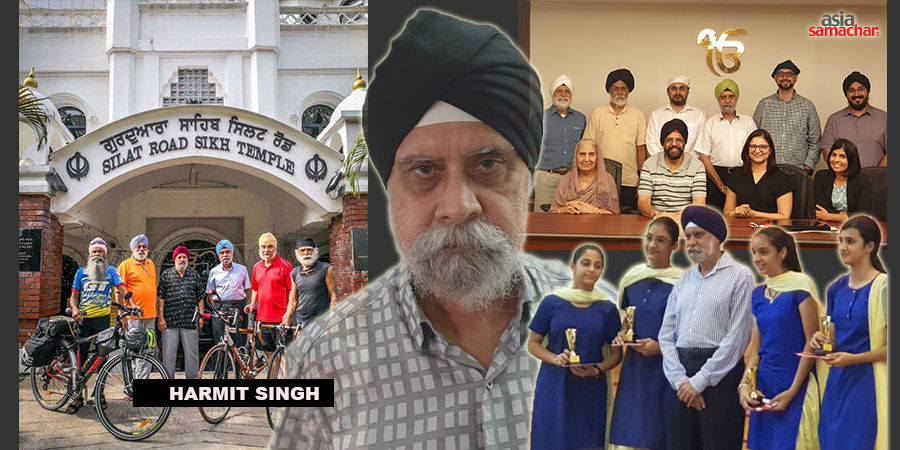
Harmit has been actively involved in the Sikh community the past decade or so. He has been associated with Gurdwara Sahib Katong for some three decades. Together with his family members, he had been performing volunteer service here, usually getting himself involved in serving Langgar.

Then, in 2012, he was elected as the assistant secretary of the gurdwara’s committee. In 2018, he was made the secretary, a position that he still holds today. In 2013, he was elected as the treasurer at SIWEC. After holding the post for four years, he was then made secretary from 2017 to 2019. In 2019, he was elected as the council’s vice chairman.

In 2017, he was also elected as the treasurer of the Central Sikh Gurdwara Board (CSGB) and then vice president in 2019. Harmit is also a licensed marriage solemniser.

“I want to give back to the Sikh community, which has sustained me throughout my life. Ever since my retirement 11 years ago, I have had the time and capacity to serve the community,” he told Asia Samachar when asked what motivates him to serve the community. “I have been very blessed by Waheguruji, such that I do not need to worry about generating an income to maintain my wife and myself.”

EXCERPTS FROM THE INTERVIEW

What motivates you to serve the community?

I want to give back to the Sikh community, which has sustained me throughout my life. Ever since my retirement 11 years ago, I have had the time and capacity to serve the community. I have been very blessed by Waheguruji, such that I do not need to worry about generating an income to maintain my wife and myself. Our younger volunteers are still in the process of building up their careers and therefore, it is a struggle for them to allocate time to serve the community. This makes it all the more important for a semi-retired and retired person like me to step forward and do what they can for the community.

How did you enter into the world of volunteer work?

I have been serving langar at Gurdwara Sahib Katong for 25 years. In 2012, I was nominated and elected into the management committee of the Gurdwara and have been serving since then.

You have been active in several organisations – SIWEC, CSGB and Gurdwara Katong. How did you find the time to manage all these roles?

When I retired, I was looking for something meaningful and fulfilling to do with my newfound time. I have three grown-up children who are well-established in their careers. I am passionate about SIWEC, CSGB and Gurdwara Katong, but of course finding the time to juggle all three at once is challenging. I’ve recently chosen to step down from the CSGB after serving for four years, as I’d like to focus my energies on the other two organisations for now.

Was it fundamentally different to serve on the three organisations mentioned earlier? Did they each require different skillsets or commitments from you?

There was a different emphasis in serving the three organisations. Gurdwara Sahib Katong involves overseeing day-to-day religious services while CSGB was more of a board level role that discussed policies and made strategic decisions for three organisations under its wings. The three organisations are: Central Sikh Temple, Silat Road Sikh Temple and Sikh Centre.

Sikh Welfare Council has a very different mandate – rather than the administration of gurdwara affairs, it is a charitable organisation that looks out for people’s wellbeing. So that allows me to think about this type of work differently than the other two organisations. Siwec’s stakeholders include all 7 Sikh Gurdwaras in Singapore together with other Sikhi organisations, and my role there is to serve not just the Sikh community but also the community at large in Singapore.
SIWEC, which you now chair, is a critical part of the Sikh community landscape on Singapore. What unique approaches or perspectives will you bring to SIWEC as its chairman?

I hope to add value with a people-orientated approach to management of SIWEC. The beneficiaries of our services, as well as our clients, should always come first. At the same time, we want to encourage greater participation in the Sikh community.
The self-renewal process is an ongoing challenge in attracting new entrants to come forward and serve in the committee. We need to have a healthy balance of well-experienced individuals, both male and female, across all age groups for diversified inputs.

Now almost three decades on, how do you see SIWEC’s relevance?

I see SIWEC playing a bigger role as we move forward in coping with the community’s needs and well-being. In the present Covid-19 situation, virtual outreach has become the default method of communication. I see digital platforms gaining even more usage going forward. SIWEC will have to adapt accordingly.

SIWEC today is seen to be well-established and with ample resources at its disposal. This makes the challenges your team and you face different from what your predecessors experienced. In your opinion, what are some of the key challenges you would have to tackle?

In fact, the perception that SIWEC is well-resourced is one of our challenges, because it has led to questions around whether individual support is still required. The truth is, though, that support from the community and from individuals is a large part of the reason why we receive government grants. If that support recedes, the quantum of the grants will also be affected. In other words, the more donations we receive, the higher our credibility when applying for government grants.

Another key challenge we’d like to address is the fact that many young people are unaware that an organisation like SIWEC exists in the community. We’d like to find ways to reach out to this group.

In your term at the helm of SIWEC, what would you like to achieve?

I would like to see a stable secretariat giving very good support to all SIWEC’s initiatives. We need to further reach out to our seniors by giving them programmes to occupy themselves throughout the week as peer-support is essential for this group.

Emotional well-being is a new frontier for SIWEC that has become more prominent in this present Covid situation. We are developing an initiative called Theek Thak to address concerns about emotional wellbeing, and to start a conversation about providing emotional support. This initiative will launch very soon.

What advice do you have for younger people who have entered community service or are looking to contribute?

My advice to younger people is to gain a foothold in any little activity you can involve yourself in and do not be surprised to see more doors opening up for you, the longer you allow yourself to be involved.

RELATED STORY:

CSGB new team elected unopposed (Asia Samachar, 3 Sept 2021)

ASIA SAMACHAR is an online newspaper for Sikhs / Punjabis in Southeast Asia and beyond.Facebook | WhatsApp +6017-335-1399 | Email: editor@asiasamachar.com | Twitter | Instagram | Obituary announcements, click here |

Of turbans and head covering in Sikhism and other religions

3

By Rishpal Singh Sidhu | Opinion |

It is not an uncommon occurrence to see a sewadar or a member of the sangat (congregation) gently reminding visitors to a gurdwara to please cover their heads when entering the Darbar Sahib or Diwan Hall where the Guru Granth Sahib is kept on a Manji Sahib under a canopy (Chanani or Palki) when Sikh prayer is in progress or when it is covered with a cloth when it is not being read. While covering their heads has never really been an issue with amritdhari Sikhs, it applies to Mona Sikhs (clean shaven) and other visitors to a gurdwara who are expected to wear a patka, scarf, or other head covering. This article seeks to examine and explore the historical origins and reasons behind this long established custom of covering the head, the propounded reasons and benefits of doing so, and whether it is also practiced  by followers of other religious faiths.

While there appear to be no references to a turban or head-covering in the Guru Granth Sahib, the Sikh Rehat Maryada (The Code of Sikh Conduct & Conventions) Section 4, Chapter X, Article XVI (t) states that “for a Sikh,  there is no restriction or requirement as to dress except that he must wear Kachhehra (a drawer type undergarment fastened by a fitted string round the waist, very often worn as an underwear) and turban. A Sikh woman may or may not tie a turban”. Interestingly, Chapter X, Article XVI (s) makes it perfectly clear that “it is not proper for a Sikh woman to wear veil or keep her face hidden by veil or cover”. Recent years have also witnessed a noticeable trend of Sikh females in Britain and Canada wearing turbans, although Guru Gobind Singh did not proscribe this practice when he institutionalized the Sikh identity through the establishment of the Khalsa tradition in 1699 with the keeping of kesh (uncut hair) as one of the Five Ks of the Khalsa .

It is not really known what Guru Nanak looked like and what clothes he wore. However, some narratives and ubiquitous images appear to suggest that he wore a saffron robe, his shoulders were draped in a brown shawl, he had a white beard, and that he wore a turban in the simple Dumalla style (“Du” meaning two and “Malla” meaning cloth or fabric). According to some historical accounts, Guru Nanak bestowed Guru Angad with a special dastar when he was declared the next Guru, and Guru Arjan was likewise honored on the passing of Guru Ram Das. There are also references in Sikh history describing how Guru Gobind Singh personally tied dumallas on the heads of his older sons, Ajit Singh and Jujar Singh. In Gurbilas patshahi 10, a poetic account of Guru Gobind Singh’s life completed by Kuir Singh in 1751, forty three years after Guru Gobind Singh’s death, it is recounted that in introducing the Panj Pyare, Guru Gobind Singh and the five disciples allwore saffron colored rainment topped over with neatly tied turbans of the same color.1

The origins of the turban date back to ancient India and to Mesopotamian times where there is some evidence of a turban-like headwear in a royal sculpture from 2350 B.C.E. It is fairly clear that the turban was in use long before the advent of Islam and Christianity and its early origins had little to do with religious practices. It is only in recent times that covering the head during worship has taken on different meanings and different uses in different religions. The practice of wearing head covers and veils for religious purposes has, at some time or other, also been an integral part of three monotheistic religions, namely Christianity, Judaism, and Islam.

In the early years of Christianity, both men and women were supposed to cover their heads when entering their place of worship. In the Church of England Book of common prayer and administration 1706 it is written that “no man shall cover his head in the church or chapel in the time of divine service”. Saint Paul, Apostle of the Gentiles, amended this tradition and that only women were supposed to cover their heads at their place of worship. In the New International Version (NIV) of the Bible in 1 Corinthians 11:5, it is written that “every woman who prays or prophesies with her head uncovered, dishonors her head, for that is one and the same as if her head were shaved.” This practice of Christian head covering for praying and prophesying is also prescribed in the traditional interpretation of 1 Corinthians 11:2-6 in the New Testament of the Bible.”2 Early Christian women veiled their heads not only in church but also at any time they were in public. Head covering during prayer continues to be a common practice in many parts of the world such as Romania, Russia, Ukraine, Ethiopia, India, Pakistan, and South Korea, and variations exist in the style of head covering in these regions. At the beginning of the 20th century in Western Europe and North America, women in some mainstream Christian denominations wore head coverings during church services. Over the years, this practice has evolved from the wearing of veils and caps  to the wearing of hats, scarfs, and ornate bonnets which have become more a fashion statement rather than modesty and reverence to the Divine. Today, only a few people can be observed covering their heads inside a church. In this context, theologian and religious broadcaster the late Dr. R.C. Sproul opined that “our biblical views of women were gradually eroded by the modern feminist movement that has infiltrated the Church”. The Head Covering Movement is a community of Christians who are sparking a return to the biblical  practice of head covering.

Islam requires both men and women to dress appropriately when visiting the mosque. Women are expected to cover their head and most of their body by wearing long and full sleeve clothing, The menfolk are also  required to dress appropriately and to cover their heads with a round white cap called a taqiyah in keeping with instructions in the Koran. Head covering also plays an important role for both genders  among the Hasidic Jews.

In Hindu temples both, women and men, cover their heads as a mark of respect, gratitude, and humility towards God. This rule is not too strictly enforced in Northern Indian temples as compared to some South Indian temples some of which have really strict rules that include a dress code before entering the temple.

In Sikhism, as part of protocol when entering the gurdwara, one is expected to remove one’s shoes and cover one’s head as signs of respect towards the sovereignty of the Guru Granth Sahib. Furthermore, some gurdwaras require that hands and feet are also washed, and socks removed on entering the Darbar Sahib. Does the covering of one’s head only apply in the gurdwara in the presence of the Guru Granth Sahib or even when travelling on the train or at home when listening to and/or reading digital or print copies of gutkas containing Nitnem Banis, Sukhmani Sahib, and Asa Ki Var? Indeed, it does. It is indeed true that covering the head gives some degree of protection from dirt and dust, heat and cold, and other inclemencies of the weather. Some writers have suggested that, besides respect, covering the heads also protects the unseen metaphoric dasam duar or tenth door which is at the top of the head, which remains closed, and which needs to be opened for deep spiritual experience. The nine doors (nau darvaje) and the tenth door are frequently mentioned together to show their differences. The unstruck sound is heard at the tenth door when it is freed from the shackles of nine doors in the body.

ਨਉ ਦਰਵਾਜੇ ਦਸਵੈ ਮੁਕਤਾ ਅਨਹਦ ਸਬਦੁ ਵਜਾਵਣਿਆ ॥੩॥ (SGGS, ang.110)

Beyond the nine gates, the Tenth Gate is found, and liberation is obtained. The Unstruck Melody of the Shabad vibrates. ||3||

In Sikh theology, “the tenth door is the supreme state of the mind. It is that state of purified consciousness in which God is visible and all contacts with physical existence are cut off. The Invisible and Infinite dwells at the tenth house or tenth door. The nectar like essence (amrit ras) is dripped by the Satguru; it comes out appearing at the tenth door. The sounding of the unstruck sound announces, as it were, the manifestation of God at this door.”3 In the Sikh religious literature the seeker of the truth is urged to open this door to realize enlightenment.

ਦਸਵੈ ਵਾਸਾ ਅਲਖ ਅਪਾਰੈ  (SGGS, ang. 1036)

ਤਹ ਅਨਹਦ ਸਬਦ ਵਜਹਿ ਧੁਨਿ ਬਾਣੀ ਸਹਜੇ ਸਹਜਿ ਸਮਾਈ ਹੇ ॥੬॥ (SGGS, ang. 1069)

This begs the wider question on whether covering one’s head while worshipping is just a matter of respect and etiquette or are there more deep seated reasons for this practice? Besides housing the thinking brain, there are some who believe that the crown chakra at the center of our head is the focal point of storing energy in our bodies and that if the head is not  covered then the positive energy  acquired by them in prayer will be lost through the head. The contrary and possibly unproven proposition is that most of the body’s energy escapes and is lost if our heads are not covered. In the Punjab among Sikhs and Hindus, head covering is sometimes also done as a mark of respect to our superiors or elders, be they relations or father figures.

The covering of one’s head in prayer has been a sign of respect across many cultures, including Sikhism and the wearing of our turbans serves as a prominent mark of our Sikh identity. More importantly, it is our state of mind in prayer that matters more, for it has been rightly said that besides such external manifestations, be they dastars, chunnis, dupattas, patkas, or scarfs, genuine prayer comes from the heart where the Divine resides.

REFERENCES

1. Singh, Kuir. Gurbilas Patshahi 10. First published in 1968. Edited by Shamsher Singh Ashok and published in 1999 by Punjabi University Patiala.

2. Osburn, Carroll D. (1 July 2007). Essays on women in earliest Christianity, vol. 1, Wipf and Stock Publishers, p.208.

3. Singh, Harbans. (1995). Editor-in-Chief. The encyclopaedia of Sikhism. Punjabi University, Patiala. pp.513-514.

Rishpal Singh Sidhu has been involved in library and information services management in Singapore, New Zealand, and Australia over the past four decades. He has a passion for research, writing, and teaching. He is the compiler and editor of the book, Singapore’s early Sikh pioneers: Origins, settlement, contributions and Institutions, published by the Central Sikh Gurdwara Board in Singapore in 2017. He is presently based in Sydney, Australia.

RELATED STORY:

Seva (selfless service): An aetiological perspective (Asia Samachar, 17 Aug 2021)

ASIA SAMACHAR is an online newspaper for Sikhs / Punjabis in Southeast Asia and beyond.Facebook | WhatsApp +6017-335-1399 | Email: editor@asiasamachar.com | Twitter | Instagram | Obituary announcements, click here |

Bhagwan Singh (1921-2021), Taiping

BHAGWAN SINGH S/O MUNSHA SINGH (TAIPING)

26.12.1921 – 13.9.2021

Wife: Late Madam Muthiar Kaur

Children / Spouses:

1) Gurcharn Kaur/ Dr Rathan Singh
2) Dalgit Singh / Thaljit K. Dhillon
3) Paramjit Kaur / Late Sarjeet Singh Gill

Siblings:

1) Ram Singh
2) Jaswant Kaur
3) Late Surjit Kaur
4) Late Ranjit Kaur
5) Late Attar Singh

Grandchildren/ Spouses:

1) Narinderjit Kaur/ Ravinder Singh
2) Ramgit Singh
3) Siranjit Kaur/ Inderpal Singh
4) Anujgit Singh / Jaspreet Kaur
5) Roshanjit Singh
6) Ishagit Kaur
7) Navindeep Singh

Great grandchild: 1) Soniya Git Kaur Sangha

Path da Bhog: 26 September (Sunday) 2021, from 10am to 12noon, at Gurdwara Sahib, Taiping, Perak

Contact:

Dalgit Singh 019 5505747

Jaspreet Kaur 016 2827884

Your time with us was a blessing from Waheguru. Your fatherly role, your humbleness, kindness, and zest for living will always guide us and be an inspiration for all of us. We will forever cherish and love you.

In view of the MCO and strict SOP’s, invitation is extended to family members only. To follow prayers, kindly follow this link (https://us05web.zoom.us/j/84793008288?pwd=RGRmNldDNkkwMlphSjhpQ093MHAvUT09)

Meeting ID: 847 9300 8288 | Passcode: Gf9qvL

| Entry: 23 Sept 2021 | Source: Family

ASIA SAMACHAR is an online newspaper for Sikhs / Punjabis in Southeast Asia and beyond.Facebook | WhatsApp +6017-335-1399 | Email: editor@asiasamachar.com | Twitter | Instagram | Obituary announcements, click here |

RUU 355 enabling hudud offences not a constitutional reality – MCCBCHST

0

By Malaysian Consultative Council of Buddhism, Christianity, Hinduism, Sikhism and Taoism Statement |

1. The Malaysian Consultative Council of Buddhism, Christianity, Hinduism, Sikhism and Taoism is greatly alarmed by the statement of the YAB Prime Minister Dato’ Sri Ismail Sabri Bin Yaakob that the Government is intensifying efforts to draft the Syariah Courts (Criminal Jurisdiction) (Amendment) Act 1965, commonly known as RUU 355 to increase the Criminal Jurisdiction powers of the Shariah Courts.

2. Presently, Section 2 of the Syariah Courts (Criminal Jurisdiction) Act 1965 (Act 355) imposes limit on the punishments that can be meted out by the Syariah Courts, that is imprisonment of up to three (3) years, fine up to RM 5000.00 and whipping up to six lashes. Any proposal to amend the Syariah Courts (Criminal Jurisdiction) Act 1965 to provide for higher punishments will enable the Shariah Courts to impose punishments for Hudud offences. Thus, the Syariah Courts (Criminal Jurisdiction) Act 1965 is being promoted to enhance the Criminal Jurisdiction powers of the Shariah Courts is in effect aimed at introducing Hudud Laws.

3. A similar Bill was introduced by Pas President Abdul Hadi Awang in 2017 in Parliament as Private Member’s Bill. In earlier years it was referred to as Hudud Bill but over the years it was rebranded and promoted as enhancing the Shariah Courts sentencing powers and upgrading the Shariah Courts. There was tremendous opposition to the Bill including from Sabah and Sarawak State Governments and MPs; from MCA, MIC, Gerakan & SUPP who openly rejected it at a press conference; opposition parties like DAP, Multiple NGOs, 284 Malay NGOs under the Malay Consultative Council, G25 Group – all of these openly rejected the RUU 355 Bill. A Poll conducted showed that only 10.4% Muslims in Malaysia supported the Bill [Source: RUU 355: A bill to Talibanize Malaysia? dated 19 September 2021, Sunday (MalaysiaKini). In view of the rejection of the RUU 355 Bill earlier, it is beyond comprehension why is this Divisive RUU 355 Bill being introduced again.

4. According to the Constitutional scheme of things, the Federal Constitution does not allow a parallel Shariah Criminal System to operate side by side with the General Criminal Law System. This matter was put to rest by the Federal Court in the case of IKI PUTRA BIN MUBARRAK V. KERAJAAN NEGERI SELANGOR & ANOR [BKA-3-11/2019(W)] and the Federal Court ruled in a unanimous decision of 9 Judges that:

“…It can be postulated that having regard to the preclusion clause in item 1 of the State List, when the two legislatures (Federal and State) legislate a Law concerning the subject-matter of Criminal Law, and the two laws touch on the same matter, the said Laws cannot co-exist even if the said Law is said to be against the precepts of Islam…”

…the subject matter upon which section 28 of the 1995 Enactment was made falls within the preclusion clause of item 1 of the state list. As such, it is our view that the said section (28) was enacted in contravention of item 1 of the State List which stipulates that the State Legislatures have no power to make Law in regards to ‘matters included in the Federal List’. To that extent, section 28 of the 1995 Enactment is inconsistent with the FC and is therefore void.”

Chief Justice Tengku Maimun Tun Mat when reading out the full Judgment of the Court also stated:

“It is because the subject matter of section 28, touching on the criminalisation of unnatural sex, is one that only Parliament is empowered to enact”.

…Parliament has already enacted a Federal Law criminalising unnatural sex via Section 377A of the Penal Code.” [Malaysiakini 25/02/2021 under heading ‘Selangor Syariah Law against unnatural sex is invalid: Federal Court’].

5. The Hudud offences of Theft, Robbery, Adultery Rape, Sodomy etc., are already offences included in the Penal Code. Thus, any Act such as RUU 355 enabling such offences to be tried by the Shariah Court would be void as there is already a Federal Law criminalising them.

6. Finally, we appeal to the YAB Prime Minster not to go ahead with the proposed amendments to Act RUU 355. These were rejected earlier and it should not be reintroduced for possible political expediency. The Constitution does not allow for a Theocratic Islamic State including Hudud. Let us all abide by the Constitution and the consensus contained in the Reid Commission Report and the Cobbold Commission Report. The MCCBCHHST categorically rejects any unconstitutional effort to introduce any Hudud offences in Malaysia which will also definitely affect the Non-Muslims although claims are made to the contrary. We should educate the Public and inform them the true position of the Law and that RUU 355 enabling Hudud offences is not a Constitutional reality.

Issued and endorsed by:

1. Sardar Jagir Singh Arjan Singh Malaysian Gurdwaras Council (MGC) President MCCBCHST

2. Dao Zhang Tan Hoe Chieow Federation of Taoist Associations Malaysian (FTAM) Deputy President MCCBCHST

3. Datuk R.S. Mohan Shan Malaysia Hindu Sangam (MHS) Vice President 1 MCCBCHST

4. Archbishop Julian Leow Beng Kim Christian Federation of Malaysia (CFM) Vice President 2 MCCBCHST

5. Venerable Seet Lee Terk Malaysian Buddhist Association (MBA) Vice President 3 MCCBCHST

RELATED STORY:

No to Bill on Control and Restrictions on Development of Non-Muslim Religions – MCCBCHST (Asia Samachar, 10 Sept 2021)

ASIA SAMACHAR is an online newspaper for Sikhs / Punjabis in Southeast Asia and beyond.Facebook | WhatsApp +6017-335-1399 | Email: editor@asiasamachar.com | Twitter | Instagram | Obituary announcements, click here |
Ajitpal now sports editor at New Straits Times

By Anandpreet Kaur | Malaysia |

Experienced sports journalist Ajitpal Singh has been promoted as the sports editor at the New Straits Times (NST), an English-language newspaper published in Malaysia.

Ajitpal cracked open his path in journalism as a rookie sports journalist at The Sun in 2000 and then joined Golf Malaysia magazine the next year. He joined NST in 2003. In December 2017, he was promoted as the assistant sports editor.

The 46-year-old journalist has covered some of the larger tournaments in this part of the world for football, badminton, bowling and athletics.

Among them are the 2019 Sea Games in the Philippines, 2018 Gold Coast and 2010 New Delhi Commonwealth Games, 2018 Asian Football Confederation Awards in Oman, Badminton World Championships – 2015 in Jakarta, Asian Games – 2010 Guangzhou edition, Sea Games (2009 in Laos, 2011 in Indonesia, 2013 in Myanmar and 2015 in Kuala Lumpur), World Match Racing Tour – 2010 in Denmark and Thomas/Uber Cup (2006 in Japan), 2008 in Indonesia), 2010 in KL) and 2014 (in India).

He was recognised for his work when he bagged the Sportswriters Association of Malaysia’s Best Sports Columnist in 2009 and Best Sports News Report in 2016.

RELATED STORY:

Nepal cricket league team signs up Virandeep Singh (Asia Samachar, 26 Aug 2021)

ASIA SAMACHAR is an online newspaper for Sikhs / Punjabis in Southeast Asia and beyond.Facebook | WhatsApp +6017-335-1399 | Email: editor@asiasamachar.com | Twitter | Instagram | Obituary announcements, click here |

Harvard-trained lawyer Iqwinder turns lawmaker, joins 16 other Indo-Canadians

0

By Asia Samachar | Canada |

First-time Liberal party candidate Iqwinder Singh Gaheer won a seat in Canada’s just concluded general elections which saw 16 other Indo-Canadians winning a ticket as parliamentarians.

Iqwinder, 28, won the riding of Mississauga-Malton. The seat became vacant when Navdeep Singh Bains announced in January 2021 that he was calling call it quits from the high level politics with a decision to “step away as a cabinet minister”. The 43-year old politician had served as the Minister of Innovation, Science and Industry for the last five years.

In stepped in Iqwinder who worked as a lawyer in commercial litigation in New York. He studied law at Harvard University and had served for three years, from 2016 to 2019, as the editor-in-chief of the Human Rights Journal.

Though Gaheer is a newcomer this federal election, he has volunteered with Navdeep. This is how he described himself in a tweet in the run-up to the election: “Born in a village, welcomed to Canada, raised by a plumber-turned-businessman & stay-at-home mom, and privileged to attend a top law school, my heart was already so full. I’m filled with gratitude to be the Liberal candidate for Mississauga-Malton in this federal election.”

Among the prominent Sikhs who won a seat in this election included NDP leader Jagmit Singh who retained his seat in the Burnaby South riding. From the winning side of Liberal Party, all three Sikh ministers – Harjit Sajan, Anita Anand and Bardish Chagger – won their seats.

RELATED STORY:

Meet the new Robin Hood (Asia Samachar, 17 Sept 2021)

ASIA SAMACHAR is an online newspaper for Sikhs / Punjabis in Southeast Asia and beyond.Facebook | WhatsApp +6017-335-1399 | Email: editor@asiasamachar.com | Twitter | Instagram | Obituary announcements, click here |

Dropped: India extradition case against 3 Sikh youth

0


By Asia Samachar | Britain |

London – Three British Sikh men today faced  a battle against extradition to India where they would almost certainly have faced torture and the death penalty.  Thousands of Sikhs peacefully protested outside Westminster Magistrates Court this morning.

Within days of Dominic Raab’s visit to India to discuss a trade deal in December 2020 the #WestMidlands3 had their homes raided in the early hours and they were arrested on the order of Priti Patel and told they faced extradition to India. 

The three were brought to Westminster Magistrates Court and told of the charges made by India against them.  Despite the seriousness of the charges the judge was concerned with timing of the extradition request and the three were given bail.  

The Indian authorities claim the men were involved in an attack on a member of the Hindutva extremist militant group the RSS twelve years ago in 2009 when the three men were in the 20s -even though they were not in the country when the incident happened.

The #WestMidlands3 were originally investigated by the British authorities, based on the Indian State allegations more than a decade earlier, with the investigation concluding no further action was required against them, clearing them of any wrongdoing.

There is concern among the British Sikh community that the attempted extradition is politically motivated and aimed at silencing Sikh activists.

The #WestMidlands3 case is believed to be the first time British Sikhs – born and raised in the UK have been targeted in such a fashion by India.  Two of the three were targeted in September 2018 when 5 Sikhs associated with the #FreeJaggiNow campaign had their homes raided.

The raids were according to Indian media due to “diplomatic pressure” from India. Laptops, phones, and other personal items – including those belonging to the children of the men – were confiscated and kept for investigation for over a year.  There were no arrests or charges following the raids that were assumed to try and find anything that could be used by the Indian authorities to incriminate Jagtar Singh Johal who is coming up to his 4th anniversary of arbitrary detention and torture in an Indian jail without any evidence to justify keeping him in prison.

The September 2018 raids were said to show a “paper trail” to Jagtar Singh Johal’s detainment in India, according to Gareth Peirce, the highly respected human rights lawyer acting for those facing extradition.

The fact that the #WestMidlands3 are again being targeted is believed to be linked to their work in providing support for the #FreeJaggiNow campaign. It is believed – as suggested by Gareth Peirce – that during his torture, Jagtar Singh Johal was shown photographs of UK-based Sikh activists he had worked with.

An online parliamentary petition had recently been started calling for the extradition treaty between the UK and India to be revoked.  The petition is attracting around 1,000 signatures a day and has reached the 10,000 threshold that requires a response from the UK Government.  Constituents for nearly 500 MPs have signed the petition.  Around 30 MPs have had more than 100 constituents sign the petition.

Bhai Amrik Singh, the Chair of the Sikh Federation (UK) said:

“We have been assisting the #WestMidlands3 since the raids on their homes in September 2018, arrests in December 2020 and in their legal challenge against extradition.

“On the basis of human rights there is absolutely no way a British court could sanction their extradition to India where they will be tortured and face the death penalty.

“However, we have a Home Secretary, in Priti Patel who is very close to the right wing BJP government in India and she will bend over backwards to assist India, especially if it helps in trade negotiations.

ASIA SAMACHAR is an online newspaper for Sikhs / Punjabis in Southeast Asia and beyond.Facebook | WhatsApp +6017-335-1399 | Email: editor@asiasamachar.com | Twitter | Instagram | Obituary announcements, click here |

Celebrating the Malaysian Family Spirit

0

By Amerjit Singh | Opinion |

31 August 2021, as Malaysians, we recently marked our 64th Merdeka Day, and 58th Malaysia Day on September 16. Both significant dates commemorate a historic moment for our ancestors who toiled and sacrificed in their noble effort to liberate this homeland from imperialists occupation.

Frankly speaking, the historic formation of Malaysia might not had happened should there been no mutual understanding among Malaysians. Indeed, our success from the onset until we continue to make strides today is certainly the result of unity in the Malaysian family. Undeniably, sacrifice and tolerance among people from various backgrounds had always been the golden key to our success today. Yes, it is this spirit of Merdeka that has instilled  the sense of attachment and sense of pride for the nation.

Malaysia is quite unique compared to most other countries, especially the racial and ethnic composition in this country which has various cultural backgrounds and beliefs. History has proven that there are many countries that face turmoil and disunity as a result of the failure to create understanding between races and ethnicities.

Our country’s history, diverse culture and food provide clear testimony for Malaysia’s unique selling preposition (USP). Besides food, iconic landmarks and historical buildings, we are truly blessed with wonderful people. Malaysia is a country with multiracial people who have different belief, but yet are able to sit down at the same table and live peacefully. Malaysians, irrespective of their background, have always come together to support and strengthen each other amid the COVID-19 pandemic. This is truly reflective of the spirit our founding fathers had in mind during the formation of Malaysia. Therein, the secret of Malaysia’s aesthetic beauty lies in her friendly people, which provides a backdrop for its passionate populace.

Honourable Prime Minister, Datuk Seri Ismail Sabri Yaakob in his inaugural speech after being appointed as the 9th Prime Minister of Malaysia emphasized on the philosophy of “Malaysian Family”. The Malaysian family was chosen to be a pillar of government administration due to its more inclusive nature, transcending religious, racial and ethnic boundaries. As a family, we are bound by family values such as mutual respect, politeness, civility and responsibility. The spirit of the Malaysian Family is all about togetherness, unity, patriotic spirit and love for the country among ordinary citizens.

In this regard, both National day and Malaysia Day observed recently aptly reflected a celebration filled with patriotism in the spirit of the Malaysian family. Various programmes and special performances, embedding patriotism, were showcased complying strictly with the standard operating procedures (SOP) with physical presence of a limited number of people, while others watched live broadcasts of the event virtually as the new normal during this COVID-19 pandemic.

Finally, our rich culture and unity in diversity have never failed to capture and captivate the spirit of being a Malaysian. The recent momentous celebrations portrayed  Malaysians of all races, religion and culture coming together even stronger in promoting our bond of unity congruent with the spirit of Keluarga Malaysia, or simply the spirit of Malaysian family.

Given the trust and bedrock of the Federal Constitution Malaysia’s people pledged their united efforts during the recent significant celebrations by abiding to the following principles, as outlined in the nation’s ideology, Rukun Negara:

1. Belief in God

2. Loyalty to King and Country

3. Supremacy of the Constitution

4. The Rule of Law

5. Good Behaviour and Morality

Dr. Amerjit Singh L S. Bhag Singh is the Director of Media and Corporate Communication Division at Department of Information Malaysia. 

RELATED STORY:

Patriotism and unity in Malaysia’s multicultural society (Asia Samachar, 6 March 2021)

The Malaysian ‘muhibah’ spirit (Asia Samachar, 17 Sept 2021)

PR-man Dr Amerjit bags award at Malaysian ministry innovation day (Asia Samachar, 17 Dec 2016)

ASIA SAMACHAR is an online newspaper for Sikhs / Punjabis in Southeast Asia and beyond.Facebook | WhatsApp +6017-335-1399 | Email: editor@asiasamachar.com | Twitter | Instagram | Obituary announcements, click here |

Charanjit Singh Channi: First Dalit as Punjab chief minister

0

By Harjeshwar Pal Singh | Opinion |

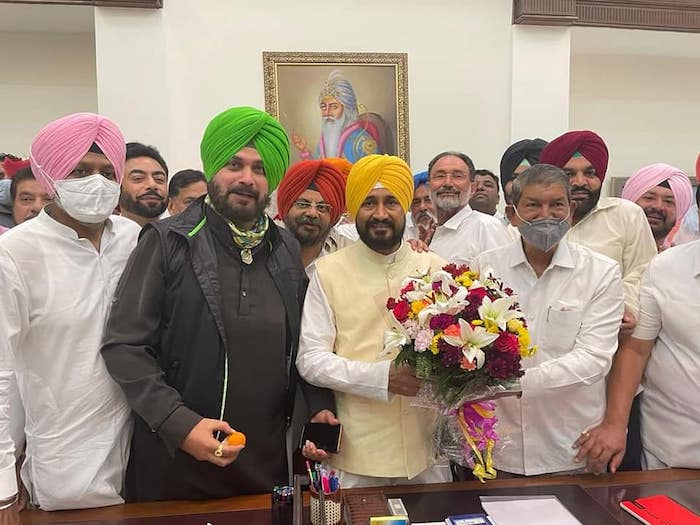
This is a historic day in Punjabs politics. On Sept 19, Charanjit Singh Channi became the first ever Dalit Chief Minister (CM) of the state.

Channi’s elevation even though largely a symbolic act and seemingly more out of compulsion than design is still a huge moment in the political advance of the state.

Political power to historically marginalised groups improves their self concept and integration into society. It enables social equality and social justice.

Charanjit Channi is an exceptional politician in the Punjab Congress context. His rise is not due to family, money power or connections. Unlike the usual route for Dalit political elevation —Dalit aristocracy (Chaudris of Jalandhar), sidekicks of powerful upper caste politicians (ਸੀਰੀ/ਮਜਦੂਰ model) or former bureaucrats(kuldip vaid types) — Channi is a first generation politician who rose through sheer hard work and merit.

SEE ALSO: Captain Sahib throws in the towel

Belonging to a humble family, Channi graduated from my college, Sri Guru Gobind Singh College (SGGS College) SGGS, Sector 26 and was an ace Bhangra as well as a university-level handball player. Later he did his law and MBA and now is also pursuing PhD. He supported himself right from his student days through sheer hard work.

As a first generation politician he started his life as a municipal councillor and later headed the municipal council of Kharar. He first became Member of the Legislative Assembly (MLA) as an independent in 2007 from Chamkaur Sahib and later joined congress. He is now a three times MLA.

He has considerable administrative experience as he served as a leader of opposition in Punjab assembly in 2015-17 and has served as a technical education minister in the current government.

Channi is known to be soft spoken and consensus seeker and is quite popular with his constituents. His career has been dogged by a few minor controversies and gaffes which have often been blown out of proportion in the social media.

His elevation has largely been celebrated in a state whose politics has been characterised by dominant caste hegemony which is a very heartening signal.

Punjab today is on the vanguard of Indian politics.This includes heightened political competition, a demanding electorate, vibrant civil society, hyperactive social media scene and religious harmony, this signal towards social justice is another huge achievement which is worth celebrating.

Harjeshwar Pal Singh is an assistant professor at Sri Guru Gobind Singh College, Chandigarh, where he teaches history. He is an avid political commentator.

RELATED STORY

Captain Sahib throws in the towel (Asia Samachar, 18 Sept 2021)

ASIA SAMACHAR is an online newspaper for Sikhs / Punjabis in Southeast Asia and beyond.Facebook | WhatsApp +6017-335-1399 | Email: editor@asiasamachar.com | Twitter | Instagram | Obituary announcements, click here |

Khalsa Gurmat Center in Washington vandalised

0

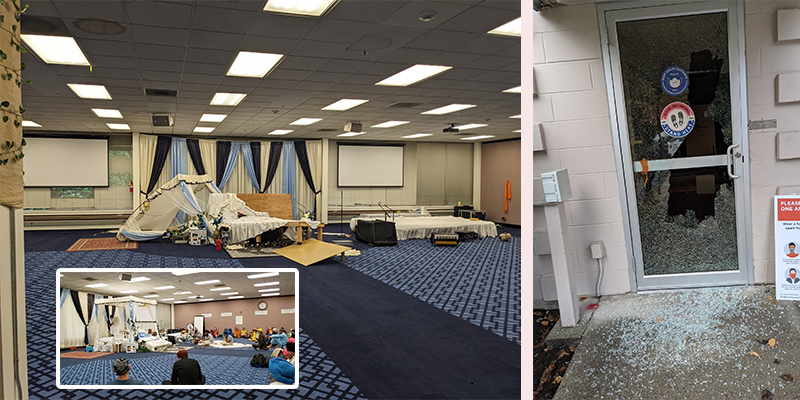
Khalsa Gurmat Center in Federal Way, Washington, was vandalized (Insert: Video grab from one of its congregational prayers)

By Asia Samachar | United States |

Khalsa Gurmat Center, a Sikh centre-cum-gurdwara in Washington, was ‘vandalised and robbed’ yesterday (Sept 18).

“Yesterday afternoon, Khalsa Gurmat Center was vandalized and robbed. The divaan hall was badly damaged, and control panels and windows were broken. Based on video surveillance, the suspect also stole several computers and TV monitors on their way out of the building. Guru Sahib’s swaroop is not kept in the facility during the week,” the centre said in a Facebook update.

“We discovered the vandalism this morning and immediately reached out to law enforcement – Federal Way Police Department, who understand that bias may have been a possible motivating factor and are investigating the incident.”

The centre is working the Sikh Coalition, a Sikh-American advocacy group that defends Sikh civil rights, and the law enforcement to ensure the crime is properly investigated as a potential bias incident against a house of worship.

The dedicated team at Khalsa Gurmat Center, located at Federal Way, Washington, have served the children and their families in the Seattle region of the State of Washington since 2006 and formally incorporated in 2014, according to its website.

The center is an independent community based non-profit organization focused on education, empowerment and civic engagement for kids and community members. To fulfill that mission the center has established an enrichment school for kids; conducted healthcare, parenting, legal clinics; and created collaborative partnerships with different government and non-profit community organizations.

In its update, The Sikh Coalition said will it provide free legal assistance to the sangat and liaise with law enforcement to ensure that the incident is investigated thoroughly. It had also shared a toolkit, entitled ‘Preventing Attacks on Gurdwaras: Resources and Best Practices for Sangat Safety and Security’, and encouraged gurdwaras to check their security cameras and security measures.

ASIA SAMACHAR is an online newspaper for Sikhs / Punjabis in Southeast Asia and beyond.Facebook | WhatsApp +6017-335-1399 | Email: editor@asiasamachar.com | Twitter | Instagram | Obituary announcements, click here |