If we look at Sikh History, there are few occasions where Sikhs have lost a battle. Where this has happened, it is either due to poor leadership and/or divisions. If we look around today, we are seeing history repeating itself, where we have a combination corrupt leaders and followers that seem more concerned about their particular dera or jathebandhi, than what Guru Granth Sahib has to say.
Going to the Gurdwara has become ritualistic, and it seems when we go there, we are more interested in dominating the stage, than trying to create opportunities for the sangat (congregation) to participate in open dialogue about issues that are important to them. In truth, the committee should be encouraging members of the sangat to feel free to put their opinions. Of course, there is a responsibility on us all to behave in a civilised manner, which means speaking politely, listening to others and having an open mind. It also means we should not just think about our own needs, but also think about the needs of others.
Encouraging open dialogue will allow us to confront the real issues, but we also know the truth can be bitter, it can hurt. In the long term, though, it is only by facing up to the truth can we hope to learn and improve. There can be many reasons why we deny the truth, but the most powerful reason is that we may be fearful of how people may react, that it will be embarrassing, that people might attack and turn against us.
Today we live in a social media age. We might have exacted now the truth can come out and the real issues facing the Panth and ordinary Sikhs might be discussed. Yes, we have seen some positive changes, and more people, especially women and young people are raising their voices. But sadly, most Panthic organisations, both here in the U.K. and in Amritsar, are dominated by old men, who show little interest in the real issues facing Sikhs. All they seem to be interested in is petty power politics, maintaining their ‘kursi’ or seats.
Gurbani says that “truth is important, but truthful living is even more important”, but sadly today, when I look at our so-called leaders, who should be positive role models, I am put off being more involved in Panthic matters.
Sometimes it feels safer just get on with your life and ignore the games that these people play. And one of those games is what we call ‘group think’ or ‘dhare bazi’. This is the practice of thinking or making decisions as a group, which can result in silencing of group members, poor quality decision making, and hostility towards other groups. I do wonder if the recent chaotic visit of the Akaal Takht Jathedar was itself a result of groupthink. I am sure if the organisers had involved the wider Sikh community, errors, like putting Gurbani on the statue or getting proper Covid-19 clearance for Harpreet Singh, could have been avoided. I sometimes think as a community we act first and think later, often when the damage has been done. That said, I do appreciate the courage that the organisers showed in apologising for their mistakes.
And it is this group think that I feel is the real enemy of the Sikhs. There is a saying, ‘united we win, divided we lose’, and this is so true. We are a minority community in all the countries where we live, but wherever we are, we spend most of our energy attacking each other. When we arrive in a new place, the first thing we do is build a Gurdwara, and then what do we do? The committee becomes divided, and a second Gurdwara appears, and then sometimes more. Because we are divided into so many groups, we cannot move forward, and it’s a real shame because it is the sangat that suffers most, and their needs and issues are simply not recognised.
The question is how can we move forward? Here are a few suggestions:
First, we need to encourage free open thinking where we don’t fear facing up to the challenges, but that together, we can find solutions. Now, when Sikhs get together to look at issues, they simply end up in shouting at each other. They slip into parent-child roles and ignore behaving like adults. I think online zoom discussions can help promote openness and participation, but it doesn’t work for some elders.
Second, many of our arguments are about petty maryada/religious differences, which is a good example of groupthink. We should put our differences to one side and focus on the many more things we have in common. And we should focus our minds on Guru Granth Sahib and not what this or that Sant or leader says we should do.
Third, we need to work much harder at learning to respect each other, even if we disagree, and that means stopping the finger-pointing and constantly blaming others rather than concentrating more on ourselves. How do we speak to others? How do we react when somebody else has made a mistake, especially if they are from the ‘other group’? Rather than supporting and helping them, we clap and laugh, but one day, as the saying, ‘what goes around comes around!’
Fourth, we need to understand that people’s behaviours are shaped by many things, such as experiences of violence, trauma, loss, and separation; all these can impact how we react in situations. For example, aggression can be a cover for fear and low self-esteem, and therefore, we all need to get in touch with ourselves, and, as Gurbani says, try to ‘recognise the divine inside ourselves’. This can only happen if we confront our ego, which gives birth to destructive emotions, such as anger and attachment.
Fifth, we should not be too harsh on ourselves and others if/when we/they make a mistake. We learn by making mistakes, and most mistakes in life are not that serious. However, they can become serious if we repeatedly make the same mistake. So the trick is when we do make mistakes, to accept this and focus our minds on learning from the mistake. This requires humility and awareness.
Writing this short reflection and facing up to some hard truths has not been easy for me. It is painful to see the Panth so divided, and for my fellow Sikhs to have so much hate for each other. Perhaps this has always been the case and it is only because of social media that we have become aware of the conflict! But I do sometimes get quite emotional and upset when I see so much distrust, where our parcharaks (preachers) spend more time criticising other parcharaks, rather than focussing our minds on Gurbani. I sometimes think we treat others, non-Sikhs, much better than our fellow Sikhs, and perhaps we need to start to treat all with respect. And that means carefully choosing our words, not using social media to spread false rumours, to celebrate all our achievements, rather than only those from our group or dhara.
Now that the damage has been done, perhaps the starting point is ‘healing’. That means working hard to put Sikhi first and group/dhara second, it means stopping the gameplaying and behaving as mature adults and positive role models for the next generation. It means putting hate to one side and nurturing compassion. And in a social media world, understanding the hurt that we can cause without even knowing. So we must carefully chose our and expressions. It’s not that difficult, and even a few kind words and humility can make a massive impact on others.
Above all, it means we need to recognise the ‘enemy within’, us and our tendency to judge others harshly. So it means we must stop judging people and stop living in the past. We need to look forward, we need to understand the new generation, and we need to tap into their heads, their minds, and understand their needs. We need to make Sikhi and Gurbani relevant to their lives, the questions in their heads and the impact that new technologies are having on all kinds of social relations. If we fail, then sadly, I have to conclude, the Panth has a bleak future!
As for me, these are my own personal reflections and I know I will have made many mistakes. So please do take on anything that you feel is of value and ignore the rest. Bhul Chuck maaf ji.
Manjit Kaur, a UK-based therapist and counsellor, is a presenter of the 1 Show on Akaal Channel. She can be contacted via email at manjitkaur1show@gmail.com
ASIA SAMACHAR is an online newspaper for Sikhs / Punjabis in Southeast Asia and beyond.Facebook | WhatsApp +6017-335-1399 | Email: editor@asiasamachar.com | Twitter | Instagram | Obituary announcements, click here |
Air is one of the five classical elements, which make all the creation. We can perceive air in the things it moves, be it leaves or hair. It is an invisible mixture of nitrogen, oxygen, and minute amounts of other gases surrounding the Earth. It is all around us. Yet, we cannot see it. Pure air has no odour. It has many uses. It provides a breath of life to all living beings. As, atmosphere, it prevents the excessive heat of the Sun from reaching us. Oxygen, one of its constituents, supports combustion. Thereby it helps us to cook food, generate heat and electricity, run industries and drive vehicles. Its other two components, nitrogen and carbon dioxide, are essential for the growth of plants. Another beneficial constituent of air is Ozone, which in the form of the Ozone layer around our planet protects us from the adverse effects of the Sun’s UV rays. Compressed air is used to fill tyres. Many machines and drills work on compressed air. Wind enables the movement of sailboats and gliders. It runs windmills to generate electricity and helps in the dispersal of seeds.
Guru Arjan appreciating the priceless importance of air to all of us articulates [1-2];
ਜਿਨਿ ਦੀਆ ਤੁਧੁ ਪਵਨੁ ਅਮੋਲਾ ॥
He (Creator) gave you the invaluable air. (Mehl 5, SGGS, p 913)
Air – The Term
The word for air (vāyu) or wind (pavana) is one of the classical elements in Hinduism [3-4]. Vāta, an additional name for vāyu, is the root of the Sanskrit and Hindi term for “atmosphere,” vātāvaran [5]. Vāyu-vāta or vāta-vāyu is the Avestan language name of a dual-natured Zoroastrian divinity [6] of the wind (vayu) and the atmosphere (vata).
Scientifically [7], the air is a mixture of several gases. Dry air, by volume, contains 78% nitrogen, 21% oxygen, 0.93% argon, 0.039% carbon dioxide, and minor amounts of other gases. Air also contains a variable amount of water vapour, on average around 1% at sea level and 0.4 percent over the entire atmosphere. Our atmosphere, the gaseous envelope, is retained by Earth’s gravity. At the surface of the Earth, that thin, all-encompassing sphere of air weighs about 500 trillion tons.
Air – Origination
Sikh theology proclaims that the beginning of the universe and all related phenomena originated from the Sunn (primal void). Sunn is not nothingness but represents a pregnant emptiness. The Sanskrit root ‘su’ also conveys the concept of being swollen with possibility. It is reported as a primal manifestation of the creative force of worldly phenomena.In holy Sikh scripture, ‘sunn’ is also expressed as a primal manifestation of one indescribable formless Absolute, the timeless Consciousness [8-11]. Guru Nanak propounds the origin of air and water from the primal void (sunn) as;
ਪਉਣੁ ਪਾਣੀ ਸੁੰਨੈ ਤੇ ਸਾਜੇ ॥
Air and water were created from the Primal Void. (Mehl 1, SGGS, p 1037)
Guru Nanak further proclaims that the classical elements of Nature, air, water and fire were created per the Creator’s command.
ਹੁਕਮੇ ਪਉਣ ਪਾਣੀ ਗੈਣਾਰੰ ॥
By the command of the Creator, air, water and fire came into being. (Mehl 1, SGGS, p 1037)
Origination – Evolution
According to modern science, about 13.8 billion years ago, the ‘big bang’ occurred. Then, approximately 5 billion years ago, swirling clouds of cosmic dust began to condense to form our solar system. At the time of its birth, our Earth was extremely hot. Under the intense heat of the Sun, great volcanic activity was happening on land. The release of gases from the Earth’s womb lead to forming the gaseous envelope around it. With time clouds took shape, and then it rained on Earth for the next several hundred years. This rainwater flooded the Earth and cooled it. In the shallower parts of the Earth, the water took the form of seas.
Life is thought to have originated in the seawater as unicellular animals (e.g. amoeba and protozoa). From seawater, many organisms later invaded freshwaters and land. The present complex plants and animals have been produced in the course of ages by slow changes in the earlier simple life forms. Currently, Darwin’s theory of natural selection is recognized as the main factor in plant and animal life evolution. In his hymns of ‘Sri Raag,’ Guru Nanak proclaims that the air was produced from the ultimate reality (primal void). From the air, water came into being, and thereafter, the whole world of living beings and things came into existence.
The air was born from the ultimate reality, and from the air, the water took birth. After that, the whole world was created from water. (Mehl 1, SGGS, p 19)
Air and Nature
For a scientist, the word ‘Nature’ stands for the baffling mysteries of the universe. The universe consists of our Earth with all its living and non-living things, other planets, millions of stars and solar systems, galaxies, nebulas, black holes, dark matter and dark energy etc. [12]. Thus ‘Nature’ is the entire composite material universe and its phenomenon – the world.
From the point of view of religion, ‘Nature’ is a beautiful conglomeration and ever-present consciousness. It controls five distinct but subtle classical elements; air, fire, water, earth, and space (akasha). It gives birth to a chain of beings, namely the mineral, the plant, the animals and the human beings. Guru Nanak, in his hymns, has often used the word ‘Qudrat’ to depict ‘Nature.’ He asserts that the classical element of air is a part of Nature.
ਕੁਦਰਤਿ ਪਉਣੁ ਪਾਣੀ ਬੈਸੰਤਰੁ ਕੁਦਰਤਿ ਧਰਤੀ ਖਾਕੁ ॥
Nature is wind, water and fire; Nature is Earth and dust. (Mehl 1, SGGS, p 464)
Air and Worldly Phenomena
Air, we breathe is invisible, odourless and tasteless. It cannot be observed at all unless it moves. Generally, it is usually peaceful and still, but it is a reservoir of enormous power. The air is necessary for our life, for we quickly die without it. The air that is all around us is a mixture of several gases. One among these gases is oxygen which is critical to life. It makes up about 21%t of the volume of the air that we breathe. Air is an essential part of the entire life cycle on Earth. Humans and animals must consume oxygen to live, giving off carbon dioxide as waste gas. However, plants inhale carbon dioxide and give off oxygen. It provides a continuous renewing balance in the atmosphere, ensuring that the oxygen we need is never exhausted. It also brings forth a dependable and pleasing environment of greenery, flowers and food for us. Air, in SGGS, is propounded as a powerful creative aspect of Nature. Guru Nanak proclaims that the universe’s creative force produced air, fire, and water and, using these elements, created the whole worldly phenomena.
ਜਲੁ ਤਰੰਗ ਅਗਨੀ ਪਵਨੈ ਫੁਨਿ ਤ੍ਰੈ ਮਿਲਿ ਜਗਤੁ ਉਪਾਇਆ ॥
The world was formed by combining the three things, e.g. the waves of water, fire, and air. (Mehl 1, SGGS, p 1345)
Diversity of Air
The main components of air on Earth are nitrogen, oxygen, and argon. These three gases together constitute the major gases of our atmosphere [13]. Water vapour accounts for roughly 0.25 percent of the atmosphere by mass. The remaining gases such as carbon dioxide, methane, nitrous oxide, and Ozone are often referred to as trace gases. Besides, it may include dust, organic compounds, spores, pollen, volcanic ash and sea spray. Diverse industrial emissions may also be present as gases or aerosols. So there is a wide diversity in the composition of air at different places and in various seasons on Earth. Even on other planets and stars, the air is expected to have a lot of diversity. Guru Arjan describes such a fact of Nature in his hymns as:
ਕਈ ਕੋਟਿ ਪਵਣ ਪਾਣੀ ਬੈਸੰਤਰ ॥
Many millions are the winds, waters and fires. (Mehl 5, SGGS, p 275)
Air and Whirlwinds
A whirlwind is a vortex of rapidly swirling air in the Earth’s atmosphere. It ranges from small eddies to firestorms, waterspouts, and tornadoes. The generic whirlwind also includes dust whirls or dust devils, sand whirls or pillars, fire, smoke, snow, and even hay whirls [14]. It is interesting to note that whirlwinds carry over 100 million tons of sand grains around the Earth every year. Guru Nanak not only depicted the existence of whirlwinds on Earth but also described their plurality in Nature as;
ਥਲ ਵਾਰੋਲੇ ਬਹੁਤੁ ਅਨੰਤੁ ॥
There are countless whirlwinds on numerous Earths. (Mehl 1, SGGS, p 465)
Air and Laws of Nature
Laws of Nature [15] are the principles that govern the natural phenomena of the world. These laws are considered to be inherent in Nature and have universal application. On the surface of the Earth, wind, following the laws of Nature, flows. Similarly, planetary wind, the out-gassing of light chemical elements from a planet’s atmosphere into space, is subjected to these laws. In outer space, solar wind, the movement of gases or charged particles from the Sun through space, follows these norms. Sikh theology articulates that air obeys the laws of Nature, as set by the Creator at the onset of the worldly phenomenon. Guru Nanak articulates that wind, following the command (laws of Nature, bhae), blows everywhere.
ਵਾਜੈ ਪਵਣੁ ਆਖੈ ਸਭ ਜਾਇ ॥
Following the command, the wind blows everywhere. (Mehl 1, SGGS, p 662)
ਭੈ ਵਿਚਿ ਪਵਣੁ ਵਹੈ ਸਦਵਾਉ ॥
Following the laws of Nature, the wind and breezes ever blow. (Mehl 1, SGGS, p 464)
Air and Human Beings
All beings need air for breathing. Breathing is a necessary process that delivers oxygen to where it is required in the body and removes carbon dioxide. Guru Nanak emphasizes the importance of the classical elements of life, e.g. air, water and fire (energy), for all living beings, as;
ਪਉਣੁ ਪਾਣੀ ਅਗਨੀ ਮਿਲਿ ਜੀਆ ॥
From the union of air, water and fire, the living being is made. (Mehl 1, SGGS, p 1026)
Another critical (classical) element of life is Earth. It is a source of 92 natural chemical elements. An average 70 kg adult person contains [16] at least 60 chemical elements. Out of these, about 29 elements are thought to play an active role in life and health in humans. Guru Nanak points out the importance of Earth (soil or dust) for living beings as;
ਦੇਹੀ ਮਾਟੀ ਬੋਲੈ ਪਉਣੁ ॥
The body is dust; the wind speaks through it. (Mehl 1, SGGS, p 152)
Guru Nanak Dev asserts that the essential elements of life are blended by the creative force in the living beings. Furthermore, the union of these elements within a body gives rise to an intellect of varying potency.
ਪਉਣੈ ਪਾਣੀ ਅਗਨੀ ਕਾ ਮੇਲੁ ॥ ਚੰਚਲ ਚਪਲ ਬੁਧਿ ਕਾ ਖੇਲੁ॥
The union of air, water and fire, the body is the play-thing of the fickle and unsteady intellect.
(Mehl 1, SGGS, p 152)
Air – The Breath of Life
Breathing is essential to life. By the process of breathing, beings oxygenate their blood and expel carbon dioxide. Breathing is our primary means of drawing in oxygen and prana or life force [17]. In living beings, the power of prana [18] is considered responsible for the body’s activity, energy level, health and maintenance. With its help, we can move, think, see and hear. Prana is a vehicle through which consciousness manifests.
Guru Nanak, in his hymns, describes the importance of breath for life. He articulates that all living beings are dependent on breathing, and it is an essential law of Nature. As per the law, once the breathing stops in a being, death occurs. Therefore, at the time of death of a being, the breath of life (prana) flows out of him/her.
ਪਵਣੈ ਖੇਲੁ ਕੀਆ ਸਭ ਥਾਈ ਕਲਾ ਖਿੰਚਿ ਢਾਹਾਇਦਾ ॥
The play of the breath is everywhere. By withdrawal of this action, they (beings) crumble. (Mehl 1, SGGS, p 1033)
Air – A Medium for Communication
Air is an excellent medium of communication. Odours rise, waft, and diffuse through it. Pleasant fragrances can enhance our sense of well-being and improve our mood. For example, sandalwood is a tree with highly aromatic wood. Its pleasant fragrance spreads all around through the air. Bhagat Namdev describes this natural phenomenon as;
ਬਾਵਨ ਬੀਖੂ ਬਾਨੈ ਬੀਖੇ ਬਾਸੁ ਤੇ ਸੁਖ ਲਾਗਿਲਾ ॥
The beautiful fragrance of sandalwood emanates from the sandalwood tree and attaches to the other trees of the forest. (Bhagat Namdev, SGGS, p 1351)
Fragrances are the most widespread form of communication on the Earth, in which air plays a vital role. Flowers of many plant species produce their specific scents. These scents are essential factors in attracting pollinators. Bees and flies are attracted by sweet scents, whereas beetles are enticed by strong, musty, spicy, or fruity odours. Guru Nanak articulates this exciting feature of Nature as;
ਰਸੀਆ ਹੋਵੈ ਮੁਸਕ ਕਾ ਤਬ ਫੂਲੁ ਪਛਾਣੈ ॥
If someone savours a fragrance, then he can truly appreciate its flower. (Mehl 1, SGGS, p 725)
Another form of communication in living beings is sound. It is also propagated through the air, making it the medium of every call, all language, each chant or song. The vibration of a body produces sound, and air acts as its medium of communication. Guru Amar Das proclaims that all beings get their breath of life from the air and make sound and communicate with each other with its help.
ਘਟਿ ਘਟਿ ਪਉਣੁ ਵਹੈ ਇਕ ਰੰਗੀ ਮਿਲਿ ਪਵਣੈ ਸਭ ਵਜਾਇਦਾ ॥
The same breath (air) flows through every being. Receiving the breath, all the instruments (beings) sing (converse). (Mehl 3, SGGS, p 1061)
Air and Impermanence
Impermanence implies that everything changes, and nothing remain the same in any consecutive moment [19]. It is important to note that although things change every moment, they cannot be accurately described as just the same or different from what they were a moment ago. Heraclitus, a noted philosopher, had said that we couldn’t step into the same river twice. He was right. The water in the river today is entirely different from the water we had bathed in yesterday. Nevertheless, though, it is the same river.
The understanding of impermanence assists us to go beyond all concepts. It helps us in going beyond the same and different, coming and going. It can be said that things don’t last forever, but remembering this can be helpful when we are enmeshed in complex emotional states. Thanks to impermanence, this too shall pass, whatever this is. When we cling to the idea of things lasting forever, we shield ourselves from experiencing here and now. Guru Arjan makes us aware of the impermanence nature of air and whole of the worldly phenomena as;
ਗਿਰਿ ਬਸੁਧਾ ਜਲ ਪਵਨ ਜਾਇਗੋ…….॥
The mountains, the Earth, the water and the air, shall pass away. (Mehl 5, SGGS, p 1204)
Air Pollution
The addition of harmful materials into the atmosphere is called air pollution. It causes damage to all living beings. It also affects the natural or built environment in a wrong way [20-21]. Air pollution is produced from natural sources, e.g. volcanic eruptions, forest fires, and burning leaves. Besides, harmful emissions from vehicles and industries are the primary man-made sources of air pollution. These emissions include sulphur dioxide, carbon monoxide and nitrogen oxides.
Air pollution has been seen as a significant cause of lung cancer, asthma, allergies, and breathing problems in humans. It is also a predominant cause of severe and irreparable damage to flora and fauna. Chlorofluorocarbons released from refrigerators and air-conditioners severely damage the Earth’s protective shield – the Ozone layer, leading to global warming. Severe global warming has increased temperatures the world over. Consequently, there is an increase in sea levels and enhanced melting of ice in polar regions. It has caused wide-scale displacement and loss of habitat of several species of animals and birds, many of which are facing the danger of extinction. Bhagat Kabir alerts us to the fact that air, water and fire (e.g. radioactive thermal emission) have become contaminated, as;
ਮੈਲਾ ਪਉਨੁ ਪਾਵਕੁ ਅਰੁ ਨੀਰੁ ॥
Wind, fire and water are polluted. (Bhagat Kabir, SGGS, p 1158)
Air pollution is not only affecting living beings but non-living things too. If left unabated, it could leave us with a planet sapped of its beauty, vitality, and diversity. Therefore, there is a dire need to control it and take apt measures to conserve the pristine glory of our natural world. To avoid air pollution’s ill effects, Guru Arjan urges us to do such acts, which might help curtail it.
ਸੋ ਕਿਛੁ ਕਰਿ ਜਿਤੁ ਮੈਲੁ ਨ ਲਾਗੈ ॥
Do only such acts, by which no filth (pollution) shall stick to you. (Mehl 5, SGGS, p 199)
Air is Divine
SGGS proclaims that the Creator pervades and permeates worldly phenomena. Thus, air, an essential part of Nature, has been granted a divine status in Sikhism. Guru Nanak expresses such a view, as;
ਆਪੇ ਪਉਣੁ ਪਾਣੀ ਬੈਸੰਤਰੁ ਆਪੇ ਮੇਲਿ ਮਿਲਾਈ ਹੇ ॥
He (God) permeates through air, water and fire; He is the cause of their union. (Mehl 1, SGGS, p 1020)
Declaring the universal kinship of all beings, Guru Ram Das appreciates the universal power of air as the breath of life. He reports this divine attribute of air as;
ਏਕੋ ਪਵਣੁ ਮਾਟੀ ਸਭ ਏਕਾ ਸਭ ਏਕਾ ਜੋਤਿ ਸਬਾਈਆ ॥
There is only one breath (air); all are made of the same clay; the same essence (life force) pervades within all. (Mehl 4, SGGS, p 96)
Air and Divinity
In religious terms, divinity is the state of things that come from a supernatural power or deity, such as a God or Creator. Therefore, such things are regarded as sacred, holy or divine due to their transcendental origins. Air gets such a status as it is proclaimed as the dwelling place of Creator in SGGS. Guru Nanak articulates it as;
ਪਉਣ ਪਾਣੀ ਅਗਨੀ ਇਕ ਵਾਸਾ ॥
Within the body of air, water and fire, the One Lord (Creator) dwells. (Mehl 1, SGGS, p 1033)
Guru Ram Das declares that the classical elements of life (air, water, earth and sky) are the dwelling place of the Creator. Thereby air and other elements are sacred, holy and divine.
ਪਉਣ ਪਾਣੀ ਧਰਤੀ ਆਕਾਸੁ ਘਰ ਮੰਦਰ ਹਰਿ ਬਨੀ ॥
Air, water, earth and sky – the Creator has made these His sacred home. (Mehl 4, SGGS, p 723)
Air and Spirituality
Spirituality is a process of personal transformation. It is achieved either by following traditional religious ideals or, increasingly, oriented on psychological growth and subjective experience independent of any specific religious context [22]. It also relates to the activity of developing beliefs around the meaning of life and connection with others. Sikh doctrinesencourage the process of personal transformation (spiritual growth) by reining in worldly passions, performing philanthropic activities and having a loving dedication to the Creator. Using the analogy of air’s unique characteristics of being impartial and transparent, Bhagat Kabir proclaims that by imbibing the love of God in one’s life, one becomes fair-minded (impartial) and free from harsh qualities (transparent).
ਸੁੰਨਹਿ ਸੁੰਨੁ ਮਿਲਿਆ ਸਮਦਰਸੀ ਪਵਨ ਰੂਪ ਹੋਇ ਜਾਵਹਿਗੇ॥
Merging one’s being into the Absolute Being, oner becomes impartial and free from harsh qualities (transparent), like the air. (Bhagat Kabir, SGGS, p 1103)
Using the air (breath) as a metaphor for thread, Guru Nanak advises us to rein in the fickleness of mind and inculcate compassion in our Nature. He asserts that by adopting such a way of life, we can imbibe the love of God in our lives.
Suppose the pearl of the mind is strung like a jewel on the thread of the breath. and the soul-bride adorns her body with compassion; then the Beloved Lord will be pleased with His lovely bride. (Mehl 1, SGGS, p 359)
Thus for spiritual advancement, Gurbani recommends to rein in our evil tendencies, inculcate compassion, taking up philanthropic activities, and imbibing the love of God in our lives.
Air – A Metaphor for Guru
Breathing is fundamental to our life and consciousness. Air provides us with the breath of life. Air has remarkable qualities of being cool, calming, playful, soothing, inspiring and life-giving. Mentally, air represents transparency, creativity, clarity of thought, peace and tranquillity. These remarkable qualities of air make it synonym with the qualities of a guru, who encourages and inspires us to strive for greatness, live to our fullest potential and see the best in ourselves [23]. At birth, a child’s first breath of life brings him out of the darkness (or womb) to the brightness of worldly life; similarly, the presence of a guru (imparter of knowledge) dispels the darkness of ignorance from one’s life. Recognizing such a similarity in the qualities of a Guru and air, Guru Nanak articulates the fact as;
ਪਵਣੁ ਗੁਰੂ ਪਾਣੀ ਪਿਤਾ ਮਾਤਾ ਧਰਤਿ ਮਹਤੁ ॥
Air is the Guru, Water is the Father, and Earth is the Great Mother of all. (Mehl 1, SGGS, p 8)
Air- A Metaphor for Mind
The human mind is the cognitive faculties that enable consciousness, perception, thinking, judgment, and memory. Anger, jealousy, and desirous attachment are the states of mind that disturb our inner peace. Our suffering is caused by our deluded states of mind rather than other people, poor material conditions, or society [24]. Apt spiritual practices help to reduce/eradicate our delusions and replace them with permanent inner peace. Through continued concentration and meditation on God, we draw the grace to be changed and transformed. Using wind (which is often invisible, unpredictable, unreliable, playful and destructive) as a metaphor for the human mind, Guru Nanak describes its fickleness and advises us to contemplate God to attain a steady state of inner peace.
ਮਨੂਆ ਪਉਣੁ ਬਿੰਦੁ ਸੁਖਵਾਸੀ ਨਾਮਿ ਵਸੈ ਸੁਖ ਭਾਈ ॥
O, Brother! The human mind is like the wind. But it attains peace, at the very instant when the love of God (Naam) sets in it. (Mehl 1, SGGS, p 634)
Air – A Metaphor for Desires
Desire is a sense of longing or craving for a person, object, or outcome [25]. Thomas Hobbes, a noted philosopher, has asserted that human desire is the fundamental motivation of all human action. In many cultures, desire is celebrated in the form of music, art and literature. A desire for material possessions is also encouraged, and people who have earned wealth and possessions are held up as role models. Within Sikhism, desire is defined as the craving to hold on to pleasurable experiences or be separated from painful or unpleasant experiences. The Sikh tradition identifies that these desires are based on ignorance. These desires are contrasted to wholesome kinds of desire, such as the desire to serve others or follow the Gurmat marg. Sikh Gurus identified five evils (e.g. lust, rage, covetousness, fondness, narcissism) as a principalcause in the arising of suffering, anxiety and dissatisfaction in one’s life. Using the boat as a metaphor for one’s way of life, wind as a metaphor for desires, and ocean as a metaphor for the world, Guru Nanak raises a very pertinent question of what will happen if the boat tumbles over. Thereby implicitly implying that a person engrossed in worldly desires might succumb to their peril at their hand.
ਹਮ ਡੋਲਤ ਬੇੜੀ ਪਾਪ ਭਰੀ ਹੈ ਪਵਣੁ ਲਗੈ ਮਤੁ ਜਾਈ ॥
My boat is wobbly and unsteady; it is filled with sins. The wind (of desires) is rising – what if it tips over? (Mehl 1, SGGS, p 878)
Furthermore, he elucidates that a person who has imbibed the love of God in his life loses fickleness of mind and is not troubled by desires.
ਨਾ ਮਨੁ ਚਲੈ ਨ ਪਉਣੁ ਉਡਾਵੈ ਜੋਗੀ ਸਬਦੁ ਅਨਾਹਦੁ ਵਾਵੈ ॥
His mind does not waver, and the winds of desire do not buffet him. Such a Yogi is in tune with the unstruck sound current of Shabad. (Mehl 1, SGGS, p 1040)
Lessons from Air
Air, an invisible provider of breath of life to all living beings, influences our lives significantly. Due to its extraordinary qualities, Sikh Gurus have christened ‘air’ as ‘guru’ (spiritual guide or mentor). By its actions, it teaches us several valuable lessons. For example, Guru Arjan Dev propounds that we can learn equality and love for all from the air, as it provides the breath of life to all without any consideration of caste, class, colour or creed.
The calm and fragrant wind gently blows upon all places alike. It touches all the things/beings wherever these are, without even a bit of hesitation. (Mehl 5, SGGS, p 1018)
Furthermore, Guru Arjan proclaims that a God-conscious being, like the wind, looks upon all alike without distinguishing one’s class or social status.
The God-conscious being looks upon all alike, like the wind, which blows equally upon the king and the poor beggar. (Mehl 5, SGGS, p 272)
Guru Nanak emphasized that the fundamental nature of air is immaculate. The addition of pollutants in it makes the air polluted. He asserts that a human soul’s essential nature is divine, but worldly desires can adversely affect it. He articulates that air teaches us a great spiritual lesson, i.e. maintain our pristine, immaculate Nature.
ਜੂਠਿ ਨ ਪਉਣੈ ਮਾਹਿ ਸਮਾਣੀ ॥
Air, which is diffused everywhere, is not impure intrinsically. (Mehl 1, SGGS, p 1240)
Moreover, we can learn true selflessness, genuine renunciation, sacrifice, and broadmindedness from the air, as it distributes the life force (breath) to all beings, without any consideration of caste, colour or creed. Gurbani proclaims that as air and water remain unaffected by the social status of beings while providing their services, a person should treat all beings with equality and broadmindedness without getting affected by their social standing or worldly gains. Guru Angad articulates it by raising a very pertinent question;
ਚੰਦ ਅਨੇਰਾ ਕਿ ਕਰੇ ਪਉਣ ਪਾਣੀ ਕਿਆ ਜਾਤਿ ॥
What can the darkness do to the moon? What can social status do to air and water? (Mehl 2, SGGS, p 150)
Thus, as a great teacher of ethics and spirituality, air provides practical examples of the valuable lessons to be learnt.
Air – A Source of Wonder
Air plays a variety of marvellous roles [26] in Nature. The origin of monsoons and rains, the formation of clouds and rainbows, making picturesque dunes with beautifully contoured shadows of ripples and undulating crests are just a few of the marvellous features of air. From fire rainbows to the northern lights, from morning glory clouds to mammatus, noctilucent and iridescent clouds, from tornados tosupercells, from dust whirls to fire whirls, from gravity waves to mirages, there are several optical features of air, which are dynamic and charming. Appreciating the wondrous play of air in Nature, Guru Nanak exclaims in his hymns as;
ਵਿਸਮਾਦੁ ਪਉਣੁ ਵਿਸਮਾਦੁ ਪਾਣੀ ॥
Wonderful is the wind; remarkable is the water. (Mehl 1, SGGS, p 464)
Conclusion
Air, a mixture of several gases, is an invisible provider of breath of life to all living beings. The wind is air in motion. It affects the weather and seasons on our planet Earth. Life on Earth depends on good quality air to breathe. With the ever-increasing human population and industrial activities, the air has lost its pristine purity in recent times. There is an urgent need to preserve the excellent air quality to maintain the good health of people, animals, plants and ecosystems. Sikh theology emphasizes that clean air is one of the most precious resources on the planet, which deserves our care and help to keep its pristine glory intact. By keeping it clean, we are not only supporting all the life on this planet but ourselves too, as we all need good quality air to breathe.
Siri Guru Granth Sahib translation in Punjabi by professor sahib Singh. (n.d.). Siri Guru Granth Sahib Darpan of Professor Sahib Singh in Punjabi and Hindi. https://www.gurugranthdarpan.net/darpan.html
The element of wind/Air. (n.d.). https://www.santharia.com/alchemy/wind.htm
Raju, P. T. (1954). The concept of the spiritual in Indian thought. Philosophy East and West, 4(3), 195-213. https://doi.org/10.2307/1397554.
Ghose, V., Ramanathan, J., & Khandekar, R. N. (1992). Tirtha, the treasury of Indian expressions. CMC Limited.
Dhalla, M. N. (1938), History of Zoroastrianism, OUP. Oxford. England, p. 160, 219–221, 274–275.
Atmosphere of earth. (2003, March 29). Wikipedia, the free encyclopedia. Retrieved August 28, 2021, from https://en.wikipedia.org/wiki/Atmosphere_of_Earth
Singh, D. P. (2018). Science and Sikhism – Conflict or Coherence, Singh Brothers, Amritsar, India. p. 62-72.
Virk, H. S. (2007). Scientific Vision in Sri Guru Granth Sahib & Interfaith Dialogue, Singh Brothers, Amritsar, India
Sunn. (n.d.). SikhiWiki. Retrieved August 28, 2021, from https://www.sikhiwiki.org/index.php/Sunn
Tarneja, S. (1980). Nature, Spirituality and Science, Vikas Pub. House Pvt. Ltd., New Delhi.
Atmosphere of earth. (2003, March 29). Wikipedia, the free encyclopedia. Retrieved August 28, 2021, from https://en.wikipedia.org/wiki/Atmosphere_of_Earth
Laws of nature. (n.d.). Internet Encyclopedia of Philosophy | An encyclopedia of philosophy articles written by professional philosophers. https://www.iep.utm.edu/lawofnat/
Composition of the human body. (2007, September 13). Wikipedia, the free encyclopedia. Retrieved August 28, 2021, from https://en.wikipedia.org/wiki/Composition_of_the_human_body
Prana. (2003, July 5). Wikipedia, the free encyclopedia. Retrieved August 28, 2021, from https://en.wikipedia.org/wiki/Prana
Accepting impermanence – The centre for mindfulness studies’ blog. (2016, June 7). Centre for Mindfulness Studies. https://www.mindfulnessstudies.com/accepting-impermanence/
Rinkesh. (2013, September 8). 71+ shocking facts about pollution that are seriously eye-opening. Conserve Energy Future. https://www.conserve-energy-future.com/various-pollution-facts.php
Effects of air pollution on humans, plants and animals. (2021, April 5). Eschooltoday | Learn something new today. https://eschooltoday.com/learn/effects-of-air-pollution/
Teachers are role models. (2021, July 9). Finding the Best Online Education For You | Teach.com. https://teach.com/what/teachers-change-lives/teachers-are-role-models
Desire. (2008, September 17). Wikipedia, the free encyclopedia. Retrieved September 2, 2021, from https://en.wikipedia.org/wiki/Desire
Belegisanin, I. (2020, June 5). 22 ridiculously cool rare natural phenomena that happen on earth. Emlii. https://www.emlii.com/dd9b03c9/22-Ridiculously-Cool-Rare-Natural-Phenomena-That-Happen-on-Earth
Dr. D. P. Singh, M.Sc., Ph.D. is Director, Center for Understanding Sikhism, Mississauga, Ontario, Canada. He is a physicist by training, a teacher by profession and a writer by choice. He specializes in writing on Science, Religion and Environmental topics. Email: c4usikhism@gmail.com
ASIA SAMACHAR is an online newspaper for Sikhs / Punjabis in Southeast Asia and beyond.Facebook | WhatsApp +6017-335-1399 | Email: editor@asiasamachar.com | Twitter | Instagram | Obituary announcements, click here |
Punjab chief minister Captain Amarinder Singh has thrown in the towel in the on-going feud to control the Congress Party in the state. He submitted his resignation to Governor Banwarilal Purohit at Raj Bhavan in Chandigarh today (Sept 18).
“I feel humiliated,” he told reporters during which he reminded them that he had been involved in politics for 52 years.
The move comes as the party, led by Sonia Gandhi, called for a meeting of its legislature party in which the MLAs are expected to elect their new leader. The salvo comes as more than 50 Congress legislators from Punjab wrote to Sonia to seek Amarinder’s removal.
Making reference to Punjab lawmakers huddle called by the party high command, Amarinder noted it was the third such meeting for the MLAs.
“It appears that there is an element of doubt over me that I could not run a government. I feel humiliated…You called meeting of MLAs three times within two months, so I decided to resign,” he told reporters.
In mid-July, former minister Navjot Singh Sidhu was appointed the Punjab Pradesh Congress Committee chief, a direct blow for Amarinder in the fight for supremacy in Punjab Congress.
Former PCC president Sunil Jakhar, once an associate of Amarinder, was among the names being considered for the chief minister’s post, according to The Indian Express quoting unnamed sources.
So, what is the problem with Captain Sahib? The same newspaper listed out five reasons why he had to step down as Punjab CM. They are: 1) Inaction on sacrilege, drugs, and the Badals; 2) inaccessibility; 3) allowing bureaucrats to run the government; 4) surveys suggesting waning popularity, putting a question mark on his ability to steer the party to victory in the 2022 assembly elections; and 5) internal revolt with dissidents led by PPCC chief Navjot Sidhu and the Majha brigade of three ministers — Tript Rajnder Singh Bajwa, Sukhbinder Sarkaria and Sukhjinder Randhawa — managed to rally together the majority of legislators against the CM.
“One of the major gripes of Congress MLAs was that it was impossible to meet the Chief Minister who surrounded himself with a coterie. It’s a charge that he faced in his previous tenure as well. But this time, it became more aggravated when he stopped going to the Punjab civil secretariat in Chandigarh altogether, and moved his residence from the city to a farmhouse on the outskirts,” the report noted.
In a tweet earlier today, Jakhar says: “Kudos to Sh @RahulGandhi for adopting Alexandrian solution to this punjabi version of Gordian knot. Surprisingly, this bold leadership decision to resolve Punjab Congress imbroglio has not only enthralled congress workers but has sent shudders down the spines of Akalis.”
ASIA SAMACHAR is an online newspaper for Sikhs / Punjabis in Southeast Asia and beyond.Facebook | WhatsApp +6017-335-1399 | Email: editor@asiasamachar.com | Twitter | Instagram | Obituary announcements, click here |
Writers usually provide translations when quoting Gurbani. This is to aid readers not well versed in Gurmukhi or Gurmat. I would be lost without the English translation!
But are we told whence they come from?
If the translation is not our own, but taken from elsewhere, we should attribute the source. But this is not widely practiced at this point of time, except when writing papers for research journals.
Why does this matter?
Well, translation plays a critical role for many of us to understand Gurmat. Many are unable to decipher Gurbani independent of translations. We rely heavily on them to help us make sense of Gurbani. Majority of the present day translations are in Panjabi, Hindi or English.
When we inject translations into our writing; we should credit the translator. This serves at least two purposes. One, attribution. In research and writing, attribution is an essential rule. You inform your readers as to the source of the information or statement. Second, honesty. We should declare the source of the translation. If it is not our own, we state the source.
FOR MORE ARTICLES ON GURBANI TRANSLATIONS, CLICK HERE
If the Gurbani translation shapes heavily the way a writer understands Gurbani, then attribution matters all the more. Translations are not value-free. They are influenced by the worldview of the translator or translators. This worldview, in turn, impacts directly how a verse from the Guru Granth is presented. Things can get lost in translation. A comparison of available translations will attest to this. They do differ, especially when you compare the earlier work with the more recent ones. Here is one example of a new kid on the block when it comes to Gurbani translation.
If you’re attempting to discuss a topic anchoring on Gurbani, translation then plays a critical role. I’ve seen lengthy articles, purportedly discussing some issue at hand, peppered with Gurbani and its English translation plucked without attributing its original source. If you take away the English translations, some of the articles end up hollow. It’s well and fine if the writer had studied the Guru Granth, and subsequently placed before us verses which he or she had deliberated (vichaar). But what if the writer merely did a word search and pulled out verses based on the English translation matches? Say, I want to write on death. I punch ‘death’ into one of the many available online Gurbani search engines. Walla! In an instant, I got more 1,200 results for my search. I cherry pick a dozen or so verses and weave them into an article. In today’s copy and paste culture, that is very much a possible scenario.
But if the writer provides his own translation, then he is adding value to the article. An article with a single Gurbani verse accurately translated and well explained is worth its weight in gold.
So, the next time we quote Gurbani, let us attribute the source for the translation. This may just prod us to better understand the Guru Granth.
Hb Singh is a Kuala Lumpur-based journalist with some experience in dealing with Sikh organisations, both from within and outside.
* This is the opinion of the writer, organisation or publication and does not necessarily represent the views of Asia Samachar.
ASIA SAMACHAR is an online newspaper for Sikhs / Punjabis in Southeast Asia and beyond.Facebook | WhatsApp +6017-335-1399 | Email: editor@asiasamachar.com | Twitter | Instagram | Obituary announcements, click here |
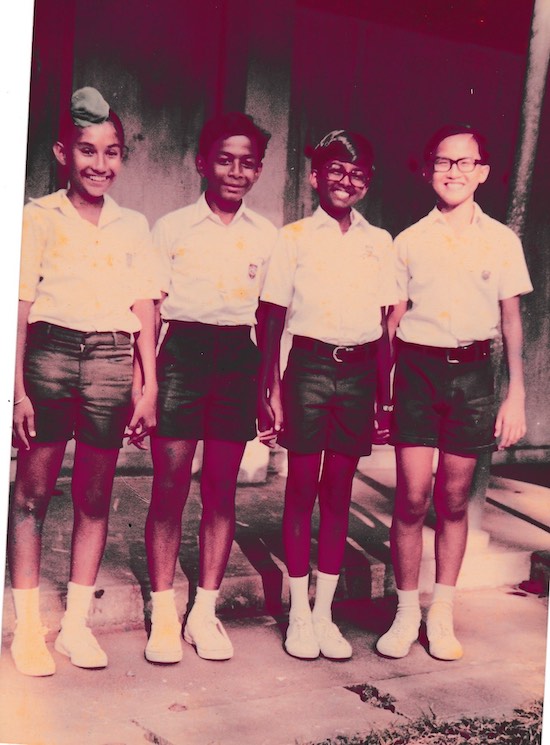
Malaysian-based trainer Tejwinder Singh shared a photo of him and three classmates taken just over four decades ago to depict the Malaysia in which he grew up.
It was tagged to the Malaysia Day celebration on Sept 16. This is the day when the Federation of Malaya joined Singapore, Sabah and Sarawak to form Malaysia in 1963. Singapore subsequently left the new federation two years later.
“This is a photograph with my classmates, Murshidee, Soma and Khai Ming from the year 1980. We had our ‘muhibah’ spirit then, now and forever! SELAMAT HARI MALAYSIA!,” he wrote in an entry at his personal Linkedin page.
“We still keep in touch by WhatsApp, noisy chatrooms, still like little boys,” Tejwinder remarked in response to a comment. “When I was young, used to stay in the police barracks, we were like a big family, whatever race, lots of respect – beautiful.”
He also shared the following poem with the photo.
MALAYSIAN SWEET DREAM
Sweet dreams are made of this Who am I to disagree I travel around our beautiful country Everybody’s looking to live in harmony
All of them want to believe you All of them want to get respected by you All of them want to befriend you All of them want to trust you
Hold your head up, we are proud of you Hold your head up, we adore you Hold your head up, moving on Hold your head up, moving strong.
ASIA SAMACHAR is an online newspaper for Sikhs / Punjabis in Southeast Asia and beyond.Facebook | WhatsApp +6017-335-1399 | Email: editor@asiasamachar.com | Twitter | Instagram | Obituary announcements, click here |
International communications consultancy Hume Brophy has appointed Malminderjit Singh as its regional content lead and senior account director for its Southeast Asia operations.
Malminderjit, who has more than 15 years of experience in media, communications and public policy, was most recently the digital news editor at Channel News Asia (CNA). Among others, he was previously a journalist at The Business Times and an executive director at the Singapore Indian Chamber of Commerce and Industry (SICCI).
In his new role, the announcement said Malminderjit will support the firm’s Asian offices and global leadership by spearheading and implementing new content strategies and products for Hume Brophy’s clients and its internal branding. He will also draw on his vast experience in public policy, academia and strategic communications, including as an opinions editor, to position clients as thought leaders in their respective fields.
With an in-depth knowledge of media know-how, public policy and digital media, Malminderjit will enhance Hume Brophy’s offerings to clients across the globe, it added.
On the community front, Malminderjit has played an active role for many years now. In November 2020, he was appointed as chairman of the Sikh Advisory Board (SAB), a conduit between the Singapore government and the estimated 12,000 strong Sikh community.
ASIA SAMACHAR is an online newspaper for Sikhs / Punjabis in Southeast Asia and beyond.Facebook | WhatsApp +6017-335-1399 | Email: editor@asiasamachar.com | Twitter | Instagram | Obituary announcements, click here |
Spouse: Jagjit Kaur Kahlon d/o Late Hardev Singh Kahlon
Son: Laganpreet Singh Sidhu
All Family and Friends.
You will be remembered as a loving husband, a nurturing father, and a wonderful brother in law, brother and uncle. You were the pillar of our family and we take comfort in knowing that you have found your rightful place in heaven.
For enquiries, please contact: Sarbjit Singh (012-5656676) or Jagjit Singh (019-6998055)
We are eternally grateful to our family and friends for sharing our grief. Thank you for the support and prayers.
| Entry: 17 Sept 2021 | Source: Family |
ASIA SAMACHAR is an online newspaper for Sikhs / Punjabis in Southeast Asia and beyond.Facebook | WhatsApp +6017-335-1399 | Email: editor@asiasamachar.com | Twitter | Instagram | Obituary announcements, click here |
Political leader Jagmeet Singh is the ‘closest thing’ to a present day Robin Hood for Canadians preparing to vote in a snap national polls on Monday (Sept 20).
The leader of the New Democratic Party (NDP), a social-democratic federal political party trying to break the hold of two larger parties, has been splashed on the cover of a Canadian weekly.
“In this year’s Canadian election, the closest thing to Robin Hood is NDP Leader Jagmeet Singh, who’s the politician most eager to take from the rich. And in his world, there are two Sheriffs of Nottingham protecting the oligarchs — Liberal Leader Justin Trudeau and Conservative Leader Erin O’Toole,” reads the article in The Georgia Straight. The dashing Jagmeet was on the cover page.
The Georgia Straight is a free Canadian weekly news and entertainment newspaper published in a large ‘tabloid’ format in Vancouver, British Columbia, by the Vancouver Free Press Publishing Corp.
Prime Minister Trudeau called for the general elections two years early in an attempt to seek a fresh mandate for his handling of the Covid-19 pandemic. He was leading a minority government.
The article pulled up a quote of what told Jagmeet told reporters on September 11 during a campaign stop in Vancouver Granville.
“One of the key problems that we’re highlighting—whether it’s with the climate crisis, whether it’s with a rigged economy, or whether it’s with housing—we’re saying really clearly, ‘The billionaires are making out like bandits.’ Whether that’s in the housing market or the biggest polluters or in the economy: those at the very top continue to exploit the system, and Liberals and Conservatives have let them do it.”
“Our offer to Canadians, what makes us really different is, we’re going to take them on directly,” Singh continued. “We’re the only party that’s said we’re going to tax the billionaires. We’re going to take on the superwealthy. And we’re going to make sure companies like Amazon start paying their fair share.”
With Singh’s oft-stated mantras about taxing the ultrarich and the billionaires, he has positioned himself outside the boundaries of traditional Liberal-Conservative thinking, the report said.
In addressing these issues, the article said that Jagmeet has demonstrated his Robin Hood approach through various policy prescriptions, including a one percent wealth tax on those with assets of $10 million or more. This, he claims, would generate about $13 billion per year in revenue by the fifth year of an NDP federal government.
Also under a federal NDP government, people earning more than $210,000 in annual income would face a top marginal tax rate of 35 percent, up from 33 percent. It’s not a huge hike, but enough to send a signal that this NDP is more inclined to pluck the wealthier geese to a greater degree than either Trudeau or O’Toole, the report added.
In addition, it said Jagmeet has proposed boosting capital-gains taxes on investors in the stock market by lifting the inclusion rate from 50 percent to 75 percent. This means that investors would have to multiply any gain by this amount to determine their taxable capital gain. It’s a move that the NDP says will generate more than $10 billion per year in the final two years of its five-year fiscal plan.
ASIA SAMACHAR is an online newspaper for Sikhs / Punjabis in Southeast Asia and beyond.Facebook | WhatsApp +6017-335-1399 | Email: editor@asiasamachar.com | Twitter | Instagram | Obituary announcements, click here |
Life is a journey, people come and go, but the emptiness you leave in our lives is unbearable. You were a fighter, the pillar of strength of the family.
You leave us with all the beautiful memories. Your love is still our guide, although we cannot see you, you’re always at our side. Our iron lady…
Till we meet again……
* In light of the current MCO and SOPs, the cremation will be a private affair.
We thank you for your kind understanding.
For enquiries, please contact: Perdip Singh at 012-672 5880
We are eternally grateful to our family , relatives and friends for sharing our grief. Thank you for the support and prayers.
| Entry: 17 Sept 2021 | Source: Family
ASIA SAMACHAR is an online newspaper for Sikhs / Punjabis in Southeast Asia and beyond.Facebook | WhatsApp +6017-335-1399 | Email: editor@asiasamachar.com | Twitter | Instagram | Obituary announcements, click here |
“Do you want to play a game”, the supercomputer WOPR asks in the movie WarGames, on the verge of starting a thermonuclear war destroying the world. The movie was about a hacker who unwittingly accesses a United States military supercomputer (WOPR) programmed to predict and execute nuclear war against the Soviet Union.
I was 10, and instantly fell in love with the idea, while watching the movie, that being a hacker would be a really cool thing. My uncle had afforded a personal computer way back in the 80s, and I was already in love with playing computer games on it. I could see myself as the teenager in the movie playing computer games that never looked different to what I was playing in my uncle’s house.
My heart was set to being a computer whizz.
Then, in 1992, with my own 486 PC my father had bought for me to pick up new skills and use this new phenomenon known as the internet, the movie Sneakers came out. It turbocharged my hacker dream. I was hooked onto the notion of taking control of complex systems owned by governments and corporations that many of us couldn’t trust those days.
The Matrix came out in the year 1999. I was 24 years old and had just graduated with a degree in Computer Sciences. It had struck a chord with many, including myself, for the ultra cool portrayal of a hero raging and rebelling against the machines designed to harvest energy from our minds.
The protagonist or hero, Neo, was an accomplished hacker who could see past the virtual reality he was living in all his life. This romantic notion resonated with me, having learned and getting pretty good at programming software code during my uni days. Being a hacker was the ultimate notion, in my mind, to rebel against Big Brother (or organizations exercising total control over our lives) breaking into systems and stealing the rich for the poor.
Although I did become a programmer, I never got to becoming a hacker, unfortunately. But there was the joy of creation, from lines of code written, appearing as something attractive on the computer screen. As I matured, the rebel in me died a natural death.
But the Matrix trilogy also resonated with my spiritual beliefs. That we are living in some virtual reality, unbeknownst to us what true reality is. That there is this pervasive force that keeps us and our bodies together, the spark that is life. And if we can harness looking past the veil of untruthfulness, we can bend some laws of nature. Our mind can be a powerful weapon, if we conquer it with peace and one-mindedness. Conquer our mind, and we can conquer the world. These ideas were all prevalent in the movies, and fortified the spiritual beliefs that had begun to permeate in my mind when I started exploring the mysticism of the Sikh spirituality.
What stayed with me from all these movies – shaping my vision of who I wanted to grow up to be – was the idea that our humanity would, or should, always prevail over how technology slowly becomes entrenched in our lives. Technology, naturally, improves our lives. Yet, it also makes us all too dependent on it. Every facet of our lives today, whether we like it or not, is held hostage to the use of technology. Life would be a living hell without technology. Yet, we try our very best to remain humane, to cherish our relationships with our close ones, and to remain spiritual however we can. We try to do all this despite technology. We are also raging against the machines, just like Neo in the movies.
Some of us choose to take the red pill, to unlearn things about ourselves and to challenge ourselves to be better humans, to be better to each other. Some of us choose to keep taking the blue pill, stay the same, consume everything in our path, taking for granted how short our lives are.
I can’t wait for the next installment of The Matrix series coming out in December this year. To fall in love again with those spiritual messages that I saw decades ago. To relive the inspirational feelings again.
Jagdesh Singh, a Kuala Lumpur-based executive with a US multinational company, is a father of three girls who are as opinionated as their mother
* This is the opinion of the writer, organisation or publication and does not necessarily represent the views of Asia Samachar.
ASIA SAMACHAR is an online newspaper for Sikhs / Punjabis in Southeast Asia and beyond.Facebook | WhatsApp +6017-335-1399 | Email: editor@asiasamachar.com | Twitter | Instagram | Obituary announcements, click here |


























 By Asia Samachar| Singapore |