






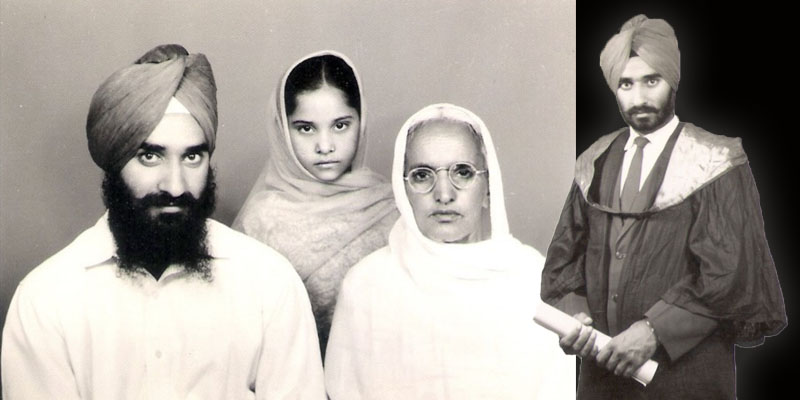
By Hardev Singh Virk | Opinion |
The Story of My Trials and Tribulations [1]
As a young boy in high school, I experienced a drastic change in my life from riches to rags. These circumstances were created by a family feud that devastated my dreams in life. However, I found solace in my deep faith in the Sikh scripture and its universal message of hope. My readings of the Sri Guru Granth Sahib (SGGS) gave me the moral strength to face the upheavals of my life.
Guru Arjun [2] gives a clear-cut formula in SGGS to get rid of worries in life by making an honest effort:
ਉਦਮੁ ਕਰੇਦਿਆ ਜੀਉ ਤੂੰ ਕਮਾਵਦਿਆ ਸੁਖ ਭੁੰਚੁ ॥
ਧਿਆਇਦਿਆ ਤੂੰ ਪ੍ਰਭੂ ਮਿਲੁ ਨਾਨਕ ਉਤਰੀ ਚਿੰਤ ॥੧॥
ਜੋ ਨਰੁ ਦੁਖ ਮੈ ਦੁਖੁ ਨਹੀ ਮਾਨੈ ॥
ਸੁਖ ਸਨੇਹੁ ਅਰੁ ਭੈ ਨਹੀ ਜਾ ਕੈ ਕੰਚਨ ਮਾਟੀ ਮਾਨੈ ॥
That man, who in the midst of pain, does not feel pain,
who is not affected by pleasure, affection or fear, and who looks alike upon gold and dust.
Prologue [4]: In April 1955, I had joined Govt. High School Malerkotla in 9th class. On 7th May, my Nani (maternal grandmother and my guardian) was killed by a lineal descendant (shariq). I was a young boy of thirteen and this shock was unbearable for me. We were reduced to a state of penury in fighting the case of murder in the judicial courts. Despite our best efforts, we lost the case due to lacunas in FIR (first information report). We were dispossessed of Nani’s land holdings and our standing crops were captured by the murderer’s party. We had exhausted all our resources during this case. I had no money left to purchase my books. My mother’s relations provided some support in the form of wheat grains to keep our kitchen running.
SEE ALSO: My Role Models in School and College Days
SEE ALSO: Sikh scientist Prof Hardev Singh Virk honoured for groundbreaking research
My teachers and classmates proved to be a great source of strength. I used to borrow my prescribed textbooks from both sources and returned the same after reading. During both these years of high school, I had hardly any textbook in my personal possession except a textbook of English provided by my teacher as her complimentary copy. Despite these handicaps, I scored the top position in the 9th class in the final examination.
FOR MORE ARTICLES BY HARBANS SINGH VIRK, CLICK HERE
My teachers took a lot of interest in my studies. Harjit Singh Rai taught us Mathematics and Science during high school. I was offered free lodging and boarding facilities in his house for a month on the eve of Matriculation examinations. His wife treated me like her son offering me homely comforts. My life-long relationship with Rai family is still intact. Presently, they are settled in Calgary, Alberta, Canada. The school teachers expected that I shall score a high merit position in 1957 in the Matriculation results of Punjab University, Chandigarh. I topped in my high school but failed to achieve a place in the merit list.
The Story of My College Life: The college admissions started in mid-May, 1957. I was interested to continue my studies in the non-medical group of F. Sc. (Intermediate). When I asked my mother about the college admission fees, she presented me a note of ten rupees, which was all in her possession. Darshan Singh Grewal, a science teacher in Islamia High School, Malerkotla, and living in my neighbourhood, was my constant sympathiser and motivator during those days of adversity. Somehow, he came to know of my predicament. He offered to pay my admission fees as a gesture of goodwill. However, I was reluctant to accept his offer.
Next day, I reported the situation to my school Headmaster, Raghu Nath Sahai. He was so much impressed by my entreaty that he accompanied me to the office of the Principal, Government College Malerkotla. Mr. Sahai told Mr. Khosla, the Principal, that I was a rural student who topped in Govt. High School and deserve full fee concession. The kind-hearted Principal not only waived all my admission fees but also sanctioned some money from the amalgamated funds of the college for the purchase of my books. The only condition imposed was that I had to return the books to the library after my examinations were over. My mother was overjoyed to learn about my admission and she went to the village Gurdwara to offer her special prayers of gratitude.
I was not in a position to afford the costly dress for my college wear. My choice fell upon khadi wear prepared by my mother using homespun cotton. In college days, I was a sort of rebel caring nothing about my social status but only focussed on my studies. I acquired the habit of preparing my lessons in advance. I covered most of the chapters of my book on Trigonometry during summer vacation. Even while grazing cattle, a pastime for us rural students, I kept a book in my one hand and the ‘grazing stick’ in the other. I had no time to waste. My engagements were heavy and the conflicts became part and parcel of my early life.
The book which inspired me to opt for science as my career is still in my possession. It was a popular science book “The Universe and Dr. Einstein” authored by Lincoln Barnett. This book was my first introduction to Theory of Relativity and four-dimensional continuum of Space and Time. I was motivated to interpret the Gurbani of Sikh scripture later on, for example, the topics of Cosmology and Nature (Qudrat), scientifically based on my early studies of this book.
I was not pessimistic in college life but up against all odds. I learned to cope with my circumstances thinking that it was my testing time and a temporary phase of my life. My student life from High School in Malerkotla to M.Sc. in Physics in AMU Aligarh, has been full of struggle. I wonder how could I come out of this struggle unscathed?
As they say “All is well that ends well”. We lost the murder case in 1955 but won the landed property case in our favour in 1963, the year I passed my M.Sc. from AMU Aligarh. It was another test of our moral courage to get possession of our land. After selling the landed property, I built a house in Model Town, Patiala. Peace returned to our family as a gift from God. My focus was shifted from litigation to teaching and research. I remained committed to my mother for the whole of my life. The dangerous phase of my life lasted for almost a decade (1955-65).
Adversities and Travesties in Dr. Virk’s Life [5]
Dr. Virk’s autobiography is replete with challenges, frustrations, and agonies in life. In his personal life, benign neglect from his father, apathetic attitude of his step mother and open hostility from his step brothers caused untold amount of anxiety, worries, and obstacles in his life. Hostile attitudes from both collateral and lineal descendants (shariq) in a Jatt family of Punjab are portrayed with the stunning accuracy in Hardev’s autobiographical account.
Similarly, the professional hurdles for Dr. Virk to secure the most deserving position as the Vice-Chancellor of a University in Punjab, are very candidly portrayed in his autobiography. The very sad spectacle of bribery, corruption, nepotism, and sifarsh (inappropriate approaches or recommendations) are quite prevalent in India in general, and in Punjab, in particular. Sad but true to a large extent, the most deserving and meritorious candidates like Dr. Virk are passed over by those who have political connections or plenty of money to bribe. Unfortunately, meritocracy is sacrificed at the altar of many crooked practices of hypocrisy, avarices, and abuses of political powers.
I admire Dr. Virk’s courage to share his personal and professional life very openly without any reservations. Behind autobiographical work of Dr. Virk, we see a person of profound scholarship who has produced pioneering research well recognized throughout the world. Specifically, Modgil-Virk model and his Radon studies for earthquake prediction research have a potential to make Dr. Virk stand in line with eminent scientists of the world.
To finalize, I metaphorically compare Dr. Virk with the Lotus flower, born and raised in the mud and mire of poverty and life of afflictions. Dr. Virk blossomed as a beautiful Lotus flower and smelled like a rose whose romantic and sweet fragrance of fame and scholarship travelled all around the world from the Royal City of Patiala, Punjab to the romance capital of the world, Paris, France.
I commend and congratulate Dr. Virk for treasuring his life experiences of joys and sorrows in the golden box of eternal memory of a published autobiography. I also thank him for inviting me to write this Foreword and allowing me to become a permanent part of his long-lasting memoir.
Tribute by Dr D.P. Singh, a Mentee and Colleague [6]
To describe Professor Hardev Singh Virk, merely as a physicist, educationist, or Sikh scholar would be inadequate, because he embodies a rare synthesis of scientific brilliance, spiritual depth, intellectual courage, and human warmth. As his mentee, I have always seen him not only as a scholar of international standing but also as a guiding light who taught generations how science and spirituality can coexist harmoniously.
His academic journey itself inspires awe despite his trials and tribulations. As a physicist, his range spread across many interdisciplinary areas, for example, nuclear physics, radiation physics, seismology, radon studies, and nanotechnology. His research on radon and groundwater contamination in Punjab showed that he understood science as a responsibility to society, not merely an academic pursuit. His roughly 500 papers and fifty books stand as a testament to a lifetime of disciplined inquiry.
To his students, he was more than a teacher. He listened patiently, welcomed every question, and sent young minds away with confidence and purpose. He taught that education is not the accumulation of information but the cultivation of wisdom, integrity and compassion.
Future generations may remember him as an eminent physicist, prolific author, or distinguished Sikh scholar. But those of us fortunate enough to learn from him will remember something even greater: a mentor who transformed curiosity into purpose and learning into service.
Miracles Do Happen
Sikh Gurus discouraged their family members to display miracles which are considered to be interference in the laws of Nature. However, I was a witness to unusual phenomena in my life which you may call coincidences or miracles.
It is a miracle that with one Ten Rupee Note in possession of my mother, I dared to join Govt. College, Malerkotla in 1959 and completed my undergraduate studies in science in 1961.
The murderer of my Nani (maternal grandmother) planned my murder in 1963. I got an inkling and changed my route. It was a split-second decision which saved my life.
Before departing for Paris, to join Marie Curie University, I was given a recommendatory letter by Prof. Harbans Singh of PU Patiala, addressed to Dr Sham Lal Malick, who happened to be a researcher in the same university. This letter saved my one year of study in Paris [7]. It is not less than a miracle.
During my research in Marie Curie University, there was a deadlock between me and my research supervisor, Tsai Chu. I rejected his hypothesis of a new elementary particle emission in nuclear interactions at high energy. Ultimately, under duress, I prayed for some solution to my predicament. The solution was provided by providence and I solved the riddle of a new particle [8].
Light at the end of the Tunnel
As they say, there is always light at the end of the tunnel. The success story of my Scientific Journey is well illustrated and documented in my Autobiography “My Journey in Science”, available on Amazon and my website: https:// hsvirkresearch.com.
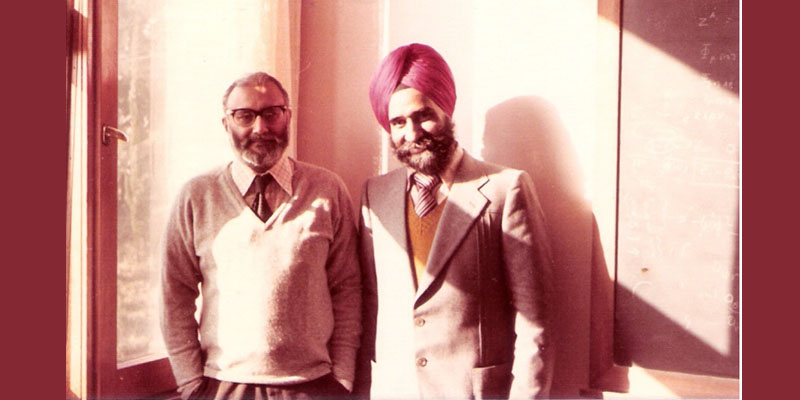
Acknowledgements: I am obliged to my teachers (Harjit Singh Rai, Raghunath Sahai, Bahadur Singh & PS Gill) for help in my student life. Prof. Abdus Salam, Director ICTP Trieste, was a great motivator in my research. My wife, Ranjit Virk, stood like a rock in my life.

Scholar and scientist Hardev Singh Virk retired from Amritsar-based Guru Nanak Dev University in 2002 after serving as Founder Head Physics Department and Dean Academics. He was re-employed as Director Research in DAVIET, Jalandhar (2008-11); Adjunct Professor in Eternal university, Baru Sahib (HP); Visiting Professor in SGGS World University, Fatehgarh Sahib (2013-17); and Professor of Eminence, Punjabi University, Patiala (Punjab), India (2017-2019).
RELATED STORY:
A Critique of “How religion became ethnonationalism: Reflections on Sikh calls for statehood and identity” (Asia Samachar, 21 March 2024)
ASIA SAMACHAR is an online newspaper for Sikhs / Punjabis in Southeast Asia and beyond.Facebook | WhatsApp +6017-335-1399 | Email: editor@asiasamachar.com | Twitter | Instagram | Obituary announcements, click here