




















By Bhupinder ‘Bo’ Singh | Book Review |
The 350th martyrdom anniversary of Guru Tegh Bahadur Ji, the ninth Sikh Guru, commemorated in November 2025, provided an occasion to revisit his profound spiritual teachings.
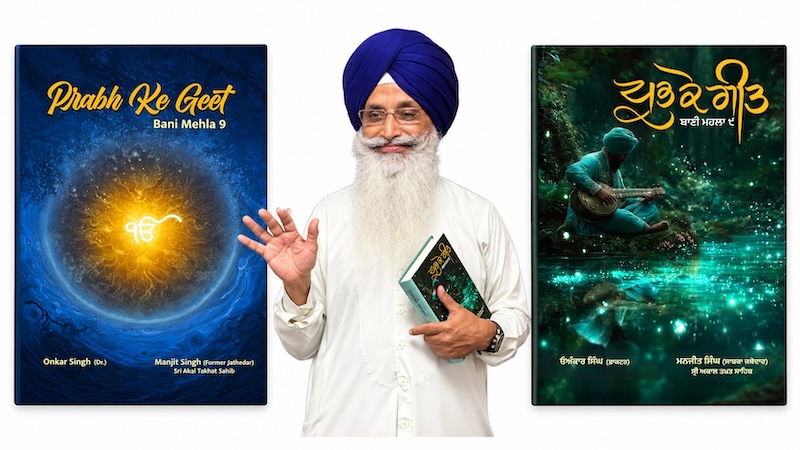
To mark the anniversary, Bhai Manjit Singh, former Jathedar of Sri Akal Takht Sahib, and his brother Dr. Onkar Singh jointly produced Prabh Ke Geet, a book offering detailed explanations of the Guru’s Bani.
The book covers all 59 Shabads and 57 Saloks of the ninth Sikh Guru, providing word-by-word meanings, interpretations of complete compositions and detailed elucidations. Its title is drawn from a line in one of the 57 Saloks.
MORE ON GURU TEGH BAHADUR, CLICK HERE
One of the book’s significant contributions is its challenge to the conventional description of Guru Tegh Bahadur Ji’s Bani as Vairaghmai, commonly understood as detachment from worldly life.
Manjit Singh, who was also the jathedar of Takht Kesgarh Sahib, argues that this interpretation often carries a negative connotation, suggesting withdrawal from life. Instead, he presents the Guru’s Bani as fundamentally life-affirming, offering guidance on living a purposeful, fulfilling and blissful life.
Understanding two important Saloks
An interesting aspect of the book is its examination of two consecutive Saloks, traditionally associated with a popular account involving Guru Tegh Bahadur Ji and Guru Gobind Singh Ji.
According to this account, the ninth Guru composed the first Salok while imprisoned in Delhi and sent it through a messenger to Guru Gobind Singh Ji at Anandpur. The second Salok is said to have been the response.
The first Salok reads:
ਬਲੁ ਛੁਟਕਿਓ ਬੰਧਨ ਪਰੇ ਕਛੂ ਨ ਹੋਤ ਉਪਾਇ ॥
ਕਹੁ ਨਾਨਕ ਅਬ ਓਟ ਹਰਿ ਗਜ ਜਿਉ ਹੋਹੁ ਸਹਾਇ ॥੫੩॥
Bal chhuTakio bandhan pare kachhoo na hott upai ||
Kahu nanak ab oT har gaj jiau hoh sahai ||53|| (SGGS, Pg. No. 1429)
Translation: Separating from the Divine Meditation, man’s spiritual strength exhausts and he gets entangled in the worldly bindings. No effort can then be made (for emancipation).
Says Nanak! Clutched in the grasp of worldly entanglements now, Divine is the only refuge now, as the octopus proved helpful for the release of the elephant. ||53||
The second Salok states:
ਬਲੁ ਹੋਆ ਬੰਧਨ ਛੁਟੇ ਸਭੁ ਕਿਛੁ ਹੋਤ ਉਪਾਇ ॥
ਨਾਨਕ ਸਭੁ ਕਿਛੁ ਤੁਮਰੈ ਹਾਥ ਮੈ ਤੁਮ ਹੀ ਹੋਤ ਸਹਾਇ ॥੫੪॥
Bal hoaa ba(n)dhan chhuTe sabh kichh hot upai ||
Nanak sabh kichh tumarai haath mai tum hee hot sahai ||54|| (SGGS, Pg. No. 1429)
Translation: Yes, spiritual strength is restored on coming to Divine shelter and efforts became possible as the worldly shackles are shattered. Nanak says that all this play is in Your hands. You only are helpful to save me from the worldly shackles (created by You). ||54||
The authors question the historical plausibility of the popular account, particularly the possibility of the imprisoned Guru obtaining writing materials and arranging a messenger under such difficult circumstances.
They also questions why Guru Tegh Bahadur would need to test Guru Gobind Singh when he had already verified his suitability as successor.
Instead, the two Saloks can be understood as describing a spiritual transformation. The first portrays depleted spiritual strength and helplessness amid worldly entanglements. The second describes renewed strength, freedom from bondage and unlimited possibilities through complete trust and faith in the Almighty.
This interpretation shifts attention from an emotionally appealing narrative to the spiritual message of the compositions themselves.
Combining reading with musical experience
A distinctive feature of Prabh Ke Geet is the QR code on its back cover, linking readers to YouTube recordings of the Bani rendered in the prescribed Raagas.
Readers can therefore listen to the compositions while studying their meanings and explanations, combining musical appreciation with a deeper understanding of Gurbani.
The book, which took three years to complete, is available in Gurmukhi, Hindi and English, with plans for editions in other major languages.
It was released at Patna Sahib by the Governor of Bihar during the martyrdom anniversary commemorations. Its US launch took place on June 13, 2026, at the Sikh Center of Gulf Coast in Houston, Texas, where Manjit Singh discussed its main features and interpretations.
Prabh Ke Geet offers readers an opportunity to engage with Guru Tegh Bahadur’s Bani beyond conventional interpretations. Its combination of detailed explanations and musical renditions makes it a useful resource for those seeking a deeper understanding of the Guru’s teachings.
Above all, the book presents Gurbani not as a call to withdraw from life, but as a guide to living meaningfully, with spiritual strength, purpose and unwavering faith.

Bhupinder ‘Bo’ Singh, Houston. Born in Bhamo, Myanmar, he now lives in Houston, US, where he runs a manufacturing company formed with his son. A mechanical engineer by training, he has authored a number of books, including Connecting with the Master – A collection of essays on topics related to Sikhism (2006) and In Bully’s Eyes – An Illustrated Children’s book on Bullying (2019).
RELATED STORY:
Dead While Alive (Asia Samachar, 19 Sept 2025)
ASIA SAMACHAR is an online newspaper for Sikhs / Punjabis in Southeast Asia and beyond. You can leave your comments at our website, Facebook, Twitter, and Instagram. We will delete comments we deem offensive or potentially libelous. You can reach us via WhatsApp +6017-335-1399 or email: asia.samachar@gmail.com. For obituary announcements, click here