





















By Jordan Villegas | Latina | United States |
In 2017, a video began to spread across Twitter and Facebook, capturing an “impromptu neighborhood dance party” that began when neighboring Punjabi and Mexican families in suburban Stockton, California, combined their respective house parties in the street. Clips of the party captured on cell phone were edited to show how partygoers took turns dancing to each other’s music in the suburban street of Stockton, California. “THIS IS WHAT HAPPENS WHEN TWO CULTURES MEET” BuzzFeed News proclaimed, emphasizing that the virality of the content was to be found in the ostensibly novel fusion of South Asian and Latino music and dance.
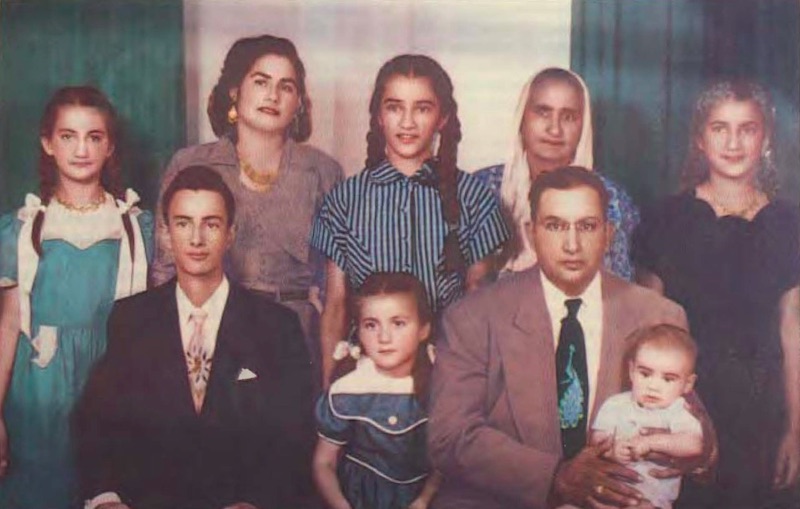
But the blending of the ‘traditional’ styles of Punjabi and Mexican dance in Buzzfeed’s 2017 report was no outlier. In fact, a couple years earlier, just a few miles east in San Francisco, the Duniya Dance and Drum Company and Ensembles Ballet Folklorico de San Francisco collaborated to develop choreography that brought together Bhangra, a folk-dance originating from Punjab region of India and Pakistan, with the Mexican regional styles of Ballet Folklorico. The performance, entitled “Half and Halves,” was organized to commemorate the community of Punjabi-Mexican families that emerged from the conditions faced by immigrant populations in early 20th century California, including immigration restrictions, racial segregation, and anti-miscegenation laws.
The U.S. Southwest is dotted with Punjabi-Mexican enclaves in states like California, Texas, and Arizona. One such enclave is Yuba City, California. The Punjabi-Mexicans of this locale trace their origins to a population of Punjabi migrant men who settled as agricultural laborers in California during the first decades of the 1900s, before the Asiatic Barred Zone Act of 1917 restricted nearly all immigration from Asia. These men were largely restricted from entering the United States with wives or other family members because of anti-Asian immigration policy, which sought to prevent the entry of nonwhite immigrant populations into the U.S. except as a source of cheap, and disposable labor.
“Half and Halves”
The first recorded marriages between Punjabi men and Mexican women occurred in 1916. Punjabi men sought local women whom they could legally marry, for both companionship and as a source of domestic labor. As Karen Leonard, a professor of anthropology at the University of California at Irvine explained in her book Making Ethnic Choices: California’s Punjabi Mexican Americans, “Many Punjabi’s married the Mexican women that worked on their land because of their cultural similarities and proximity. And when they’d show up at the county record office, they could both check ‘brown.’ No one knew the difference.”
In the early 20th century, Mexican women often lived and worked in close proximity to male Punjabi immigrants, increasing the likelihood of marriages between the two groups. Moreover, driven north by the political and economic tumult of the Mexican Revolution, an even greater number of Mexican families began to settle in the agricultural regions of Southern California throughout the 1910s. Thus, it was no coincidence that many Mexican families picked cotton alongside Punjabis.
Read the full story here.

ASIA SAMACHAR is an online newspaper for Sikhs / Punjabis in Southeast Asia and beyond.Facebook | WhatsApp +6017-335-1399 | Email: asia.samachar@gmail.com | Twitter | Instagram | Obituary announcements, click here