























By Gurnam Singh | Opinion |
The question of what constitutes consciousness is arguably the most fundamental inquiry we can make about human existence. At the common-sense level of self-perception, we, as human beings, can feel and experience consciousness. This approach to consciousness was perfectly captured by 17th century French philosopher, mathematician and scientist René Descartes in his utterance “Cogito, ergo sum,” which translates to “I think, therefore I am.” By recognizing that the act of doubt itself implies a thinking self, Descartes asserted the certainty of his own existence as a conscious being.
Given that ‘thinking’ is not constant, we might talk about degrees or levels of consciousness, typically associated with brain activity. Moreover, it is also conceivable that other animals and perhaps even plant species have their own systems of thought and hence degrees of consciousness. However, when it comes to very simple organisms and certainly bacteria, one might be stretched to think that have any sense of self-consciousness in the Descaritan sense. That said, the presence of complex adaptive behaviour amongst single cell organisms, including altruistic or cooperative behaviour, suggests some kind of intelligence, though clearly, in comparison to organisms, like humans, with centralized nervous systems, this will be very different.
Turning to ‘non-living’ things or inanimate objects, such as mountains and rocks, we might be stretched to argue that they have any consciousness. For this reason, most scientists argue that, while in the not-too-distant future, we may see sophisticated robots powered by artificial intelligence mimicking consciousness, this does not represent ‘real consciousness’. So far, there is nothing much to disagree about. However, when we begin to figure out the source and location of consciousness, divergences appear, particularly between scientific and religious worldviews.
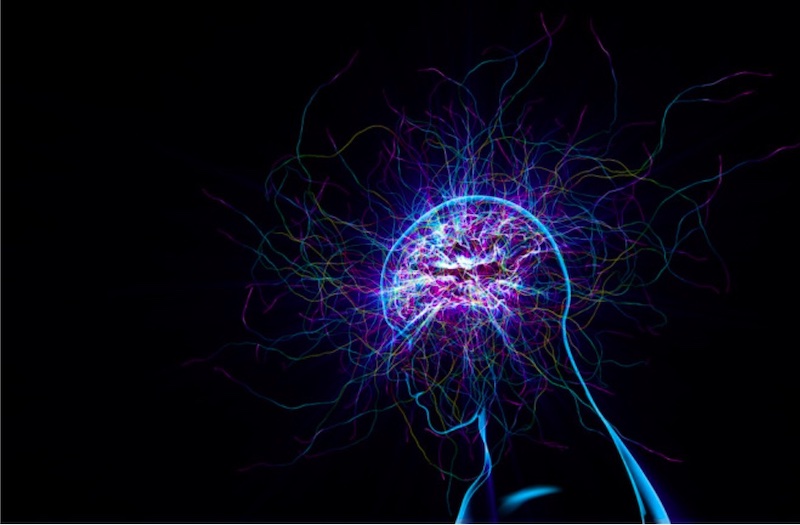
One fundamental assumption of the scientific approach is that consciousness is born out of complex chemical structures. Though there is some disagreement on this, consciousness is understood as a phenomenon associated with the brain’s neural activity. Just as a television, with an array of electronic components and an energy source, can produce sound and video, brain cells arranged in a particular configuration, supplied by necessary chemicals and energy, can produce awareness, perception, and the subjective experience of thoughts and emotions.
If we turn to religion, consciousness is universally associated with the divine spirit, commonly referred to as God and the idea of the soul. Hence, from a religious perspective, consciousness is not reducible to the physical realm or activities of the brain, but there is an autonomous element termed ‘the soul.’ Accordingly, all the main religious traditions assert that when the human body expires, consciousness in the form of the ‘soul’ leaves the body and ends up in some other place.
Examining the main traditions reveals some important variations. In Hinduism, for example, consciousness (Atman) is considered eternal and interconnected with the ultimate reality (Brahman). Buddhism sees consciousness as impermanent and subject to rebirth. In Christianity, consciousness is often associated with the soul, created by God. Islam emphasizes the soul’s accountability in the afterlife, while in Judaism, consciousness is viewed as a divine gift.
DOES CONSCIOUSNESS EXTEND BEYOND BRAINS? THE 2023 HOLBERG DEBATE
In contrast to all these other traditions, in Sikhi, consciousness is seen as a connection to the divine within all of reality, including all matter in the universe. This interconnection is between the transcendent, universal consciousness ‘Paramatma‘ and the life force that exists in all bodies ‘Atma.’ There is a divergence of opinion about the location of the divine force within bodies or physical matter. Gurbani talks about the divine force/consciousness or ‘Atma’ residing in the hearts of all, from highly complex organic organisms such as human beings to simple single-cell life forms, from stationary life forms to those that move—the divine resides within every heart (Bhagat Naam Dev Ji – Sri Guru Granth Sahib Ji – p988).
ਅਸਥਾਵਰ ਜੰਗਮ ਕੀਟ ਪਤੰਗਮ ਘਟਿ ਘਟਿ ਰਾਮੁ ਸਮਾਨਾ ਰੇ ॥੧॥
The keyword deployed here is ‘ghatt,’ which means ‘heart.’ However, given that Gurbani talks about the divine spirit existing within every cell of the body, the ‘ghatt’ can be interpreted as in the nucleus of each cell, or for that matter, the nucleus of each atom. This line of thought, through quantum theory, opens some interesting possibilities for reconciling the current mechanical approach adopted by most scientists and the ‘spiritual’ approach of most of the main religious traditions.
The relationship between quantum mechanics and consciousness is a topic of ongoing debate and speculation within the scientific and philosophical communities. While most neuroscientists and physicists favour classical explanations for consciousness, as discussed earlier, some researchers and theorists propose that quantum processes may play a role in understanding consciousness, suggesting that the fundamental principles of quantum mechanics, such as superposition and entanglement, might be relevant at the level of neural processes. The connection between quantum theory and spirituality emerges through the suggestion that the non-locality and interconnectedness observed in quantum phenomena may parallel certain spiritual or holistic worldviews.
Whether or not one seeks to prove the existence of divinity through faith or quantum theory, the important thing there can be no dispute: consciousness is real, even if our understanding of it is still limited. Developments in Artificial Intelligence may well shed some light on the nature of consciousness and human subjectivity, but for now, the challenge, I think, that the Sikh worldview poses is to avoid both thinking of consciousness in mythological ways, as well as the rather bleak mechanistic model deployed by scientists. Most critically, the challenge Sikhi poses is for us to develop a realization that consciousness permeates every atom and collection of atoms in the universe and that within this multitude of consciousnesses, there is a unity of consciousness or oneness, and that is what constitutes the divine universal force which we call the timeless, limitless entity or ‘Akaal Purakh.’

Gurnam Singh is an academic activist dedicated to human rights, liberty, equality, social and environmental justice. He is an Associate Professor of Sociology at University of Warwick, UK. He can be contacted at Gurnam.singh.1@warwick.ac.uk
* This is the opinion of the writer and does not necessarily represent the views of Asia Samachar.
RELATED STORY:
Miracles and Godmen (Asia Samachar, 31 July 2020)
ASIA SAMACHAR is an online newspaper for Sikhs / Punjabis in Southeast Asia and beyond. When you leave a comment at the bottom of this article, it takes time to appear as it is moderated by human being. Unless it is offensive or libelous, it should appear. You can also comment at Facebook, Twitter, and Instagram. You can reach us via WhatsApp +6017-335-1399 or email: asia.samachar@gmail.com. For obituary announcements, click he





Veer ji,
First, many thanks for your feedback. However, I don’t think your points contradict my argument but add to my general thesis. As for ‘ghatt’ my argument was that this was not a reference to the physical heart organ but a metaphor to indicate the pervasive nature of divinity. I am unsure how you think it means mind, which is ‘mann’.
S. Gurnam Singh Jee with due respect to you, can you please advise how you did you arrive of the view Location of the divine force. As per my understanding
1. There is no such thing as the “LOCATION of the divine force within bodies or physical matter.” Such a view assumes that the “divine force” is a physical object that is LOCATED somewhere. The “divine force” is neither a physical object, not is it located somewhere specific. The Gurbani position is that all bodies and all physical matter IS the divine force. Everything that is creation is the extension (Pasara) of the Creator Himself.
Mohinder Singh
2. The word “Ghat” does not mean “heart.” The heart is simply an organ – no different than the liver or kidneys. Ghat refers to our MIND.
3. The concern of Gurbani is NOT where God / Creator is LOCATED, or where He RESIDES. The concern is REALIZATION. Gurbani tells us to REALISE that the Creator is WITHIN, that the Creator is EXTENDED into all of creation and that all of Creation is actually an EXTENDED version of Him. This realization happens in the MIND – not the heart, brain, kidneys, liver or the nucleus of the cell.
Comments are closed.