




















By Dr. Charanjit Kaur | Opinion |
Interfaith refers to interaction and dialogue between people of different religions. It is a platform not for comparing or competing beliefs but for sharing one’s faith in a respectful and authentic manner. However, interfaith dialogue is often misunderstood as a space to argue, assert superiority or emphasise exclusivity. In reality, its true essence lies in mutual understanding, empathy and the willingness to listen with an open heart and mind.
I have been involved in interfaith work for more than 15 years. Through this journey, I have had the opportunity to learn about various faith traditions, especially the major religions in this country such as Islam, Christianity and Hinduism. In recent years, there has also been growing recognition and space for minority religions such as Bahai, Taoism and Confucianism. This gradual inclusion reflects a positive shift towards embracing diversity within a multicultural society.
I am grateful that the Malaysian government has consistently recognised Sikhism as a distinct religion from the beginning. This recognition is not only institutional but also symbolic of the efforts of our forefathers, who contributed significantly to nation-building while preserving a strong and distinct Sikh identity. Their legacy reminds us that maintaining one’s faith identity while contributing to society are not mutually exclusive but deeply complementary. Sikh values such as equality, humility and selfless service (seva) naturally align with the spirit of interfaith harmony.
My first major interfaith platform was a significant milestone, appearing on TV Alhijrah, a state-owned Malaysian free-to-air Islamic television channel operated by Al-Hijrah Media Corporation under the purview of the Department of Islamic Development Malaysia (JAKIM) in the Prime Minister’s Department. I am sincerely grateful to the founder of Global UNITY Network, Bro Shah Kirit, who worked tirelessly to ensure that other faiths were given the opportunity to share their perspectives on this platform, allowing diverse religious philosophies to reach a wider audience across Malaysia.
Prior to this, I had no formal experience in interfaith discussions. Naturally, I felt a sense of pressure, especially with the responsibility of meeting the organisers’ expectations. However, I relied entirely on the teachings of the Guru Granth Sahib as my guiding reference. This grounded approach enabled me to present Sikh perspectives with authenticity, clarity and confidence.
The response I received was overwhelmingly positive. Many viewers shared that they had never encountered the quotations and perspectives I presented. I was given six different slots covering six topics over a one-hour broadcast. From that moment, I gradually became recognised as a Sikh voice in interfaith platforms. As far as I recall, I was among the early female interfaith speakers representing any religion on that platform at the time.
Over the years, I continued to grow through this journey. I welcomed questions from diverse audiences, as each question challenged me to refine my understanding and articulation. My academic background in Anthropology and Sociology, along with my Ph.D research focusing on gender from the perspective of the Guru Granth Sahib, further strengthened my ability to engage meaningfully in interfaith discourse. Interfaith engagement, at its best, is a continuous learning process; one that encourages openness, reduces prejudice and discourages ego, comparison and self-importance.
One aspect I am often known for is my straightforwardness. I do not sugar-coat my responses; instead, I present perspectives grounded in the Guru Granth Sahib while relating them to the Malaysian social context. This approach has helped me build credibility over time. I remain deeply appreciative of the NGOs, universities and government agencies that have trusted my contributions and continuously invited me to share ideas.
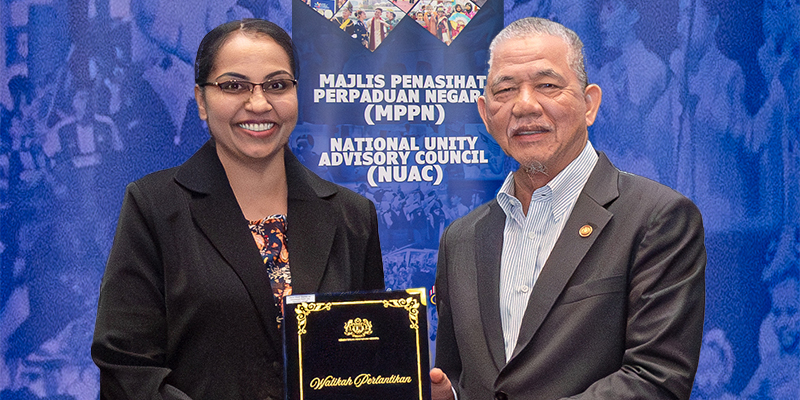
I was recently appointed as a member of the Malaysian Consultative Council of National Unity (MPPN), probably due to my background in interfaith dialogue and academic work. It reflects not only personal growth but also the growing importance of interfaith understanding in strengthening national unity.
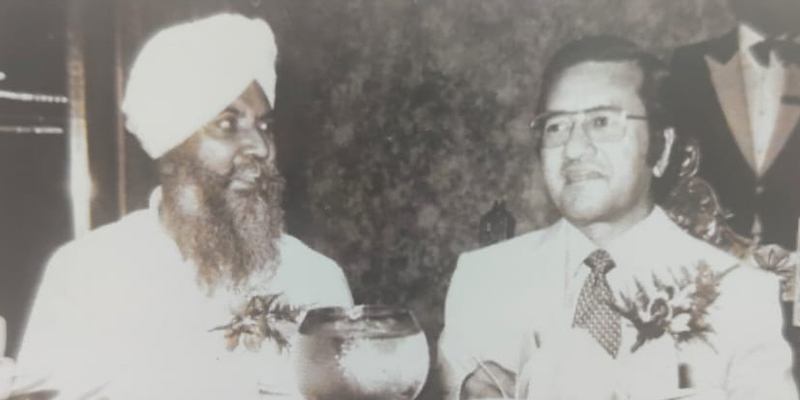
Throughout this journey, I have had the privilege of meeting many inspiring individuals. One of the earliest Sikh interfaith speakers I encountered was the late Jasbir Singh. We collaborated on the “Dialog Harmoni” project on TV Alhijrah. He was humble, supportive and generous in sharing both his knowledge and time. He also assisted me by connecting me with Sikh youth respondents for my research, always willing to help without hesitation. What stood out most about him was his quiet strength and sincerity. He carried himself with humility yet his commitment to interfaith work and the Sikh community was deeply evident. Occasionally, I would meet him at the Sabha House or the gurdwara and each encounter, no matter how brief, was meaningful. He was always soft-spoken, approachable and genuine in his interactions, making others feel comfortable and valued.
I also had the opportunity to meet the late Sukhindarpal Singh, a lawyer from Penang, during the seminar on the Application of Noble Values in Hinduism, Buddhism, Christianity and Sikhism in 2017 at the Kuala Lumpur Police Headquarters (IPK Kuala Lumpur). We met for the first time yet his friendly and warm nature made it feel as though we had known each other for a long time. He carried himself with ease and sincerity which naturally created a sense of comfort and familiarity in our interaction.
The audience comprised senior Sikh police officers and presenting at IPK Kuala Lumpur itself was initially intimidating for me. However, his sense of humour, coupled with the warm hospitality of the then Kuala Lumpur police chief Amar Singh Ishar Singh helped ease the atmosphere, allowing the session to flow smoothly and meaningfully. He shared thoughtful and insightful perspectives on Sikhism while I spoke on Grishti Jivan and its relevance in today’s context. Although our interactions were not frequent, each meeting left a positive impression. Our exchanges were always marked by mutual respect, openness and a genuine willingness to engage in meaningful dialogue.
HARCHARAN SINGH
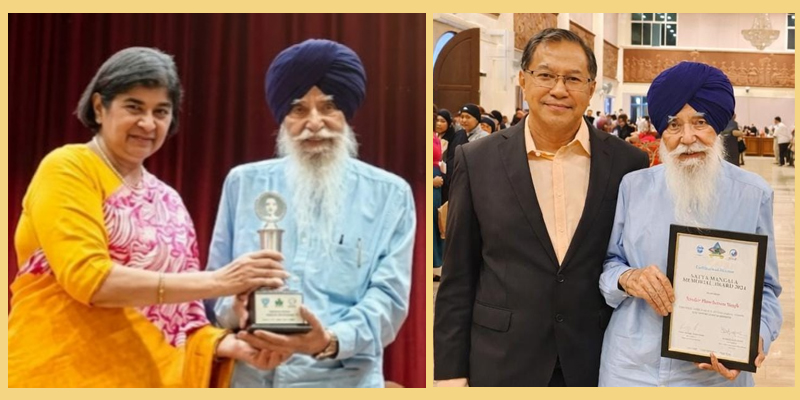
In addition, I later came to learn more about Harcharan Singh, one of the pioneers of interfaith work in Malaysia, who was honoured with the Sathyamangala Memorial Award on 20 July 2024. I had met him several times at Gurdwara Sahib Sentul, although I initially had little knowledge of the depth of his contributions. What continues to impress me is his remarkable memory, despite being 91 years old, he still recognises me and engages in thoughtful conversations.
It has become a personal responsibility for me to acknowledge and share his inspiring journey. Born in 1935 in Penang and shaped by the challenges of World War II and the Partition of India, he overcame adversity through perseverance, resilience and a deep commitment to learning. He mastered multiple languages and served as a court interpreter, dedicating his professional life to public service.
Beyond his professional achievements, Harcharan Singh devoted his life to religious and community service. He played key roles in Sikh organisations at local, national and international levels. He first became active in Sikh religious organisations in the early 1970s and held various leadership positions. He also served as the Sikh representative at the National Unity Department (now Ministry) since 1977, contributing under multiple national administrations. In 1979, he served as President of Sikh Naujawan Sabha Malaysia (SNSM), initiating numerous local and national programmes. He also contributed significantly to the development of Sikh institutions, including Gurdwara Sahib Sentul, where he served as President for 16 years during my early years.
In 1984, he was among the five members of the ad-hoc committee formed to respond to the attack on the Harmandar Sahib (popularly called the Golden Temple) in Amritsar in Panjab, India. In 1988, he was one of the founding members of the Malaysian Gurdwara Council (MGC), serving as its president for three terms. At the global level, he represented Malaysia in the Global Sikh Council (GSC), further strengthening Sikh representation internationally. He was also actively involved in various national and international interfaith programmes and was a founding member of MCCBCHS, which later became MCCBCHST [Malaysian Consultative Council of Buddhism, Christianity, Hinduism, Sikhism and Taoism] with the inclusion of Taoism. He went on to serve as its president for two terms.
His involvement in interfaith work spans over five decades, reflecting a lifelong dedication to fostering peace, understanding and cooperation among different faith communities. His life exemplifies core Sikh values such as Chardi Kala (eternal optimism) and Sarbat da Bhala (welfare of all). These principles resonate deeply within interfaith engagement, where the goal extends beyond coexistence towards meaningful harmony and collective well-being.
Looking back on this journey, interfaith work has taught me invaluable lessons: to listen without prejudice, to speak without arrogance, to respect differences and to appreciate shared human values. It is a space where faith is not diluted but deepened and where one’s own beliefs are strengthened through sincere engagement with others. Ultimately, interfaith dialogue, when approached with sincerity and grounded in values such as those found in Sikhism, becomes a powerful bridge. It connects communities, nurtures mutual respect and contributes to a more peaceful, inclusive and united society.
(Check the comments for the article at Asia Samachar Facebook and Instagram)

Associate Professor Dr. Charanjit Kaur is an expert in cultural anthropology, with a special focus on the Sikh minority community in Malaysia. Her work explores themes such as religious-cultural conflict, gender identity, and social behavior.
RELATED STORY:
Faith, Culture and Clarity: A Sikh Perspective on Diwali in Malaysia (Asia Samachar, 21 Oct 2025)
ASIA SAMACHAR is an online newspaper for Sikhs / Punjabis in Southeast Asia and beyond. You can leave your comments at our website, Facebook, Twitter, and Instagram. We will delete comments we deem offensive or potentially libelous. You can reach us via WhatsApp +6017-335-1399 or email: asia.samachar@gmail.com. For obituary announcements, click here