



















By Asia Samachar | BRITAIN |
When it comes to mental health, the British Panjabi may not pay much heed towards it. In fact, one organisation dabbling in the area found that the community does not generally take mental health seriously partly due to the lack of culturally sensitive relevant health promotion.
But a small band is trying to make a difference. Called Taraki, the group believe they been able to put mental health on the radar of Panjabis in the UK.
“By speaking fearlessly about these topics we have shown that mental health is an integral part of our lives,” Shuranjeet Singh tells Asia Samachar in an email interview.
Shuranjeet founded Taraki in October 2017 after his personal experiences with mental health challenges as a student. He felt incredibly lucky as he was supported through his struggles by his friends. However, he observed that many facing similar challenges within Punjabi communities were unable to access adequate support.
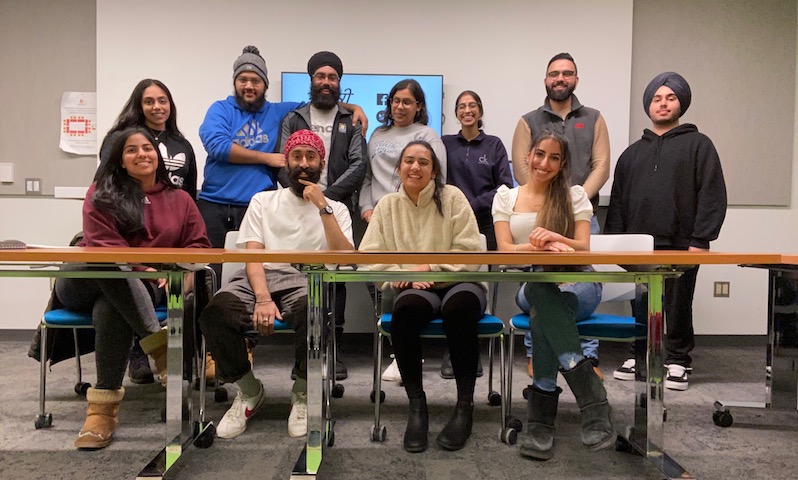
Todate, Shuranjeet said Taraki has a team of 12 volunteers who come from a range of different professions, backgrounds and experiences, contributing to what makes Taraki great through compassionate and conscientious approaches to mental health.
The word taraki is found in Punjabi, Urdu and Hindi. As a verb, it means to progress — movement to an improved or more developed state.
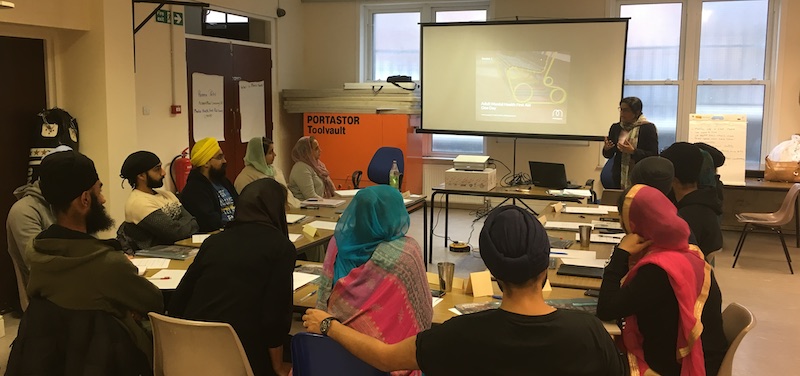
Here are excerpts from the interview with Shuranjeet.
What are the main projects Taraki is carrying out at the moment?
We have a few main projects we have been supporting. Since the beginning of the pandemic our work has aimed to respond to the challenges presented by COVID-19. First and foremost, we did a research project to best understand how COVID was impacting the mental health of Punjabi communities, following this we developed programming based on what issues and gaps we saw.
We have been having monthly virtual discussions groups for Punjabi men, Punjabi women and Punjabi LGBTQ+ peoples to ensure that our communities have the space to talk about tough topics, learn from each other, build connections and stay on top of their wellbeing during such challenging times.
Furthermore, we are currently running sessions directly aimed at students and their well-being. Students have exams and a lot of other things to make their lives difficult at the moment and it is important that they have the space to talk openly, share, listen, and grow.
Finally, we are also supporting work around mental health and faith. Faith has been an important part of how Punjabi communities have supported themselves during the pandemic, so it’s integral that we’ve been able to develop opportunities to learn more about mental health and faith for our audiences – you can read a short report about these programmes here.
What is the one biggest difference that Taraki has brought about?
Judging by how we have engaged with our audiences, the biggest difference we have made is to put mental health on the radar of more people in Punjabi communities. By speaking fearlessly about these topics we have shown that mental health is an integral part of our lives. People experiencing mental health challenges should not be pushed away but should be able to receive support however they see best. Our social support work has offered spaces for people to listen, learn and grow together, our awareness work has started important conversations. Overall, we are working with Punjabi communities to reshape approaches to mental health from most basic awareness, to education, social supports, and even research.
What have you learnt about the Panjabi community when it comes to mental health?
I have learnt that despite the many obstacles we face in relation to mental health, we have so many strengths that can help us support ourselves and one another. Mental health is generally not taken as seriously within Punjabi communities partly due to a lack of effective services and relevant health promotion which is rarely culturally sensitive. I have learnt that families can be an amazing source of support for some, but also a point of difficulty for others, I have learnt that we have amazing teachings and learnings within our faith traditions, but that people can experience exclusion from faith-based communities. We are a complex and hugely diverse group and it’s important to recognise that even though we face many obstacles, we also have so many strengths which can help us to emerge stronger, together.
Can you share a few examples of mental health cases, without, of course, naming anyone?
The COVID-19 pandemic has highlighted the many mental health challenges that our communities can experience. For students, the shift to working from home has meant a huge change in routine, isolation from friends, and a lack of supports usually found in school and university. We are social creatures and being disconnected from those close to us has a huge impact. Some students are experiencing more feelings of anxiety and low-mood, and others are not able to access support in the same way they did before. This can lead to difficulties sleeping, a lack of motivation, and further challenges with completing studies.
Our research also showed that the most frequent challenges our audiences were experiencing concerned fear of the future, occasional low mood, and difficulty sleeping. On their own these challenges may appear small but if they last for a longer time they risk having a bigger impact on the individual and those close to them. Mental health challenges can impact anyone so it’s important to remember that we can all experience difficulties. When we speak with others we should do so with empathy and compassion, we never know what they are going through even if they appear OK on the outside.

Personally, what are you doing now?
I am just finishing my masters in Health Policy, Management and Evaluation from the University of Toronto. I recently moved back to the UK and I’m preparing for life after my masters! I run Taraki as well as conduct consulting work in mental health research. I’m looking forward to a nice break over the summer, I hope!
Do tell us a little bit about your family background.
I am a third generation migrant, so my grandparents moved to the UK in the late 1960s. I was born and raised in Birmingham and that is also where I currently reside.
RELATED STORY:
Feel pressured to be happy all the time? You’re not alone! (Asia Samachar, 4 May 2021)
Birmingham lad works to remove mental health stigma in Punjabi community (Asia Samachar, 6 May 2019)
ASIA SAMACHAR is an online newspaper for Sikhs / Punjabis in Southeast Asia and beyond. Facebook | WhatsApp +6017-335-1399 | Email: editor@asiasamachar.com | Twitter | Instagram | Obituary announcements, click here |