



















By Baljit Ghuman | HuffPost | United States |
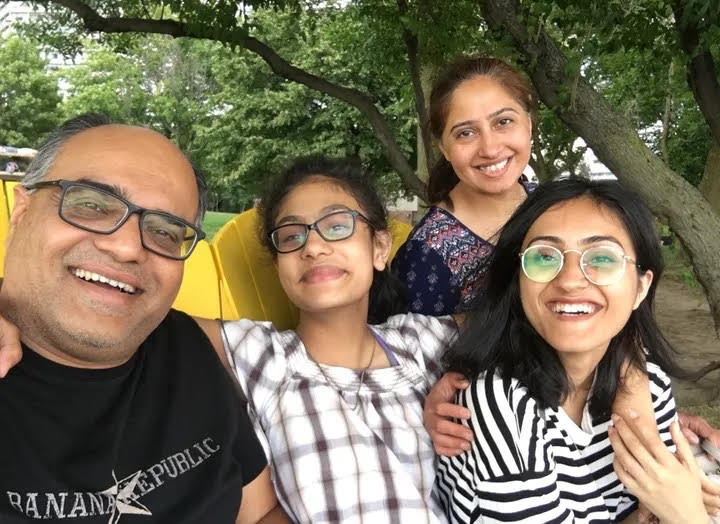
For a long time, our daughter’s lack of understanding about personal space caused my wife and I extreme anxiety. Her apparent tantrums at malls and family gatherings made it difficult for us to go out into public. We became accustomed to receiving judgmental stares from other parents. My wife remembers parents yelling at her when our daughter veered too close to their kids or acted pushy on the playground. The best she could do is apologize and leave the park as soon as she could.
I admit, I did not take our daughter’s outbursts very well. But my wife is the stronger one — she never once gave up on taking my daughter into the public, and through her resilient efforts we began to see improvements in her social interactions.
Around 2014, at the urging of staff at our daughter’s school, we sought help from the medical community to help identify our daughter’s behaviour. In a Mississauga hospital room, a group of experts diagnosed our daughter with Autism Spectrum Syndrome (ASD) and Attention Deficit Hyperactivity Disorder (ADHD). Unaware of the discussion, our tall and beautiful seven-year-old daughter continued to play with toys in the children’s area, as the medical professionals eyed us, possibly trying to read our reactions.
My wife and I bottled our emotions and blankly nodded in agreement with the diagnosis. We made it clear that we did not plan to put our daughter on any ADHD medications, as her school’s administrators had suggested; the doctor was on board. But inside, our hearts were breaking. We silently prepared for the fact that our child’s diagnosis could mean a lifetime of struggle. A new source of anxiety welled up: how would we navigate our South Asian community as parents of a special-needs child?
Our community in Ontario’s Peel Region is demographically Punjabi Sikh. Disability is a taboo topic not openly discussed in our culture, often linked to feelings of shame. There is a lack of awareness around autism, mental health and disabilities. Many elders in our community would explain away our daughter’s behaviour as the product of “bad parenting” or being “spoiled;” others would simply deny that our daughter’s condition exists. I had little success explaining her medical condition to them, and was frustrated by their misplaced pity. As parents, it made us feel helpless and isolated.
Guided by the founding principle of the Sikh faith — “seva,” or selfless service — we were inspired to bring the rest of our community into the conversation. In April 2019, we launched the Sikhs for Autism awareness campaign on social and local ethnic media. Sikh parents of special-needs children started reaching out, surprised and thankful to hear the topic of autism discussed in their native language. I could hear the relief in their voices. As a parent of an autistic child I know what they felt: a sense of validation, an acknowledgement that they are not alone, and hope that their children will be accepted for who they are.
Read the full story, ‘Autism Is Taboo In Our Culture. Our Daughter’s Diagnosis Made Us Face It’ (HuffPost, 29 Jan 2021), here.
RELATED STORY:
At 15, Heeren Kaur Gill knew psychology was her thing (Asia Samachar, 12 Jan 2022)
ASIA SAMACHAR is an online newspaper for Sikhs / Punjabis in Southeast Asia and beyond.Facebook | WhatsApp +6017-335-1399 | Email: asia.samachar@gmail.com | Twitter | Instagram | Obituary announcements, click here