



















By Jagdesh Singh | Opinion |
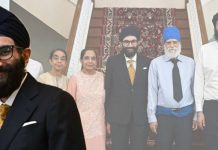
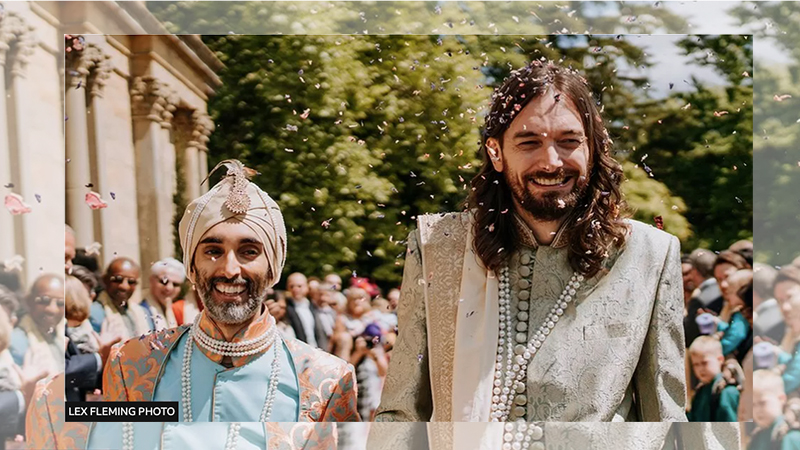
A picture paints a thousand words, a statement ever more true than before, where we’re constantly bombarded with countless images and videos on social media today. But we’ll never know what’s behind those wide smiles or laughter in those images emitting from the small screens slightly larger than the palm of our hands. A particular image that caught my eye was of a gay couple’s wedding, one of them adorning a beautiful turban crowning his bearded face. The smiles and laughter in that image looked sincere, of happiness and of joy. It was an image on a news article published on the BBC. Intrigued, I quickly read through it to understand the context and story behind the image. The story was interesting, of hope and of awareness within our community, particularly in the UK. You can read more of it here.
But the story was also a reminder that many of us still view the LGBTQ subset, within our own Punjabi community, under very conservative lens. Punjabis are predominantly Sikhs in Punjab, India, with a whole lot of cultural roots stemming from northern India, intertwined with old Hindu conservative ideas like the caste systems and dowry, just to name a couple. And so the reaction towards a full fledged looking Punjabi Sikh gay publicly coming out, and coming out in his own wedding with a white husband, was pretty typical of conservatives that don’t really understand nor acknowledge why it took this man so much courage to explain his marriage to his world.
Now, don’t get me wrong. I’m not here to preach, explain and even justify my opinion about the LGBTQ community in general. Nevertheless, I’ll share my opinion.
Personally, it has been a journey in understanding my acceptance of these humans (even this sentence can sound pretty judgmental while I sit on my high and mighty chair). But the crux of it all is that they’re really as human as we are. Humans who have feelings, dreams and hopes just like any of us.
As Punjabis, especially the Punjabi diaspora living in countries far away from Punjab India, we all know quite a bit about living as a minority, many times as outsiders that don’t really belong. More often than not, we’ve had to fight for equality and for our voices to be heard. Even in Mother India, for centuries we’ve been struggling to maintain our identity as a people, to practice our way of life, and to maintain the dignity of being recognized as an equal to any other human in this world. We’re even proud of the stories our forefathers have told us, of our struggles and battles of bravery fighting inequality. When everybody else looked at the fairer sex as being the weaker, we were the most progressive, elevating our sisters to being as strong, brave and smart as our brothers and sons. So, we do know a thing or two about equality, you know.
We’ve broken the barriers for equality between castes, between men and women. We’ve taken our Gurus’ teachings and further broken down barriers between races after venturing out from India as a diaspora. Our kirpans that we wear are symbols to remind us that we stand up to tyranny. Any form of tyranny, protecting the weak and downtrodden, and most importantly protecting against inequality. Embedded into our consciousness from our early childhood is the notion that every human, no matter form or color, is Waheguru’s child. You see, equality is a big deal for us Sikhs.
Even on the battlefield, we have exhibited our humanity by feeding water to injured soldiers that were supposed to kill us. You might say we’re a tad over romantic with ourselves, and some of these beliefs aren’t practical in today’s world. I’d say we need this humane romanticism more than ever today because cynicism about our lives is at an all time high. We all need a little more love from each other.
Lesbians, gays, bisexuals, transgenders and queers don’t suddenly decide or change from being heterosexuals in one day. I learned this the hard way when my best friend came out to me. I trusted him all my life, and was shocked 10 years ago when he came out of the closet, to learn of the pain and struggle he had to go through, hiding himself from the people he loved and respected. He tried everything to ‘be normal’. But he knew from his early childhood that he was different from his brothers and his friends. He was frustrated that he could never feel attracted to a girl, and sometimes forced himself to get attracted to a girl who displayed some affection towards him. He knew nobody around him, his family and his friends, who would understand what he was going through. He knew if he came out as a gay, he would be treated almost as a pariah within his close circle of family and friends. He knew he won’t be equal to his family and friends. Nobody would have afforded him equality as a brother and a friend. He was probably right as well.
He finally came out post the AIDS traumatic era in the 80s and 90s, when society seemed a bit more accepting in the early 2010s. I admit that I would’ve been mean to him, and would’ve ostracized him if I found out in the early 2000s. I was a bigot, and would’ve been toxic to him. As he was my best friend, almost a brother to me, I was forced to recalibrate the way I viewed and understood gays. Now, this is the great thing about fundamental beliefs. These beliefs make sense when you boil it down to the basics. My best friend was a human, first and foremost. He was a child of Waheguru. He was still the loving, caring, smart man that he was before coming out. He wasn’t suddenly this lustful freak who lost all senses of sexuality and wanted to experiment more variety to satiate his sexual hunger. He was never this. He was still my best friend. My fundamental belief of equality was ever relevant as it was the day I learned about it.
The pain and silent suffering he went through, I really hope and pray, won’t be experienced by the people that I hold dear to my heart, my children, my nephews and nieces. With a little love, I will accept them as they’re are, born as free willed humans, equal as one family.
All we need is a little more love for each other. A little less of hate to those who aren’t like us in some ways or another.

Jagdesh Singh, a Kuala Lumpur-based executive with a US multinational company, is a father of three girls who are as opinionated as their mother
* This is the opinion of the writer, organisation or publication and does not necessarily represent the views of Asia Samachar.
RELATED STORY:
Jasvir Singh: ‘I’m a devout Sikh – and married to a man’ – BBC (Asia Samachar, 5 Feb 2023)
ASIA SAMACHAR is an online newspaper for Sikhs / Punjabis in Southeast Asia and beyond. When you leave a comment at the bottom of this article, it takes time to appear as it is moderated by human being. Unless it is offensive or libelous, it should appear. You can also comment at Facebook, Twitter, and Instagram. You can reach us via WhatsApp +6017-335-1399 or email: asia.samachar@gmail.com. For obituary announcements, click here.





I think these dears have now added an ‘A’ and an ‘I’ to the list and a plus sign after that. It is LGBTQAI+ now… I think. I hope they leave some letters of the alphabet to us straight guys and gals! I am still trying to work out what all these letters mean!
This gentle middle sex has always been there. I think they make too big a ‘song-n-dance’ about it now.
Minority groups, all kinds have always been persecuted and I guess will keep on being persecuted. It is the duty of all human beings to show acceptance and love towards them but folks – remain gentle. Love to all.
Comments are closed.