

















By Gurnam Singh | Opinion |
Our physical appearance is often the first thing people notice about us, yet for many Sikhs, the turban, uncut hair and beard are far more than outward symbols. They represent a deep spiritual attachment with the Guru, an expression of dignity and a visible declaration of faith.
Recently, I undertook a small personal experiment that revealed just how deeply these symbols have become part of who I am.
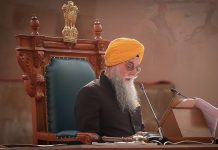
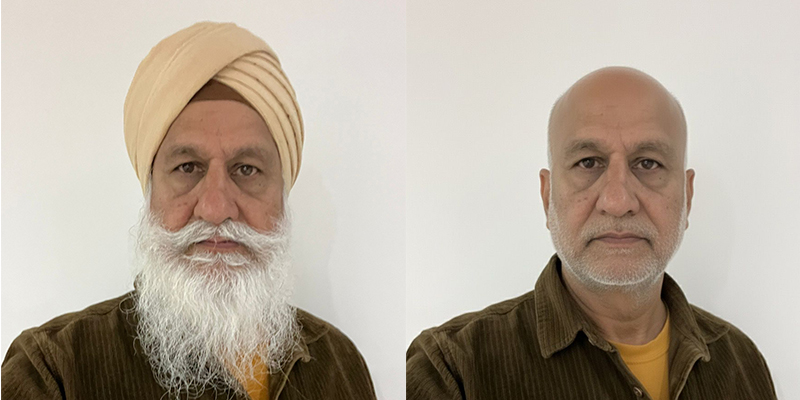
Above are two images of me. One shows my authentic self with turban, uncut hair and beard and the other, generated by artificial intelligence, depicting me without them. Out of simple curiosity, I wanted to see how I might react to being clean-shaven, without actually being ‘clean-shaven’!
Though the facial features in the AI-generated image are technically identical, I was shocked when I first saw it. I simply could not recognise myself. The person in that image felt alien; as though the essence of who I am had been stripped away. That moment of discomfort revealed something profound: just how deeply my kesh (uncut hair) has become intertwined with my identity.
When I showed the two images to my wife of 40 years, Manjit, her reaction mirrored my own. She too felt a sense of dissonance, saying she could not associate that clean-shaven face with the person she has known and loved for decades. That response confirmed for me that my Sikh identity, symbolised by the turban and beard, is not merely about appearance, but a reflection of something inward, spiritual and deeply personal.
My Journey into Sikh Identity
To understand why my turban, uncut hair and beard have played such an important role in shaping who I am today, I must share a little of my backstory.
I am now 66 years old. I have kept my kesh since the age of 18, when I made the conscious decision to embrace the full Sikh way of life and take initiation into the Khalsa through the ceremony known as ‘Khande di Pahul’.
At first, the transition was not easy. Most of my friends were clean-shaven, and adopting the turban and beard in the UK during the late 1970s came with its challenges. I encountered a new form of racial prejudice that I had not experienced before. Suddenly, my identity was not just about being South Asian or Punjabi; I was visibly Sikh, a ‘rag head’, and that visibility carried social consequences.
Yet, as my friendship circles changed and my inner resolve strengthened, I grew increasingly comfortable and confident in my new identity. I also found those around me beginning to give me the kind of respect that I didn’t have previously; it was as if I was now being taken seriously by both relatives and old friends.
Over time, what had once made me feel different or excluded became a powerful source of self-assurance and pride.
From Inferiority to Empowerment
Growing up in a Britain marked by casual racism, I had internalised a sense of inferiority. I carried feelings of self-doubt and self-loathing that affected my academic performance and self-esteem. But when I entered university at 18, newly committed to my Sikh identity, something remarkable happened.
Contrary to the fears of some friends and relatives, who were worried that adopting a full Sikh appearance might make me withdrawn or isolated, I found myself expanding my social and intellectual horizons. My turban and beard became symbols of discipline, resilience and moral clarity. Rather than holding me back, they propelled me forward.
Within just five years of keeping my turban and kesh, I had become proficient in Gurmukhi, learnt Raag Kirtan and Tabla to a level where I could perform in the Gurdwara, and even trained in Gatka, the Sikh martial art. I went on to teach others, establishing gatka akharas in three different cities.
Academically, too, my trajectory transformed. From struggling to pass my O Levels and A Levels, I went on to complete my undergraduate studies, two post graduate professional qualifications in Social Work and Training Management, and a Master of Science degree. By my early-thirties, I had embarked on a PhD at the University of Warwick and a full time academic career.
Looking back, I have no doubt that embracing a ‘full’ Sikh identity played a pivotal role in this transformation. It gave me the confidence, discipline and spiritual grounding to excel and flourish — not in spite of my distinct identity, but because of it.
Closing Reflections
The above reflections are personal and in no way intended to imply that those Sikhs who have chosen to cut their hair are in any way inferior. Indeed, my journey into and through Sikhi has taught me not to judge others on the basis of appearance.
However, for me and my own self-identity, my turban and beard are not simply symbols of faith or heritage; they are integral parts of my being. They connect me to my history, my community, and my sense of purpose.
The AI image experiment was a small but profound reminder of that truth. It revealed that identity is not just about how others see us; it’s about how we see ourselves, and what we come to embody through our lived experiences.
In a world increasingly obsessed with appearance and conformity, I am grateful for the gift of kesh, which is a reminder of authenticity, humility, and courage. For me, keeping my turban and beard is not just a matter of tradition; it is a declaration of who I am and what I stand for.

Gurnam Singh is an academic activist dedicated to human rights, liberty, equality, social and environmental justice. He is an Associate Professor of Sociology at University of Warwick, UK. He can be contacted at Gurnam.singh.1@warwick.ac.uk
* This is the opinion of the writer and does not necessarily represent the views of Asia Samachar.
RELATED STORY:
The Demise of the Akali Dal and the Badal Dynasty: What Next for the Panth? (Asia Samachar, 5 Aug 2024)
ASIA SAMACHAR is an online newspaper for Sikhs / Punjabis in Southeast Asia and beyond. You can leave your comments at our website, Facebook, Twitter, and Instagram. We will delete comments we deem offensive or potentially libelous. You can reach us via WhatsApp +6017-335-1399 or email: asia.samachar@gmail.com. For obituary announcements, click here




R4spected Gurnam Singh ji, why not focus on the fundamental doctrine of Sikhi: To obey the command of Ekankar i.e Creator of this universe. Creator is perfect and His creation is also perfect : ( ggs 1349)
ਮਾਟੀ ਏਕ ਅਨੇਕ ਭਾਂਤਿ ਕਰਿ
ਸਾਜੀ ਸਾਜਨਹਾਰੈ ॥
ਨਾ ਕਛੁ ਪੋਚ ਮਾਟੀ ਕੇ ਭਾਂਡੇ
ਨਾ ਕਛੁ ਪੋਚ ਕੁੰਭਾਰੈ ॥੨॥
We just obey His command and don’t distort any part of our body including our hairs. If some body part is not needed, the Creator Himself remove it or convert it into a vestigial organ. You can give example of nictitating membrane of human eye and vermiform appendix which works in birds and some animals respectively but have become vestigial organ in human body.
Much appreciated Dr Gurnam Singh ji!
To quote you, “….my turban and beard are not simply symbols of faith or heritage; they are integral parts of my being. They connect me to my history, my community, and my sense of purpose.” Memorable words indeed!!
I owe much too much to my Sikh ID during decades of changing race relations in the UK (1960-…)
Comments are closed.