




















By Manjit Singh | Thailand |
Sikhs have been punching way beyond their weight in almost every profession in Malaysia be it civil service, legal, police and armed forces, medical, educational, political, corporate leadership and sports. We have had the distinguished top Sikh cop Commissioner Amar Singh making the headlines and not forgetting Ajit Singh who served as Ambassador and Secretary General Association of Southeast Asian Nations (ASEAN). Our youths can only aspire to what they know exists out there. Kudos to Asia Samachar for profiling the prominent Sikhs who have broken the glass ceiling for the community at the national level, as these evergreen heroes serve as role models and inspire the young of our community.
It would appear that there are three broad areas i.e. politics, bureaucracy , business – where Sikhs must have a presence to assure some visibility of the Sikh identity. Rapid economic, technological, and social changes are creating a world that is ever more interconnected. Looking forward, this article aims to motivate Sikh youth to explore international careers specifically within the United Nations (UN) agencies, addressing an under-representation and also as a strategic means to enhance the global profile of the Sikhs, hopefully raising social awareness and fostering positive impact for the wider Sikh community which would complement the current high impact and visibility that Sikhs in Malaysia already have locally.Embarking and succeeding in an international career can be a challenge though.
Why go international (UN)?
Starting with a simple analogy, in the Malaysian context Sikhs are naturally used to being a minority in national ‘sandbox’ environments vis-à-vis schools, work environments, housing estates i.e. the only keshadhari person in a meeting, the only dastaar or chunni in the parade/crowd/office, the only one sporting a ‘jura’, long haired braid or the kara or patka on the sports field /class, the only Sikh family in our neighbourhood ‘taman’ etc. With our visible and unique outward identity including articles of faith we are naturally differentiated and form a distinct outlook. Thus from young we grow up with rich personal and communal experiences and confidence , and are naturally adaptable and natural fits to thrive in an international and multi-cultural UN environment where diversity is embraced.
As the UN also encompasses numerous specialised agencies such as FAO, ILO, ICAO, ICC, IMF, UNESCO, UNHCR and UNICEF, to name a few, there is an opportunity for our doctors, lawyers, educators, scientists, engineers, business and finance graduates, human rights proponents and other professionals, to pursue a career within their field of expertise at the international level. It may be worthwhile noting that there are approximately 21 UN entities with regional offices in Thailand.
Does UN work suit you?
Here are some self-assessment questions that will help one to understand whether UN work suits you:
• Do you wish to fulfil higher noble causes such as contributing to peace, standards setting, economic development, technical assistance, global sustainability, human rights, international cooperation and collaboration?
• Does making a difference in a complex world (e.g. navigating geo-politics) motivate you?
• Do you have the zeal to be a part of a bigger purpose in the service of humanity?
• Do you wish to explore your untapped talent or full professional ‘potential’ energy ?
• Are you the type of person who strives for challenges, willing to travel and work anywhere ?
• Do you thrive in an environment that is multi-cultural and function at your best through the efforts of teams of different people or internationally dispersed teams ?
If you answered “yes” to most of these questions, you are a natural fit for UN work.
Is a UN job challenging?
First there is the challenge of getting hired. The reason UN jobs are competitive are due to language requirements, strong international competition, specific needs for skills, experience and competencies, higher-level education qualifications and there is a need to navigate through complex UN recruitment process that may include comprehensive form-filling, reference and academic checks, technical written tests and competency based interviews. Most applications nowadays are screened via automated systems (like Inspira) where a standard, non-tailored CV will rarely pass the initial screening.
While the UN recruits as diversely as possible, as long as you are dynamic and adaptable person, who can think creatively, are proactive and flexible, it is generally a fair and transparent merit-based competition of the best.
Once selected, there are of course the usual on-the-job and structural challenges. The UN organizations are known for slow decision-making, extensive paperwork, and complex, hierarchical structures. Work can be high stress and internal politics come into play where there is the need to balance the interests of many member states, which can create complex, political, and sometimes inefficient work environments. To advance your career one may be required to move away from comfort zones to different, sometimes remote duty stations.
What UN work offers?
On the plus side, the UN and its agencies also offer:
• Reasonably attractive remuneration
• A family-friendly work environment that emphasizes work- life balance, safety net family health insurance, participation in a pension plan, professional development and learning programs, education grants for dependents, home leave benefits etc.
• Policies and protocols that offer protection from harassment, abuse of authority and prohibition from discrimination
• An exciting place to do multi-disciplinary work andmeet and work with people from all over the world. While work missions require strict measurable outcomes be accomplished, each country mission does offer unique cultural and fascinating experiences.
• Work offers personal and professional fulfilment i.e. achievement of life goals which are important to an individual.
• Courtesy privileges i.e. UN staff members carry the United Nations laissez-passer (UNLP ), some diplomatic immunities and privileges normally apply which may include access to diplomatic plates and duty-free car purchases.
How to get started in a UN career ?
Increasingly, starting a career with the UN requires strategic preparation due to high competition, which includes:
• Being mindful of, doing research and consciously developing the personality traits and skills needed to succeed in an international role.
• Research /Browse through the UN and its agencies websites. Note that the UN is a “family” of organizations not just one entity, so explore different agency websites in addition to the main UN careers portal.
• Internship – the program is not paid generally, but it’s a great way to network and make extremely useful acquaintances and get to know the work of the UN from the inside.
• Consultants – short service assignments to fulfil specific, temporary tasks, positions for professionals with work experience.
• Volunteering for a UN Young Professionals Programme – provides a unique professional development opportunity to youths who are embarking on their career. Selected candidates will usually work under the mentorship of a subject-matter expert.
• Regular Staff openings – Professionals or regular posts assumes that you have several years of experience, postgraduate qualifications and knowledge of languagesis an advantage, specialization or a specific educational background and area of expertise can be desirable.
Concluding Remarks:
To summarise, generating interest among Sikh youth for international careers in UN agencies requires a combination of mentorship and career guidance, targeted skill development, strategic advocacy for representation including supporting participation as delegates to Model UN simulations, and possibly framing UN Work as global ‘seva’ or emphasizing that working in UN agencies aligns very well with the core Sikh principle of Sarbat da Bhala.
Interestingly, the core values of the United Nations — adhering to the high standards of Integrity, Professionalism, Respect for Diversity, Ethical conduct, Gender equality …rhyme very well with the teachings of Sikhi!
*** United Nations Children’s Fund (UNICEF), United Nations Development Fund for Women (UNIFEM), United Nations Development Programme (UNDP), United Nations Environment Programme (UNEP), United Nations High Commissioner for Refugees (UNHCR), United Nations Office on Drugs and Crime (UNODC), United Nations Population Fund (UNFPA), Joint United Nations Programme on HIV/AIDS (UNAIDS), International Labour Organization (ILO), Food and Agriculture Organization of the United Nations (FAO), United Nations Educational, Scientific and Cultural Organization (UNESCO), World Health Organization (WHO), World Bank, International Civil Aviation Organization (ICAO), Universal Postal Union (UPU) and International Telecommunication Union (ITU).
SEE COMMENTS AT ASIA SAMACHAR FACEBOOK AND INSTAGRAM

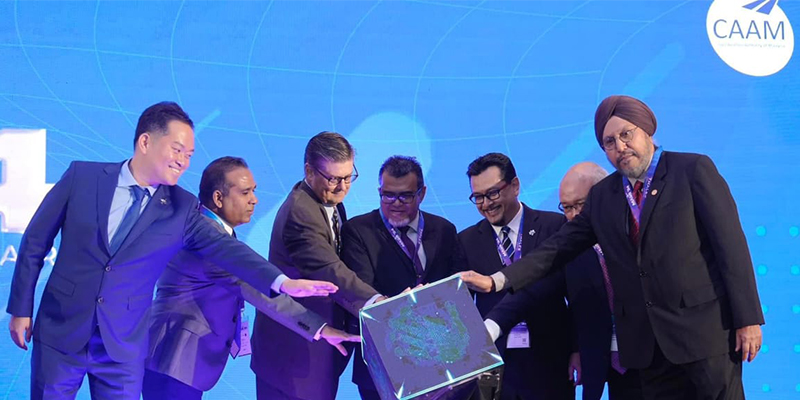
Manjit Singh, PhD who served with Malaysia’s Department of Civil Aviation is a seasoned Malaysian aviation professional, who moved on from the comfort of the Malaysian civil service to serve as the Deputy Regional Director of the ICAO Asia Pacific Office, a specialised agency of the United Nations, in Bangkok, Thailand . For some guidance or a deep-dive conversation on how to navigate the complexities of the UN recruitment processes, you may wish to contact the author via email mjits@hotmail.com .
RELATED STORY:
Rajpal moves to Jakarta, continues family healthcare tradition (Asia Samachar, 28 Jan 2024)
ASIA SAMACHAR is an online newspaper for Sikhs / Punjabis in Southeast Asia and beyond. You can leave your comments at our website, Facebook, Twitter, and Instagram. We will delete comments we deem offensive or potentially libelous. You can reach us via WhatsApp +6017-335-1399 or email: asia.samachar@gmail.com. For obituary announcements, click here





I have serve as a peacekeeper during my service in PDRM 2010-11 and have retired don’t mind serving any duties of UN in Malaysia UN Tq
Comments are closed.