



















By Amarjeet Singh @ AJ | Opinion |
Another question worth reflecting upon deeply is this: Why did the Melaka Yaadgiri Semagam grow into what it is today?
After all, Sant Baba Sohan Singh Ji also served in other places, including Ipoh, where Akhand Paths and remembrance programmes are still held in his honour. Yet Melaka eventually evolved into something much larger, drawing thousands from across Malaysia and overseas year after year.
Why?
Was it only because of stalls and crowds? Or was it because over time people found spiritual connection, familiarity, belonging, memories, friendships, seva, and identity within that gathering?
Perhaps the answer lies somewhere in between. And to understand this properly, we must stop looking only at Melaka in isolation. We need to step back and observe Sikh gatherings globally.
When we travel to Sri Harmandir Sahib in Amritsar, what do we see surrounding it? Shops. Hotels. Restaurants. Souvenir stalls. Religious merchandise. Books. Music stores. Food vendors. Transport services. Tourism activity. Crowds from across the world.
Travel further to Tarn Taran Sahib, Bangla Sahib in Delhi, Anandpur Sahib during Hola Mohalla, Hazur Sahib, Patna Sahib, or even major Nagar Kirtans across Canada, the UK, the United States, Australia, and Southeast Asia — and we witness similar realities.
Large Sikh gatherings today naturally create wider ecosystems around them.
During major Nagar Kirtans globally: roads close, thousands gather, businesses operate, sponsors appear, stages are built, jathas are invited, langgar is distributed massively, social media coverage expands, and entire cities become involved.
Look at Vaisakhi Nagar Kirtans in Surrey, Vancouver, Southall in London, Yuba City in California, Melbourne, Singapore, or even Kuala Lumpur itself.
Entire communities move together. Families reunite. Friends reconnect after years apart. Children experience Sikh identity publicly. Youth volunteer in seva. Businesses support programmes. Sangat travels from different countries. Hotels fill up. Local economies benefit.
PART 1: Yaadgar Semagam or Mela?
PART 2: The bigger picture behind the Melaka Yaadgiri Semagam
PART 3: Beyond Melaka: Understanding the bigger reality around Sikh gatherings
Does that automatically make everything wrong? Or does it simply reflect how communities evolve when gatherings become larger over generations?
These are not simple questions.
Even in Malaysia, when major Sikh programmes take place, hotels become occupied, restaurants benefit, traders set up stalls, and businesses see opportunity. Sikh entrepreneurs sell books, clothing, religious items, food, music, and cultural products. Families reunite. Old school friends meet after years. Children who rarely enter a Gurdwara environment suddenly spend days surrounded by sangat, seva, Gurbani, and Sikh identity.
And perhaps this is another reality many overlook.
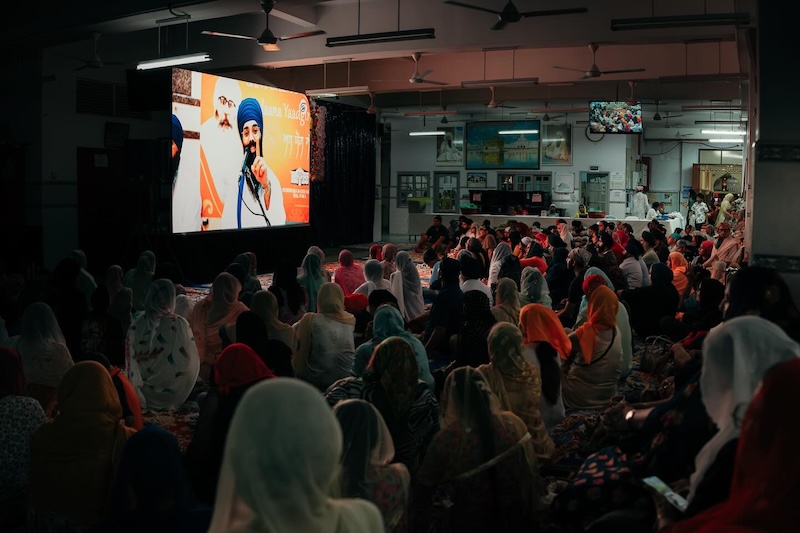
The Melaka Semagam is no longer only a local programme. For many Sikhs across Southeast Asia, it has become one of the largest annual Sikh gatherings in the region.
Families and relatives arrive from Australia, New Zealand, Singapore, Thailand, Indonesia, England, the United States, and many other places. Some return yearly almost like a spiritual and emotional reunion point for the wider Sikh community.
Can we completely dismiss all this as meaningless?
At the same time, another difficult question emerges.
Where exactly is the line between spiritual ecosystem and commercial overgrowth?
Because while growth can strengthen a community, unchecked growth can also slowly shift focus away from the very spiritual centre that gave birth to the gathering in the first place.
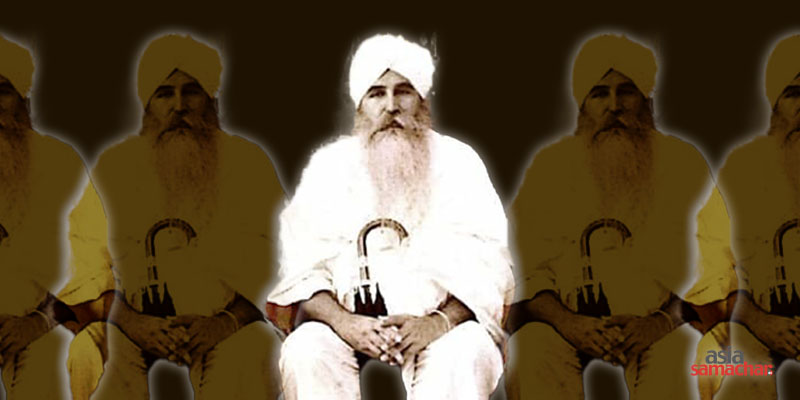
FOR MORE STORIES ON BABA SOHAN SINGH OF MALACCA, CLICK HERE
And this is where the Sikh community must think very carefully.
The true centre of every Sikh gathering is not the stage. Not the stalls. Not the crowds. Not the personalities. Not social media visibility. Not prestige. Not entertainment.
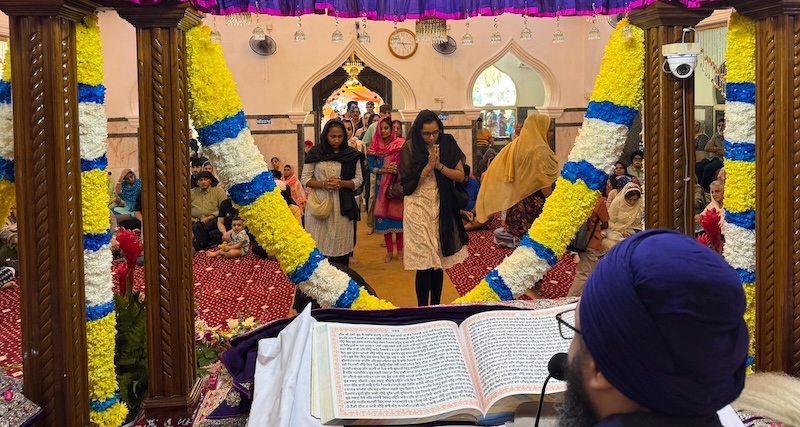
The true centre remains Guru Granth Sahib Ji. Everything else must revolve around that centre respectfully. Without Guru Sahib at the core, even the biggest gathering becomes spiritually empty. This is why maryada, humility, discipline, and respect inside Darbar Sahib can never become secondary matters.
Large gatherings are not the problem.
The danger begins when the surrounding ecosystem becomes more attractive than the spiritual purpose itself.
When people remember the food more than the Gurbani.
When they remember the crowd more than the Katha.
When they remember the entertainment more than the teachings.
When selfies become more important than simran.
When personalities overshadow Guru Sahib.
When social media clips become more important than inner reflection.
That is where reflection becomes necessary.
SEE ALSO: Malacca: Memories of Baba Sohan Singh rings loud
SEE ALSO: Sant Baba Sohan Singh: A Beacon of Compassion
At the same time, we must also be honest enough to ask difficult financial questions.
Today, many major Sikh programmes worldwide spend enormous sums bringing in well-known Kirtan Jathas, speakers, and personalities. Some undoubtedly contribute tremendously towards connecting younger generations to Gurbani through bilingual explanations, modern engagement styles, and spiritually uplifting Katha.
That contribution should be appreciated fairly. Because many youths today understand Gurbani better through these efforts.
But another question must also be asked: How much is too much?
If organising committees spend beyond their means merely to maintain prestige, appearances, or crowd attraction, then are we still protecting the spiritual purpose of the gathering?
If the budget becomes unsustainable…
if debt increases…
if smaller local needs get neglected…
if local Pathis, sewadars, youth programmes, welfare efforts, education funds, or struggling Gurdwaras receive less attention while appearance costs continue rising…
then have we unintentionally defeated the very purpose of seva?
These are uncomfortable but necessary questions. Because Sikh history was never built upon extravagance. It was built upon sacrifice, simplicity, discipline, seva, and truthful living.
At the same time, this should also not become an attack on Kirtan groups or organising committees. Bringing sangat together is essential. Kirtan is essential. Katha is essential. Seva is essential. Explaining Gurbani to younger generations is essential.
Supporting Sikh businesses honestly earning a living is also part of the wider ecosystem.
The challenge is balance.
Can major Semagams continue inviting inspiring Kirtan Jathas while remaining financially responsible? Can budgets be managed wisely without turning spirituality into competition? Can local talent, local Pathis, local youth, and grassroots Gurbani education also be strengthened instead of relying entirely on imported prominence? Can remembrance evolve into sustainable community development rather than only annual expansion?
And maybe the biggest question of all is this: What kind of Sikh gatherings are we building for the next generation?
Gatherings centred around Guru Sahib, Gurbani, seva, humility, education, and transformation? Or gatherings increasingly centred around visibility, personalities, prestige, and social attraction?
Because the answer to that question will shape the future direction of Sikh institutions globally — not only in Melaka, not only in Malaysia, but across the Panth itself.
At the same time, after witnessing the scale of seva, the reconnecting of families, the prayers, the Kirtan, the sangat, and the global Sikh presence surrounding the Melaka Semagam, another reality also becomes very clear:
This gathering has become far bigger than one committee, one town, or one event. It has become part of a living Sikh ecosystem connecting people across generations and across the world.
And despite all differing opinions, the greater responsibility now is not to fight endlessly among ourselves, but to help each other grow.
Grow through Gurbani.
Grow through seva.
Grow through humility.
Grow through understanding.
Grow through honest reflection.
Grow through supporting one another.
Grow through preserving Gurmat values while adapting responsibly to modern realities.
SEE ALSO: Malacca: Not barsi, but yaadgar semagam
Because if we truly believe in the spirit of “Raj Karega Khalsa,” then growth cannot only mean physical expansion. It must also mean spiritual growth, intellectual growth, community growth, economic upliftment, and collective responsibility towards one another.
From the prayers…
to the Kirtan…
to the explanations of Gurbani…
to the Gurmukhi verses within Guru Granth Sahib Ji…
to the sewadars…
to the Pathis…
to even the small Sikh business owners honestly earning a living during such gatherings…
all remain part of the wider Sikh ecosystem.
Ultimately, large crowds alone do not define spiritual success.
What truly matters is whether Gurmat values — humility, seva, discipline, compassion, integrity, and truthful living — continue remaining alive within the sangat long after the programme itself ends.
And mature communities must be brave enough to reflect on both the beauty and the dangers that come with growth.
Join the conversation on this story on Asia Samachar’s Facebook and Instagram pages.
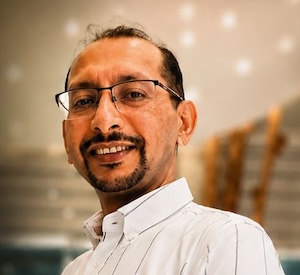
Amarjeet Singh @ AJ is a Malaysia-based business consultant with over 25 years experience
RELATED STORY:
The most respected Sikh in Southeast Asia (Asia Samachar, 20 May 2020)
ASIA SAMACHAR is an online newspaper for Sikhs / Punjabis in Southeast Asia and beyond. You can leave your comments at our website, Facebook, Twitter, and Instagram. We will delete comments we deem offensive or potentially libelous. You can reach us via WhatsApp +6017-335-1399 or email: asia.samachar@gmail.com. For obituary announcements, click here