




















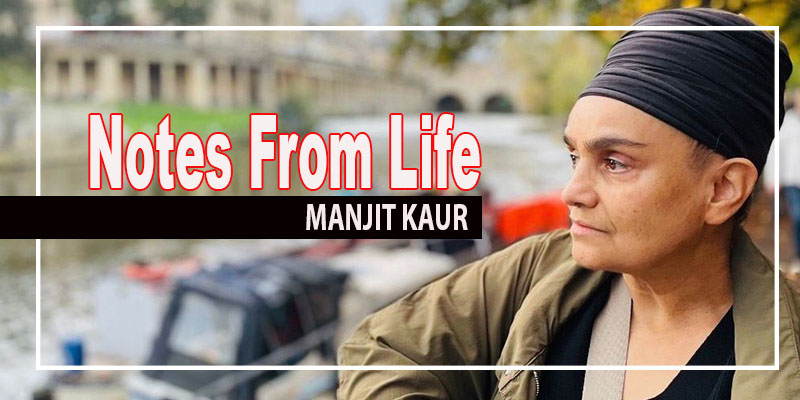
 By Manjit Kaur | Opinion |
How often have you bought a piece of clothing, just to wear it once or twice? What about buying some gym equipment but after a few weeks, stopped using it? If your answer is yes, then you are like me and many millions of other well-educated people, who are aware the facts about not being wasteful or the benefits of regular exercise, but still fail to do the right thing.
We live in an age overflowing with knowledge. Advice on health, wellbeing, balance, and happiness is everywhere; in books and podcasts. We know what to eat, how much to sleep, why exercise matters, and how important it is to look after our mental health. Yet despite all this knowledge, many of us continue to live in ways that contradict what we know to be true.
I include myself in this. There have been many moments in my life when I have understood clearly what my body and mind needed, such as proper rest, nourishing food, slowing down, but have still chosen the opposite. I have eaten out of convenience, stayed up late without purpose, and pushed myself beyond my limits. And then, I ask myself: Why do I feel like this?
I can remember growing in my family home where we, or rather my mum, would prepare the food from scratch almost on a daily basis. The rich variety of vegetables, pulses, rice’s, and flower meant that we had an extremely balanced and healthy diet. Even the high sugar content would be burnt off through hard physical work. As for clothes, we didn’t have a lot, but what we did have come to good use. Unlike today, where we are constantly chasing the latest fashion trends almost on a monthly basis, shoes and clothes would normally only be changed if they were either worn out, or I had grown out of them.
I can remember when I was a teenager, I was desperate to buy a long black leather coat, which I felt was really cool. It was quite expensive and money was tight in those days. Anyhow, after much pleading, and some crying, I managed to persuade my mom to buy the coat. I loved it so much, I think I rarely went out of the house without it. I can honestly say that leather coat was very well worn.
If I fast-forward to today and look inside my walk-in wardrobe, I find numerous coats and other items, yet in truth, many are rarely worn, if at all. Perhaps this reflects our relationship with money, or simply the effects of living in a consumer society, where food is often wasted and clothes are valued more for appearance than practical use.
Life when I was growing up was simpler, more genuine, and more grounded. Today, although we enjoy far greater material wealth and access to education, something seems to be going wrong. Why is it that we often know, in theory, what the right course of action may be, whether it is healthy eating or other positive habits, yet struggle to put that knowledge into practice?
This tension between thought and actions, or knowing and doing is not new. It sits at the heart of a powerful insight in Gurbani: “ਸਚਹੁ ਓਰੈ ਸਭੁ ਕੋ ਉਪਿਰ ਸਚੁ ਆਚਾਰੁ ॥ Truth is higher than everything. But higher still is truthful living”. We often focus on understanding truth, on learning it, discussing it, even preaching about it to others. But the real measure is whether we live it. And that is where the challenge lies.
Another line from Gurbani brings this reality into even sharper focus: ਅਵਰ ਉਪਦੇਸੈ ਆਪਿ ਨ ਕਰੈ ॥ ਆਵਤ ਜਾਵਤ ਜਨਮੈ ਮਰੈ ॥ One who instructs others but does not practise it themselves remains caught in the cycle of coming and going.”
These words do not simply criticise hypocrisy; they reveal a deeper human tendency. It is far easier to speak about what is right than to consistently to live up to it.
In my own life, I have often told myself I don’t have time, whether it is always to cook properly, to exercise, to rest, or even to pause and reflect. But if I am honest, I know that time is rarely the real issue. It is prioritisation. And it is a failure of willpower, especially when in our multi-media driven world we are constantly being bombarded with so many adds.
We make time for what we value.
And yet, many of us place our own wellbeing at the bottom of that list. We focus on work, responsibilities, financial pressures, and the constant pull of modern life. Convenience becomes our default, such as quick food, irregular sleep, constant busyness, until our bodies and minds begin to show the strain.
At that point, we ask “why?”, when the clues have been there all along.
The Subtle Pull of Desire
Another challenge I have had to confront is desire, particularly in relation to food, consumption, and lifestyle. I enjoy food. I love to try out new dishes, especially indulging in desserts and to travel. There is nothing wrong with that. But I have also experienced how easily enjoyment can turn into overindulgence and how the taste of the moment overrides longer-term awareness of health.
The same pattern appears with spending. While I have learned to manage my finances carefully and live within my means, I have still felt the pull of impulse. This is the belief that buying something will bring satisfaction or lift my mood. Sometimes it does, but only briefly. I think the scientists call this a ‘dopamine rush’. Described as the brains feel-good chemical, dopamine is a neurotransmitter involved in the brain’s reward and motivation systems. However, the truth is after the rush, not unlike how drugs work, there is the realisation that fulfilment cannot be sustained through continuous consumption, and in the long term, this can lead to negative effects.
Culture, Discipline, and the Question of Enough
Growing up within a Punjabi cultural context, by observing my parents was learnt the value of saving, discipline, and financial awareness. These are important lessons. But over time, I have also reflected on the need for balance, which means, not saving endlessly out of fear and not spending excessively out of desire. Enjoying life is not a sin!
The deeper question that keeps emerging for me is this, what is enough? Without answering that, it becomes very easy to drift into constantly striving, consuming, or comparing, while losing sight of in contentment. Gurbani repeatedly reminds us to look inward, not outward. To find meaning not in what we acquire, but in how we live. As Guru Nanak states in Jap bani, “ਭੁਖਿਆ ਭੁਖ ਨ ਉਤਰੀ ਜੇ ਬੰਨਾ ਪੁਰੀਆ ਭਾਰ ॥ The desire can never be appealed, even by tying together bundles of worldly goods”. It follows that that true peace, which we all seek, can only come from training the mind to stop seeking out external validation and to value moderation and simplicity, which sadly is not easy in our media driven consumer culture.
Bridging the Gap
So why do we continue to ignore what we know to be true?
From my own reflection, the answer is not simple. It is a mix of habit, comfort and sometimes ego, which makes us believe that we can push through, that we will be fine, that we can deal with it later. But “later” has a habit of catching up with us in the form of fatigue, stress, dissatisfaction, or imbalance.
The gap between awareness and action is where we either grow or drift further away from ourselves.
Three Ways to Begin Living Truthfully
I do not write this as someone who has mastered these challenges. I still struggle. But through reflection, I have come to see that living truthfully does not begin with dramatic change, but with small, honest shifts. Here are three ways I believe we can start to bring our lives closer to the truths we already know:
1. Start with one honest habit: Rather than trying to change everything at once, choose one area where you know you are out of alignment. Whether it is sleep, food, or mental rest, decide to commit to improving it consistently. Remember truthful living grows through small, repeated actions.
2. Create time, don’t wait for it: We often say we “don’t have time”, but time reflects our priorities. Even setting aside 20–30 minutes a day for your wellbeing , whether for cooking, exercise, or reflection, this is a conscious act of respecting your body and mind.
3. Practise self-awareness without judgement: Instead of criticising yourself for falling short, learn to observe your patterns honestly. Ask yourself: What am I avoiding? What am I overdoing? What do I need right now? Awareness, without denial, is the foundation of change.
A Final Reflection
The more I reflect on my own life, the more I realise that the problem is not a lack of truth. The truth is already known. The real question is whether we are willing to live it. Because as Gurbani reminds us, truth itself is important but not enough; what really counts is how we live that truth.
Join the conversation on this story on Asia Samachar’s Facebook and Instagram pages.

Manjit Kaur, a UK-based therapist and counsellor, is a presenter at the 1 Show Live at Panjab Broadcasting Channel, UK. She can be contacted via email at manjitkaur1show@gmail.com
RELATED STORY:
Sikh identity under siege: Children, safety and racism in the UK (Asia Samachar, 12 June 2026)
ASIA SAMACHAR is an online newspaper for Sikhs / Punjabis in Southeast Asia and beyond. You can leave your comments at our website, Facebook, Twitter, and Instagram. We will delete comments we deem offensive or potentially libelous. You can reach us via WhatsApp +6017-335-1399 or email: asia.samachar@gmail.com. For obituary announcements, click here