























By Pola Singh | Experience |
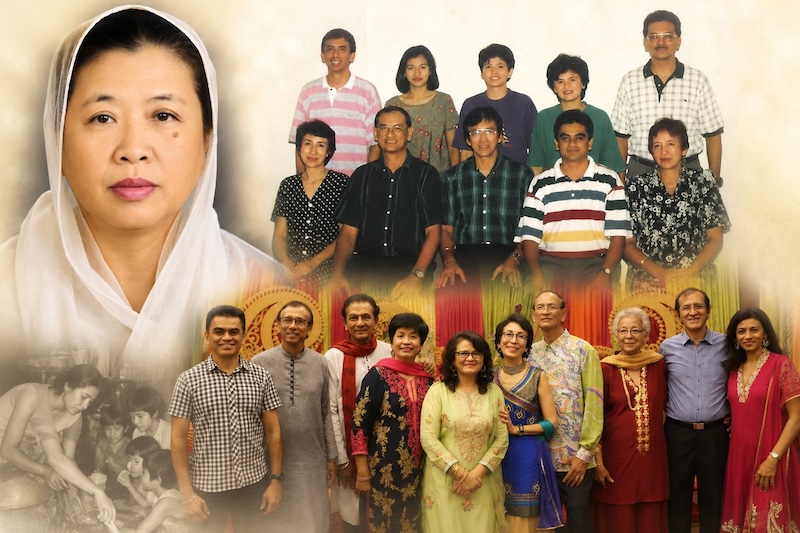
Life is often measured by the milestones we reach, the titles we earn, and the comfort we secure. But for our late mother, Ram Kaur—born Chan Yoke Lin—life was measured entirely in the survival, education and ultimate triumph of her ten children. She was truly a mother in a million. Her life was an extraordinary testament to strength, resilience, and an unwavering, fierce love that knew no bounds.
Yet, as we look back on the beautiful legacy she left behind, our hearts are heavy with a profound, collective sorrow. The greatest tragedy of Maji’s life is that she walked through an unending desert of hardship, pouring out every ounce of her youth, health, and spirit so that her children could thrive. But when the rain finally came, and it was time for her to sit in the shade and taste the sweet fruits of her gruelling labour, she was taken from us.
I write this tribute not just to honour her memory, but as a solemn reminder to all Malaysians: never take your parents for granted. Treasure them, listen to them, and love them while they are here.
A Childhood Interrupted, A Life of Non-Stop Toil
Maji’s journey began in the grip of abject poverty. Born tiny and fragile, she was forced to leave school after only Standard Three. Destiny swept her into adulthood before she could even experience youth; she was married at the tender age of 13 to our father, a Panjabi cowherd. By 14, she was a mother. Within a decade, she was managing a bustling, impoverished household of ten children, born just a year or two apart.
Entering a mixed-race marriage in an era of strict social boundaries brought immense cultural shocks and societal non-acceptance. Yet, with a quiet, monumental dignity, she did not just adapt—she excelled. This young Chinese girl entirely embraced her husband’s Sikh and Punjabi roots. She mastered the traditions so profoundly that when our elder sisters, the late Ajaib Kaur and Piaro Didi, got married, Maji strictly adhered to the intricate, old-style Sikh wedding rituals. She stunned and deeply impressed the Malacca Punjabi community, proving that a mother’s devotion can bridge any cultural divide.
But behind the cultural grace was a daily battle for survival. Maji’s life was an unrelenting, 16-hour marathon. Waking up at the crack of dawn at 5:00 AM, she juggled an impossible workload until 9:00 PM. She didn’t have sophisticated business acumen; she tried her hand at selling nasi lemak and kuih to supplement our meagre income, but her generous heart often got the better of her. She would charge a princely sum of 30 sen, but out of sheer kindness, she piled the plates so high that profit was impossible.

To make ends meet, she would walk 20 minutes under the blistering afternoon Malacca sun to clean a factory office for a mere RM35 a month—unprotected by benefits, fuelled only by a mother’s sheer willpower.
The Silent Suffering of a Mother’s Love
We lived hand-to-mouth, but because of Maji, we never once went to bed hungry. There was always food on the table—even if it was just plain rice, salted fish gravy, and a few vegetables.
It breaks our hearts today to remember how she ate. Maji would feed on the scraps left on our plates. As innocent, naive children, we genuinely believed she preferred it that way. When we had fried ikan kembung, the final piece was always eagerly snatched up by one of us, because we thought our mother truly loved sucking on the bare chicken and fish bones, leaving the flesh for us. Only as adults did the painful truth dawn on us: she was starving herself so her ten children could eat.
She bore this suffering without a whisper of self-pity or an angry word toward our endless demands. We remember the time one of us timidly begged her for money to buy a Scouts uniform, feeling the sting of being the only boy in the troop without one. At first, with a breaking heart, she softly explained there was no money to spare. But seeing tears well up in her child’s eyes was a pain she could not bear. For the next fortnight, she scrimped, saved, and cut back on her own basic needs until she proudly led her son to the tailor. To a young boy, it felt like winning the lottery; to Maji, it was just another piece of her soul sacrificed for her children’s happiness.
Maji never took the easy way out. She never pulled us out of school to put us to work, nor did she ever think of giving any of us up for adoption, despite the crushing weight of poverty. She knew, with absolute certainty, that education was our only passport out of poverty.
Our Mother’s Only Escape
Maji’s entire world was her family, and her only escape was the occasional Hindi or Tamil movie at the Lido or Capitol cinema once a month. Her absolute favourite was the classic ‘Mother India’. Watching it with the whole family, she drew profound inspiration on how to be a good mother, seeing her own struggles mirrored on the silver screen. Even though the ticket prices dented her tightly managed pockets, the sheer joy it brought her—and the way we, her children, would behave beautifully just to please her before movie night—made it priceless.
Breaking Barriers and a Lasting Legacy
Maji’s immense sacrifices eventually bore historic fruits. The entire Malacca Punjabi community, which had once looked at her mixed-race marriage with scepticism, began to look up to her with boundless respect.

In 1971, her eldest son, Jaib Singh, became the first person in Kampung Air Leleh to graduate from the University of Malaya, earning a state scholarship for his stellar Higher School Certificate results. He broke the glass ceiling, paving the way for me to follow him to university soon after. Together, both of us shattered the cycle of generational poverty, proving to every kampung child that university was an achievable dream.
This historic milestone belonged entirely to Maji. It was her victory. Her long days, her burned and tired hands, her walks under the hot sun, and her empty stomach had built the university towers her sons stood upon.
A Debt of Gratitude We Can Never Repay
Today, as the ten siblings—the late Ajaib Kaur, Piaro Didi, Jaib, Pola, Heera, Harban, Iswander, Kulwant, Inderjit, and Sarjit Kaur—reflect on the comfortable lives and blessings we enjoy, we know exactly who to thank. We feel Maji’s warm presence every single day.
Yet, a poignant, everlasting regret lingers in our hearts. We never truly got to tell her, with the maturity of adulthood, just how much she meant to us. We never got to give her the luxury, the rest, and the pampering she so richly deserved after a lifetime of non-stop toil. She left this world just as the seeds she planted were blossoming into a beautiful garden.

I write this tribute not just to honour her memory, but as a solemn reminder to all Malaysians: never take your parents for granted. Treasure them, listen to them, and love them while they are here.
Our Maji, Ram Kaur, was a woman of extraordinary substance, an anchor in our storms, and a beacon of pure love. Your struggles are over now, Maji, but your legacy is etched forever in the hearts of your ten children and the generations that follow. We love you, we miss you, and we will carry your spirit with us until we meet again.
Join the conversation on this story on Asia Samachar’s Facebook and Instagram pages.

Dr Pola Singh, who retired as Maritime Institute of Malaysia director-general in 2011, is also the author of ‘Uphill — The Journey of a Sikh-Chinese Kampung Boy’
RELATED STORY:
Jai Hind: Epitome of authentic Panjabi delights in Kuala Lumpur (Asia Samachar, 10 Feb 2024)
ASIA SAMACHAR is an online newspaper for Sikhs / Punjabis in Southeast Asia and beyond. You can leave your comments at our website, Facebook, Twitter, and Instagram. We will delete comments we deem offensive or potentially libelous. You can reach us via WhatsApp +6017-335-1399 or email: asia.samachar@gmail.com. For obituary announcements, click here





Sounds like an interesting story about family dynamics. Did Ram Kaur have to navigate any cultural challenges?
Comments are closed.