





















By Gurnam Singh | Opinion |
One of the most common and perhaps least understood or discussed aspects of Sikh devotional practice is what is referred to as the ‘bhoag’ (ਭੋਗ). Originating from wider Indic religious vocabulary, bhoag within Sikh practice commonly denotes the formal conclusion of a reading of the Sri Guru Granth Sahib. This can take various forms, from known a complete continuous Akhand Paath or continuous reading, Sadharan/Sehaj Paath or slow reading, ‘Sukhmani Sahib Paath’, or another liturgical recitation or service.
The bhoag is also a routine feature of ceremonies (birth, marriage, death, Amrit Sanchar) which are routinely concluded with the reading of the Anand Sahib, followed by reading of a random Shabad or Hukam Nama from Guru Granth Sahib and offering and distribution of Karah Prasad and Langar, marking the completion of communal worship.
Like many other concepts emanating from the dominant and long-established traditions of the time, the Sikh Gurus inherited this vocabulary from its Vedantic roots, but most critically radically transformed its meaning. Rather than rejecting the language outright, Gurbani redirects the concept away from sensory gratification and ritual transaction towards spiritual nourishment and communal equality.
Bhoag in the Indic Religious Tradition
For a greater appreciation of the concept of bhoag, it is necessary to examine is roots which originate from classical Sanskrit literature. The word bhoag derives from the Sanskrit verbal root (bhuj), meaning, to enjoy, consume, experience, partake and undergo. It is from this root that bhoag emerges, incorporating both the physical enjoyment and existential experience. Most critically, unlike many English synonyms, bhoag in its classical usage is morally neutral. It simply describes participation in experience, whether pleasurable or painful.
Within Vedantic philosophy, bhoag is also closely associated with the idea of karma. Hence, every action (karma) generates consequences or deeds and fruit (karmaphala), and those consequences must eventually be experienced. This experience itself is called bhoag. Thus, in this framing, one may experience a range of ‘fruits’, pleasurable to painful and heavenly to earthly bhoag. In this framework, liberation (moksha) arrives only when the soul no longer accumulates karma and no longer requires further bhoag.
Bhoag and Sensory Pleasure or Rasa.
Classical Indic literature also employs bhoag in a secular sense to denote enjoyment of all kinds of worldly pleasures, such as food, wealth, music, sex and power. Understood as sensory experiences, these are sometimes referred to as rasa. In this regard, concepts of ‘bhoag’ (sensory experience/consumption) and ‘rasa’ (aesthetic essence/taste) are related because they both explore how human beings bridge the gap between everyday experience and a deeper spiritual dimension.
It was the 10th Century Indic philosopher, Bhatta Nayaka, who offers a link between bhoag and rasa and aesthetics. He suggested that rasa is a “fruition” of bhoag and it represents the realm of pure divine bliss. Known for his love of dance, through his theory of “aesthetic enjoyment” (bhuktivāda), Bhaṭṭa Nāyaka argued that when we engage with art, our personal egos temporarily dissolve, allowing us to consume experiences and experience pleasure without personal anxiety, or a refined state of bhoag. Through this ego-free consumption, he suggests, we are able to “taste” the universalised rasa of an emotion. Bhoag is therefore understood as the active capacity to experience and consume, while rasa is the ultimate, refined juice that is tasted.
Bhoag as a Ritual Practice
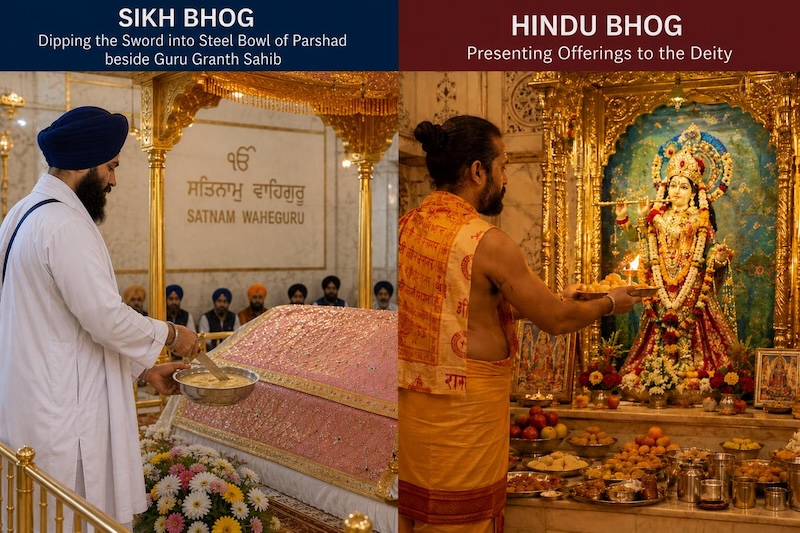
In Hindu temples across India bhoag is also associated with the ritual preparation of food which is then presented before a deity for it to be blessed. The deity is understood to accept or “enjoy” (bhoag) the offering before it is returned as Prasada, sanctified food distributed among devotees.
Whether interpreted literally or symbolically this practice varies considerably across Hindu traditions, yet the ritual vocabulary consistently employs bhoag to describe divine reception of the offering. Thus, prior to the emergence of Sikhi, bhoag commonly encompassed three interconnected ideas: sensory enjoyment, karmic experience, ritual offering to the divine.
If we focus attention on Gurdwaras, we can identify a ritual performed at the culmination of the Ardaas known as ‘Kirpan Bhet’ also known as ‘bhoag’. Whilst Sikhi rejects the worshiping of idols, through the formalisation of bhoag in the form touching Karah Parshad (sweet meal) and often also the prepared langar with a Kirpan (steel blade), one can argue Sikhs have also uncritically adopted this practice.
This ritual offering is often accompanied by the following lines:
The lines recited during the bhoag are composed by Guru Arjan Dev Ji (the fifth Guru) and are recorded on page 1266 of the Guru Granth Sahib,
ਅਨਿਕ ਪ੍ਰਕਾਰ ਭੋਜਨ ਬਹੁ ਕੀਏ ਬਹੁ ਬਿੰਜਨ ਮਿਸਟਾਏ ॥ “I have prepared all sorts of foods in various ways, and all sorts of sweet desserts.”
ਕਰੀ ਪਾਕਸਾਲ ਸੋਚ ਪਵਿਤ੍ਰਾ ਹੁਣਿ ਲਾਵਹੁ ਭੋਗੁ ਹਰਿ ਰਾਏ ॥੨॥ “I have made my kitchen pure and sacred. Now, O my Sovereign Lord King, please accept/sample my food.”
The disconnect between Gurmat and empty ritualism lies in taking what is a deeply mystical, internal, and metaphorical lines and reducing it to an external, physical ritual. In essence these lines deploy the “kitchen” (paaksaal) as a metaphor for human consciousness (hirda). The “cleanliness” (soch pavitraa) refers to purifying the mind of five vices (lust, greed, anger, attachment and ego). The “foods and desserts” are the virtues, love, and divine wisdom cultivated within the soul.
As for the passing the kirpan through the pudding, since the formless Divine (Akal Purakh) does not consume physical calories, the true bhog (which translates to “enjoyment” or “consummation”) is the divine acceptance of a pure life.
The Sikh Reinterpretation of Bhoag and Rasa
Tragically, such practices remain even though the Sikh Gurus abandoned ritualism, whilst inverting the inherited meanings bhoag and rasa away from external consumption towards internal transformation. Gurbani repeatedly warns that pursuit of pleasure without spiritual consciousness ultimately proves empty. Guru Arjan states:
ਭੋਗਹਿ ਭੋਗ ਅਨੇਕ ਵਿਣੁ ਨਾਵੈ ਸੁੰਞਿਆ ॥ ਹਰਿ ਕੀ ਭਗਤਿ ਬਿਨਾ ਮਰਿ ਮਰਿ ਰੁੰਨਿਆ ॥੨॥
You may enjoy various pleasures, but they are useless without the Divine wisdom. Without the reflective meditative remembrance of the Divine, you shall die in sorrow, again and again. ||2||
In the following shabad Guru Nanak (GGS p15) offers a clear explanation of the Sikh understanding of rasa, which offers a more similar, but nuanced understanding. “ਰਸੁ ਸੁਇਨਾ ਰਸੁ ਰੁਪਾ ਕਾਮਣਿ ਰਸੁ ਪਰਮਲ ਕੀ ਵਾਸੁ ॥ਰਸੁ ਘੋੜੇ ਰਸੁ ਸੇਜਾ ਮੰਦਰ ਰਸੁ ਮੀਠਾ ਰਸੁ ਮਾਸੁ ॥ਏਤੇ ਰਸ ਸਰੀਰ ਕੇ ਕੈ ਘਟਿ ਨਾਮ ਨਿਵਾਸੁ ॥੨॥ The pleasure of gold, the pleasure of silver, the pleasure of companionship, and the pleasure of fine perfumes; The pleasure of horses, the pleasure of cozy beds in grand mansions, the pleasure of sweets, and the pleasure of rich foods. With so many pleasures dominating the body, how can the Divine Name find a place to dwell within the heart?”
The word rasa literally refers to as “pleasurable taste.” And in Gurbani, this can refer to both physical tastes and emotional/psychological exaltation. In repeating the word rasa eight times in just two sentences, Guru Nanak seeks to mimics the clutter and saturation of the human mind that the desire for rara can induce and how this unchecked can result in disastrous consequences.
The problem therefore isn’t the possession of physical gold, the house, or the food themselves, but becoming psychologically addicted to what are fleeting states of pleasure. Nanak reminds us that worldly pleasures (ਰਸ ਸਰੀਰ ਕੇ) are fleeting and leave us wanting more, leading to a cycle of endless desire. And in this state of high sensory noise, one becomes distracted from the true and everlasting true pleasure derived from naam and shabad (divine wisdom). As Guru Ramdas Ji states:
ਰਸਕਿ ਰਸਕਿ ਗੁਨ ਗਾਵਹ ਗੁਰਮਤਿ ਲਿਵ ਉਨਮਨਿ ਨਾਮਿ ਲਗਾਨ ॥ ਅੰਮ੍ਰਿਤੁ ਰਸੁ ਪੀਆ ਗੁਰ ਸਬਦੀ ਹਮ ਨਾਮ ਵਿਟਹੁ ਕੁਰਬਾਨ ॥੧॥
Through the Guru’s Teachings, I sing the Glorious Praises of the Lord with joyous love and delight; I am enraptured, lovingly attuned to the Naam, the Name of the Divine. Through the Word of the Guru’s Shabad, I drink in the Ambrosial Essence; I am a sacrifice to the Naam.
Hence, to attain an exalted state of bliss, there is no need to violently forcing yourself to give up delicious food or material comforts, as was the case with the Yogis; It is about experiencing a state of inner peace that is so sweet, you no longer rely on external luxuries to feel whole. And this ultimately can only be achieved if one is fully engaged in the world yet is at the sometime nurturing agency or a higher level of awareness through critical reflection (Naam) and discerning intellect (Budh Bibeik)
The ceremony therefore functions best when understood sacramentally rather than mechanically. The outward action points beyond itself and in this regard, the Bhoag ceremony can only fulfil its purpose if it inspires the devotee to embody these virtues beyond the walls of the Gurdwara, in their everyday interactions.
Conclusion
As for wordily pleasures, the key challenge is moderation and balance. There is nothing wrong with enjoying some of the material pleasures of lifre. However, if this indulgence it becomes an addiction, and destroys lives and relationships, then one if definitely on the wrong path. It is for these reasons that, rather than those fleeting and potentially destructive desires that surround us, Gurbani direct us towards inner sweetness, true love, peace and bliss.
Join the conversation on this story on Asia Samachar’s Facebook and Instagram pages.

Gurnam Singh is an academic activist dedicated to human rights, liberty, equality, social and environmental justice. He is a Professor of Sociology at University of Warwick, UK. He can be contacted at Gurnam.singh.1@warwick.ac.uk
* This is the opinion of the writer and does not necessarily represent the views of Asia Samachar.
RELATED STORY:
Heaven, Hell and the Afterlife: What does Sikhi teach us? (Asia Samachar, 3 July 2026)
ASIA SAMACHAR is an online newspaper for Sikhs / Punjabis in Southeast Asia and beyond. You can leave your comments at our website, Facebook, Twitter, and Instagram. We will delete comments we deem offensive or potentially libelous. You can reach us via WhatsApp +6017-335-1399 or email: asia.samachar@gmail.com. For obituary announcements, click here