






















By Charanjit Kaur | Opinion |
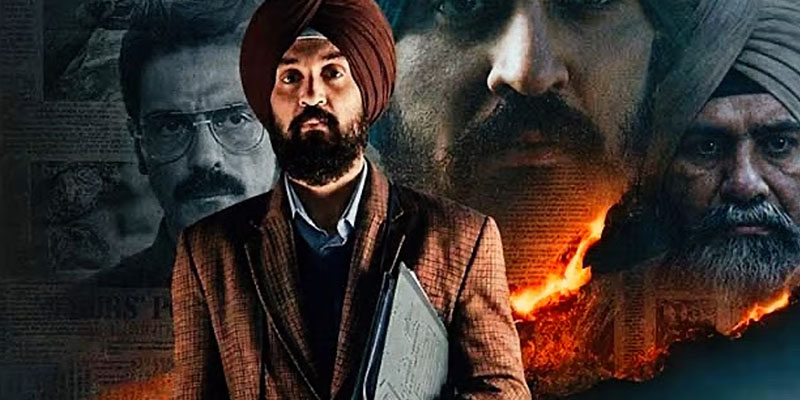
There is a particular kind of failure that happens when a ban meets a community that already knows how to keep a story alive without permission. That is roughly what happened to Satluj. The film, built around the life and disappearance of human rights activist Jaswant Singh Khalra, was pulled from its streaming platform not long after release, quietly, the way these things tend to happen, with a message that simply read “not available in your region”. What the decision-makers behind the film’s removal may not have anticipated was what happened next. Satluj did not simply disappear but it found a new audience.
Instead of remaining on an OTT platform, it moved into the open courtyards of village gurdwaras across Panjab’s Majha region. Community screenings were organised in villages such as Pandori in Amritsar, Shekhupura and Panjw
The Ban That Backfired
Downloaded copies began circulating hand to hand, screen to screen. Youth groups set up projectors under the night sky. Families arrived together, the way they might for a wedding or a gathering after evening prayers, except this time the courtyard held a screen instead of a stage. Guru ka Langar was served throughout because in Sikh tradition, Sach and Seva have never been separate acts. They are the same instinct, expressed twice.
It is worth sitting with what actually happened here. A gurdwara has always been a place for prayer, for kirtan, for the study of Gurbani. What it became, in village after village, was also a place to confront history, collectively, in the open, without a subscription or a login. Whether a film ‘belongs’ in a gurdwara is a fair question to ask. But there is another way to frame it: if a film insists on truth, on justice, on standing with people who were failed by the state meant to protect them, that is not a departure from what a gurdwara does. It may simply be the same purpose the space has always served, meeting a modern problem in an old way.
This is, in miniature, the story of nearly every ban in recent memory. A ban rarely protects an audience from harm; more often, it protects a narrative from scrutiny. It assumes people cannot be trusted to sit with a difficult truth and reach their own conclusions. And it almost always backfires, because telling people they cannot see something is one of the most reliable ways to guarantee they will go looking for it. Satluj did not disappear when it was pulled. It simply changed distributors, from a platform that was paid to carry it, to a community that refused to let it vanish.
A Film, Not a Verdict
None of this means the film is above criticism and the fairest critics of Satluj have raised a real point: it tells one side of a very large, very painful story. Much of the raw brutality, the abductions, the torture, the full scale of what happened to the disappeared, is left off-screen, replaced by a tighter focus on the decade-long pursuit of justice.
That is a defensible creative choice rather than an evasive one. A film that leaned into shock value would have retraumatised its audience without necessarily informing them. What Satluj offers instead is an entry point, not a complete historical record because no 150-minute film compressing a decade of suffering ever could be one. If the film leaves audiences wanting more context, more perspectives, more voices, that gap is not necessarily a failure of the filmmaking. It may be exactly the invitation the filmmakers intended: go read further, ask harder questions and do not let one film become the entire record.
As a piece of cinema, it earns its strongest marks where it takes its time, a script that lingers on quiet, devastating lines rather than rushing past them, a score that knows when restraint matters more than swell and a lead performance built on stillness rather than spectacle. It earns its weakest marks where the investigation feels flattened into something simpler than it likely was, a compression that leaves the pursuit of justice looking easier than a decade-long struggle ever is. Both things can be true of the same film. That tension is, if anything, the most honest review anyone can give it.
A Grief Without a Passport
For members of the Sikh diaspora watching from thousands of kilometres away – in Malaysia, Canada, United Kingdom, Australia, the United States, in pockets of East Africa and the Gulf – the film raises a quieter question: why does an event that happened decades ago, in villages they may never have set foot in, still reach them?
Part of the answer sits in Sikh history itself, in a recurring pattern of standing beside someone else’s persecution at personal cost. Part of it is generational, the older members of any diaspora community often carry memories that younger, foreign-born generations only encounter secondhand, through research, through interviews, through the stories and habits passed down at home long before they ever had a name for them. And part of it is simply this: shared faith creates a form of kinship that does not require a shared passport or a direct bloodline to feel real.
That grief, though, comes with a responsibility to hold it carefully. This is fundamentally a struggle for justice that belongs to the people of India and diaspora communities engaging with it are well served by remembering that solidarity is not the same as ownership. The instinct to anchor first in one’s own country’s rule of law, to let the Constitution, not sentiment, guide how these conversations are taught and discussed, is not a lesser form of caring. It may be the more honest one.
What Happens After the Credits
The hardest question the film leaves behind is not about its running time or its cuts. It is about what an audience does once the lights come back on. Watching Satluj cannot be the finish line and it was likely never meant to be one. The film opens a door into conversations about accountability, about what it looks like when the institutions responsible for protecting citizens become complicit in failing them, about systemic corruption, about the obligation governments carry to protect minorities before an atrocity happens rather than after. These are not conversations that end when the credits roll. They are, arguably, only beginning there.
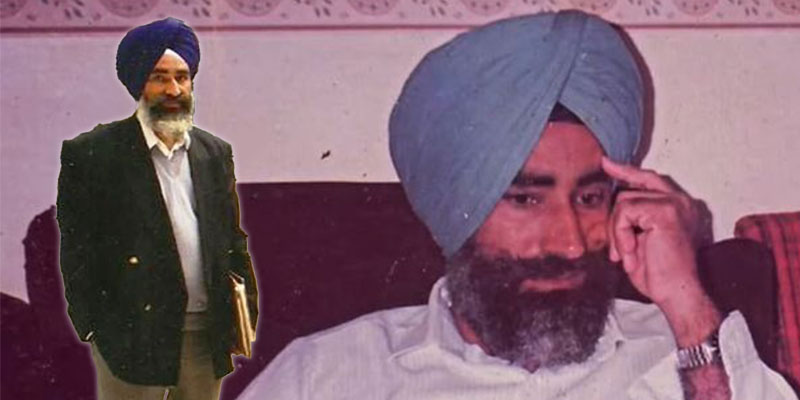
At the centre of all of it remains one man: Jaswant Singh Khalra, whose meticulous, dangerous work uncovering what had happened to the disappeared is the reason any of this reached the public at all. Thirty-one years on, the wound his work exposed has not fully closed but it has, in villages across Panjab, started to be looked at directly rather than buried. Recognising that kind of courage properly, formally, publicly, feels less like a suggestion and more like an overdue debt.
A ban tried to keep a story contained. Instead, it travelled from platform to courtyard, from screen to conversation, carried by exactly the kind of community that has always known how to keep a truth alive when no one else will. The film is finished. The conversation, by every indication, is not.
Join the conversation on this story on Asia Samachar’s Facebook and Instagram pages.

Associate Professor Dr. Charanjit Kaur is an expert in cultural anthropology, with a special focus on the Sikh minority community in Malaysia. Her work explores themes such as religious-cultural conflict, gender identity, and social behavior.
RELATED STORY:
Bridging faiths, upholding Sikhi: A personal journey in interfaith harmony (Asia Samachar, 26 April 2026)
ASIA SAMACHAR is an online newspaper for Sikhs / Panjabis in Southeast Asia and beyond. You can leave your comments at our website, Facebook, Twitter, and Instagram. We will delete comments we deem offensive or potentially libelous. You can reach us via WhatsApp +6017-335-1399 or email: asia.samachar@gmail.com. For obituary announcements, click here