




















By Gurnam Singh | Opinion |
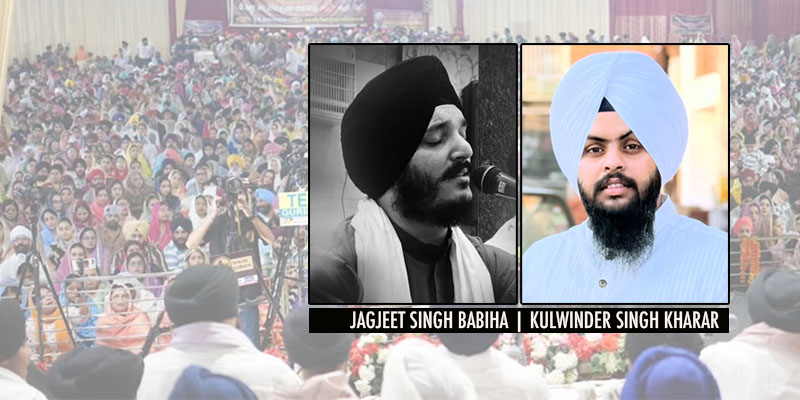
A recent feud between two widely popular, young, dynamic Sikh devotional musicians (kirtanis), Bhai Jagjeet Singh Babiha and Bhai Kulwinder Singh Kharar, spilled off the stage of a gurdwara in Phagwara, Panjab, and into social media feeds across the globe within seconds. The response from the Akaal Takht, the highest temporal seat of Sikh authority, was swift: both performers were banned from public kirtan for a month and ordered to undergo mandatory “re-education” on Sikh tenets (Gurmat) alongside community service.
To outsiders, ordering musicians and artists into doctrinal re-education can look like a long-discarded feudal practice or the kinds of practices found in totalitarian regimes. However, for many, such actions can be rationalised as a necessary defence of sacred decorum. Either way, the episode highlights one of the sharpest fault lines in modern democratic societies: where does a religious community’s right to police its own boundaries end, and an individual’s right to free speech and conscience begin?
Every major faith maintains a mechanism to draw lines between orthodoxy and heresy. Catholics have excommunication; Jews have cherem; Muslims have takfir; and Sikhs have the Akaal Takht’s two-tiered system of declaring members tankhaiya (guilty of religious misconduct) or expelling them from the Panth altogether.
Without the power to define what a community stands for, arguably, a religion runs the risk of fragmentation and incoherence. Historically, religious censure even served as a check on unchecked power. In 1802, under the leadership of Akali Phula Singh, the Akaal Takht summoned Maharaja Ranjit Singh, the mighty ruler of the Sikh Empire, and sentenced him to public penance for moral misconduct, thus demonstrating that no person stood above the community’s ethical code.
SEE ALSO: The Legitimacy of Excommunication in Sikhi: The Case of Professor Gurmukh Singh
SEE ALSO: Excommunication and Sikhism: The case of Bhai Ranjit Singh Dhadriawala
Yet modern democracies rest on a radically different premise. Born out of the Enlightenment, the principles of freedom of belief and expression place moral authority inside the individual conscience, not the institution. Under democratic norms, questioning accepted history, reinterpreting texts, and challenging leaders are not sins; they are how societies discover truth.
When those two worldviews collide, the fallout is immediate. In the 1990s, Western-trained Sikh scholars were routinely summoned before the Akaal Takht and assigned penance for applying historical-critical analysis to early manuscripts of Sikh scripture. Moreover, critical research methods, routine in universities but viewed by clergy as an assault on the revealed word of God, highlighted the precarious ground on which Sikh academics, artists and preachers have to tread. For example, though there are no restrictions on creating pictures and paintings, filmmakers have been excommunicated or banned for depicting Sikh Gurus and their close relatives on screen, violating strict religious taboos against human portrayal. Likewise, leading Sikh preachers and ragis are regularly summoned to the Akaal Takht to receive punishment and, in some cases, excommunication.
FOR MORE STORIES ON EXCOMMUNICATION, CLICK HERE
On paper, the right of a religious community to establish guardrails seems like a reasonable stance. However, in the real world, especially in tightly knit diaspora communities where the gurdwara is the centre of social life, marriage networks, and cultural identity, excommunication is never just a spiritual technicality. Being shunned can fracture families, destroy livelihoods, and chill honest debate among young scholars and reformers who fear becoming the next target. Worse, across history, religious edicts have too often been weaponised to settle personal and political scores rather than defend timeless truths.
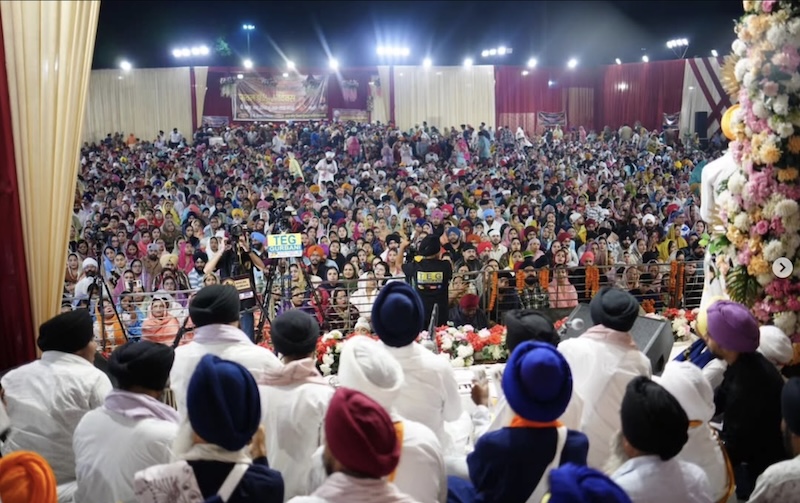
A further challenge facing the Panth today is the effects of the compression of time and space as a result of social media. Previously, disputes would unfold slowly, leaving room for measured debate. Today, because of social media and the way algorithms reward outrage, stories can almost instantly become weaponised and distorted. A 30-second clip of a preacher or musician can ignite global fury across Instagram, TikTok, WhatsApp and YouTube before anyone checks the facts. Religious authorities rapidly come under pressure to act and issue instant edicts to quell online lynch mobs.
KEEPING THE PEACE
So how do we keep the peace between Sikh scholars, parcharaks and kirtanis, Sikh institutions, the social media mobs and the Akaal Takht?
First, Sikh religious institutions must practise restraint. There is a world of difference between repudiating the core ethical tenets of a faith and debating history, art, or institutional governance. Reserving formal censure for clear breaches of foundational principles, while guaranteeing transparent, fair hearings, protects an institution’s moral credibility far better than reactive bans to please the baying mobs.
Second, restorative discipline beats permanent exile. The Sikh tradition of Tankhah, which asks offenders to humble themselves by cleaning shoes or washing dishes in the community kitchen before rejoining the congregation, offers a powerful model of accountability paired with grace.
Thirdly, care must be taken not to totally strip those summoned by the Akaal Takht of their dignity. Why? Because it is not only damaging to the individual, but it may also well end up discouraging others from entering the Sikh space, and thus damage the future of the Panth. Such actions should balance the demand for punishment with the imperative of healing.
MANAGING CREATIVE IMPULSES
Sikh scholars and artists cannot fulfil their role in serving the Panth if their critical and creative impulses are constrained by fear, censorship, or ideological conformity. The pursuit of knowledge and artistic expression depends upon the freedom to explore difficult questions, challenge prevailing assumptions, and present ideas that may be controversial, unsettling, or unpopular. This freedom is not absolute. Academics and artists remain bound by ethical standards, professional responsibilities, and the law.
Gurbani offers a valuable guide for navigating these tensions: “the seeker flourishes, the dogmatist perishes” (ਖੋਜੀ ਉਪਜੈ ਬਾਦੀ ਬਿਨਸੈ). Service to the Panth, important though it is, cannot be reduced to simply preserving inherited traditions. It also requires the capacity to revisit, reinterpret, and deepen our understanding of those traditions, while remaining open to fresh insights and new forms of expression. Such renewal can emerge only through rigorous scholarship, open inquiry, and critical engagement rather than dogmatic certainty. In this sense, freedom of expression and robust dialogue are not opposing principles but complementary foundations of a vibrant and intellectually confident Panth.
Equally, a faith community without boundaries risks losing its distinctiveness and core identity. Yet we must remember that Sikhi is not a museum piece to be preserved behind glass but a living, dynamic force. If its relevance for the world of today and tomorrow is to be realised, this will not be achieved by silencing critics or discouraging creativity. Rather, it will be sustained through the confidence to engage with ideas openly, discuss them honestly, and allow truth to emerge through reflection, scholarship, and collective wisdom.
As for Bhai Jagjeet Singh Babiha and Bhai Kulwinder Singh Kharar, one can hope that they will both emerge from this sad episode with more humility, knowledge and determination to continue to develop their craft of kirtan in ways that remain true to the basic tenets of Gurbani Sangeet. I would urge them and all kirtanis to reflect on the following lines from Guru Arjan in Raag Raamkali (SGGS, page 885):
ਭਲੋ ਭਲੋ ਰੇ ਕੀਰਤਨੀਆ ॥ ਰਾਮ ਰਮਾ ਰਾਮਾ ਗੁਨ ਗਾਉ ॥ ਛੋਡਿ ਮਾਇਆ ਕੇ ਧੰਧ ਸੁਆਉ ॥੧॥ ਰਹਾਉ ॥
“Blessed and excellent is such a Kirtania who renounces the selfish pursuits and entanglements of Maya and sings the glorious praises of the all-pervading Divine.”

Gurnam Singh is an academic activist dedicated to human rights, liberty, equality, social and environmental justice. He is a Professor of Sociology at University of Warwick, UK. He can be contacted at Gurnam.singh.1@warwick.ac.uk
* This is the opinion of the writer and does not necessarily represent the views of Asia Samachar.
Join the conversation on this story on Asia Samachar’s Facebook and Instagram pages.
RELATED STORY:
Super Intelligence: AI, Ego and the Future of Humanity (Asia Samachar, 24 Sept 2026)
ASIA SAMACHAR is an online newspaper for Sikhs / Punjabis in Southeast Asia and beyond. You can leave your comments at our website, Facebook, Twitter, and Instagram. We will delete comments we deem offensive or potentially libelous. You can reach us via WhatsApp +6017-335-1399 or email: asia.samachar@gmail.com. For obituary announcements, click here