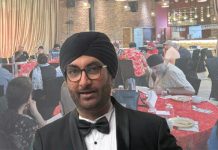
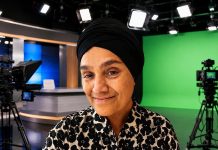
Angad Singh, a senior engineering manager at Twitter, has been busy establishing the company’s product data engineering team. This is his second stint at the microblogging and social networking service.
He first joined Twitter San Francisco in 2013, fresh out of college as a software engineer on the infrastructure team. He studied Bachelor of Engineering in Computer Engineering at National University of Singapore (NUS).
After a ‘great first year’ in the US, he ended up moving back to Singapore where he worked for a startup for two years.
“But my experience at Twitter felt incomplete and I remained curious about how Twitter could unlock its potential to grow internationally – both to diversify its talent pool and to grow the base of people who use the platform in untapped markets,” he writes in an article published at Singapore Global Network.
“The opportunity to rejoin the company presented itself when my now-manager moved from San Francisco to Singapore in 2016, with the directive to spin up Twitter’s international data science team under the product data science umbrella.
“I jumped at the opportunity to help establish this team and grow the Singapore office. We built a small team of five data scientists that focused on understanding how the behaviour of people who use our platform differs across geographies, which led to several product improvements (including bookmarks, sharing features, multiple accounts etc),” he added.
Angad noted that Twitter has been intentional about diversification and decentralization for many years, from being an early adopter of hybrid ‘work from both’ work environments before the pandemic to becoming the first major US company to announce permanent remote work plans in 2020.
He said much thought has gone into decentralization, from understanding how engineers can most effectively communicate and collaborate, to developing best practices that create an even playing field that fosters personal and professional growth.
Since 2018, he writes that Twitter has been scaling data science teams and adding more decentralized engineering teams to Singapore, such as performance engineering, data engineering, and machine learning.
In the article, Angad goes on to discuss the challenges to build effective decentralised teams.
“Building a distributed team or decentralized organization has been a challenge, but it has also presented countless exciting opportunities. For me personally, it has led to an accelerated learning path for my career. For Twitter, it has allowed us to hire strong talent and leverage a diverse range of voices that more accurately represent our customers,” he says. Read the article here to find out more about the topic.
In the meantime, Angad has been kind enough to let us know where lies his heart. It’s in all things data – large scale data processing, experimentation, and data storytelling.
ASIA SAMACHAR is an online newspaper for Sikhs / Punjabis in Southeast Asia and beyond.Facebook | WhatsApp +6017-335-1399 | Email: asia.samachar@gmail.com | Twitter | Instagram | Obituary announcements, click here
9.30am: Sukhmani Sahib Paath 11.00am: Kirtan 11.30am: Path Da Bhog Followed by Langar / Lunch
She is lovingly remembered and missed dearly by her family but we know she watches over us and takes care of us as she always did
Manmohan 012 306 1157
Gurit 012 298 2021
ASIA SAMACHAR is an online newspaper for Sikhs / Punjabis in Southeast Asia and beyond.Facebook | WhatsApp +6017-335-1399 | Email: asia.samachar@gmail.com | Twitter | Instagram | Obituary announcements, click here |
Father: Rtd (P) Seran Singh S/O Late Sadu Singh (From Kuchai Lama)
Mother: Late Mdm Deep Kaur
Wife: Parkash Kaur A/P Kirnal Singh Randhawa
Son: Alvinder S Sandhu A/L Jagjit Singh
Daughter: Keshvin Kaur A/P Jagjit Singh
Path da Bhog: 30 April 2022 (Saturday), from 10am to 12 noon, at Gurdwara Sahib Sunway
Programme: Kirtan Katha (10am onwards), Ardas (12noon), followed by Guru ka Langgar
Contact:
Raj 010 – 818 4181
Alvin 011 – 3345 1998
We thank relative, friends & working colleague and well-wishers for their prayers. Your kind message of condolence was greatly appreciated, and we received comfort and strength from all your uplifting words. We am beyond grateful for all the support you have shown us throughout this time of grief.
| Entry: 18 April 2022; Updated: 25 April 2022 | Source: Family
ASIA SAMACHAR is an online newspaper for Sikhs / Punjabis in Southeast Asia and beyond.Facebook | WhatsApp +6017-335-1399 | Email: asia.samachar@gmail.com | Twitter | Instagram | Obituary announcements, click here |
Manmohan Singh Randhawa – Photo: Videograb from The Star
79-year-old Manmohan Singh Randhawa, whose passion of preserving artifacts relating to Punjabi culture and heritage for the past 50 years, has led him to set up a gallery called Virsah in Kuala Klawang, Negri Sembilan.
In conjunction with Vaisakhi on Thursday (April 14), The Star spoke to Manmohan on why it’s important to preserve this heritage for future generations.
ASIA SAMACHAR is an online newspaper for Sikhs / Punjabis in Southeast Asia and beyond.Facebook | WhatsApp +6017-335-1399 | Email: asia.samachar@gmail.com | Twitter | Instagram | Obituary announcements, click here
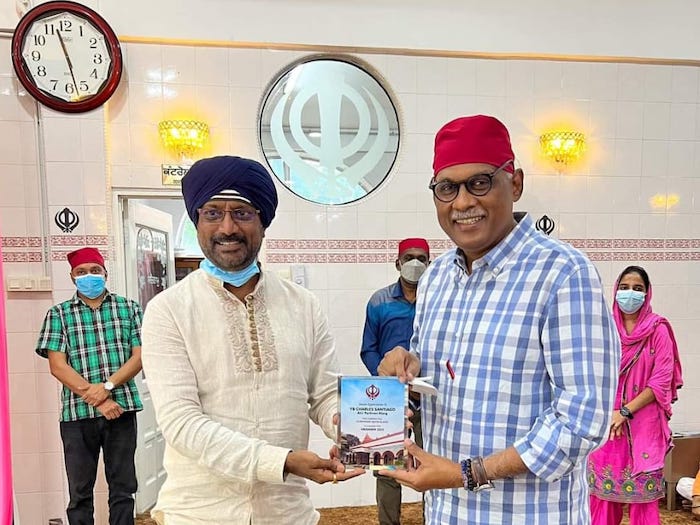
Klang MP Charles Santoago (right) receiving a momento from Gurdwara Sahib Klang committee president Santokh Singh at Vaisakhi event on 14 April 2022 – Photo: Supplied
By Asia Samachar | Malaysia|
Klang gurdwara expects to receive RM50,000 federal government to pay for its infrastructure and maintenance works.
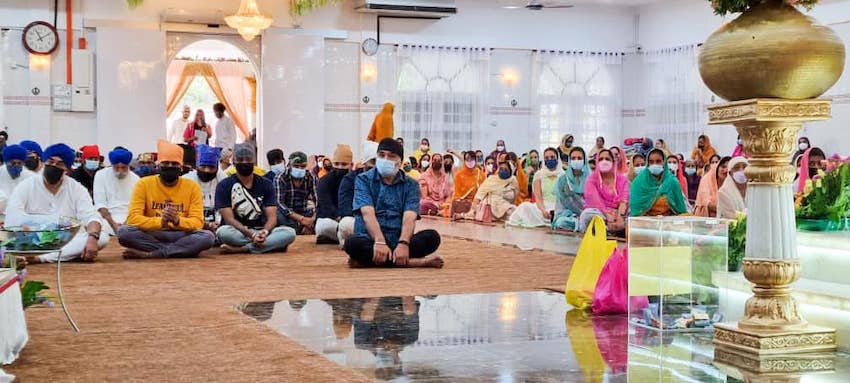
Klang parliamentarian Charles Santiago announced the funding for Gurdwara Sahib Klang (GSK) when he visited the Sikh place of worship on Thursday (April 14) for a Vaiskahi celebration.
“It was a great opportunity to see the Sikh community come together after the two years of the pandemic at their place of worship….It was also an opportunity to recognise the great contributions the Malaysian Sikh community who have helped us during times of need,” the Klang MP shared on his social media after the visit.
GSK committee president Santokh Singh that GSK has already received confirmation via email the approval for the funding coming from the Implementation Coordinating Unit under the Prime Minister’s Office (PMO).
“The funding should reach us within us two weeks,” he told Asia Samachar.
Kang gurdwara celebrating Vaisakhi on 14 April 2022 – Photo: Charles Santiago Facebook
ASIA SAMACHAR is an online newspaper for Sikhs / Punjabis in Southeast Asia and beyond.Facebook | WhatsApp +6017-335-1399 | Email: asia.samachar@gmail.com | Twitter | Instagram | Obituary announcements, click here
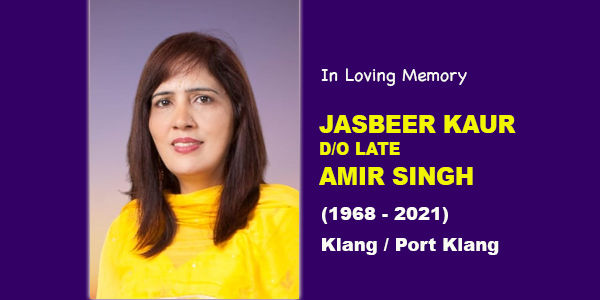
Beloved mother, a loving wife, caring sister, generous aunty, determined mentor, faithful friend and, most importantly, a beautiful soul.
Husband: Daljit Singh
Children: Jaskiran Kaur
Path da Bhog: 7 May 2022 (Saturday), from 10 am -12 noon, at Gurdwara Sahib Port Klang
Contact:
Jaskiran Kaur 016 653 1495
Daljit Singh 016 303 3916
Sivender Kaur @ Cindy 013 636 5596
Amarjit Kaur @ Ambay 017 366 5627
A golden heart stopped beating, Hard working hands at rest, God broke our hearts to prove to us He only takes the best.
| Entry: 16 April 2022 | Source: Family
ASIA SAMACHAR is an online newspaper for Sikhs / Punjabis in Southeast Asia and beyond.Facebook | WhatsApp +6017-335-1399 | Email: asia.samachar@gmail.com | Twitter | Instagram | Obituary announcements, click here |
L-R: Moe Sihota, Gary Grewal, NinaGrewal and husband Gurmant Grewal, and Ujjal Dosanjh
By Prabhjot Paul Singh | Opinion |
Indo-Canadian politicians after establishing their credibility at the community level, and now, on the basis of their track record, are emerging as a strong political entity with their growing presence on the provincial and federal stage. When Ontario goes to polls in first week of June, they will be major playmakers holding their past record since their entry in provincial politics in British Columbia in 1986 has been a success story that every immigrant community across the globe should emulate.
After making a dent in the political scenario of the province of British Columbia in Canada in the early 80s when they sent Moe Sihota to the state legislature as an elected MLA on the New Democratic Party ticket, South Asian politicians have come a long way. They have not only scripted a success story but are a vibrant and rapidly growing political entity that has successfully spread its wings as both federal and provincial lawmakers.
Born in Duncan, Moe – Munmohan Singh – Sihota has been the second generation politician of Indian origin who served on the BC Cabinet in different capacities before heading the BC NDP.
“Immigrants from South Asia take more interest in politics back home than flex their political sinews in the new countries of their domicile. They, somehow, do not get assimilated in their new political environments.” This observation, made by one of the scholars-cum-writers on the Indian diaspora about 30 years ago, now needs to be revised.
The South Asian politicians are now more into Canadian politics at all levels – from municipal to federal – than remaining involved in politics back home. Their diminishing interest in politics back home was evident from their token presence in the just concluded Punjab Vidhan Sabha elections that gave a landslide win to the Aam Aadmi party with 92 of 117 seats.
South Asian immigrants now not only occupy 20 odd seats in the House of Commons but also have one of them as the leader of a major federal party, the NDP. It is this leader, Jagmeet Singh, who earlier sat in the Ontario Provincial Parliament for nearly two terms, signed an agreement with the minority Liberal Government of Justin Trudeau to keep it in office till the completion of its term in 2024, for getting important demands of NDP, including free dental care, accepted.
What started as a single seat in the British Columbia Provincial Parliament in October 1986 has now spread to five Provincial Parliaments that have South Asian politicians as members. The latest on the list is Saskatchewan that had in 2020 elected its first ever Indo-Canadian Gary Grewal from Regina.
The South Asian politicians in general and Indo-Canadians in particular will now be sending 50-odd candidates for the ensuing elections to the Ontario Provincial Parliament in the first week of June. Besides representing the ruling Conservatives, they will also be contesting under the banners of Liberal, NDP, Green and other parties.
Interestingly, most of these candidates are not only second generation Canadians but are also well qualified professionals, including lawyers, teachers, nurses, engineers and social activists with degrees from top universities in Canada. Only a handful of first generation politicians will be in fray for the June polls.
The growth of Indo-Canadian politicians has been phenomenal. Fourteen years after Moe Sihota was elected to British Columbia Provincial Parliament, Ujjal Dosanjh earned the distinction of becoming the first Indo-Canadian to take oath as Premier of British Columbia.
The Indo-Canadian community, especially Punjabis, have, since then, not looked back.
Though initial political successes came in British Columbia under the banner of NDP, the South Asian politicians jumped on the Liberal bandwagon for rapid strides in Canadian politics.
The 1990 Calgary Convention of the Liberal Party, leading to the election of Jean Chretien as its leader, was a milestone, for it formed a solid, loyal voting block for the future Prime Minister of Canada. It was the first time the community organised itself as a political force.
Some still believe that the events back home in 1984 was a strong factor that mobilised a small but highly vociferous community into a political group.
Now 30 years later, the Indo-Canadian community not only boasts of Indo-Canadian as Defence Ministers of Canada in Harjit Singh Sajjan or Anita Anand or a Punjabi as the first woman Leader of the House of Commons in Bardish Chagger or first Punjabi Premier of British Columbia in Ujjal Dosanjh but also several ministers starting with Herb Dhaliwal, Navdeep Bains, and Amarjit Sohi ; Gurbax Malhi, the first turbaned Sikh as Member of the House of Commons for five successive terms; and Grewals, Gurmant and wife Neena, as the first Punjabi couple in Parliament, but also several Punjabis sitting in Provincial Parliaments of Ontario, British Columbia, Manitoba, Alberta and Saskatchewan.
In Ontario , Raminder Gill, who represented the Conservative Party, was one of pioneers of Punjabi politicians to be elected as a Member of the Provincial Parliament. Since then, the number of Punjabi politicians as MPPs (Members of Provincial Parliament or MLAs in common parlance) has been growing with every election.
Dr Gulzar Cheema has the distinction of sitting in both Manitoba and British Columbia Provincial Parliaments.
Besides the 1990 Calgary convention of the Liberals, the emergence of this new phenomenon of ethno-politics in Canada is also linked more to the election of three Indo-Canadians to the House of Commons in 1993 — Herb Dhaliwal, Gurbax Singh Malhi and Jag Bhaduria — it has been gradually gaining ground to what the Canadian media used to describe as the “apna factor”, symbolising a movement that was gaining strength using the “block voting” technique.
Arguments given in favour of the “apna factor” and “block voting” techniques were substantiated by the fact that most of the political success stories, for example in Ontario, came from the suburbs of major cities like Brampton, Mississauga and Scarborough of the Greater Toronto Area. It is true that not many politicians of South Asian origin have won from the main cities. But things are changing.
Late Deepak Obhrai, who won from Calgary East for a record number of times, used to attribute the influence of the Indo-Canadian community to a passion for politics that he believed was rooted in a movement that led to India’s Independence from Britain in 1947.
It is pertinent to mention here that Kamagata Maru or the Ghadar Movement, too, took off from the shores of British Columbia in Canada, the region from where the battle for political recognition began. The then Indo-Canadians or Indian immigrants worked as lumberjacks and participated in development projects, before getting together and heading homewards to get their motherland freed.
It was argued that the freedom movement galvanised the whole nation as every cross-section of society was involved. It infused Indians with an intense interest in politics that is still palpable in the Indo-Canadian community, which has been called the “most politically active ethnic group in Canada now.”
Interestingly, the Indo-Canadian community mostly supported the NDP in British Columbia in provincial elections. It also ensured that Sukh Dhaliwal now and Herb Dhaliwal earlier retained their seat in the House of Commons as Liberals. In Alberta, the Indo-Canadian community, though small in number, elected more Reform or Conservative MPs. In Ontario, initially they used to go with Liberals in Federal elections but gradually started supporting Conservatives also. It has supported both Liberals and Conservatives in the provincial elections.
That diversity of view is seen at the elected level, where there are MPPs or MPs with the Reform, Liberals, NDP and Conservative parties. Some former Canadian MPs of Punjabi origin, including Gurbax Malhi, used to attribute the success of Indo-Canadian politicians to timing rather than to the “apna factor”. They argued that Indo-Canadian politicians had spent many years establishing their credibility at the community level, and now on the basis of their track record, they are getting widespread voter support to jump to the provincial or federal stage.
To be continued.
Prabhjot Singh is a veteran journalist with over three decades of experience covering a wide spectrum of subjects and stories. He has covered Punjab and Sikh affairs for more than three decades besides covering seven Olympics and several major sporting events and hosting TV shows. For more in-depth analysis please visit probingeye.com or follow him on Twitter.com/probingeye
ASIA SAMACHAR is an online newspaper for Sikhs / Punjabis in Southeast Asia and beyond.Facebook | WhatsApp +6017-335-1399 | Email: editor@asiasamachar.com | Twitter | Instagram | Obituary announcements, click here
We would like to express our sincere gratitude to everyone who have conveyed their condolences, prayers and loving support rendered during the bereavement.
Path da Bhog: 24 April 2022 (Sunday), from 10am to 12pm, at Wadda Gurdwara Sahib, Ipoh, followed by Guru ka Langgar.
Contact:
Baljit 013 581 3432
Kalwinder 016 549 4877
Raven 012 302 2456
| Entry: 16 April 2022 | Source: Family
ASIA SAMACHAR is an online newspaper for Sikhs / Punjabis in Southeast Asia and beyond.Facebook | WhatsApp +6017-335-1399 | Email: asia.samachar@gmail.com | Twitter | Instagram | Obituary announcements, click here |
MP Carrie Tan (right) getting pani puri lesson from Simran Kaur at Yishun gurdwara Vaisakhi event on 15 April 2022 – Photo: Carrie Tan Facebook
By Asia Samachar | Singapore|
Yishun gurdwara launched a book capturing the history of Singapore’s “Northern Sikhs” at the sideline of its Vaisakhi event today (April 15).
The book is entitled ‘Singapore’s “Northern Sikhs” and their Gurdwaras: The historic Journey of Gurdwara Sahib Yishun‘.
Gurdwara Sahib Yishun celebrated the 25th anniversary of its present gurdwara complex in August 2021.
While it may appear to be the youngest and newest compared to six other gurdwaras in Singapore, its history is as old as any of them. Its origins go back to the colonial interwar years, where three gurdwaras existed in Northern Singapore during the British days. They are Naval Police Sikh Temple, Sembawang Sikh Temple and Jalan Kayu Sikh Temple. Over time, they got merged into one.
One of the guests at the event were Carrie Tan Huimin, a Member of Parliament (MP) representing the Nee Soon South ward of Nee Soon Group Representation Constituency since 2020.
In an entry at her social media account, she said: “Sikhism respects all faiths, and is of the belief that everyone should have their own freedom to practice whatever faith they choose. Defenders of the right of each individual to choose their beliefs – that is a beautiful thing to defend.”
She added that she got to know Simran Kaur who made the ‘delicious’ pani puri to feed all those who visit the gurdwara. She shared a photo of her and Simran (in yellow), ‘teaching me how to stuff the filling into the crispy shell’.
BOOK COVER: Singapore’s “Northern Sikhs” and their Gurdwaras – The historic Journey of Gurdwara Sahib Yishun
ASIA SAMACHAR is an online newspaper for Sikhs / Punjabis in Southeast Asia and beyond.Facebook | WhatsApp +6017-335-1399 | Email: asia.samachar@gmail.com | Twitter | Instagram | Obituary announcements, click here
Raman Singh and his parents Jas and Roopa, close friends of Fatehpal Singh Tarney – Photo: Fatehpal
By Fatehpal Singh Tarney | Opinion | United States |
American troops go into combat with the idea that freedom isn’t free and they pay for it. That freedom includes freedom of religion. The country is more diverse than ever before and it is vital that the military reflects this reality.
There was a time when beards and long hair were acceptable and even commonplace in the American military. Civil War photos from both the Union and the Confederacy document this. My take is that all this changed when Prussian military prowess made an impact on the American military in the late 19th century. This included what was known as the Prussian “high and tight” haircut. There was always a mixed reaction to mustaches. I think there were better role models given that Prussian militarism contributed to both 20th century world wars.
I recall in Vietnam, a sergeant reprimanded for his mustache being too long. There are often times when the military prioritizes quite petty matters having little to do with winning a war. Trivial concerns adversely affect morale. When I think of impressive mustaches, I think of Field Marshall Sam Manekshaw, the Chief of the Army Staff of the Indian Army during the Indo-Pakistani War of 1971. Then there is Lt. General Jagjit Singh Aurora. Two of the world’s greatest military commanders!
The U.S. Marines are the military branch most resistant to change. Of course, there is a place for tradition and uniformity, but this can be excessive – especially in the Marine Corps. Marines resisted blacks joining and women serving in combat. Now, the percentage of blacks in the Marine Corps is higher than in any other service branch. Marine inconsistency is quite clear. During our great commitments in the Middle East, the Marines, desperate for recruits, were accepting enlistees with tattoos from head to toe – people who were rejected by the U.S. Army.
A highly-decorated and diverse British Army unit. Top: Field Marshal Manekshaw Bottom: General Jagjit Singh Arora
Marine resistance to change in previous decades often resulted in obsolete equipment! We went to Vietnam in 1965 with 1930 vintage suspender straps that were in no way useful in supporting a cartridge belt. We had WWII/Korean War metal canteens that were noisy and already rusted. My advantage was being fluent in Vietnamese, which enabled me to acquire stolen U.S. Army equipment from the local black market. I was quite popular given my ability to get plastic canteens (they neither rusted nor made noise in the bush), better suspender straps and rifle magazine pouches that were standard issue in the Army.
There are Sabat-Surat Sikhs [Sikhs who maintain their bodily hair] serving in other branches of the U.S. military with no negative effects on performance or morale.
The U.S. Marines, and so many other organizations, have a persistent inertia, which is a resistance to change – regardless of how positive that change could be. For example, “Why should we have observant Sikhs in the Marines now? We never had them before!” The Marines claim their boot camp (basic training) requires uniformity. What uniformity is achieved when there is one recruit with no ink next to another recruit with tattoos from head to toe?
The Marine Corps claims that beards put lives at risk. This is nonsense! It is interesting how many inter-service special operations personnel sport beards. These are the most elite troops we have with the most combat experience. Beards are considered jaunty in these units and manifest self-confidence. Moreover, the argument that beards prevent adequate seals on gas masks has been disproved time and time again here and in armies around the world.
I wish more military leaders and politicians in America would look closely at the diversity in the Indian and United Kingdom militaries and see that diversity is an asset – not a liability to effective performance in combat. Does respecting religious diversity in basic training programs in the Indian military adversely affect esprit de corps: pride, loyalty, and combat performance? I think not!
Franklin Paul Tarney [a.k.a. Fatehpal Singh Tarney], an ex-Marine of Vietnam era, has been a Sikh for over 40 years. He was very demoralized after the Vietnam War, but Lt. Gen. Jagjit Singh Aurora and his leadership in the 1971 Indo-Pakistani war stimulated by interest in Sikhi. He is proud to be one of the few Western Sikhs to have been president of a predominantly Punjabi Sadh Sangat. A retired history teacher and coach of tennis, soccer, and lacrosse, Tarney is actively involved in interfaith programs in Florida and Michigan. The initial version of the article was first published at Gurmat Learning Zone (GLZ), an email-based Gurmat discussion group.
ASIA SAMACHAR is an online newspaper for Sikhs / Punjabis in Southeast Asia and beyond.Facebook | WhatsApp +6017-335-1399 | Email: asia.samachar@gmail.com | Twitter | Instagram | Obituary announcements, click here