

















UA-56202873-1
Page 525

A more vibrant Samelan

1
Younger kids exposed to the Guru Granth at the SNSM annual camp – Photo: Harmit Singh
By Jagdesh Singh | OPINION |

It was all so familiar. Almost typical. The sanggat in the main darbar of Khalsa Land tucked between the foothills of Kuala Kubu Baru sang as loud, almost in chant like manner, to welcome the new ablakhees (initiates) into the Khalsa fold. The eminent part time lawyer and full time preacher, Harcharanjit Singh @ Raja led this congregation into almost a frenzy, in his usual enigmatic style.

This scene isn’t dissimilar at all to the very same ceremonial part of the Annual Gurmat Parchaar Samelan that have been organized by the Sikh Naujawan Sabha Malaysia (SNSM) for the past 56 years. Yet, the formulaic template still evokes spine tingling emotions for me every time. The bagpipes, the drums, the lyrics all mashed into a memory that lingers on for days and sometimes even for weeks.

But the same copy and paste approach to the camp over the years is also a double edged sword. At one point, it was considered the true tried and tested approach that other regional Sikh centers decided to emulate. Sydney and Bangkok are prime examples. But these recent days, this template is considered almost unmodern. Sabha has been accused of not keeping up with the times, millennials and the following generations now question everything including what is being preached at these Sikh camps.

The youth are now believed to be more inquisitive.The internet provides immediate answers at their fingertips. The old ways of preaching and lecturing, that worked miracles for my generation, may be impediments to the current generation. At least this was one of the main theories on the perceived lower attendance for these annual samelans over the past handful of years. But the numbers say otherwise. 760 total participants, including 285 sewadars (as the volunteers are called) tell us that the attendance is as healthy as before. If there was any genuine reason for a dip in the attendance, my first thought would be camp-fatigue for our youth. But I digress.

Having spent the whole week at the annual camp, thoroughly enjoying the company, the rough and tumble of being closest to nature and a jam packed schedule, my views and observations could very well be biased. But here goes.

The lectures were all focused on Guru Nanak and his teachings from his 4 Udasis. The material prepared for both students, participants and the lecturers were of very high quality, printed in color and distributed electronically. But what impressed me more than anything was the activities planned in class and outside of class throughout the day. It was evident that the messages that were being preached or conveyed were realistic and applicable to the daily challenges of the young in school and at home. I remember the messages we got in the good old days were a bit more superficial and prescriptive. As in ‘Thou Shall Keep Hair and strive for being an Amritdharee’. Rather, what was being repeated daily over the last seven days were on applying Baba Nanak’s teachings on being a kinder, more humane caring human being, espousing equality and practicality in all walks of life.

The children resonated with these messages, evidently. And the relevance were further fortified with the new roles of Junior Sewadars being the bridge between the young participants to the more senior organizers of the Samelan. The activities were a breadth of fresh air for many of the returning participants, including myself.

It was indeed a good move by Sabha to empower the younger generation of sewadars to design and plan these creative activities like Shark Tank and Samelan Olympics (just to name a couple) that allowed feedback loops from the participants themselves. This new generation of millennials, more in touch with the their target audience, have proven that Sabha’s future are in good hands based on the smiling faces at the end of the Samelan. The proof, as they say, is in the kheer pudding.

Jagdesh Singh, a Kuala Lumpur-based executive with a US multinational company, is a father of three girls who are as opinionated as their mother

* This is the opinion of the writer, organisation or publication and does not necessarily represent the views of Asia Samachar.


ASIA SAMACHAR is an online newspaper for Sikhs / Punjabis in Southeast Asia and beyond. Facebook | WhatsApp +6017-335-1399 | Email: editor@asiasamachar.com | Twitter | Instagram | Obituary announcements, click here |

British university students design hand-cranked washing machine for refugees

1
Navjot Sawhney (right) during a trip to Kurdish Iraq on a field trial – Photo: The Washing Machine Project Facebook page
By Asia Samachar Team UK |

A British engineering graduate is pushing hard to make available low-cost washing machines for the those who need it most: refugees and the poor.

Navjot Sawhney and a band of volunteers under the banner of ‘The Washing Machine Project’ are en-route to sending the first 50 of the newly designed hand-cranked machines to refugee camps in Iraq.

The team led by the Navjot — a 29-year old engineer who is studying for an MSc in Humanitarianism, Conflict and Development — has finished manufacturing 50 of the machines called Divya.

Why Divya? That’s the name of Navjot’s friend in southern India who told him of the physical struggles she and others like her faced when washing clothes without a machine.

The journey involved seven weeks of manufacture involving more than 75 volunteers from all over the country.

In an Facebook update, the University of Bath student said they had interviewed 80 displaced families interviewed – directly feeding into the product design.

“Thousands of hours spent developing these washing machines for the last 12 months. For one cause. To alleviate the burden of unpaid domestic work such as hand washing clothes.

“These machines are now on their way to Oxfam Iraq – we will distribute across refugee camps in January,” he said.

The Washing Machine Project is a social enterprise meant to alleviate the burden of handwashing clothes for everyone, everywhere. It is run by volunteers who each bring unique skills – in engineering, data science and humanitarian action – to bear on the project.

In an interview with British newspaper the Daily Mail, Navjot said: “In March 2019, we were lucky enough to be invited out to Kurdish Iraq by Care International, where we conducted a week-long field trial with two of our prototypes with 79 families in five IDP (internally displaced person) camps.

“The feedback was overwhelmingly positive and we were given some useful direction on how we could further improve our design. We have developed partnerships with large international NGOs and a funding pipeline.

“What drives us forward is a common goal to make the world a better place with the skills we have. The exciting thing is that we’re only just getting started.”

Hand washing is said to take some people more than 12 hours a week in deprived countries, preventing some women and girls in charge of the task from pursuing education and straining their bodies, leading to chronic back and joint pain, the report added.

The project has launched a fundraising drive to raise £2,000.


ASIA SAMACHAR is an online newspaper for Sikhs / Punjabis in Southeast Asia and beyond. Facebook | WhatsApp +6017-335-1399 | Email: editor@asiasamachar.com | Twitter | Instagram | Obituary announcements, click here |
The life of a 103-year-old grandmother

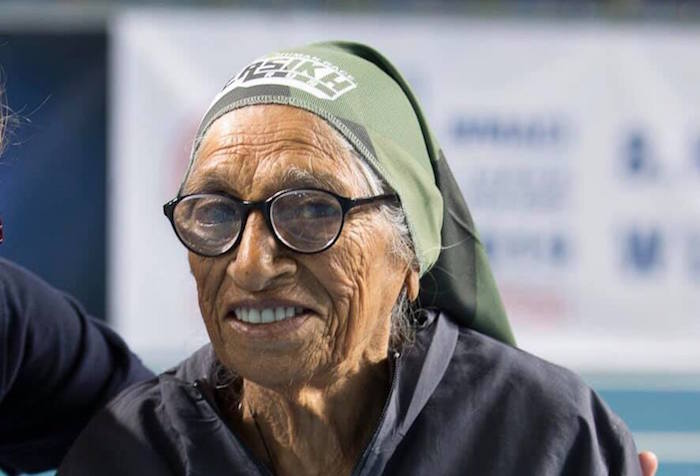
Man Kaur – Photo: Personal Facebook / FitIndia
By Priscilla Tawie | NEW SARAWAK TRIBUNE | MALAYSIA |

India’s oldest athlete was in Kuching for the 21st Asia Masters Athletics Championship. At 103 years old, Sardarni Man Kaur had lived a century and is still living life through her passion for sports.

As a young girl, Sardarni Man Kaur, 103, did not receive any education. However, her late father taught her to read and write in her mother tongue Punjabi. She also studied the Sikh scripture. Before being a full-time housewife in 1934, Man Kaur served the Queens of King of her hometown, Patiala in the early 30s.

Wanting her to maintain a fit lifestyle, eldest son Gurdev Singh had asked his mother to run the track field. “She had no problems doing so at the age of 93 in 2009,” he said.

Ever since then, she enjoyed running and had quickly improved. Two years later, she joined her first competition.

With three children on board, the centenarian represented India in the World Masters Athletic Championship held in the US where she had won two gold medals in the 100- and 200-metre races. From there, she had broken the existing world record and was declared Athlete of the Year 2011.

Apart from running, she also participates in javelin and shot put. The energetic lady had won more than 80 medals from various countries.

Man Kaur gets up in the wee morning between 5am and 6am. She immediately bathes, and washes her clothes by hand. “As Sikh Scriptures say the Almighty is residing in all human beings, so I serve Him by washing his clothes, offering good food and exercising to keep His house liveable,” the devout said.

When she was 50, Man Kaur started practising a vegan diet lifestyle. Gurdev curated her eating lifestyle according to nutritional needs. Hence, when she wakes up, the first thing she drinks is a glass of 300 millimetres of kefir. “Then I go for training.”

During lunch and dinner, she eats chapatis made from sprouted wheat. When thirsty, she will drink soy milk and tea made from different tree leaves. “I also eat some nuts and seeds.”

“I feel good and thank God for giving me such type of body,” said Man Kaur. However, she is thankful for having lived with her husband until several years ago when he died at the age of 102.

When asked to compare the lifestyle of decades ago to now, Man Kaur simply said that before there were not much to desire. “Whatever we had we felt happy. No ill will against anyone. We lived in harmony with different communities.” She also added that fresh food before was without fertilisers or gardening sprays.

Mann Kaur (right) and her son Gurdev Singh on the cover of today’s (4 Dec 2019) New Sarawak Tribune- Photo: Nurul Fazlyn / New Sarawak Tribune

In August this year, Man Kaur was diagnosed with gallbladder sludge. Doctors had recommended the removal of the gallbladder. Being a believer of homoeopathic medicine, Man Kaur was treated and had no problem until today.

“Otherwise she never took any medicine for the last so many years,” said her son, Gurdev. Man Kaur also suffers from spine scoliosis at the lower level. While she feels difficult when walking, she had no problem running. Nonetheless, it is not an obstacle for her to move forward with sports.

Being Man Kaur’s cheerleader, manager, interpreter, trainer Gurdev was a member of the football team and the athletic team of his school and college. Apart from that, he also runs.

To date, Gurdev has more than 80 racing medals won since 1992. After graduating, he served in the Punjab Agricultural University as Senior Technical Assistant but after eight years of service resigned and started a photocopying business.

As his mother’s nutritional advisor, Gurdev, who prepares the food disclosed that he also eats the same diet as his mother.

Story courtesy of the New Sarawak Tribune published on 14 Dec 2019 here.


Marathon Fauja to get British Empire Medal (Asia Samachar, 5 Jan 2015)


ASIA SAMACHAR is an online newspaper for Sikhs / Punjabis in Southeast Asia and beyond. Facebook | WhatsApp +6017-335-1399 | Email: editor@asiasamachar.com | Twitter | Instagram | Obituary announcements, click here |

Malaysia, India in second spat within weeks

1
By Asia Samachar Team | MALAYSIA |

Just weeks after a minor row, Malaysia and India are seemingly headed for another round of a diplomacy spat.

Malaysian envoy in India was summoned for a meeting with the nation’s Ministry of External Affairs (MEA) in the second spat between the two countries arising from comments by the Malaysian prime minister.

On Saturday, Malaysia’s acting head of mission was summoned for India to lodge a protest over remarks made by Prime Minister Mahathir Mohamed against the Citizenship (Amendment) Act, 2019, reports The Wire.

The summoning of the Malaysian embassy’s charge d’affairs took place a day after India had issued an official statement urging the Malaysian leader to refrain from commenting on India’s internal affairs, “especially without a right understanding of the facts”, the report added.

Mahathir had expressed regret that India as a secular state would take action to “deprive some Muslims of their citizenship”.

“Already people are dying because of this law, so why is there a necessity to do this thing when all this while, for 70 years almost, they have lived together as citizens without any problems,” he added.

Quoting unnamed ‘official’ sources, the newswire reported that the Malaysian envoy was told that “such remarks are neither in keeping with accepted diplomatic practice of non-interference in each other’s internal affairs, nor with the state of our bilateral relations”.

“It was also conveyed that such remarks are both ill-informed and insensitive. Malaysia was asked to take a long-term and strategic view of the bilateral relations,” it added.

A day earlier, it reported that India had described Mahathir’s comment were “factually inaccurate” and called upon “Malaysia to refrain from commenting on internal developments in India, especially without a right understanding of the facts.

The relations between the two nations came under watch when Dr Mahathir made pointed remarks in a United Nation’s address on India’s handling of the Kashmir issue.

In his speech during the general debate of the 74th session of the United Nations General Assembly in New York, Dr Mahathir said: “The helplessness of the world in stopping atrocities inflicted on the Rohingyas in Myanmar had reduced the regard for the resolution of the UN. Now, despite UN resolution on Jammu and Kashmir, the country has been invaded and occupied. There may be reasons for this action but it is still wrong. The problem must be solved by peaceful means. India should work with Pakistan to resolve this problem. Ignoring the UN would lead to other forms of disregard for the UN and the Rule of Law.”

Following the speech, there had been calls in India for the country to drop Malaysian palm oil.


ASIA SAMACHAR is an online newspaper for Sikhs / Punjabis in Southeast Asia and beyond. Facebook | WhatsApp +6017-335-1399 | Email: editor@asiasamachar.com | Twitter | Instagram | Obituary announcements, click here |

How to raise children? Some personal thoughts.

1
By Manjit Kaur (UK) | OPINION | UK |

Raising children in today’s busy materialistic world can be very challenging. There is a popular myth that raising a child should come naturally to a parent. In theory this might be true, but in reality, because of many factors, such as our childhood experiences, family dynamics, cultural attitudes, social norms, technology etc, raising a child is a very complex task.

In this brief post, having raised 2 children who are both now married with their own families, I thought it would be helpful to share 10 key lessons I have learnt about parenting.

1. Communication – It is important to engage with your children in an open and honest way. Of course, how you engage will change as they grow older, but most importantly, you have to adjust to their level. Active listening and reading their body language are really the key to effective communication with your children. A good parent by simply looking at their child can know if they are sad, happy, frightened, dishonest, troubled etc.

2. Love and Compassion – do not ever get tired of giving hugs to your children, which make your children feel secure and loved. The amazing thing is that your children will repay that love many times over your life. However, your love should be unconditional, otherwise it could backfire.  Never blackmail your children!

3. Equality – Each child is unique and we should not discriminate at all. In Panjabi culture, sadly there is a lot of discrimination based on gender and appearance. I had a girl and a boy, but I never treated them differently. Treating people equally is a key Sikh principle, but the best way to teach your children this value is to practice it yourself.  If we don’t do this, when the children grow up, they will accuse you of hypocrisy and may even turn against you.

4. Education – In Panjabi families, all we think about is that our children become doctors and lawyers. We see them as trophy’s to display to our friends and relatives. But this is wrong; our children are not property or investments! So, it’s really important for them to make their own educational choices, to realise and follow their own passion and to develop independent thinking. That said, we do have a role in the education our children, most importantly about our Sikh history, language and where we came from. That doesn’t mean we force our children to follow our path or to preach to them, but we should guide them to find their own true path and their own positive identity.

5. Making mistakes – All parents are terrified that their children will go against their wishes and make mistakes. But we must remember, for a child to become a independent rounded person, they need to make mistakes in order to develop self-confidence to make their own decisions. To rebel against parental authority is not only a natural thing, but important for the child to develop into an adult. This rebellion tends to begin around the age of 15/16 years and can last up to the early 20’s. Yes, parents need to set boundaries, but during this stage, we need to have a lot of patience and not be harsh on them.

6. Quality Time – We live very busy lives trying to earn money and please extended family and community. These are important, but not at the expense of neglecting our children. For this reason, it’s important for parents to spend quality time with their children. This can take many forms, from reading together, singing, playing, making things, going for picnics, walks/trips in the countryside, gatka, kirtan and Sikhi camps etc.

7. Freedom – Parents have a responsibility to protect their children but that doesn’t mean we put them in a cage. You have to let them explore the world and face challenges.  These can range from everyday challenges to activities like climbing mountains, cycle rides, camping etc. I believe children are like delicate flowers, but you should let them grow naturally and learn how to survive in the environment around them. I have seen too many parents who have overprotected their children and then suffered later when their children find it difficult to face the world on their own.

8. Ups and down – Life is not a straight journey and everyone has their ups and downs. In life the successful person is somebody who can deal with the challenges. Some challenges are real and we need to have patience and not to overreact. When faced with such challenges our role as parents is to create stability for our children, and often time can be a great healer. Some problems are just in our minds but because we over think they become bigger than they actually are. So, in life you have to be in high spirit (chardhi kala) and remember life is about facing and managing challenges. We may need others to help with our problems sometimes, but we must first try to deal with them ourselves and develop our own inner strength, and we should teach our children to do the same.

9. Knowing when to let go – As I said earlier, our children are nobody’s property. The role of parents is to help them develop so they can cope with life’s challenges. This means learning to let go, especially when they become adults and make their own choices; whether that is to do with career, marriage or even where they live. Parents are fearful that their children might abandon them, but, if you give them unconditional love and respect, then they will definitely not forget their responsibilities to you. Letting go is healthy for parents and children in many ways.

10. Never abandon Guru Granth Sahib – Faith can be a great help in raising a family. I have gained much strength from Guru Granth Sahib ji, as have my children.  Sometimes life can be cruel, but it is important at those moments not to abandon the Guru. Sadly, I have seen other parents, where they have conflict at home, either losing their faith or going to pakandi babas, who simply make things worse! Guru Granth Sahib has all the answers and we can access our guru though mobile phone apps like SikhitotheMax. So, when faced with major challenges I always taken a hukam nama and have encouraged my children to do so as well. I have never forced religion on them, but have encouraged them to develop their own love for Guru.

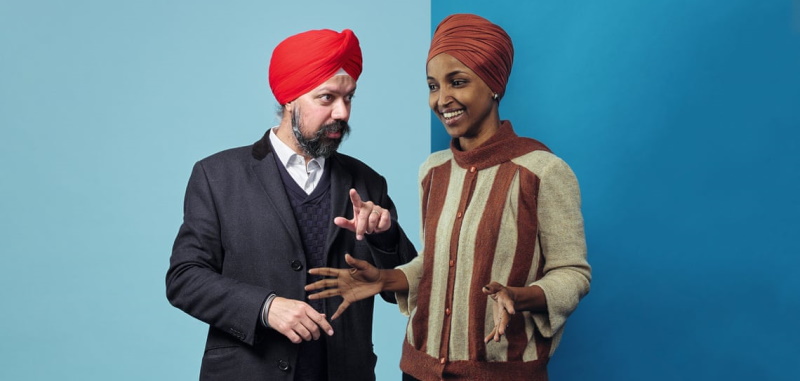
Tan Dhesi meets Ilhan Omar

0
Tan Dhesi and Ilhan Omar: ‘Given our majorities, we can’t be accused of just having sneaked in.’ – Photos: Suki Dhanda and Stephen Voss / The Guardian

Tanmanjeet Singh Dhesi and Ilhan Omar are trailblazers in their own ways.

Tan Dhesi, as he’s known, became the first turban-wearing Sikh MP after the 2017 UK snap elections. He won again in the recent general elections which were his party unable to oust the Boris Johnson-led Conservative Party.

Ilhan, a Democratic congresswoman from Minnesota, is the first person ever to wear a hijab in Congress.

Tan Dhesi, Labour MP for Slough, understands the law of firsts: the 41-year-old is the first member of parliament to wear a turban and, like Omar, has a reputation for speaking out against anti-Muslim sentiment in government. In September, during prime minister’s questions, Dhesi called on Boris Johnson to apologise for his remarks about Muslim women looking like “letterboxes” which, to cheers from the chamber, he called “derogatory and racist”.

The two politicians meet for the first time in November via Skype – Dhesi from his constituency office, Omar from Washington DC. As minority ethnic members of government, the MP and the congresswoman are both keenly aware of what is at stake in their respective countries’ forthcoming elections, and of what happens when political rhetoric lurches to the right.

These are difficult times and the two politicians seek, in their discussion, to reach across the Atlantic in a spirit of progressive solidarity.

“In our own way, we helped to break a glass ceiling,” says Tanmanjeet in the conversation.

Ilham says: “It’s not that we get elected because we’re different and special and interesting. We get elected because we speak to the heart of the challenges many of our constituents face.”

Read their full conversation, ‘Ilhan Omar meets Tan Dhesi: ‘We helped to break a glass ceiling’ (The Guardian, 21 Dec 2019), here.

RELATED STORY:

History making Sikh MPs back in British Parliament (Asia Samachar, 13 Dec 2019)


ASIA SAMACHAR is an online newspaper for Sikhs / Punjabis in Southeast Asia and beyond. Facebook | WhatsApp +6017-335-1399 | Email: editor@asiasamachar.com | Twitter | Instagram | Obituary announcements, click here |
Malaysian Jewel of Punjab

1
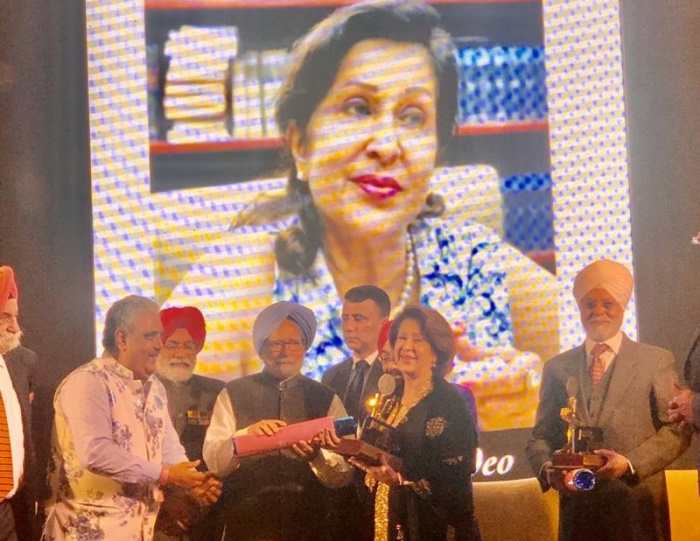
Former Indian PM Dr Manmohan Singh (blue turban) presents a token to Gurmit Kaur Deo during the launch of ‘Jewels of Punjab – Leading Global Punjabi Personalities Volume II’
By Sarjit Kaur MALAYSIA|

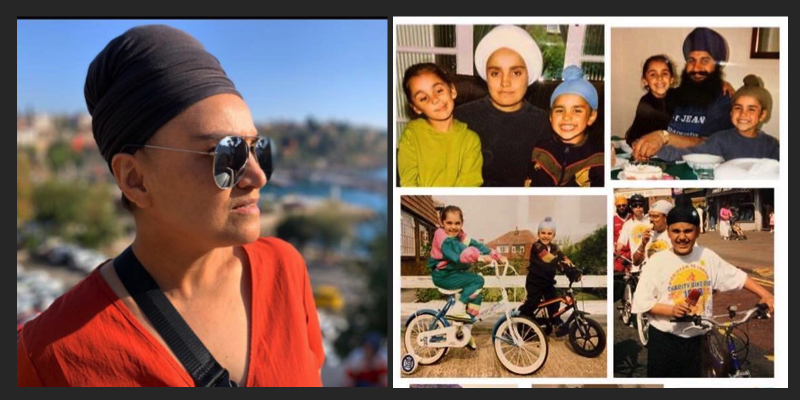
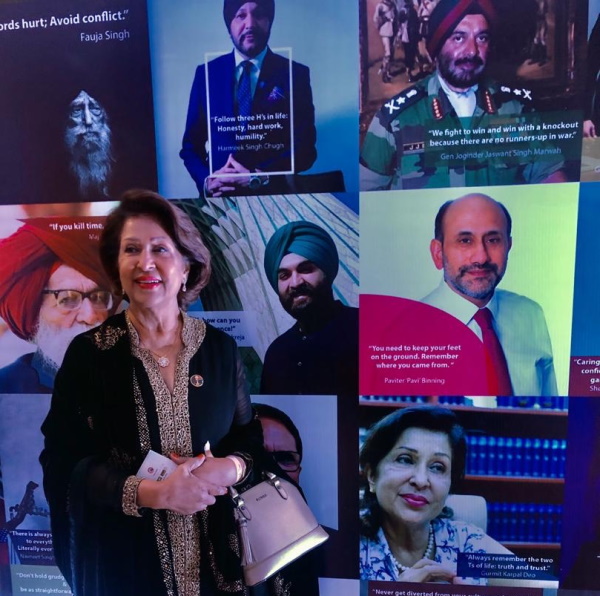
Malaysian Gurmit Kaur Deo, wife of respected politician and lawyer Karpal Singh, is featured in the second edition of the Jewels of Punjab book.

It was an honour for Gurmit who had always been in the shadows of her husband who passed away in a car accident in 2014, though she played a key role in the background.

“I’m truly humbled,” she told Asia Samachar after being feted at an event in New Delhi on Friday (20 Dec 2019). “My life was just around Karpal…giving him moral support all the way.”

The coffee-table book, ‘Jewels of Punjab – Leading Global Punjabi Personalities Volume II’, was unveiled by former Indian Prime Minister Dr Manmohan Singh. It pays tribute to global Punjabi personalities who have championed causes.

Gurmit’s ‘love and loss’ story is headlined ‘The Iron Lady’. She was born in 1948 in Narathiwat, the southern Thai province, where her parents had migrated from Punjab in the 1930s. She was the ninth of 13 children of Puran Kaur and Sohan Singh Gill. The family moved to Malaya when she was seven.

She married Karpal in 1970, whom she had known since they were kids in the backwaters of the then Penang.

“The story of my life can neither begin nor end without him. Had it not been for him, perhaps I would not have had a life as privileged as I have today,” she says in the book released by World Punjabi Organisation (WPO) in association with Maneesh Media.

WPO badges itself as an international body of Punjabis that is non-political comprising Punjabi industrialists, businessmen, sportsmen, journalists, artists and achievers in various fields from all over the globe.

The mention of Karpal evokes respect and admiration in many Malaysians, even his opponents in politics.

Today, two of Gurmit’s sons are parliamentarians while another is a state assemblyman in Penang, with her daughter also actively involved in politics. After the historic general polls of 2018, the couple’s second-born Gobind Singh Deo became a federal minister, a first for the Sikh community in Malaysia.

Gurmit Kaur Deo at the launch of ‘Jewels of Punjab – Leading Global Punjabi Personalities Volume II’

RELATED STORY:

Time for Sikh women to join politics, urges lawmaker Ramkarpal (Asia Samachar, 6 Aug 2019)

Karpal Singh’s arrest 31 years ago in Operasi Lalang (Asia Samachar, 28 Oct 2018)

Newly minted minister Gobind Singh Deo visits Sikh gathering in Malacca (Asia Samachar, 25 May 2018)


ASIA SAMACHAR is an online newspaper for Sikhs / Punjabis in Southeast Asia and beyond. Facebook | WhatsApp +6017-335-1399 | Email: editor@asiasamachar.com | Twitter | Instagram | Obituary announcements, click here |
IN LOVING MEMORY: Imerdeep Singh Sandu (Smiley) (1976-2019)

1st YEAR BARSI: 28 December 2019 (Saturday) at Gurdwara Sahib Ashby Road, Ipoh, from 6.30pm to 8.30pm followed by Guru ka Langgar | Malaysia

IMERDEEP SINGH SANDU (SMILEY)

Son of Jagdis Singh Sandu (Ipoh) & Ranjit Kaur Sandu (Ipoh)

FIRST YEAR BARSI in loving memory of our beloved Smiley will be held on 28 December 2019 (Saturday) at Gurdwara Sahib Ashby Road, Ipoh, from 6.30pm to 8.30pm followed by Guru ka Langgar.

Please treat this as a special invitation to you and your family and join us on this day to celebrate the loving memory of our dearest Smiley.

Contact:

Raveet Kaur Sandu 012-501 1784

Dr Simmrat Singh Sandu 012-505 1951


| Entry: 21 Dec 2019 | Source: Family

ASIA SAMACHAR is an online newspaper for Sikhs / Punjabis in Southeast Asia and beyond. Facebook | WhatsApp +6017-335-1399 | Email: editor@asiasamachar.com | Twitter | Instagram | Obituary announcements, click here |
YSA’s Sarabjeet Singh in the running for Singaporean of the year award

0
Sarabjeet Singh – Photo: The Straits Times
By Asia Samachar Team | SINGAPORE |

Sarabjeet Singh should be no stranger to Asia Samachar readers as he has been featured in a number of articles as we showcased the activities of the Young Sikh Association (YSA).

In a recent article, he shared about how he picked up the art of tying the turban.

This time around, the always obliging and ever ready to take on a challenge Sarabjeet has been picked Singapore’s largest newspaper as one of the 11 finalists for the The Straits Times Singaporean of the Year 2019 award.

One of the finalists the year before was Harbhajan Singh, a veteran nurse who was on the front line battling the Severe Acute Respiratory Syndrome (SARS) crisis.

The award seeks to recognise Singaporeans whose extraordinary acts of goodwill have improved their community and the lives of others. It also recognises Singaporeans who have put the country on the world map or persevered to overcome immense adversity.

Two weeks of online public voting for the award will begin on Dec 25.

Below is the article ran by the newspaper on him.


CONNECTING PEOPLE FROM DIFFERENT ETHNIC GROUPS

By Clement Yong | STRAITS TIMES | SINGAPORE |

When Mr Sarabjeet Singh was six years old and frolicking in a swimming pool, two Chinese girls asked him where his top was.

“I wore my hair long in keeping with the teachings of Sikhism and they had mistaken me for a girl,” Mr Singh, now 35, told The Straits Times.

“If only I had explained myself instead of angrily swimming away,” he added, saying the incident was a missed opportunity.

Today, the president of the Young Sikh Association (YSA) heads a YSA initiative called Cultural Community Conversations, which invites non-Sikhs to Sikh temples to help them understand Sikh religion and culture.

In September, Mr Singh and the YSA earned kudos when, instead of lashing out, they invited an Instagram influencer to the Central Sikh Temple after she had posted online that two men with turbans were “obstructions” to her view at the Singapore Grand Prix. The influencer said the visit to the temple helped her better understand other religious practices.

The success of that visit kick-started Cultural Community Conversations.

“I have come to realise that many of these incidents are caused not by malicious intent, but by ignorance. I knew her comments could have been made by any of my former students,” said Mr Singh, who used to teach geography and now works at the Education Ministry.

So far, a group from the Republic of Singapore Air Force, some teachers, as well as nearly 400 residents living near the Central Sikh Temple have either attended or set up meetings with the YSA.

“Many of those who live in the area tell me they thought the Central Sikh Temple was a mosque. The (influencer) incident has allowed more people to admit they don’t know much about Sikhism and Sikhs,” Mr Singh said.

Cultural Community Conversations is structured as informally as possible so people have greater liberty to steer discussions, an open approach much like the YSA’s work with Sikh groups in universities. YSA encourages Sikh students to take non-Sikh friends to temples.

Mr Singh, whose wife is Chinese, has also sought to convince others that Sikhs need not be defined primarily by their ethnic or religious traits. In Primary 4, he cut his hair short to fit in, telling his conservative father, who was in Canada on business, his decision in a teary phone conversation.

“My mum would tell naysayers that she would gladly eat soup made by my wife and that my wife enjoys her chapati. What matters are the person’s values. As Singaporeans, we have much in common.” The Straits Times (20 Dec 2019)


RELATED STORY:

How I learnt to tie my Phag (turban) (Asia Samachar, 15 Dec 2019)

Veteran Sikh nurse shortlisted for ST Singaporean of the Year 2018 award (Asia Samachar, 15 Oct 2018)


ASIA SAMACHAR is an online newspaper for Sikhs / Punjabis in Southeast Asia and beyond. Facebook | WhatsApp +6017-335-1399 | Email: editor@asiasamachar.com | Twitter | Instagram | Obituary announcements, click here |
First Malaysian to land award at UK bhangra awards

0
Kamal Chopra
By Jasrinder Kaur | MALAYSIA |

A Penang-based singer Kamal Chopra became the first Malaysian to land an award at the UK Bhangra Awards 2019.

The lawyer-turned-professional singer caught the attention of the UK award team with her mixed performances of Hindi, Punjabi, English, Malay, Tamil and Chinese songs.

She was crowned ‘Best International Artist’ at the event in Birmingham, United Kingdom, on 30 Nov 2019.

“The organisers looked at my one-year’s work. They also wanted to see what the person has done for the community, what kind of performances the person has been doing,” she told Asia Samachar.

Kamal also performed live at the Birmingham event along with Inderjit London, Subaig Singh and Jin & Seetal.

“It was a joy to perform before the audience,” she said.

The others who performed were K Mohito, Gurdeep Kainth, Khadija Dilnawaz, Pally Matharu, Vinay Bangar, Haripa Dancers, Bhangra Smash Up, Beat Asylum, Dance Bhangra, 4All2 Envy Entertainment and Birmingham Crew DJ’s.

Inspired by the award and spurred by her fans, she now plans to work with a UK-based producer to produce her original bhangra number.

“I’ve been doing covers all the while. It’s about time I come up with some original numbers. Fans have also requested for them,” she said.

Born in Petaling Jaya, Kamal had always enjoyed singing. But her legal profession and commitment to the family meant that she could not devote much attention to it.

“Everything changed about seven years ago, when my husband gave me the push to start singing again,” she said.

Kamal is married to Dr Sunil Chopra, a consultant radiologist and nuclear medicine physician practicing in a private hospital in Penang. The couple has three children aged 17 to 22.

She undertook training was under the Rockschool International Music & Performance Arts.

Kamal sings professionally at corporate events, public shows, charity events and weddings. She has also made pro-bono appearances at fundraising and charity events for the Sikh gurdwaras, the Penang Sikh Association and the Penang Gujarati Association.

In 2014, she performed in a charity musical called Viva La Pinang in aid of Penang Family Health Development Association, directed by Joe Sidek.

Her first experience in singing with a live band came when she became the lead singer for Kasajam, a family based band in Penang made up of a group of doctors, lawyers and other professionals.

She is currently the lead singer of a six-piece rock band in Penang called Vintage Rising, also made up of a group of professionals.

She has also made several song covers and mash-ups on YouTube such as Bulleya/Skyfall (which is a mash up of a Hindi and English song), Tum Hi Ho/Galliyan (a mash up of two Hindi songs) and One Call Away/Neeyum Naanum (which is a mash up of an English and Tamil song). Her latest entry is a cover single of a popular 1980’s Hindi song called Yeh Wada Raha.


ASIA SAMACHAR is an online newspaper for Sikhs / Punjabis in Southeast Asia and beyond. Facebook | WhatsApp +6017-335-1399 | Email: editor@asiasamachar.com | Twitter | Instagram | Obituary announcements, click here |