

















By Parmeet Kaur | Eulogy |
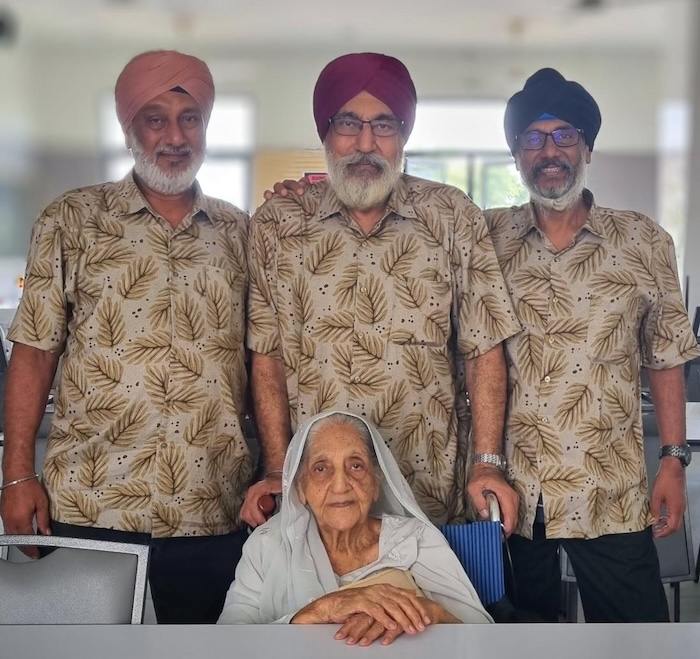
On behalf of the family, thank you for being here this evening as we celebrate the life of our matriarch, our beloved Iron Lady, Mata Achint Kaur, whom we lovingly called Maaji.
To understand her strength, we must look back at the incredible history she carried. Maaji was born on July 13, 1924, and passed away peacefully on July 1. In just two days, we would have gathered to celebrate her 102nd birthday.
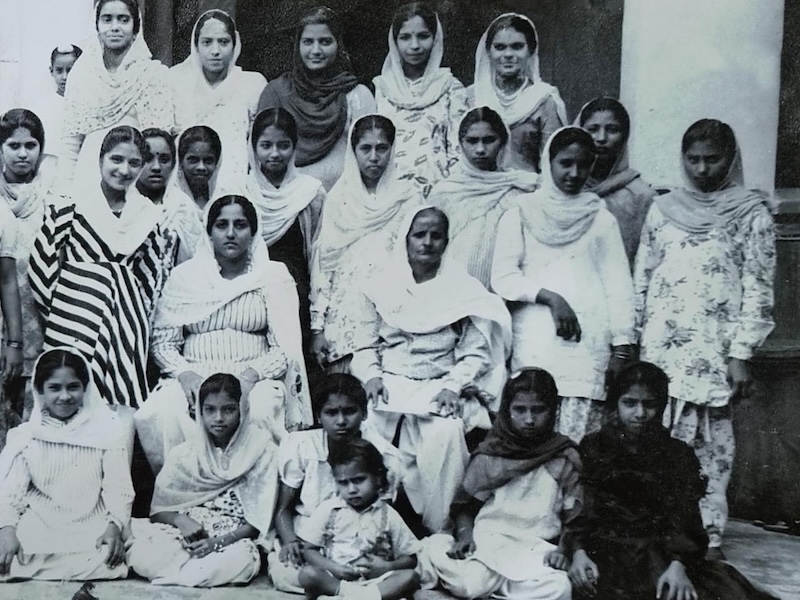
Maaji came from a line of remarkable resilience. Her mother, Pram Kaur, came from a place in northern Pakistan that she recalled as “Kali Maati”. She was a woman ahead of her time. When told that she was to be married, she insisted on completing her education first. Her husband, my great-grandfather, Bishan Singh, agreed, and his family enrolled her in the very first girls’ boarding school in Kairon, Punjab, where she completed her secondary education.
Although Maaji’s father was not formally educated himself, he worked hard as a contractor here in Malaysia. Maaji’s mother put her education to use by managing the finances, paying the workers and drafting any official letters that were required.
But life tested Maaji at a very tender age. She was only nine when her mother passed away, leaving behind five young children. Following this profound loss, Maaji was taken in and raised by the Pethe family in Ipoh—the loving family of Darshan Babaji, Nikki Nanjo Maaji and Waddi Nanjo Maaji.
Because of the age gap, Maaji naturally stepped into a mothering role for them. She taught herself to sew so that she could make clothes for the younger ones, while Nikki Nanjo Maaji taught her Punjabi in return.
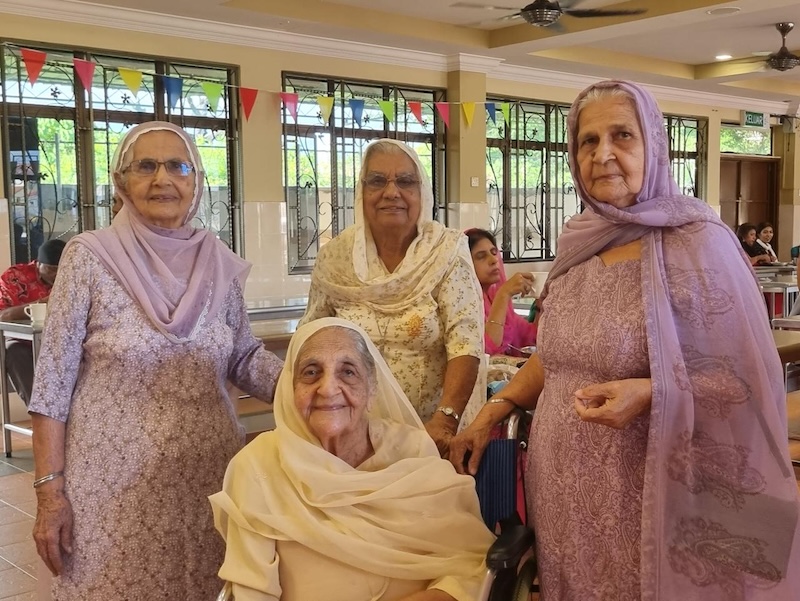
What began in childhood became the foundation of an unbreakable, lifelong bond. When I spoke to them at Maaji’s 100th birthday, they looked back on a century together and reminded me of that deep connection, saying, “Bibiji sadi maa wa.” They shared that, over a lifetime, they had never once had a single fight—only pure love and deep mutual respect.
One story about their bond always brings a warm smile to my face. Every day, at around 5:00 p.m., Darshan Babaji would call Maaji just to check on her: “Kii haal chal, Bibiji? Raji ah? Haan, raji ah. Okay, bye.” And if the phone call was even a few minutes late, Maaji would ask, “Aaj Darshan da phone nei aya?”
It was this same devoted Pethe family who eventually took on the responsibility of arranging Maaji’s marriage.
DEATH IN GURBANI: Sermon by Karminder Singh Dhillon at prayer gathering in memory of Mata Achint Kaur
At 17, Maaji married our grandfather, Harnam Singh, who was in the police force. But heartbreak struck early. By the age of 20, Maaji had lost her husband, leaving her a young widow with a one-year-old son—my father.
She moved back to Penang to be near her father, returning to a place where her roots ran deep. Maaji always remembered that her own grandfather, Sunder Singh Purba, had laid the foundation stone of the Penang Gurdwara.
It was at this very Gurdwara that Maaji turned her grief into purpose, spending many years teaching sewing to local ladies. Her impact lasted a lifetime. Just recently, one of her former students told me that she had learned to sew from Maaji when she was a little girl of just seven.
Maaji later remarried and was blessed with four more children, expanding her family and her home. As a mother, she possessed an almost supernatural intuition and a fierce devotion to her children.
One of my chachas recently shared that Maaji always knew exactly when her children were returning home at night. Even from a distance, she recognised the sound of their footsteps and would be waiting at the gate to greet them.
Whenever her children were in need, she simply showed up. Once, when her daughter called from KL while facing a health issue, Maaji simply asked, “Who is there with you?” She then immediately hopped on a bus from Penang to KL to be by her side.
In 2011, at 86 years of age, Maaji made the long journey to Canada to attend her grandson Kuljit’s wedding. It was incredibly difficult to secure her visa, and it was approved just five or six hours before her flight. Having her there was such a joyous occasion for all of us that there was a massive celebration at the airport the moment she arrived.
I was also incredibly lucky to witness my own father care for her until the very end. A sweet memory etched in my mind is from when Maaji recently returned home from the hospital after her fall. My chachi washed her hair, and my father sat down to dry it very gently.
I think we were all secretly envious of her long, luscious hair—even at 102!
To her grandchildren, Maaji was a calm, gentle presence whose face was always radiant with a smile. In all our years growing up, not one of us ever saw her angry.
She truly possessed “magic hands”. From her soothing head massages and intricate sewing to her everyday household chores, Maaji approached everything she touched with care and perfection.
She did not need a sophisticated steam iron; her hands alone could iron clothes better than any modern appliance. She would sit on the floor with her legs stretched out, demonstrate her technique and tell us, “Istra teh laeeda.”
Whenever our parents travelled, Maaji would step in without a second thought, staying with us in Ipoh for weeks. We would wake up to the sound of her chadoo—the broom—and, by the time our eyes were open, the entire house would be completely clean.
Her sons and my brothers would occasionally enjoy a coconut oil massage from her for healthy hair, although we always laugh because, in one case—with my brother Dharam—the remedy unfortunately backfired!
We were blessed with one final, beautiful memory of her just two weeks ago, on the day before she suffered her stroke. My sister-in-law and my nephews had just returned from Melbourne and came to visit. The boys were Maaji’s great-grandchildren.
It was the happiest we had seen Maaji in recent times. She was filled with joy and even asked her great-grandchildren to dance for her. We played old videos of the boys, and she simply could not stop laughing. It is a memory we will hold very close to our hearts.
No matter what difficulties she faced, Maaji always treated everyone with love and respect. Her strength came from her unwavering faith. Her Sikhi was beautifully simple—rooted deeply in love, not in rules.
Maaji met the end of her journey with the same grace and composure that defined her entire life. In her final weeks, she told my dad and me several times, “Menu khushi khushi de naal thorio” (ਮੇਨੂ ਖੁਸ਼ੀ ਖੁਸ਼ੀ ਦੇ ਨਾਲ ਥੋਰੀਓ)—“Let me go happily.”
She left clear instructions on where her things were and exactly which suit she wanted to wear when she passed. True to her spirit, she had beautifully stitched that very suit herself using material gifted to her by her Mamiji.
She prepared for her departure with absolute dignity, leaving this world exactly as she had lived in it—independent, peaceful and fully prepared.
Maaji lived a full and beautiful life, leaving a lasting imprint on the hearts of her children, grandchildren, great-grandchildren, extended family and dear friends.
While we will miss her presence immensely, we choose to celebrate the extraordinary life she lived and carry her lessons with us forever.
Thank you all for your love, your prayers and for standing by our family.
CHECK OUT MORE FEEDBACKS FOR THIS REPORT AT FACEBOOK AND INSTAGRAM
RELATED STORY:
When I die (Asia Samachar, 4 August 2026)
ASIA SAMACHAR is an online newspaper for Sikhs / Punjabis in Southeast Asia and beyond. You can leave your comments at our website, Facebook, Twitter, and Instagram. We will delete comments we deem offensive or potentially libelous. You can reach us via WhatsApp +6017-335-1399 or email: asia.samachar@gmail.com. For obituary announcements, click here