















By Dr. B. S. Bains | Opinion |
The Partition That Never Ended for the Sikhs
In August 1947, Sir Cyril Radcliffe drew a boundary across Punjab that would forever change the history of the Indian subcontinent. The line divided British Punjab into West Punjab, which became part of Pakistan, and East Punjab, which became part of India.
But what was divided was far more than territory.
It was a civilisation, a shared Punjabi heritage, generations of family history and, perhaps most painfully for the Sikhs, a spiritual landscape sacred to their faith.
The Partition unleashed horrific communal violence, forced displacement and the destruction of countless lives. Sikhs, Hindus and Muslims all suffered terrible atrocities, and Sikh communities in West Punjab faced massacres, dispossession and a painful flight from their ancestral homes. A very small portion of the Sikh community were scattered within the Pakistan Punjab, who are today the citizen of Pakistan.
Majority of them crossed the border and survived, however the tragedy did not end when they crossed the border. They could rebuild their houses. They could establish new businesses. They could educate their children and create new lives. But they could never replace the sacred geography of their faith.
For the Sikh, 1947 was not merely the loss of ancestral property. It was the separation from places where their Gurus had walked, lived, preached, served humanity and revealed the wisdom that would guide generations.
And that is why, even nearly eighty years later, Partition remains an unfinished chapter in the Sikh consciousness.
The Sacred Heritage That No Boundary Could Divide
Consider Sri Nankana Sahib, the birthplace of Guru Nanak Dev Ji. Consider Sri Kartarpur Sahib, where Guru Nanak spent the final years of his earthly life. Consider Sri Panja Sahib, Sri Dera Sahib in Lahore and other historically significant sites and the Gurdwaras in those memory the Sikh society during the undivided India build, preserved closed to their hearts.
These are not ordinary historical monuments. They are sacred landmarks in the spiritual journey of Sikhism. They are living reminders of the teachings, sacrifices and everlasting wisdom of the Sikh Gurus.
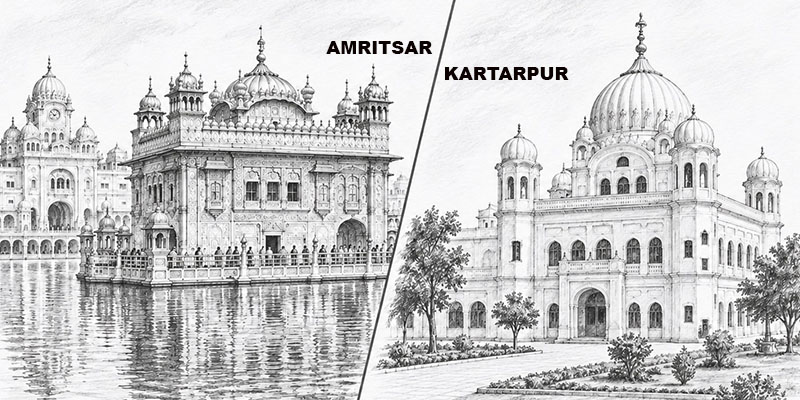
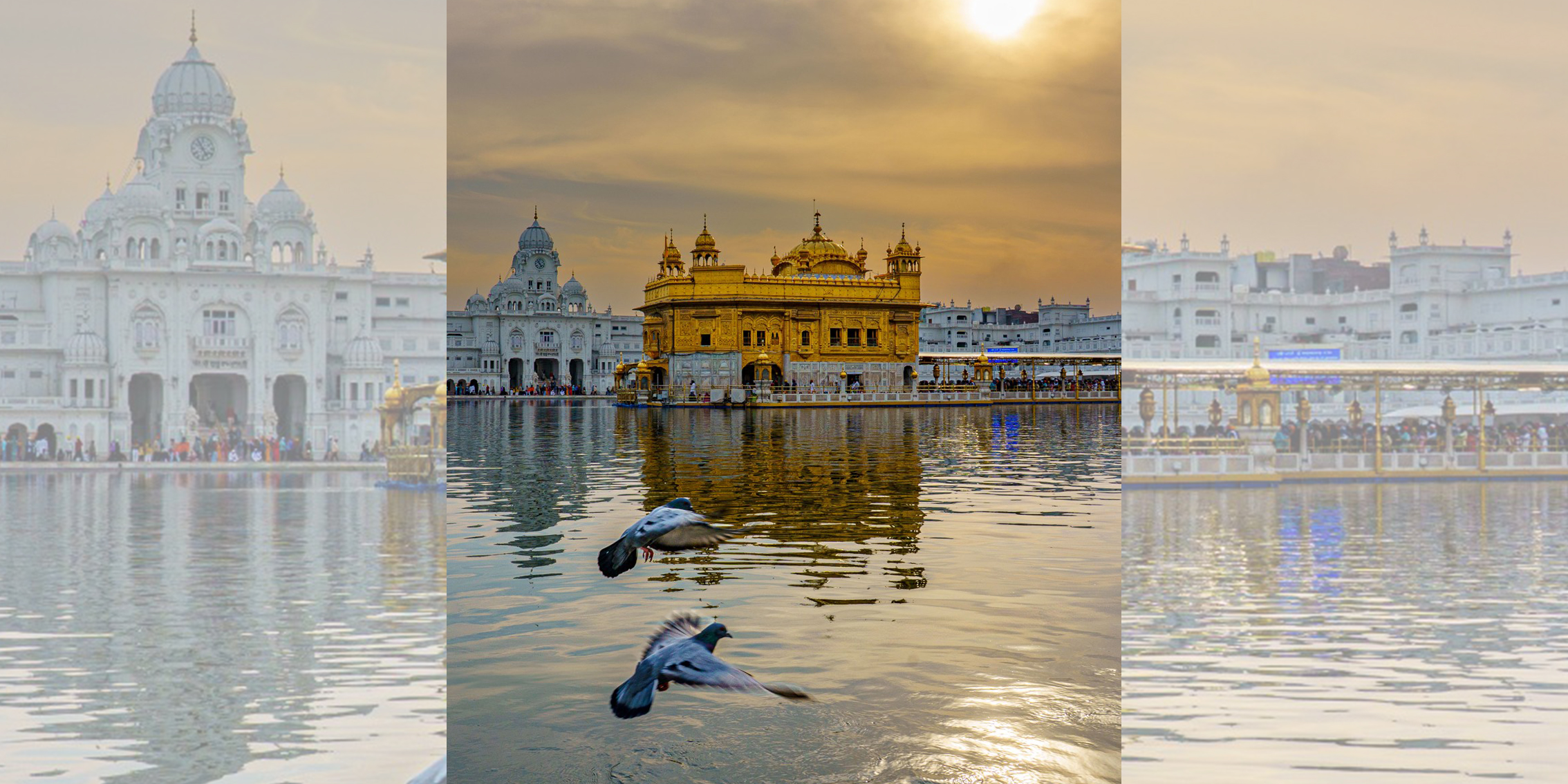
Yet many of these places lie within Pakistan, while Sri Harmandir Sahib in Amritsar and numerous other sacred institutions lie within India.
Some historical Gurdwaras in Pakistan have been restored and maintained, thanks to the new generation and secular leaders who now value those revered sentiments of their society. Others have experienced neglect, encroachment or deterioration.
How does one explain to a young Sikh born in Malaysia, Canada, Australia, the United Kingdom or elsewhere that the birthplace of the founder of their faith is across one of the most politically sensitive international borders in the world? How does one explain that visiting the sacred places of one’s ancestors may depend on diplomatic relations, security clearances and decisions taken by governments?
The Sikh Ardas itself expresses the community’s longing for unrestricted access to, and the care of, sacred Gurdwaras from which the Panth has been separated. That prayer has survived generations because the wound has never fully healed.
The Question of Loyalty: Where Does a Sikh Stand?
Here lies perhaps the most painful dilemma.
A Sikh citizen of India owes allegiance to India. A Sikh citizen of Pakistan owes allegiance to Pakistan. A Sikh citizen of Malaysia, Canada, the United Kingdom or any other country similarly owes civic loyalty to the country that is home.
But Sikh spiritual reverence does not stop at national borders. A Sikh who visits Nankana Sahib does not become politically aligned with Pakistan. A Sikh who bows before Sri Harmandir Sahib does not thereby declare political allegiance to India. And a Pakistani Sikh who honors the Sikh heritage of Indian Punjab should not have their patriotism questioned simply because of that reverence.
Citizenship is a relationship with a state. Faith is a relationship with one’s conscience, history and spiritual inheritance. They should never be confused.
Indeed, the existence of a Sikh minister responsible for minority affairs in Pakistan’s Punjab province, Sardar Ramesh Singh Arora, demonstrates how Sikh identity and Pakistani citizenship can coexist. His public duties belong to the country he serves, while his spiritual heritage belongs to the worldwide Sikh tradition.
It would be unfair to assume the personal loyalties or private fears of any Sikh in such a position. Yet the broader sensitivity surrounding cross-border religious relationships is real. However, a Sikh should never be placed in a position where the expression of religious devotion is mistaken for sympathy towards a rival state.
Kartarpur Sahib: A Corridor of Faith, Not Political Favour
The opening of the Kartarpur Corridor in November 2019 was an extraordinary and deeply emotional moment in Sikh history. For the first time in decades, Sikh pilgrims from India were granted a special visa-free passage to Gurdwara Sri Darbar Sahib Kartarpur in Pakistan, the sacred place where Guru Nanak Dev Ji spent the final years of his earthly life before departing for his heavenly abode.
SEE ALSO: Pakistan PM Khan lays foundation stone for long-awaited Kartarpur corridor
For generations, Kartarpur Sahib had remained so near, yet painfully beyond reach. Standing just across the international border, almost a stone’s throw away in the eyes of longing pilgrims, its sacred presence could be seen from Indian soil. Countless Sikhs would journey to the border simply to catch a distant glimpse of this revered shrine, their hearts heavy with sorrow and their eyes filled with tears. They stood there, separated not by the vastness of distance, but by a political boundary that had denied them the simple privilege of bowing their heads at the place where their beloved Guru had spent his final days.

Many departed from this world without ever fulfilling that cherished desire. For them, a pilgrimage of a lifetime remained an unanswered prayer, a spiritual longing carried silently to their graves.
The opening of the Kartarpur Corridor was therefore much more than a diplomatic achievement. It was a moment of spiritual reunion, a recognition that the sacred bonds of faith and devotion had survived decades of political separation.
One wonders whether Radcliffe, when drawing the boundary across Punjab in 1947, could ever have comprehended the profound and everlasting consequences of that single act. Could he have imagined that a line drawn upon a map would leave not merely a geographical division, but an enduring wound in the hearts of generations of Sikhs? Whether he ever reflected upon or regretted its consequences remains unknown. Yet the painful legacy of that boundary continues to be felt.
Radcliffe divided the land of Punjab with a stroke of his pen, but unknowingly carved a wound into the Sikh soul — a wound that time has yet to heal, and one that generations yet unborn may continue to inherit.
But the fragility of that achievement became evident when services through the corridor were suspended from the Indian side on 7 May 2025 amid security tensions. As of November 2026, India maintains that the suspension remains necessary for security reasons, while Pakistan states that the corridor is open from its side.
The corridor’s importance must therefore be understood beyond tourism or diplomacy. It is a connection between the Sikh community and a sacred place. A pilgrimage undertaken in humility should not automatically become a matter of political interpretation.
Both countries have legitimate obligations to safeguard national security. But those obligations should also inspire serious efforts to create reliable, safe and dignified arrangements for religious access.
For a Sikh, Kartarpur is not a political trophy. It is a spiritual home.
The Responsibility of the Sikh Diaspora
The Sikh diaspora carries a unique responsibility. Millions of Sikhs living outside India and Pakistan have built lives in countries that offer them citizenship, dignity and opportunities. Yet they continue to inherit an emotional connection to Punjab basically with the sacred places associated with their Gurus, that unifies them.
That connection should not be interpreted as a political threat. Rather, the diaspora can become a constructive voice for peace, religious freedom and the preservation of shared heritage.
Sikh organisations worldwide should advocate for dependable pilgrimage arrangements, the restoration and protection of historical Gurdwaras, and dialogue that separates religious devotion from geopolitical rivalry. This is not a demand to alter international boundaries. Nor is it a call for political separation or territorial claims.
It is a demand that the spiritual heritage of a community should not become a casualty of continuing political hostility.
The Sikh diaspora should be able to maintain meaningful relationships with Sikh communities and heritage institutions on both sides of the border without having its motives automatically questioned.
“The Border did Divided Punjab,
But It Must Not Divide the Sikh Soul”
Perhaps the greatest tragedy of 1947 is not only what happened to the Sikhs then, but what continues to happen to their spiritual inheritance today. Nearly eight decades have passed. Generations have been born and have grown old. India and Pakistan have established their separate national identities, institutions and political destinies. Yet the Sikh continues to live with a question that no international boundary has been able to answer: Why must my devotion to my Guru’s birthplace become entangled in the political relationship between two countries?
 Radcliffe’s boundary divided Punjab geographically, but it could not divide the teachings of Guru Nanak Dev Ji. His message of oneness, equality, compassion and universal brotherhood belongs to humanity, not to a particular state.
A Sikh does not need to choose between being a loyal citizen and being a devoted follower of the Gurus. A Sikh in India can love India while revering Nankana Sahib in Pakistan. A Sikh in Pakistan can love Pakistan while finding spiritual fulfilment at Harmandir Sahib in India. A Sikh living anywhere in the diaspora can honour both without compromising allegiance to the country of citizenship.
There is no contradiction in these loyalties unless politics creates one. The governments of India and Pakistan have a responsibility to protect their national interests. But surely, after nearly eighty years, they can also recognise that the religious sentiments of the Sikh community deserve compassion, dignity and continuity.
Security must never be ignored. But neither should security become an indefinite barrier to the legitimate expression of faith.
Perhaps it is time for both nations to consider a lasting bilateral framework for Sikh pilgrimage and heritage preservation, with predictable access, transparent procedures, appropriate security safeguards and mechanisms that survive periods of diplomatic tension.
The international Sikh diaspora can contribute constructively to such an initiative, not as an instrument of either country, but as a community seeking reconciliation with its own historical inheritance.
The future generation of Sikhs should not have to inherit the same helplessness experienced by their grandparents. They should be able to visit Nankana Sahib, Kartarpur Sahib, Panja Sahib and Harmandir Sahib without feeling that their faith places their patriotism under suspicion. And above all, they should not have to apologise for loving the sacred places of their Gurus.
The Sikhs do not seek to redraw the borders of 1947. They seek the freedom to reconnect with the spiritual heritage that those borders separated.
Radcliffe divided the land of Punjab, but he could not divide the Sikh faith. Governments may control borders, but no government can draw a boundary through a Sikh’s devotion to the Gurus.
The Sikh Prayer
The Sikh prayer for access to the historic Gurdwaras is not a prayer for political power. It is a prayer for spiritual reunion. And perhaps the greatest tribute India and Pakistan could offer to Guru Nanak would be to ensure that the path to his sacred places remains a path of peace rather than a corridor vulnerable to political conflict.
The Partition of Punjab was an event of 1947. Let us not allow the Partition of the Sikh conscience to become its everlasting legacy.
The Silent Apprehension: When Punjabi Cultural Unity Becomes a Political Suspicion
There is yet another dimension to the tragedy of Partition, one that is seldom openly discussed but continues to weigh heavily upon the minds of those who seek to preserve the collective heritage of the Punjabi people.
The Punjabi diaspora is not confined to one religion, one nationality or one political identity. It includes Sikhs, Muslims, Hindus, Christians and others whose ancestral roots lie in the historic land of Punjab.

Although their forefathers may have been separated by the events of 1947, they continue to share a remarkable cultural inheritance: the Punjabi language, literature, poetry, music, folklore, cuisine, traditional arts, customs and the intellectual contributions of generations.
Today, when members of the diaspora contemplate bringing together Punjabis from Indian Punjab and Pakistani Punjab under a common cultural platform, an uncomfortable question arises:
Will an organisation devoted to Punjabi cultural unity be welcomed as a bridge between communities, or will it be viewed with suspicion because it brings together people from two politically rival nations?
This apprehension is not always expressed publicly. It often remains buried within the subconscious mind of the organisers themselves.
An international Punjabi cultural organisation may wish to invite scholars, historians, writers, poets, artists, musicians, academics, entrepreneurs and cultural custodians from both sides of Punjab. Its objectives may be entirely educational, cultural and humanitarian.
Yet the organisers may fear that their intentions could be misunderstood.
Would the participation of Pakistani Punjabi intellectuals raise eyebrows in India? Would the involvement of Indian Punjabi scholars create similar sensitivities in Pakistan? Would a diaspora organisation bringing together both communities be viewed as operating outside the accepted mainstream, or perhaps be subjected to unnecessary scrutiny by authorities?
Religious differences have, undoubtedly, further deepened the divisions within the Punjabi community. While Sikhs form a significant part of the Punjabi population in Indian Punjab, Muslims constitute the overwhelming majority in Pakistani Punjab. Despite their shared ancestry, language, cultural heritage and centuries of spiritual coexistence, the religious divide has gradually contributed to a growing social distance between these communities. Although both sides continue to acknowledge and celebrate their common Punjabi identity, the reality is that their social bonds and everyday interactions are often not as closely intertwined as the sentiments of cultural brotherhood might suggest. This raises yet another painful question: Has Partition merely separated Punjabis geographically, or has it also, over generations, weakened the social fabric that once bound them together as one people?
There is a painful irony here.
The very effort to heal the cultural separation created by Partition could itself become a reason for political suspicion.
Punjab’s shared intellectual and artistic heritage did not begin in 1947. Neither did its poetry, its music, its traditions of scholarship or its values of hospitality and community.
Baba Farid, Guru Nanak, Shah Hussain, Bulleh Shah and Waris Shah belong to the cultural and spiritual history of Punjab. Their teachings and writings transcend the national boundaries subsequently drawn across the region.
Should a Punjabi Muslim scholar from Lahore and a Punjabi Sikh historian from Amritsar hesitate to share a common platform discussing the works of Waris Shah?
Should artists from Faisalabad and Ludhiana be discouraged from celebrating their shared musical traditions?
Should universities, museums and cultural institutions fear collaboration merely because their participants belong to opposite sides of an international border?
The question is not whether national security concerns should be disregarded. Every sovereign nation has legitimate responsibilities to safeguard its interests. The question is whether cultural exchanges undertaken transparently, peacefully and within the laws of the respective countries should automatically attract political suspicion.
There is an important distinction between political reunification and cultural reconnection.
The Punjabi diaspora does not need to advocate the removal of international boundaries to celebrate a common heritage. Nor should a Punjabi cultural institution be presumed to challenge the sovereignty of India or Pakistan simply because it brings together people of Punjabi ancestry.
Cultural unity does not demand political uniformity. A Pakistani Punjabi can remain a proud Pakistani. An Indian Punjabi can remain a proud Indian. A Malaysian Punjabi can remain a proud Malaysian. Their national loyalties are not diminished by their appreciation of a shared ancestral civilisation.
Indeed, such exchanges can help create an atmosphere of understanding that conventional diplomacy may struggle to achieve.
This is where the responsibility of the international Punjabi diaspora becomes particularly significant. Living beyond the immediate political sensitivities of the Indian subcontinent, diaspora communities have an opportunity to establish credible, non-partisan institutions for the preservation and promotion of Punjabi civilisation in its entirety.
However, they too must approach this responsibility with wisdom, transparency, sound governance and sensitivity to the laws and diplomatic realities of the countries concerned.
Their intentions must remain unmistakably cultural, educational and humanitarian. Their institutions should be inclusive of all Punjabi communities, irrespective of religion, nationality or political opinion.
For an organisation to succeed, it must be recognised not as an alternative political movement but as a legitimate contributor to international cultural understanding.
The greatest tragedy would be if the children and grandchildren of Partition were made to fear even the peaceful celebration of the heritage their ancestors once shared.
Punjab was divided into two political territories. But must Punjabi civilisation itself remain divided in the minds of future generations?
If a shared language, a shared literary history and a shared cultural inheritance cannot become bridges of understanding, then perhaps the wounds of 1947 are deeper than we care to acknowledge.
The responsibility before the international Sikh and Punjabi diaspora is therefore twofold. First, to safeguard the spiritual connection of Sikhs to their sacred heritage across India and Pakistan. Second, to preserve the shared language, literature, intellectual traditions, arts and cultural inheritance of all Punjabis, regardless of nationality or religion.
We must ask ourselves: have we reached a stage where even cultural friendship requires political justification? If a Punjabi cultural organisation must constantly defend its intentions merely because it welcomes intellectuals and artists from both sides of Punjab, then Partition has succeeded in dividing far more than geography. It has entered our collective thinking, generating apprehension even where goodwill exists.
Let our children inherit the history of Punjab, not the suspicions of Partition. Let them celebrate the shared civilisation of their forefathers without being made to question their patriotism.
We seek neither a redrawing of borders nor interference in the sovereignty of nations. We seek only the dignity of remembering and celebrating what history has left us.
Radcliffe divided Punjab in 1947. We must not allow political suspicion to divide the Punjabi conscience for another hundred years.
Reference:
- The current Kartarpur suspension is confirmed by India’s official pilgrimage portal – UK National Archives’ Partition records and academic research on Sikh sacred sites across the border
- Pakistan has stated its position separately. https://prakashpurb550.mha.gov.in/kpr/
- The Partition (Partition Museum | Amritsar & Delhi)
- Punjab Minister for Minorities Affairs Called on Federal Minister for Law & Justice and Human Rights
Join the conversation on this story on Asia Samachar’s Facebook and Instagram pages.

The writer, Dr. Balwant Singh Bains, is a Kuala Lumpur-based physiotherapist. He writes on culture, interfaith harmony, and the evolution of tradition in the modern Malaysian context.
RELATED STORY:
Rethinking Sikh governance: SGPC failings and call for global reform (Asia Samachar, 14 July 2025)
ASIA SAMACHAR is an online newspaper for Sikhs / Punjabis in Southeast Asia and beyond. You can leave your comments at our website, Facebook, Twitter, and Instagram. We will delete comments we deem offensive or potentially libelous. You can reach us via WhatsApp +6017-335-1399 or email: asia.samachar@gmail.com. For obituary announcements, click here