
























By Asia Samachar | Singapore |
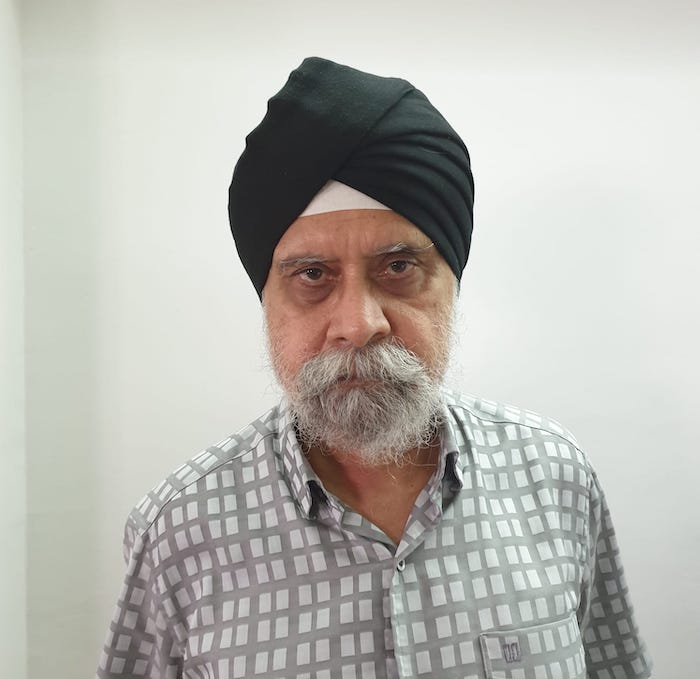
Retired businessman Harmit Singh has taken up the challenge to steer the largest Sikh welfare outfit in Singapore at a time when organisations are challenged to relook at their operations in the wake of the impact of the Covid-19 pandemic. Sikh Welfare Council (SIWEC) is no different.
“In the present Covid-19 situation, virtual outreach has become the default method of communication. I see digital platforms gaining even more usage going forward. SIWEC will have to adapt accordingly,” Harmit tells Asia Samachar in an interview.
As the new chairman of SIWEC, Harmit and the team are very much aware of daunting challenge that lay ahead. But they are determined to rise to the occasion.
“Emotional well-being is a new frontier for SIWEC that has become more prominent in this present Covid-19 situation. We are developing an initiative called Theek Thak to address concerns about emotional wellbeing, and to start a conversation about providing emotional support. This initiative will launch very soon,” he said.
Harmit took over the SIWEC leadership from Gurdip Singh Usma at the meeting in July.
Launched in 1995, SIWEC is one of the key Sikh organisations in Singapore. Over the years, SIWEC has evolved from only providing basis assistance to needy Sikh families to a more complete spectrum of services to the needy, not only within the Sikh community but the wider Singapore community.
The overall objectives for SIWEC was not just to provide immediate support, but more to assist these families to graduate from being “needy” to make them financially more independent by working with all other agencies to find suitable job for its clients, advising clients to find tenants to rent out their rooms to ease the financial dependency and providing medical support through Medical Social Workers (MSW) in order to enable the client to be fit for work, according to its website.
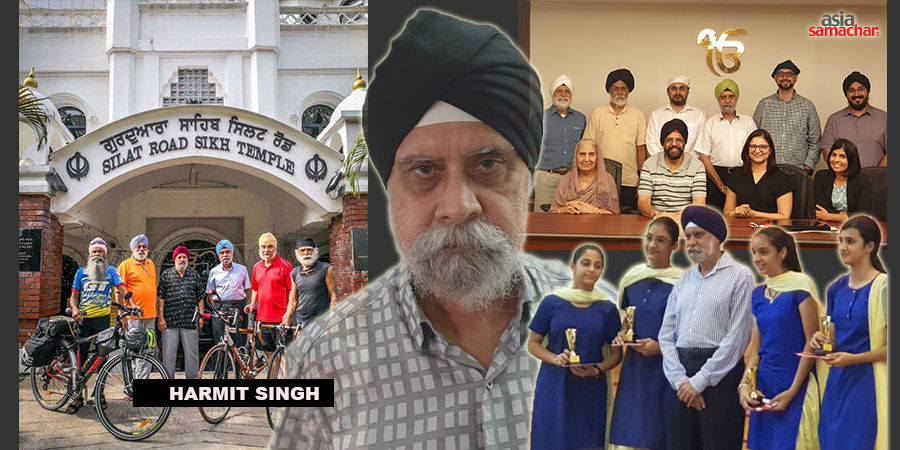
Harmit has been actively involved in the Sikh community the past decade or so. He has been associated with Gurdwara Sahib Katong for some three decades. Together with his family members, he had been performing volunteer service here, usually getting himself involved in serving Langgar.
Then, in 2012, he was elected as the assistant secretary of the gurdwara’s committee. In 2018, he was made the secretary, a position that he still holds today. In 2013, he was elected as the treasurer at SIWEC. After holding the post for four years, he was then made secretary from 2017 to 2019. In 2019, he was elected as the council’s vice chairman.
In 2017, he was also elected as the treasurer of the Central Sikh Gurdwara Board (CSGB) and then vice president in 2019. Harmit is also a licensed marriage solemniser.
“I want to give back to the Sikh community, which has sustained me throughout my life. Ever since my retirement 11 years ago, I have had the time and capacity to serve the community,” he told Asia Samachar when asked what motivates him to serve the community. “I have been very blessed by Waheguruji, such that I do not need to worry about generating an income to maintain my wife and myself.”
EXCERPTS FROM THE INTERVIEW
What motivates you to serve the community?
I want to give back to the Sikh community, which has sustained me throughout my life. Ever since my retirement 11 years ago, I have had the time and capacity to serve the community. I have been very blessed by Waheguruji, such that I do not need to worry about generating an income to maintain my wife and myself. Our younger volunteers are still in the process of building up their careers and therefore, it is a struggle for them to allocate time to serve the community. This makes it all the more important for a semi-retired and retired person like me to step forward and do what they can for the community.
How did you enter into the world of volunteer work?
I have been serving langar at Gurdwara Sahib Katong for 25 years. In 2012, I was nominated and elected into the management committee of the Gurdwara and have been serving since then.
You have been active in several organisations – SIWEC, CSGB and Gurdwara Katong. How did you find the time to manage all these roles?
When I retired, I was looking for something meaningful and fulfilling to do with my newfound time. I have three grown-up children who are well-established in their careers. I am passionate about SIWEC, CSGB and Gurdwara Katong, but of course finding the time to juggle all three at once is challenging. I’ve recently chosen to step down from the CSGB after serving for four years, as I’d like to focus my energies on the other two organisations for now.
Was it fundamentally different to serve on the three organisations mentioned earlier? Did they each require different skillsets or commitments from you?
There was a different emphasis in serving the three organisations. Gurdwara Sahib Katong involves overseeing day-to-day religious services while CSGB was more of a board level role that discussed policies and made strategic decisions for three organisations under its wings. The three organisations are: Central Sikh Temple, Silat Road Sikh Temple and Sikh Centre.
Sikh Welfare Council has a very different mandate – rather than the administration of gurdwara affairs, it is a charitable organisation that looks out for people’s wellbeing. So that allows me to think about this type of work differently than the other two organisations. Siwec’s stakeholders include all 7 Sikh Gurdwaras in Singapore together with other Sikhi organisations, and my role there is to serve not just the Sikh community but also the community at large in Singapore.
SIWEC, which you now chair, is a critical part of the Sikh community landscape on Singapore. What unique approaches or perspectives will you bring to SIWEC as its chairman?
I hope to add value with a people-orientated approach to management of SIWEC. The beneficiaries of our services, as well as our clients, should always come first. At the same time, we want to encourage greater participation in the Sikh community.
The self-renewal process is an ongoing challenge in attracting new entrants to come forward and serve in the committee. We need to have a healthy balance of well-experienced individuals, both male and female, across all age groups for diversified inputs.
Now almost three decades on, how do you see SIWEC’s relevance?
I see SIWEC playing a bigger role as we move forward in coping with the community’s needs and well-being. In the present Covid-19 situation, virtual outreach has become the default method of communication. I see digital platforms gaining even more usage going forward. SIWEC will have to adapt accordingly.
SIWEC today is seen to be well-established and with ample resources at its disposal. This makes the challenges your team and you face different from what your predecessors experienced. In your opinion, what are some of the key challenges you would have to tackle?
In fact, the perception that SIWEC is well-resourced is one of our challenges, because it has led to questions around whether individual support is still required. The truth is, though, that support from the community and from individuals is a large part of the reason why we receive government grants. If that support recedes, the quantum of the grants will also be affected. In other words, the more donations we receive, the higher our credibility when applying for government grants.
Another key challenge we’d like to address is the fact that many young people are unaware that an organisation like SIWEC exists in the community. We’d like to find ways to reach out to this group.
In your term at the helm of SIWEC, what would you like to achieve?
I would like to see a stable secretariat giving very good support to all SIWEC’s initiatives. We need to further reach out to our seniors by giving them programmes to occupy themselves throughout the week as peer-support is essential for this group.
Emotional well-being is a new frontier for SIWEC that has become more prominent in this present Covid situation. We are developing an initiative called Theek Thak to address concerns about emotional wellbeing, and to start a conversation about providing emotional support. This initiative will launch very soon.
What advice do you have for younger people who have entered community service or are looking to contribute?
My advice to younger people is to gain a foothold in any little activity you can involve yourself in and do not be surprised to see more doors opening up for you, the longer you allow yourself to be involved.
RELATED STORY:
CSGB new team elected unopposed (Asia Samachar, 3 Sept 2021)
ASIA SAMACHAR is an online newspaper for Sikhs / Punjabis in Southeast Asia and beyond.Facebook | WhatsApp +6017-335-1399 | Email: editor@asiasamachar.com | Twitter | Instagram | Obituary announcements, click here |





Well said Harmit. Looking forward to hearing more about sustainable new initiatives
Comments are closed.