





















By Rishpal Singh Sidhu | Opinion |
The Sikh community is sometimes confronted with shameful and disturbing news reports of fights taking place in some of our gurdwaras around the world where there is face-to-face confrontation between opposing groups and/or gurdwara management committees. In some instances, where there is physical violence, swords or kirpans are brandished, some antagonists have had their dastars removed (Punjabi: ਦਸਤਾਰ, also known as a ਪੱਗ paga or ਪੱਗੜੀ pagaṛī), and the police have had to be called in to enter the darbar hall to control the melee. It is common knowledge that most if not all of these fights are mainly about the administration and control of the gurdwaras, more specifically the funds received through bheta/offerings to the golak which can amount to a considerable sum of money, depending on the size of the gurdwara and worshipping sangat. This calls into question the pressing and urgent need for greater transparency and accountability on precisely how these collected monies are expended for the benefit, welfare, and greater good of the sangat.
Golak (Sanskrit golak; Persian gholak) or Guru ki Golak (the Guru’s own till) refers to a box or container used for receiving contributions from the sangat, and has a religious as well as a historical meaning in the Sikh tradition.1 It dates back to an early time in Sikh history with the formation of the sangat (holy fellowship) and pangat (commensality), including the establishment of a common kitchen (langar), the upkeep of which needed financial and other resources. “Langar for the Sikhs became, therefore, Guru ka Langar and the golak, Guru ki golak.” 2 “Garib ki rasna, Guru ki Golak” goes a Sikh saying and feeding a poor man is tantamount to the Guru’s golak” 3 This golak is normally placed in front of the sanctum into which cash offerings are placed by the sangat when paying obeisance to the Sri Guru Granth Sahib (SGGS). Other offerings such as bags of rice, atta, fresh milk, ghee, and mithai (ਮਿਠਾਈ, ਮਿਠਆਈ) are often also placed alongside the golak for use in the Guru ka Langar. The Rahitnamas (Manual/Code of Conduct) encourage Sikhs to set aside one tenth of their earnings (dasvandh) towards a common fund for communal or charitable causes. A Sikh guilty of religious misconduct (tankhaiya), if found guilty by the sangat, can, amongst other punishments, be required to pay a penalty such as contributing towards the Guru’s golak. 4
This concern for transparency and accountability in the management and use of offerings to the Guru’s golak is not something new, and dates back to the time of our third Guru, Guru Amar Das, who established the manji system (Punjabi: ਮੰਜੀ, zone or district of religious administration) to better cater to the growing needs of geographically dispersed Sikh sangats. He appointed agents called manjidars who were fully conversant with the doctrines of the (Sikh) faith, to organize worship and collection of offerings for the golak (community chest). 5 Some doubt remains as to exactly when and which Guru established the masand system to replace the manjidars, with some accounts mentioning Guru Amar Das, and still others mentioning Guru Arjan. 6 “The masands played an important role in the further growth and development of Sikhism in successive decades before in-fighting, factionalism, and corruption started to taint this institution.” 7 Like the manjidars before them, the masands were not expected to use or depend on the offerings they received to support their own subsistence. These offerings were to be used primarily in support of the langar and other charitable causes. Over time, there was increasing concern over the growing indulgence and corrupt practices of several of these masands, some of whom had grown increasingly corrupt, dictatorial, grasping power as opportunity offered, and keeping what offerings they had collected in the Guru’s name. Some even “engaged in money lending and trading on the offerings they extorted from the poor peasants.” 8 This growing disaffection with their corrupt practices and behaviour led to Guru Gobind Singh’s announcement and decision to abolish the masand system on Baisahki Day of March 20, 1699.
Fast forward to the 20th century and present times, it would appear that nothing much has really changed, and modern day masands continue to exist albeit in a different guise! The Sikh Review journal of February 1993 featured an editorial by S. Saran Singh aptly titled The Young & the Restless. He noted “that there has been a growing tendency among office bearers of Gurdwara management everywhere to play power politics. Wrangling over control of funds is not uncommon. Entrenched members consider Gurdwara property as their fiefdom and adopt unethical practices to retain control, resulting sometimes, in unseemly civil and criminal legislation.” The editorial of The Sikh Review in December 1999 was even more scathing in commenting that “if Sikhs were angels, Gurdwaras won’t need elections.” “The present day causes of division and disjunction in the Sikh Gurdwaras can, in some instances, be attributed primarily to complex interplay between personal rivalries, caste, sect, and to a certain degree, class.” 9 Chahal (2002) also avers that such fights that have taken place in our gurdwaras are more about power play and control of the huge funds collectively received in the golak from the sangat, which in some of the larger gurdwaras can amount to well over a million dollars each year. 10 Mahatma Gandhi was not wrong in observing that “those believe that religion and politics aren’t connected don’t understand either.” American writer Mark Twain was much more direct and “quite sure now that often, very often, in matters concerning religion and politics, a man’s reasoning powers are not above the monkeys.”
Gurdwaras in the Punjab come under the control of the Shiromani Gurdwara Parbandhak Committee (SGPC). Manjit Singh (2001) noted that “the SGPC ran smoothly between 1925 to 1947. The tone and demeanor of gurdwara management was low-keyed, forthright, and progressive. In general, the SGPC met the expectations of the community and did not entangle itself in politics.” 11 Much has changed since 1947 and “now elections to the SGPC or any other gurdwara committee are no different from the ordinary political elections” 12. Mann (1999) opined that the “SGPC should extract itself from the political arena and devote itself to a management regime which may be a global model for all gurdwaras” 13. “Master Tara Singh, who came into prominence at the time of the Gurudwara Reform Movement, is on record as having said that while the Sikhs had been successful in getting rid of the traditional Mahants, it would not be easy to get rid of the new Mahants that were now climbing into power. History has proved him right, and the situation in regard to the management of the gurdwaras today is much more unsatisfactory and characterized by more corruption than is usually acknowledged.” 14
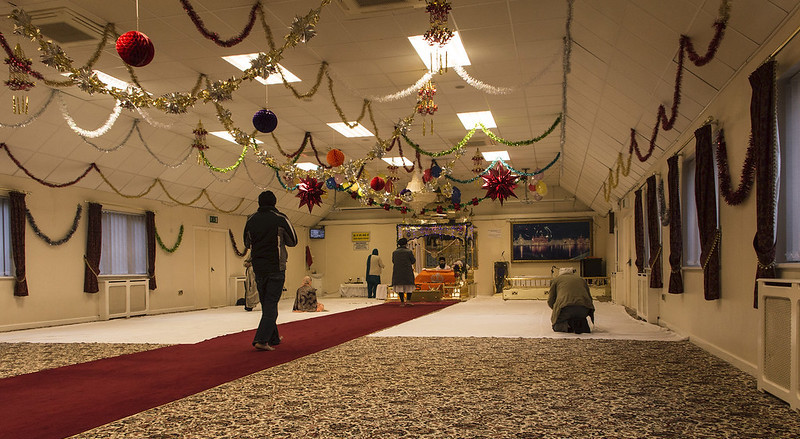
Irrespective of where they are located around the world, gurdwaras are an integral part of the Sikh way of life, and apart from spiritual upliftment, play an important role in catering to the sociocultural and sociopsychological needs of their Sikh communities. The many tasks they are required to perform include organizing and providing religious services in compliance with the Rehit Maryada, prudent management of income and expenditure, proper and hygienic maintenance of gurdwara premises and facilities, teaching of Gurmukhi, Gurbani, and other Sikh arts. The granthis, raagis, and kathakar all need to be adequately and appropriately paid from the golak. Gurdwara management committees are also expected to conduct their financial management affairs in compliance with the laws of the countries where they are located. This requires submission of audited financial statements appended to reports presented at annual or biannual general meetings. In addition, these management committees also have the potential to actively play a wider role and contribute to their respective country’s economic development and nation-building activities.
The conduct of all these activities does come at a cost and the primary source of income is contributions to the golak and direct donations from the sangat which need to be correctly and scrupulously receipted. How often the golak is emptied and the monies therein accounted for, and in whose presence this accounting takes place are all important questions that need to be rigorously addressed by gurdwara management committees.
There have been several news reports of brazen golak thefts being caught on CCTV. What happens to the surplus income over recurrent operating expenditure? Should it be spent on lavish and unnecessary decoration and embellishment of premises? Should excess income over expenditure be invested in term deposits and stocks and shares? There have been news reports of surplus income over expenditure being used by some gurdwara management committees for investment in real estate. Should the sangat not first be consulted and their views/approval first sought on this and other important large scale capital works expenditures at an extraordinary general meeting/annual general meeting? Should gurdwara management committees have their terms of office limited to no more than two consecutive terms so as to provide opportunities for new and fresh management initiatives and insights? In this context, it is instructive and of particular interest to listen to a lecture given in early 2013 by Professor Harjinder Singh Lallie from Warwick University regarding the financial practices of gurdwaras in the UK, titled “Corruption and pack politics in Gurdwaras; An examination of issues in transparency and governance in Sikh institutions.” Prof. Lallie has done much significant research into the publicly available documentation from Gurdwaras and why such corruption exists. 15
Interestingly, a Gurdwara located in South Shields, United Kingdom, called Khalsa Mero Roop Hai Khaas, was first reported in December 2014 as being the only known Gurdwara in the world which operated just on sewa of sangat. This Gurdwara has no golak, no paid granthis, kirtaniye, committee, or any employee. First opened in 1981, the sangat volunteers collectively manage the Gurdwara, prepare langar, and do kirtan and katha.
Just as it would be wrong to tar or taint all gurdwara management committees with the same brush, it would also be fanciful thinking that the SGPC or some other global organization could be established to provide guidance on both, governance, and sound transparent financial management of our gurdwaras. Models of good and enlightened gurdwara management do exist in many countries around the world, and the Singapore Central Sikh Gurdwara Board’s (CSGB) management of the two gurdwaras under its jurisdiction (Central Sikh Temple and the Gurdwara Sahib Silat Road) is but one of many known examples of good and transparent governance of gurdwaras around the world. There is no shortage of highly skilled Sikh professionals with extensive corporate experience in the business, legal, and financial fields in many countries, ‘waiting in the wings’ and willing to step forward to serve on their gurdwara communities if only some of the entrenched ‘old guard’ are willing to let go of their prejudices and old ways of management and thinking and give them the opportunities to lead the way forward with changing and more progressive times. This is the crucial or essential question! Are the present gurdwara management committees ready and willing to ‘hand over the baton’?
References
1. Singh. H. (2001). Editor-in-Chief. The encyclopedia of Sikhism, vol 2, p.100. Punjabi University Patiala.
2. Ibid., p.101
3. Ibid., p.100
4. Singh. H. (1998). Editor-in-Chief. The encyclopedia of Sikhism, vol 4, p.305. Punjabi University Patiala.
5. Sidhu, R.S. The role of the masands in Sikh history. The Sikh Bulletin, October-December 2019, p.43
6. Ibid., p.44
7. Ibid., p.44
8. Singh, K. (1999). A history of the Sikhs, vol 1; 1469-1839. New Delhi, Oxford University Press, p.82
9. Khaira, G.S. Sikh Gurdwaras: Problems and possible solutions. The Sikh Review. vol 48 no 4, April 2000.
10. Chahal, D.S. Meanings and functioning of gurdwaras. Understanding Sikhism; The research journal, vol 4 no 1, January-June 2002
11. Singh, M. Management of Sikh Gurudwaras. Discussion Paper 1. Presented at the University of Waterloo Conference. Sikhs in the Diaspora: New century, new challenges.
12. Ibid.
13. Mann, K.S. On Gurudwara legislation. Abstracts of Sikh Studies, January 1, 1999.
14. Singh. A. Sikhs at the turn of the new century. In Sikh history and religion in the 20th century.
15. https://www.youtube.com/watch?v=jYAKl6LhDMU&ab_channel=BasicsofSikhi

Rishpal Singh Sidhu is a semi-retired casual academic at the School of Information and Communication Studies, Charles Sturt University, Wagga Wagga, Australia. He has a passion for research, writing, and teaching and is the compiler and editor of the book, Singapore’s early Sikh pioneers; Origins, settlement, contributions, and institutions, published by the Central Sikh Gurdwara Board in Singapore in 2017. He is currently based in Sydney, Australia. The article was first published at Sikh Bulletin (2023 Issue 1, January-March 2023)
* This is the opinion of the writer, organisation or publication and does not necessarily represent the views of Asia Samachar.
RELATED STORIES:
Australia sees big jump in Indian-born migrants (Asia Samachar, 26 April 2022)
ASIA SAMACHAR is an online newspaper for Sikhs / Punjabis in Southeast Asia and beyond. When you leave a comment at the bottom of this article, it takes time to appear as it is moderated by human being. Unless it is offensive or libelous, it should appear. You can also comment at Facebook, Twitter, and Instagram. You can reach us via WhatsApp +6017-335-1399 or email: asia.samachar@gmail.com. For obituary announcements, click here.