




















Three key points from this article:
The “global star” label is inflated: Much of the hype around Indian entertainers being “global” overlooks the fact that their international visibility still largely depends on Hindi/Urdu/Punjabi-speaking audiences and Bollywood’s long-established reach.
Bollywood remains the engine of pan-Indian and diasporic stardom: Despite strong regional industries, true national and international name recognition — the kind that spans India and its diaspora — still flows most reliably through Bollywood’s star system, marketing power and cultural influence.
The success of Dhurandhar illustrates Bollywood’s ability to shape careers: The film’s reception, including praise for Akshaye Khanna’s performance and Ranveer Singh’s draw, reaffirms how Bollywood can revive talent, elevate actors and command global box-office traction in ways regional industries rarely match.
By Harmeet Shah Singh | Opinion |
Lately, journalism, especially in the subcontinent, has an almost obsessive fixation with the word “global”.
Scores of artistes from the Indian film, TV and singing universe from the South, the East or the North are being brazenly labelled “global stars”.
But this inflation of language obscures a simple truth: remove Hindi, Urdu and Punjabi speaking audiences, both in India and across the diaspora, and not many of these purportedly global celebrities would retain that tag on strictly global reach and recognition.
In fact, the majority derive their so-called global fame precisely because their work — or at least the recognition of their work — flows back to one dominant entertainment engine: Bollywood.
Performances in American and European venues, festival appearances abroad, or fanfare on social media get branded global largely because a significant portion of those audiences are Hindi/Urdu/Punjabi speakers, and because Bollywood has already established their names. Without that foundation, most would be known only within regional circuits.
This is not to diminish the enormous talent that exists across India’s multi-lingual entertainment industries. Cinema from the South, Bengal, Maratha lands, and even the smaller industries contribute richly to the country’s cultural mosaic.
But if Indian stardom — the idea that an actor is a household name from Kashmir to Kanyakumari, from London to Los Angeles — still looks like something measurable, then Bollywood remains the flagship. It is the industry that still defines a star at scale, underwrites pan-Indian visibility, and determines who gets talked about as global in mainstream press and public imagination.
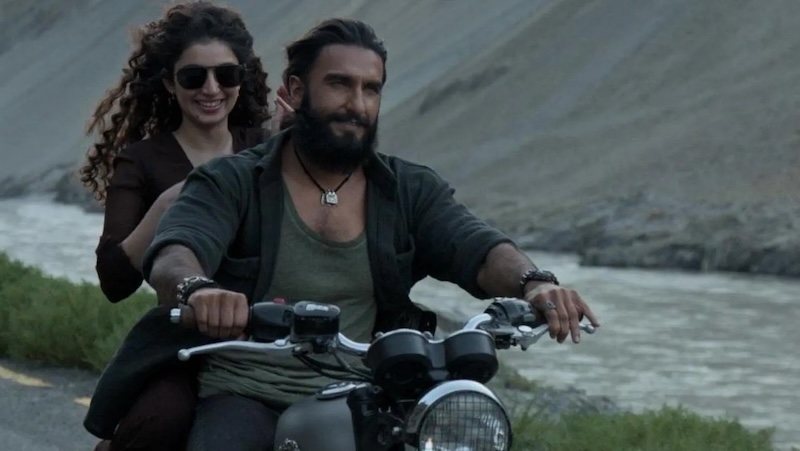
Take Dhurandhar, the 2025 spy action thriller written, directed and co-produced by Aditya Dhar.
The movie features an ensemble cast headlined by Ranveer Singh, with Sanjay Dutt, Akshaye Khanna, R. Madhavan, Arjun Rampal, Sara Arjun and Rakesh Bedi in key roles.
The film’s narrative — an Indian operative infiltrating the underworld in Karachi and dismantling a nexus of intelligence and crime — is, at face value, ripe for controversy and prone to reductive political readings. But the way audiences and critics have embraced the film underscores how cinematic quality and star power in Bollywood can transcend simplistic debates.
Consider the reaction to Akshaye Khanna’s portrayal of Rehman Dakait, an anti-India figure whose arc culminates in a brutal takedown by the Indian agent. Khanna’s work has been celebrated widely; his physical intensity, emotional nuance and screen authority have become a talking point in both popular and critical circles, eclipsing much of the surrounding chatter about the film’s ideological skew.
What makes this so noteworthy is that Khanna’s resurgence, along with the broader buzz around Dhurandhar, reiterates a familiar Bollywood pattern: the industry’s platform can redefine careers, revive talent and amplify performers to an extent few regional industries can match on their own. Yes, actors from Tamil, Telugu, Malayalam, Punjabi or Bengali cinema have massive followings, but the leap from regional superstardom to a pan-Indian household name generally traces back to a well-promoted Bollywood vehicle.
Ranveer Singh’s presence, too, reinforces this dynamic. He leads Dhurandhar with his characteristic energy and national appeal, and the film’s box-office numbers crossing significant milestones in North America and beyond reflect both his draw and the Bollywood ecosystem that propels such films internationally.
Similarly, the inclusion of stalwarts like Sanjay Dutt and R. Madhavan isn’t solely incidental. Their careers have long been bolstered by landmark Hindi cinema roles that lodged them in the Indian imagination far more widely than in any regional market. That visibility, compounded over decades of Hindi films reaching global diasporic audiences, is part of what contemporary commentators shorthand as global appeal.
This is not to dismiss genuine global crossover, but it does caution against equating every international mention, red-carpet invite or social media trending with truly broad global recognition.
The Dhurandhar phenomenon also shows how Bollywood’s structure, with its star system, marketing networks, distribution reach and cultural footprint, continues to be the dominant force in defining who gets elevated, both in India and abroad.
The audiences who champion these stars are loyal, vocal and widespread. They are often connected through a shared linguistic and cultural frame that Bollywood has historically commanded.
So before we extend the global mantle indiscriminately across the Indian entertainment map, let’s recognise where the gravitational centre still lies. Bollywood may now no longer be the only game in town for talent, but it remains the most powerful crucible for pan-Indian, and de facto international, stardom.
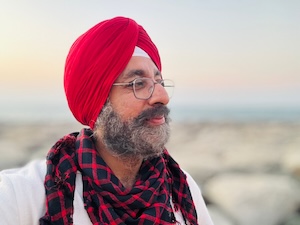
Harmeet Shah Singh is a career journalist currently serving as Communications and Advocacy Director at UNITED SIKHS (UK), a charity registered in England and Wales.
* This is the opinion of the writer and does not necessarily represent the views of Asia Samachar.
RELATED STORY:
The Demise of the Akali Dal and the Badal Dynasty: What Next for the Panth? (Asia Samachar, 5 Aug 2024)
ASIA SAMACHAR is an online newspaper for Sikhs / Punjabis in Southeast Asia and beyond. You can leave your comments at our website, Facebook, Twitter, and Instagram. We will delete comments we deem offensive or potentially libelous. You can reach us via WhatsApp +6017-335-1399 or email: asia.samachar@gmail.com. For obituary announcements, click here