























By Harmeet Shah Singh | Opinion |
Henry Nowak’s murder may prove to be one of the defining moments in the modern history of Sikhs in the West.
Not because the crime revealed anything about Sikhi. It did not. Nor because one man’s actions can be used to judge an entire community. They cannot. Its significance lies in the fact that it occurred at a moment when Sikhs have become entangled in the West’s wider political and cultural struggles.
To the progressive left, Sikhs often represent a multicultural success story. The turban, the kirpan and visible religious identity are presented as evidence that liberal democracies can accommodate difference without demanding assimilation.
To the centre right, Sikhs frequently serve as proof that immigration can work. Hard work, entrepreneurship, family stability and civic participation fit comfortably within that narrative.
To the most in the populist right, however, the visible Sikh has become another symbol in arguments about borders, identity, supremacy, and national cohesion.
Distinctions between communities matter little in such debates. The turban is absorbed into a wider story about cultural change.
The consequence is that Sikhs have become useful to everyone.
That should concern Sikhs more than it currently does. For decades, Sikh organisations fought important battles for religious freedom. They secured accommodation for articles of faith, challenged discrimination and expanded the space available for public expressions of identity.
SEE ALSO: Henry Nowak murder: The weight of suspicion and the strength of Sikhi
Those victories mattered. Every victory, however, contains the seeds of a future mistake.
Asserting religious identity in societies that allow generous space for its expression is one thing. Building an entire public culture around displaying that identity is another.
The distinction has become increasingly blurred. In parts of the diaspora, visibility itself has acquired moral value. The visible Sikh is frequently celebrated before anyone asks deeper questions about conduct, wisdom or theological understanding.
Social media has accelerated the tendency. Public attention gravitates towards the dramatic. Digital platforms amplify conflict. Identity becomes content.
The result is a strange form of insecurity.
Many Sikhs speak as though society is constantly scrutinising them while simultaneously behaving as though society should be constantly admiring them.
One moment the community describes itself as uniquely successful. The next it presents itself as uniquely targeted. One narrative seeks applause. The other seeks sympathy. Both require Sikhs to remain at the centre of the conversation.
That mindset becomes dangerous in an age shaped by algorithms.
The internet rewards emotional reactions. Political entrepreneurs reward grievance. Nationalists reward division. Every controversy becomes fuel.
Nowak’s murder unfolded inside precisely this environment.
Within hours of the conviction and sentencing, competing narratives were circulating online.
Some sought to weaponise the crime against all Sikhs. Others became preoccupied with protecting Sikh reputation. The victim, an 18-year-old student with his entire future ahead of him, risked becoming secondary to a battle over image.
That should have been a moment of collective introspection. Instead, much of the discussion became a struggle over perception. The deeper issue extends beyond this case.
For decades, many Sikh institutions have invested enormous energy in teaching people how to look Sikh. Far less energy has been devoted to asking whether they are cultivating the judgement, humility and moral restraint that Sikh teachings demand.
The imbalance is becoming harder to ignore.
The challenge facing Sikhs in the West is no longer acceptance. Britain, Canada and the United States have already provided remarkable space for Sikh identity to flourish openly.
The challenge is what happens next.
A community can spend so long defending its image that it forgets to examine itself.
When that happens, every criticism feels like persecution, every disagreement feels like hostility and every spotlight feels deserved.
The Southampton tragedy arrived in an age of hyper reaction and rising nationalism. It exposed how quickly a local crime can become a global cultural argument.
It also exposed something else.
Visibility is easy to achieve.
The harder task is becoming the kind of community that does not need constant attention in order to know who it is.
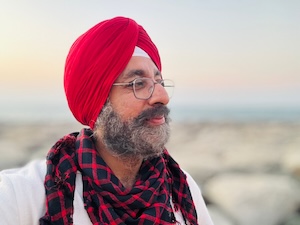
Harmeet Shah Singh is a career journalist currently serving as Communications and Advocacy Director at UNITED SIKHS (UK), a charity registered in England and Wales. The article was first shared here.
* This is the opinion of the writer and does not necessarily represent the views of Asia Samachar.
RELATED STORY:
Dear Henry Nowak: You Met a Sikh, But Not Sikhi (Asia Samachar, 3 June 2026)
ASIA SAMACHAR is an online newspaper for Sikhs / Punjabis in Southeast Asia and beyond. You can leave your comments at our website, Facebook, Twitter, and Instagram. We will delete comments we deem offensive or potentially libelous. You can reach us via WhatsApp +6017-335-1399 or email: asia.samachar@gmail.com. For obituary announcements, click here