
















By Sikh and Gay from East Malaysia | Malaysia |
I was asked to write about being Indian from an East Malaysia perspective and how that experience was. I could not do it, tried as I did, with numerous versions, all seemed like I was writing propaganda one see’s every day in Malaysian mainstream media, “Malaysia is a multiracial country with three main races, Malays, Chinese, Indians.” Just as that statement is untrue, writing from an Indian perspective on life in Borneo is also untrue, well for me at least.
I am ethnically Punjabi, and I do not as a Malaysian Bornean understand nor identify with the notion of racial boxes or boundaries. Like sexuality and gender, race too is a social construct that has been used by colonial powers and the current political parties to control the narrative and stay in power. I learnt about these racial boundaries when I moved to Peninsular Malaysia to go to a public university as an undergraduate. It was an utterly shocking cultural experience as everything seemed to revolve around the notion of ‘race’.
“Come support our college Indian team playing against the Malay team,” I was told. “We must band together as Indians I was told, if not no one will help you in university.” They were of course like-minded East Malaysians I banded with and Peninsular Malaysians who understood the doctrine of race but ignored or navigated expertly through it. Perhaps, one of them would have been better suited to write this essay because I realise once again, how I cannot describe what it is like being an ‘Indian’ from East Malaysia.
So, let me tell you what it is like being from East Malaysia, as an East Malaysian instead. First of all, our respective State flags mean more to us than the Malaysian flag. Our State anthem is always sung more loudly than the national anthem and we never do Facebook articles describing how the ‘Chinese’ uncle helped the ‘Malay’ child cross the road. We would just write about how the uncle helped the child cross the road.
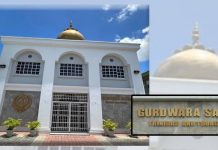
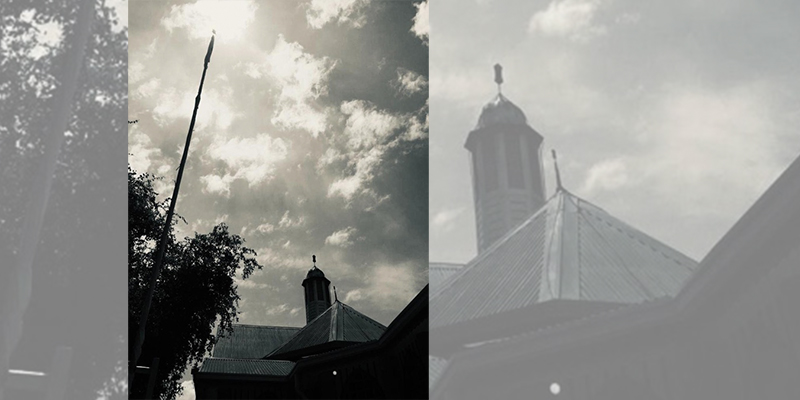
So, why is it this way? We share the same systems of education, government, and languages (with our own additional languages), not to mention, the British were also the colonial masters in East Malaysia as well[1]. The answer is actually quite simple. We are an inclusive bunch of various ethnicities and religious beliefs. Just as we share some of our coffee shops with halal and non-halal food, we also share our families at times with it not being uncommon to have Muslims and Christians from the same families. Seeing Muslim brethren at Gurdwara or Church or Temples for weddings, celebrations, and funerals is the norm, not the exception.
Now, some of you reading, might say, well this seems like reading the same type of propaganda mentioned in the first paragraph. Of course, we too have issues in the East. In Sabah, local politicians use the Stateless migrant as the bogeymen that cannot be accepted in Sarawak giving priority to one ethnic group for State civil service jobs. When I was a child, Sikh boys were at times still made fun of for their Joora (man-bun) and the majority did not keep their long locks, while girls suffered snickers for the coconut oil in their hair as well and many parents of my generation in the 1980s still wore turbans.
Of course, as I write this, I do not wish to diminish the issue of marginalisation of Indians in Peninsular Malaysia, where the majority of people who die in police incarceration are categorised as Indians. These are alarming facts that need national attention and recognising that one community makes up most of the victims is crucial in ending these outright human rights violations. And this should be a priority of all Malaysians.
As for being part of the LGBTIQA+ community, I still feel safe at my Gudwara after formally coming out on social media. I have openly talked about being a gay person when I do on rare occasions get asked why I am not married by people visiting our Gudwara from elsewhere. I have not felt in danger (although at times nervous), and I recognise the privilege of this and I am ever thankful that the multiracial Sikhs of East Malaysia choose inclusion and acceptance over hate and exclusion. I wonder if part of the reason is that we know everyone in our small Gurdwara communities or just because we are inclusive Borneans. It is harder to hate someone you do not know after all, and we grew up together in the community.
For me, being an East Malaysian, being excluded or included only because of race has never been part of my psyche growing up. I believe it allows us a special worldview, one that sees a sense of togetherness instead of being othered. This I think is what gives Sabah and Sarawak our greatest strength and I can only wish that this will be the future for all Malaysians.
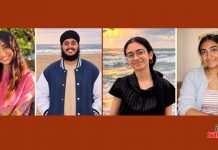
The author is a Sabahan who identifies as a Sikh and trans person in Malaysia.
[1] The type of British administration we had before World War Two in the Bornean States was different from Malaya and Singapore. Sarawak had a white Rajah and Sabah (then known as North Borneo) was run by a company. They are numerous issues with all these different types of colonial setups.
RELATED STORY:
A little love for those equal to us (Asia Samachar, 13 Feb 2023)
ASIA SAMACHAR is an online newspaper for Sikhs / Punjabis in Southeast Asia and beyond. When you leave a comment at the bottom of this article, it takes time to appear as it is moderated by human being. Unless it is offensive or libelous, it should appear. You can also comment at Facebook, Twitter, and Instagram. You can reach us via WhatsApp +6017-335-1399 or email: asia.samachar@gmail.com. For obituary announcements, click here.