























By Dr. B. S. Bains | Opinion |
The connection from the Misls (1) of Punjab, established by Banda Singh Bahadur after the Holy demise of Guru Gobind Singh, the 10th Guru of the Sikhs, in the early 18th Century; to the kingdom of Maharaja Ranjit Singh in the late 18th Century represents a remarkable journey of unification, bravery, and eventual decline ending with Maharaja Dulip Singh.
The Sikh Misls, which were originally autonomous warrior bands or confederacies in Punjab, operated independently throughout the 18th century, each led by influential Sardars who governed their respective territories. These Misls were characterized by their shared Sikh values but often acted as separate entities, with frequent rivalries among them.
UNIFYING FORCE
Ranjit Singh, born into the Sukerchakia Misl, one of the 12 Misls of Punjab, rose as a unifying force at the age of 20. He consolidated the separate Misls to establish the Sikh Empire in 1799 — a sovereign state spanning much of northern India, including regions of modern-day Pakistan, India, Kashmir, and reached the boundaries of Afghanistan.
The boundaries of his empire extended to Jamrud, at the border between Punjab and Afghanistan. Sikh General Sardar Hari Singh Nalwa (2), appointed as Army Chief, constructed two forts along the Afghan border: one at Jamrud and another at Haripur. For centuries, Peshawar and Kashmir had been under Afghan control, but Ranjit Singh boldly pushed the Afghan invaders back across the Peshawar border, reclaiming these territories and integrating them into his kingdom.
FILM: THE MONUMENT OF INJUSTICE – MAHARAJA DULEEP SINGH: SARKAR-E-KHALSA (Co-Authored & Producer: Mr. Amarjeet Singh, Chandigarh, Punjab, India; Director: P.S. Nirola)
Ranjit Singh was formally granted the title of Maharaja Sarkar-e-Khalsa in the presence of Baba Sahib Singh Bedi (3), a direct tenth-generation descendant of Guru Nanak. Baba Sahib Singh gathered all the chieftains of Punjab to confer the title Sarkar-e-Khalsa and led special prayers (Ardas) at Harmandir Sahib (Golden Temple). Later, a carefully arranged investiture ceremony was held in Lahore, the capital at the time (now in Pakistan). His palace, Sheesh Mahal, still stands in Lahore, with its walls echoing the legacy of a once-mighty Sikh Empire.
His leadership fostered a prosperous, multicultural kingdom where Sikh, Hindu, Muslim, and European were among his ministers and these communities coexisted and lived in harmony. Renowned for his secular governance and dedication to his people’s welfare, Ranjit Singh’s reign marked the pinnacle of Sikh political influence. He is also credited with the gold plating of Harmandir Sahib in Amritsar, known today as the famous Golden Temple.
However, after his death in 1839, the Sikh Empire began to fracture and fragment. His eldest son, Maharaja Kharak Singh (4), died due to poisoning, and another son, Maharaja Sher Singh, ascended as the ruler of Punjab.

Maharaja Sher Singh, a courageous and well-trained military leader, ruled the Sikh Kingdom for 3 years (1840 to 1843). Tragically, both he and his young son, Prince Kunwar Partap Singh, were murdered by his cousins, Lehna Singh and Ajit Singh Sandhawalia, driven by greed for power and wealth. This act was part of a broader conspiracy by the Sandhawalia Sardars and Dogras to destabilize the Sikh Kingdom.
The murder of Maharaja Sher Singh paved the path for the British East India Campaign to conquer Punjab.
Following these tragic events, Maharani Jind Kaur (5), wife of Maharaja Ranjit Singh, was appointed as Regent of the Darbar and made every effort to save the Sikh Kingdom. However, it was too late to regain control, as two generals, Lal Singh and Tej Singh, betrayed her, leading to the loss of two Anglo-Sikh wars.
The council then declared the five-year-old Duleep Singh as Maharaja of the Lahore Darbar. The Sandhawalia brothers attempted to seize control of the Darbar’s political system, but within days, they too were killed by the Dogras. This left the throne of Punjab leaderless.
Internal conflicts, lack of a strong successor, and British imperial interests created vulnerabilities.
The British ultimately annexed Punjab in 1849 and began dismantling the kingdom that Ranjit Singh had built. Duleep Singh, who was bestowed Maharaja of the Sikh Empire by the Sikh Council, was exiled to Britain as a child. Despite his attempts later in life to reconnect with his roots, he remained isolated and distanced from Punjab.
Duleep Singh’s life in exile marked the end of the Sikh Empire’s direct legacy. His burial outside Punjab, in Elveden, England, stands as a poignant reminder of the lost sovereignty of the Sikh state.
This disconnection is seen as a symbol of colonial displacement, severing the physical and cultural link between the Sikhs and their homeland — a painful chapter in the history of Punjab that continues to resonate.
AGONY AND DESPAIR
The Maharaja endured years of agony and despair, as his struggle to return to his homeland, Punjab, was checked and denied.
This agony thus began from 1849 when Maharaja Duleep Singh, the youngest son of Emperor Maharaja Ranjit Singh, at the age of 12, was sent from Lahore fort in Punjab, to Fatehgarh in UP, from there he was shifted to Mussoorie.
At the teen age of 14 years, the minor Sikh Maharaja was coaxed and converted to Christianity and later in 1854 he was shifted to England where he spent almost the rest of his life in exile as the British authorities never allowed him to go back to his mother land Punjab.

NEXT SCREENING:
Sikh Centre, Singapore | 8 Nov 2024, 7pm
Asia Pacific University Kuala Lumpur | 30 Nov, 3pm
He was separated from his mother, Maharani Jind Kaur who was later imprisoned by Lord Dalhousie (6), the then Governor-General of British India.
Lord Dalhousie employed various tactics to tarnish Rani Jind Kaur’s reputation. Despite this, she was known for her intelligence, bravery, and popularity among the Sikh army.
She escaped from Chinaar fort in Bihar and reached Nepal. Here Raja Jang Bahadur (7) gave her asylum for 10 years, she became almost blind and too weak to survive for long.
After 13 long years, she was finally reunited with her son, Duleep Singh, in Calcutta, only to find that his sacred Sikh hair had been cut. The pain and agony she must have felt were unimaginable. Duleep took her to England, where she passed away in August 1863. It took several months to obtain permission from British authorities to return her body to India, and in the meantime, her remains were preserved in a mortuary. Maharaja Duleep Singh was never permitted to enter Punjab to perform her final rites; he was only allowed to do so in Nasik, near Mumbai, in 1864.
After his marriage, the exiled ‘Sovereign Sikh king settled at the Elveden Estate in Soffolk near Cambridge. Later realising the atrocities done with him and his mother Rani Jind Kaur, he turned rebellious.
Duleep Singh re-embraced the Sikh faith and announced his intention to return (8) to his beloved land to regain his lost Sikh Kingdom. In 1864 he married a simple German girl Bamba Mullier 9 in Alexandria city. He had 6 off-springs with her, the sixth passed away in her infant. He along with his wife, and their 5 children once again set sail for Punjab in March 1886 but were intercepted in Aden in Middle east. They were forced to return back to England. The Maharaja refused to go back to the UK and preferred to stay back in Europe. He went to Paris. He struggled throughout his life to reach his motherland but the circumstances were never in his favor. He traveled to Germany, Ireland, France, Russia but could not find any results for traveling back to Punjab. Finally, he lost all he had including his wealth and hopes and decided to settle in Paris as for him the UK was a country of his enemies
On 22 October 1893 whilst still engaged in struggle to reclaim his throne, the last Maharaja of Sarkar-e-Khalsa died in Paris. His children became Orphans, with no source of funds and because of adverse circumstances, against the Sikh traditions and his wish the Sikh Maharaja’s body was buried at Elveden Hall church graveyard. Once owner of uncounted and unlimited wealth and power, including the famous diamond Kooh-i-Noor, he died a very miserable death, he was a homeless almost penniless at the end of his tragic life. He suffered for no other reason but for his innocence.
THE REMAINS
Since the past one century the Sikh community all over the world has been raising their voice to bring the ‘Remains of Maharaja Duleep Singh’ to Punjab for performing his last rites in Amritsar.
In this convention a meeting and seminar was organised at Sri Guru Granth Sahib Bhawan, Chandigarh jointly by Kendri Sri Guru Singh Sabha and Maharaja Duleep Singh Centenary Trust ,UK. Sikh thinkers, historians and intellectuals resolved that the ‘last rites’ of Maharaja Duleep Singh, who was ‘swindled out of the Sikh empire and duped into Christianity’ by the British, be performed as per the Sikh tradition and faith he belonged to.
As per ‘last wish’ of the last sovereign Sikh ruler of Punjab, Maharaja Duleep Singh deserves performance of sanctimonious last rites by the Sikh people of his faith. The Maharaja died 125 years ago and his remains lie buried in Elveden in England. The Sikh assembly also resolved to commemorate the 125th death anniversary of the Maharaja falling this year. Also decided to mobilise resources for constructing a ‘befitting memorial’ to the Maharaja in Punjab.
The Maharaja Duleep Singh Centenary Trust, established in 1993, commissioned a life-size bronze statue of the Maharaja in Thetford, UK which was unveiled on 29th July 1999 by the Prince of Wales.
Prominent Sikh personalities spoke on this issue, present on the occasion were Mr. Harbinder Singh Rana, Founder and Honorary Director, Maharaja Duleep Singh Centenary Trust , Daljit Singh UK, Gurtej Singh (IAS), Dr. Prof. Gurdarshan Singh Dhillion, Gurprit Singh, Amarjeet Singh(film producer), Ajmer Singh, Lt. Gen. KS Gill, Karamjit Singh, Vikram Singh Sodhi, Prof. PS Nirola, Kuljit Singh Dilbar (Dhadhi), Amar Singh Chahal, Amrinder Singh, Davinderpal Singh, Kushal Singh.
The elite gathering also demanded to build a suitable memorial with a monument at Amritsar in memory of Maharaja Duleep Singh.
THE FILM
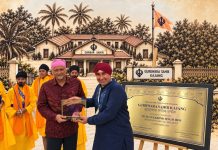
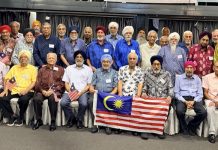
This historical narrative, is very well captured and documented in a film The Monument of Injustice, portrays the rich tapestry of the life of Maharaja Ranjit Singh, the Lion of Punjab and the life of Maharaja Duleep Singh. Tremendous pain has been taken to document this film by Mr. Amarjeet Singh, a researcher, a writer and film producer from Chandigarh, Punjab, India. This film has been featured across the globe and is being featured in Malaysia as well.
The poignant conclusion of Sikh history should hold a special place in the heart of every Sikh. As Punjabis, we must take pride in our heritage, honoring the sacrifices and resilience of our ancestors who stood firm across generations. It is every Sikh’s duty to pass these stories to the younger generation and share them with everyone we encounter.
This brief chapter on Sikh history is written in simple English, capturing the journey from the time of Guru Gobind Singh, the 10th and final Sikh Guru, through the years following the fall of the Great Sikh Empire.
It is essential for the current respective government to facilitate and work toward fulfilling Maharaja Duleep Singh’s final wish by conducting his last rites on the soil of Punjab. Additionally, the government should help establish a grand memorial statue at Summer Place in Amritsar to honor the last Maharaja, Duleep Singh, with his birth date, September 4th, 1838, inscribed on it. A similar tribute should also be placed at Lahore Fort.
This film has been featured in to name a few :-
- Apart from Punjab,
- Screened at many international film festivals,
- Spinner Wheel Film Festival Toronto,
- Jaipur International Film Festival,
- Anandpur Sahib Foundation,
- IDPA Festival, Mumbai,
- House of Commons, UK
- Over hundred sponsored screenings in UK, Canada, USA,
- Recently had a successful tour of Malaysia and Singapore.
- Getting many more invitations from across the globe
REFERENCES
1 https://mjsramgarhia.com/the-12-sikh-misls/
2 https://organiser.org/2023/09/23/93674/bharat/hari-singh-nalwa-birth-anniversary-most-feared-sikh-
warrior/
3 http://www.sikh-heritage.co.uk/personalities/baba%20sahibsingh/sahibsingh.htm
4 https://en.wikipedia.org/wiki/Kharak_Singh
5 https://en.m.wikipedia.org/wiki/Jind_Kaur
6 https://byjus.com/free-ias-prep/this-day-in-history-apr22/
7 https://www.britannica.com/place/Nepal
8 https://duleepsingh.com/maharani-bamba/

Dr Balwant Singh Bains is a Malaysia-based kirtan enthusiast and a practicing physiotherapist with a chain of physiotherapy clinics.
RELATED STORY:
What is Sikh greeting? Sat Sri Akal or the other one? (Asia Samachar, 11 Oct 2024)
ASIA SAMACHAR is an online newspaper for Sikhs / Punjabis in Southeast Asia and beyond. You can leave your comments at our website, Facebook, Twitter, and Instagram. We will delete comments we deem offensive or potentially libelous. You can reach us via WhatsApp +6017-335-1399 or email: asia.samachar@gmail.com. For obituary announcements, click here





DatoJi you have done a lot of research to write this article which is very enlightening and enriching. I enjoyed reading it today. Heartiest congratulations for enabling us an insight into Sikh history. Thanks again.
Wonderful film I have seen at Attariwala ji smadh at Attari Amritsar. Congratulations to Sr.Amarjit singh ji for the successful shows at various places. We should all raise a voice for our prince /mharaja Duleep Singh for his last rituals to be done according to sikh beliefs at Punjab .
Comments are closed.