





















By Harmeet Shah Singh in London | Opinion |
Rewind to the Indian capital in the early 2010s. Streets thick with protest. Television studios humming with argument. An anti-corruption movement converting public anger into a language of possibility.
From that churn emerged Arvind Kejriwal, a former bureaucrat who spoke as an ordinary citizen and promised to dismantle politics as usual. What followed altered urban politics in India.
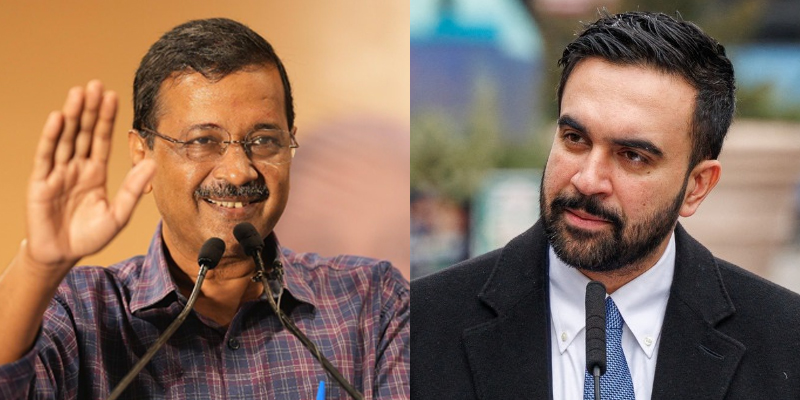
To ask whether Zohran Mamdani can become the Kejriwal of US politics requires returning to that earlier moment in Delhi, before authority hardened positions and symbolism began to carry electoral consequence.
Mamdani’s rise to the mayoralty of New York City has unfolded through a dense accumulation of meaning. First Muslim mayor. First South Asian. First African-born. Youngest in more than a century. His oath on the Quran, the musical arc from Frank Sinatra to Louis Armstrong and the Punjabi performance — all spoke to a city that understands politics through culture as much as governance.
These gestures resonated because New York recognises itself through plurality.
On the other side of the planet, Kejriwal’s early ascent relied on a similar visual and moral imagery. The muffler, the broom, the invocation of Shaheed Bhagat Singh. Each signalled anti-elitism, nationalism without majoritarian dominance and sacrifice over pedigree. When his Aam Aadmi Party won Delhi elections, subsidised electricity, free water, public transport reforms and a visible transformation of government schools gave administrative weight to those symbols.
Power, however, altered the terrain. Kejriwal learned that India’s political field demanded calibration rather than provocation. He professed devotion to Lord Hanuman in a show of ease with Hindu belief without surrendering to Hindutva. He wore a Sikh turban while campaigning in Punjab, acknowledging diversity while promising governance over grievance. Detractors labelled this opportunism. Supporters read it as political intelligence. Either way, symbolism shifted from assertion to navigation.
Mamdani’s symbolic register has operated differently. Shortly after taking office, he sent a handwritten note to Umar Khalid, incarcerated for years under India’s security laws. The letter was brief, though its reach was extensive. It placed Mamdani within a global discourse on civil liberties and dissent. For many, the gesture carried moral force.
Precision in symbolism also narrows the field of expectation. India’s prisons hold some other contested figures as well, whose cases trouble public conscience. Climate activist Sonam Wangchuk has emerged as a prominent voice on environmental and constitutional safeguards in Ladakh. Several Sikh prisoners remain incarcerated on sentences linked to Punjab’s unrest in the 1980-90s. Silence on these cases does not diminish the Khalid letter, though it sharpens its selectivity. Once leaders speak through symbols, absence becomes interpretive space.
The Punjabi performance at Mamdani’s inauguration added another layer. The Sikh rapper turned the venue itself into a chorus. The crowd responded instinctively. It captured New York’s diasporic ease, where languages cross without explanation.
Cultural affirmation, though, does not always translate into political reassurance. For communities shaped by historical grievance, representation without advocacy can feel provisional.
Kejriwal’s trajectory offers warning alongside instruction. His party expanded beyond Delhi into Punjab, tapping into aspirations for dignity, service delivery and administrative competence. It eventually lost Delhi to the more powerful Bharatiya Janata Party, demonstrating how swiftly majorities consolidate when symbolism is framed as threat rather than inclusion. In India, that consolidation has been driven by a sophisticated narrative machinery that converts cultural anxiety into electoral dominance.
The United States operates differently, though similar reflexes exist beneath the surface.
Mamdani governs a city where minorities hold numerical weight, but where power remains fragile. His affordability agenda mirrors Kejriwal’s early emphasis on everyday relief. Housing, childcare, transport and food costs will determine whether trust deepens or fractures. Administrative delivery, not ceremony, will arbitrate credibility.
The central question surrounding Mamdani is not sincerity, but sequencing. Symbols can create political space. They can also compress it when perceived as uneven or unresolved.
Kejriwal endured his first decade by adjusting continuously, recognising when to speak through iconography and when to recede into administration. His politics remained flexible enough to absorb contradiction.
Mamdani stands at an earlier point on that curve. Whether his symbolic vocabulary can coexist with broad-based governance in a polarised national climate remains undecided. Rewinding to Delhi before power hardened suggests that early promise carries risk alongside opportunity. Between symbolism and substance lies the unglamorous work of politics, where gestures attract attention and governance secures consent.
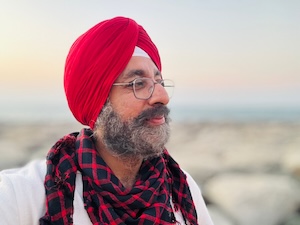
Harmeet Shah Singh is a career journalist currently serving as Communications and Advocacy Director at UNITED SIKHS (UK), a charity registered in England and Wales.
* This is the opinion of the writer and does not necessarily represent the views of Asia Samachar.
RELATED STORY:
Zohran Mamdani’s New York primary win sparks the ire of Modi’s supporters – Report (Asia Samachar, 6 July 2025)
AAP all set to break Akali Dal – Congress long stranglehold over Punjab (Asia Samachar,10 March 2022)
ASIA SAMACHAR is an online newspaper for Sikhs / Punjabis in Southeast Asia and beyond. You can leave your comments at our website, Facebook, Twitter, and Instagram. We will delete comments we deem offensive or potentially libelous. You can reach us via WhatsApp +6017-335-1399 or email: asia.samachar@gmail.com. For obituary announcements, click here