





















By Dr Pola Singh | Opinion |
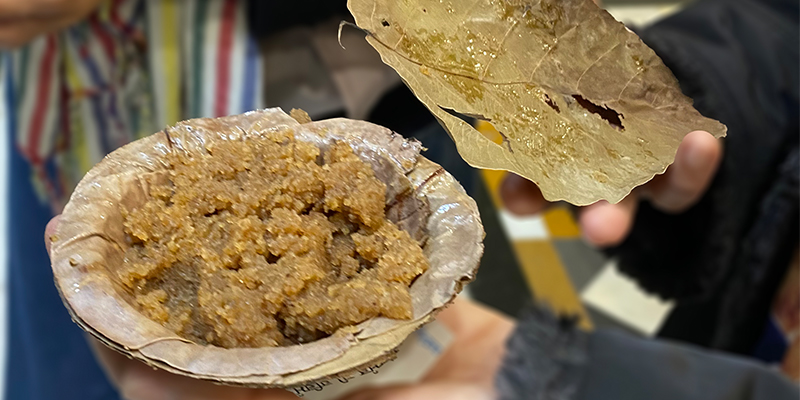
As a humble member of the Sikh community who treasures our sacred traditions, I share these thoughts with love and respect. Degh (also known as karah prashad), prepared and offered in our homes and Gurdwaras, is not just food but a symbol of devotion, equality and the Guru’s blessing. It carries deep spiritual meaning and binds us together in faith.
At the same time, it is worth reflecting on how life has changed since the days of our forefathers. They worked tirelessly in the fields, enduring long hours of physical labour under the sun. For them, the rich blend of ghee, sugar, flour and water in the degh was a source of strength and nourishment. Today, however, most of us live and work in far less demanding conditions, often indoors and with limited physical exertion. Our energy needs are different, yet we continue to consume the same rich preparation, sometimes in larger portions, even while facing health challenges such as diabetes, high cholesterol, and obesity.
This reflection is not about changing the sacred recipe or questioning tradition. It is simply about considering proportions. A little less sugar, a little less ghee — the devotion remains, the sacredness remains, but the health risks are reduced. The essence of degh is untouched, while its impact on our well-being becomes more balanced.
The home is the best place to begin this gentle change. Many Sikh families in Malaysia prepare degh regularly for prayers, birthdays and offerings. By slightly adjusting the ingredients, we can set an example for our children, relatives and guests. When someone notices the difference, it becomes an opportunity to share why we have made this choice — not as criticism, but as care for health and respect for tradition.
We have already seen such thoughtful adjustments in other practices. Years ago, serving tea without sugar at Gurdwaras was unthinkable. Today, many Gurdwaras offer both sweetened and sugar-free tea, giving the sangat the freedom to choose. This small act of inclusivity has made a big difference, especially for elders and those managing health conditions. In the same spirit, why not offer two versions of degh — one traditional, one lighter — so that everyone can partake with joy and without concern?
To those who hold our traditions most dearly, let me say with humility: this suggestion comes from reverence, not criticism. Guru Nanak Dev Ji himself encouraged reflection and balance, reminding us that faith is not blind ritual but living wisdom. Preserving health is not a modern idea; it is part of our spiritual duty. The body is the temple of the soul, and caring for it is seva.
Tradition and health can walk hand in hand. Imagine a Gurdwara where degh is offered in two forms, where langar is nourishing yet lighter, and where conversations in the sangat include not only joy and camaraderie but also gentle reminders about well-being. That is not a departure from Sikhi — it is Sikhi alive and evolving in the 21st century.
Let this not be seen as criticism, but as an invitation to reflect. Let us pass down the beauty of our traditions without passing down the burden of preventable illness. Let us build a sangat that is spiritually strong and physically healthy. Let us prepare prashad that is light on the stomach but heavy with blessings.

Dr Pola Singh, who retired as Maritime Institute of Malaysia director-general in 2011, is also the author of ‘Uphill — The Journey of a Sikh-Chinese Kampung Boy’
RELATED STORY:
When prayer meets purpose: A reflection on faith, health and gratitude (Asia Samachar, 3 May 2025)
ASIA SAMACHAR is an online newspaper for Sikhs / Punjabis in Southeast Asia and beyond. You can leave your comments at our website, Facebook, Twitter, and Instagram. We will delete comments we deem offensive or potentially libelous. You can reach us via WhatsApp +6017-335-1399 or email: asia.samachar@gmail.com. For obituary announcements, click here



The question raised in this article regarding the introduction of two versions of degh invites a deeper engagement with Gurmat theology, history, and lived Sikh practice. Any discussion of karah parshad must begin by recognizing that it is not simply food, but Guru-sanctioned prashad, inseparable from the presence of Sri Guru Granth Sahib Ji and the collective life of the Panth.
In Sikh tradition, karah parshad is prepared with equal parts atta, ghee, and sugar, and offered after Ardas in the presence of the Guru. This equality of ingredients is not incidental; it reflects the foundational Sikh doctrine of human equality and divine unity:
“Aval Allah noor upāiā, kudrat ke sabh bande.”
First, God created the Light; from this Light, all beings were created.
— Sri Guru Granth Sahib Ji, Ang 1349
Just as the Light is one and undivided, the prashad is one and undifferentiated, shared equally without distinction of caste, status, gender, or health condition. This mirrors the Sikh rejection of hierarchy within the sangat.
Sant Maskeen Ji, in his discourse on karah parshad, emphasizes that its preparation is not culinary craftsmanship but seva infused with simran. Gurbani reminds us that spiritual value lies not in form, but in intention aligned with Naam:
“Bhog khāi bhogāiā, nām visāri dukh pāiā.”
One may enjoy countless pleasures, but forgetting the Naam leads only to suffering.
— Sri Guru Granth Sahib Ji, Ang 707
Thus, karah parshad functions as a didactic symbol teaching moderation, acceptance (bhana), and remembrance of the Divine, rather than indulgence or choice.
From a historical perspective, degh is also tied to the Sikh principle of Miri–Piri. It nourishes the body while reinforcing spiritual discipline. The ceremonial touch of the kirpan to the prashad before distribution affirms that this offering flows from Guru’s authority, not personal preference or individual convenience.
However, Sikh practice has historically balanced compassion with symbolic integrity. The tradition already allows personal discretion in the quantity one receives, or the respectful choice to decline, without altering the form of the prashad itself. This preserves both individual well-being and collective unity.
Introducing multiple forms of karah parshad risks unintentionally transforming a shared spiritual symbol into a matter of personal customization. Gurbani cautions against reshaping spiritual disciplines to suit personal comfort:
“Manmukh matī khotī, bin nāvai pat jāi.”
The self-willed intellect is false; without the Naam, honor is lost.
— Sri Guru Granth Sahib Ji, Ang 1343
From a pastoral standpoint, karah parshad teaches the sangat to receive what the Guru gives with humility and trust. From an academic standpoint, its uniformity safeguards the semiotic and theological coherence of Sikh ritual life.
Any reconsideration of long-standing practices must therefore arise from Panthic deliberation grounded in Gurmat, not from isolated or utilitarian reasoning alone. Otherwise, we risk slowly reinterpreting sacred symbols through a purely biomedical or consumerist framework.
In conclusion, karah parshad is neither heavy nor light it is grace (kirpa). And as Gurbani reminds us:
“Kirpā te jāniā jāi.”
Grace alone makes true understanding possible.
— Sri Guru Granth Sahib Ji, Ang 2
To receive Guru’s prashad as it has been handed down is to participate in a living tradition that forms not only healthy bodies, but humble, unified, and spiritually grounded communities.
Comments are closed.