











By Manjit Kaur | Opinion |
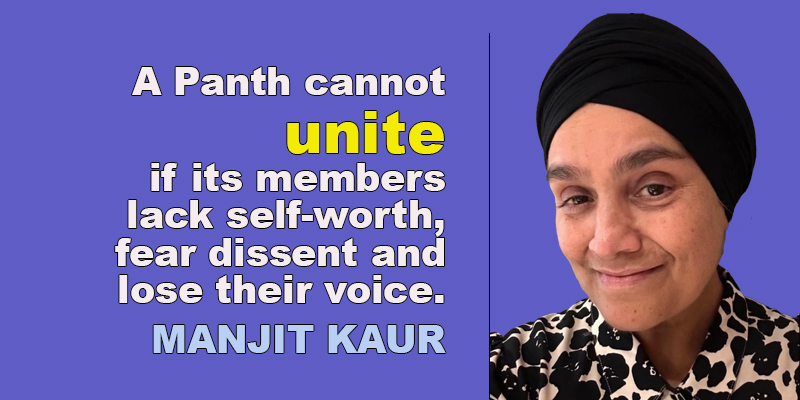
When we speak about the challenges facing the Panth, we often focus the external threats and blame other for our disunity. Rarely do we pause to ask a more searching question, what kind of individuals are we nurturing within our own homes. Yet Gurmat reminds us that collective strength can only emerge from inner stability. A Panth cannot be united if its members grow up unsure of their self-worth, fearful of disagreement, and disconnected from their own voice.
This recognition must begin early, from the day you are born, in the home. Self-confidence is not about ego. It is the quiet knowing that each and every human being is part of the Oneness and therefore worthy of respect, including self-respect. As Guru Arjan states, ਨਾ ਕੋ ਬੈਰੀ ਨਹੀ ਬਿਗਾਨਾ ਸਗਲ ਸੰਗਿ ਹਮ ਕਉ ਬਨਿ ਆਈ ॥੧॥ No one is my enemy, and no one is a stranger. I get along with everyone. (GGS p1299)
Modern psychology helps us understand what happens when this foundation is weak. Sigmund Freud spoke of the human personality as shaped by three forces, the id, the ego, and the superego. The id represents impulse and emotion, the superego represents rules, authority, and internalised expectations, while the ego is meant to balance the two with reality and reasoning.
SUPEREGO
In many Punjabi households, the superego dominates. Authority, obedience, fear of shame, and duty outweigh emotional expression and independent thinking. When the ego is not allowed to develop properly, individuals tend to swing between two extremes. Some become very passive, suppressing their needs to avoid conflict. Others become aggressive, reacting emotionally when pressure builds. Assertiveness, the healthy function of a balanced ego, which in Gurbani we term ‘sehj’, is rarely modelled or taught in Panjabi families. Being in sehj means being true to yourself and others. As Guru Nanak says, ਸਚਹੁ ਓਰੈ ਸਭੁ ਕੋ ਉਪਰਿ ਸਚੁ ਆਚਾਰੁ ॥ “Everything is lower than Truth; but higher still is truthful living.” (GGS p62). Truthful living requires the confidence to speak without fear and the humility to listen to others.
The kind of confidence required to be assertive does not come overnight. The foundations of such behaviours are laid early. A child enters the world knowing nothing except what surrounds them. From birth to the age of two or three, children do not understand meaning, they absorb behaviour. They copy tone, reactions, emotional responses. By four and five, they begin to recognise affection, boundaries, and whether their voice matters. Gurbani reminds us of the power of having the right learning environment in enabling the development of positive self-esteem.
ਸਤਸੰਗਤਿ ਮਿਲਿ ਬਿਬੇਕ ਬੁਧਿ ਹੋਈ ॥ ਪਾਰਸੁ ਪਰਸਿ ਲੋਹਾ ਕੰਚਨੁ ਸੋਈ ॥ “Joining the Sat Sangat, the discerning intellect is awakened. Touching the philosopher’s stone, iron becomes gold.” (Bhagat Kabir Ji, Ang 481). But tragically, through fear and low self-esteem, my experience has been that many in the community become very closed and hard minded.
The psychologist, Erik Erikson, described human development as a series of stages, each shaped by a central emotional task. Early childhood, he argued, is about trust versus mistrust, then autonomy versus shame, and later initiative versus guilt. When children are supported, listened to, and allowed age-appropriate independence, they develop confidence and self-worth. When they are controlled, silenced, or shamed, they develop doubt, guilt, and confusion about their own voice and self-hate.
This resonates deeply with my lived experience amongst Punjabi Sikhs. Children need unconditional love, not as a concept, but as a lived reality. They need to be held, hugged and heard. When questions are welcomed and answered in simple language, children learn that curiosity is safe. When questions are shut down, they learn that silence is survival and only express themselves in outbursts of frustration and aggression.
PARENTING
In many traditional Punjabi families, parenting follows a ‘parent child’ model well into adulthood. Obedience is valued over understanding the child’s needs and challenges they are facing. Control, threats and one-way communication replaces affection, listening and dialogue. Children are often driven towards paths chosen for them, careers, behaviours, even personalities, rather than be guided to discover their own strengths and ambitions in life.
This interrupts what Erikson described as the development of autonomy and initiative, which can result people struggle to trust their own judgement in adulthood. If I am honest, my experience of Panthic individuals is that although on the surface we see over the top displays of respect, but beneath the surface, there is little trust, which is why we are so disunited.
This affects both genders, though in different ways. For girls, the restriction is often sharper, voices silenced earlier, choices narrowed sooner. For boys, emotional expression is discouraged, replaced by overblown expectations and pressure. When voices are suppressed, regardless of gender, the result is similar, adults who struggle to express needs or assert themselves without conflict.
As children grow into teenagers and adults, conflict becomes unavoidable. Yet in our culture, conflict is often framed as win or lose, not win and win. Erikson described adulthood as a stage where healthy relationships depend on identity and mutual respect. Without a secure sense of self, disagreement feels threatening, not productive.
Assertiveness becomes essential here. Assertiveness is neither aggression nor passivity. It is the ability to express oneself clearly, calmly, and honestly, while respecting others.
Emotional boundaries are another area where we struggle. Panjabi Sikhs are deeply emotional people, yet rarely taught emotional awareness. Arguments quickly become heated, minds clouded, positions hardened. When emotions take over, listening stops. Passive individuals withdraw, aggressive individuals escalate, and assertive dialogue disappears.
Anger and frustration, when suppressed, do not disappear, they get more intense, like a pressure cooker resulting in harmful behaviours, to self and/or others. Freud observed that repressed emotion often re-emerges in distorted ways. Many in our community have learned to lock feelings away because expression is discouraged. Over time, this creates resentment, mistrust, and emotional distance, both in families and in Panthic institutions.
ASSERTIVENESS
Learning assertiveness can be transformative. It allows individuals to stand on their own feet, engage in healthy relationships, and contribute meaningfully to community life. When people feel secure in themselves, they are less threatened by disagreement and different viewpoints are respected, mistrust reduces.
This has direct implications for Panthic life. Fragmentation, suspicion of Jathedars, and internal divisions do not arise in a vacuum, they reflect unresolved emotional patterns carried from homes into institutions.
If we genuinely want unity in the Panth, we must stop blaming others and begin with emotional literacy in our families. Raising children who are loved, heard, and guided, not controlled, is not a threat to tradition, but the only way to truly serve the Panth.
CHECK MORE COMMENTS ON THIS STORY AT ASIA SAMACHAR FACEBOOK AND INSTAGRAM

Manjit Kaur, a UK-based therapist and counsellor, is a presenter at the 1 Show Live at Panjab Broadcasting Channel, UK. She can be contacted via email at manjitkaur1show@gmail.com
RELATED STORY:
Valentine’s Day: A Sikh perspective on true love (Asia Samachar, 14 Feb 2024)
ASIA SAMACHAR is an online newspaper for Sikhs / Punjabis in Southeast Asia and beyond. You can leave your comments at our website, Facebook, Twitter, and Instagram. We will delete comments we deem offensive or potentially libelous. You can reach us via WhatsApp +6017-335-1399 or email: asia.samachar@gmail.com. For obituary announcements, click here