

















By Gurnam Singh | Opinion |
Recently, while watching a YouTube video featuring Annaka Harris entitled You Don’t Exist the Way You Think You Do, I was struck by how closely her observations echoed Sikh philosophy. Although modern neuroscience and Sikh thought are separated by almost half a millennium, and arrive at their conclusions through very different methods, both challenge the assumption that we are separate, independent selves moving through the world.
In the video, Harris argues that our everyday experience of being a fixed “self” inside our heads is, in an important sense, an illusion. She is careful to emphasise that this does not mean our experiences are unreal. Common sense tells us that our thoughts, emotions and perceptions are undeniably real. Rather, she suggests that beneath this subjective experience lies a far more fluid and interconnected reality. Modern neuroscience increasingly indicates that the human mind is not a static entity but a dynamic process arising from countless interactions within the brain and the wider natural world.
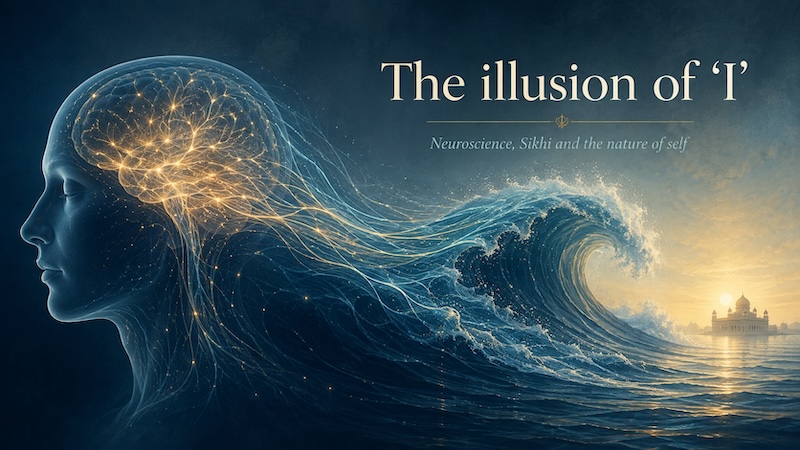
To explain this idea, Harris uses the metaphor of an ocean wave. A wave appears to be a distinct object. We can point to it, name it and describe its behaviour. Yet a wave is not truly a thing in itself. It is a temporary process, constantly changing from moment to moment. Most importantly, it cannot exist apart from the ocean. The wave is simply the ocean expressing itself in a particular form.
As I listened, my thoughts immediately turned to a shabad by Bhagat Ravidas Ji in the Sri Guru Granth Sahib Ji (SGGS):
“ਤੋਹੀ ਮੋਹੀ ਮੋਹੀ ਤੋਹੀ ਅੰਤਰੁ ਕੈਸਾ ॥ ਕਨਕ ਕਟਿਕ ਜਲ ਤਰੰਗ ਜੈਸਾ ॥੧॥
You are me, and I am You. What is the difference between us? We are like gold and the bracelet, or water and the waves.” (SGGS, p. 93)
The parallels are striking. Bhagat Ravidas Ji employs two powerful metaphors to dismantle the illusion of separateness. The first is gold and the bracelet (ਕਨਕ ਕਟਿਕ). A beautifully crafted gold bracelet appears to be a distinct object with its own identity, yet its substance is nothing other than gold. The second is water and the wave (ਜਲ ਤਰੰਗ). A wave appears separate, yet its essential reality is only water. Form creates the appearance of difference, while essence remains one. Both metaphors point towards a profoundly non-dual understanding of reality: what we perceive as separate entities are merely temporary manifestations of a deeper underlying unity.
The self as process, not object
Modern neuroscience arrives at a remarkably similar insight. Research increasingly suggests that the brain constructs a narrative sense of self through memory, perception and ongoing neural activity. The feeling of an enduring inner controller — an independent “I” directing experience from behind the scenes — appears less like a fixed reality and more like a useful cognitive model generated by the brain.
This insight resonates strongly with the Sikh concept of haumai (ਹਉਮੈ). Although often simplistically defined as ego, pride or arrogance, haumai possesses much deeper meanings associated with self-centredness and the illusion of an autonomous personal identity. It is the deeply ingrained conviction that the individual self exists independently and separately from everything else. Consequently, haumai compels us to think in terms of “me”, “mine” and “my achievements”. In doing so, it obscures our profound interconnectedness with other people, the natural world, existence itself and, ultimately, the Timeless Divine Reality referred to as Akaal Purakh.
From a Sikh perspective, the sense of separation generated by haumai is not merely a psychological misunderstanding; it is the primary veil preventing us from perceiving reality as it truly is. Just as the wave mistakenly imagines itself to be independent of the ocean, the individual imagines itself to be separate from both the Divine and the rest of creation.
Bhagat Ravidas Ji captures this beautifully in the following shabad, where he employs multiple metaphors, including that of the wave in the ocean, to illustrate how the illusion of separateness obscures the reality of unity with the Divine:
ਰਾਗੁ ਸੋਰਠਿ ਬਾਣੀ ਭਗਤ ਰਵਿਦਾਸ ਜੀ ਕੀ
Raag Sorat’h, The Word of Devotee Ravi Daas Jee:
ੴ ਸਤਿਗੁਰ ਪ੍ਰਸਾਦਿ ॥
One Universal Divine Essence. By The Grace Of the True Guru:
ਜਬ ਹਮ ਹੋਤੇ ਤਬ ਤੂ ਨਾਹੀ ਅਬ ਤੂਹੀ ਮੈ ਨਾਹੀ ॥
When I am in my ego, then You are not with me. Now that You are with me, there is no egotism within me.
ਅਨਲ ਅਗਮ ਜੈਸੇ ਲਹਰਿ ਮਇ ਓਦਧਿ ਜਲ ਕੇਵਲ ਜਲ ਮਾਂਹੀ ॥੧॥
The wind may raise up huge waves in the vast ocean, but they are just water in water. ||1||
ਮਾਧਵੇ ਕਿਆ ਕਹੀਐ ਭ੍ਰਮੁ ਐਸਾ ॥
O my sweet Divine, what can I say about such an illusion?
ਜੈਸਾ ਮਾਨੀਐ ਹੋਇ ਨ ਤੈਸਾ ॥੧॥ ਰਹਾਉ ॥
Things are not as they seem. ||1||Pause||
ਨਰਪਤਿ ਏਕੁ ਸਿੰਘਾਸਨਿ ਸੋਇਆ ਸੁਪਨੇ ਭਇਆ ਭਿਖਾਰੀ ॥
It is like the king, who falls asleep upon his throne, and dreams that he is a beggar.
ਅਛਤ ਰਾਜ ਬਿਛੁਰਤ ਦੁਖੁ ਪਾਇਆ ਸੋ ਗਤਿ ਭਈ ਹਮਾਰੀ ॥੨॥
His kingdom is intact, but separated from it, he suffers in sorrow. Such is my own condition. ||2||
ਰਾਜ ਭੁਇਅੰਗ ਪ੍ਰਸੰਗ ਜੈਸੇ ਹਹਿ ਅਬ ਕਛੁ ਮਰਮੁ ਜਨਾਇਆ ॥
Like the story of the rope mistaken for a snake, the mystery has now been explained to me.
ਅਨਿਕ ਕਟਕ ਜੈਸੇ ਭੂਲਿ ਪਰੇ ਅਬ ਕਹਤੇ ਕਹਨੁ ਨ ਆਇਆ ॥੩॥
Like the many bracelets, which I mistakenly thought were gold; now, I do not say what I said then. ||3||
ਸਰਬੇ ਏਕੁ ਅਨੇਕੈ ਸੁਆਮੀ ਸਭ ਘਟ ਭੋੁਗਵੈ ਸੋਈ ॥
The One Divine is pervading the many forms; He enjoys Himself in all hearts.
ਕਹਿ ਰਵਿਦਾਸ ਹਾਥ ਪੈ ਨੇਰੈ ਸਹਜੇ ਹੋਇ ਸੁ ਹੋਈ ॥੪॥੧॥
Says Ravi Daas, the Divine is nearer than our own hands and feet. Whatever will be, will be. ||4||1||
The core theme of this shabad is the central spiritual dilemma of human existence: haumai. Ego simultaneously gives us a sense of identity and individuality while creating the illusion of separation from the Divine reality that permeates all existence. It establishes the experience of “I”, yet conceals the deeper truth of interconnectedness.
This is the point at which neuroscience largely stops, but Sikhi continues. Neuroscience can demonstrate the constructed nature of the self and reveal how the experience of an enduring “I” emerges through neural processes. However, Sikh philosophy extends the discussion beyond description into spiritual transformation. For Sikhi, recognising the illusory nature of the ego is not the end of the journey but the beginning of a deeper awakening.
Ravidas Ji’s opening line makes this distinction clear: “When I was immersed in ego, You were not present to me. Now that You are present, there is no ego left within me.”
The message is profound. Ego-consciousness (haumai) and Divine consciousness (Ik Oankar) cannot fully coexist within the awareness of the seeker. Ego is not simply pride; it is the mistaken perception of oneself as an independently existing entity. When the “I” dominates consciousness, the Divine appears distant. When awareness becomes absorbed in the Divine, the illusion of a separate self begins to dissolve.
The rahao line, which normally denotes the central or core meaning of the shabad, could not be clearer when Ravidas Ji explicitly confronts the illusion of life: “What can I say about such an illusion? Things are not as they seem.”
Through vivid imagery and poetic dexterity, Bhagat Ravidas Ji maps the movement from ego-centred consciousness towards Divine consciousness, a transformation that lies at the heart of Sikh spirituality. As he states in the final lines: “The One Divine is pervading the many forms; He enjoys Himself in all hearts. Says Ravi Daas, the Divine is nearer than our own hands and feet. Whatever will be, will be.”
Where neuroscience and Sikh philosophy diverge
Though connected, neuroscience makes a clear distinction between the mind and the self. The mind represents the total collection of cognitive processes in the brain, whereas the self is understood as involving both conscious thoughts and unconscious mental processing. Neuroscience supports the view that the self is a decentred and dynamic construct produced by complex networks of neural activity operating simultaneously across the brain. The self, from this perspective, emerges from innumerable interactions among neurons, creating what we experience as a unified consciousness.
Where neuroscience explains the illusion of self through the brain’s tendency to construct coherent self-models, Sikh philosophy explores the existential and spiritual consequences of that illusion. In both cases, the central insight is remarkably similar: the isolated, independent self that we instinctively take ourselves to be is not quite what it appears.
The similarities are fascinating, but the differences are equally significant. Both perspectives begin from fundamentally different starting points and pursue different goals. Neuroscience, as a scientific discipline, relies upon observation, experimentation and empirical evidence gathered through the study of the brain. Its purpose is largely descriptive. It seeks to understand how consciousness emerges and how the perception of self arises.
Sikhi, in contrast, begins from spiritual insight (gian) and seeks transformation rather than explanation. It asks not merely how the sense of self arises, but what prevents human beings from experiencing reality as it truly is. Neuroscience makes no claims regarding an ultimate reality beyond the physical world governed by the laws of nature. In contrast, Sikhi goes much further by locating all existence within Akaal, the timeless reality that transcends birth, death, space and time itself. Whereas neuroscience deconstructs the self to better understand consciousness, Sikh philosophy deconstructs the self in order to reveal an underlying spiritual reality.
The practical implications
The practical implications of these perspectives are also distinct. If one accepts the neuroscientific approach, then recognising the self as a process rather than a fixed entity has the potential to foster greater humility and psychological flexibility. If we become less attached to the “I” or to rigid identities, we can become more aware of how thoughts, emotions and behaviours arise through countless interacting causes and conditions. Such an understanding can encourage ethical awareness and, for example, greater empathy by undermining identity-based nationalism and hateful behaviour.
Sikh philosophy embraces many of these insights but takes them considerably further. If the individual self is not separate from others or from the Divine, then compassion is not merely an ethical preference; it becomes a natural expression of truth itself. When the “I” diminishes, the “we” rises, leading towards the realisation expressed by Guru Arjan:
ਨਾ ਕੋ ਬੈਰੀ ਨਹੀ ਬਿਗਾਨਾ ਸਗਲ ਸੰਗਿ ਹਮ ਕਉ ਬਨਿ ਆਈ ॥੧॥
No one is my enemy, and no one is a stranger to me. I get along with everyone. (SGGS, p. 1299)
From the Sikh perspective, spiritual growth involves loosening the grip of the “I” through self-reflection, selfless service (seva), meditation (simran) and devotion (bhagti), thereby cultivating humility and spiritual awareness.
This is not merely an abstract philosophical principle. It carries profound implications for everyday life. A stranger helping someone in need, a family caring for an elderly relative, or volunteers serving food in a langar all embody the recognition that life is fundamentally relational rather than individualistic. Service therefore extends beyond the moral impulse to help “others” towards the realisation of an underlying interconnectedness that already exists. One comes to realise that serving others is, in a deeper sense, serving oneself. Why? Because one begins to recognise the essential unity of all existence, the reality encapsulated in the principle of Ik Oankar.
Conclusion
The convergence between modern neuroscience and Sikhi is both surprising and illuminating. Each, in its own way, challenges the assumption that human beings are isolated, self-contained individuals. Neuroscience suggests that the self is a dynamic process rather than a fixed entity. Sikhi similarly dismantles the illusion of separateness, but then proceeds further, situating human existence within the larger, unbounded and timeless reality of Ik Oankar.
Perhaps the most important lesson from both perspectives is one of humility. The self we defend, promote and cling to so fiercely may be far less substantial than we imagine. Yet, paradoxically, it is precisely through loosening our attachment to this separate self that we create the possibility of discovering a deeper connection with others, with nature and ultimately, in the Sikh context, with the Divine.
Join the conversation on this story on Asia Samachar’s Facebook and Instagram pages.

Gurnam Singh is an academic activist dedicated to human rights, liberty, equality, social and environmental justice. He is a Professor of Sociology at University of Warwick, UK. He can be contacted at Gurnam.singh.1@warwick.ac.uk
* This is the opinion of the writer and does not necessarily represent the views of Asia Samachar.
RELATED STORY:
Sikhi as a living universal praxis (Asia Samachar,21 June 2026)
ASIA SAMACHAR is an online newspaper for Sikhs / Punjabis in Southeast Asia and beyond. You can leave your comments at our website, Facebook, Twitter, and Instagram. We will delete comments we deem offensive or potentially libelous. You can reach us via WhatsApp +6017-335-1399 or email: asia.samachar@gmail.com. For obituary announcements, click here