



















By Manjit Kaur | Opinion |
Can you imagine waking up one morning and discovering that everything you see is the same colour? Perhaps blue, green, or pink. Imagine a world where every flower, every tree, every face, and every landscape shared the same shade. How strange, how lifeless, and how impoverished that world would feel. We might even feel that something of our own identity and being had been lost.
Yet, in many ways, this is the world we seem determined to create: a world where difference is viewed with suspicion, where individuality is discouraged, and where people are judged simply because they do not look, speak, think, dress, or live like us.
Diversity is not merely desirable; it is essential. It is the very foundation of life itself. We are all products of diversity, our genetic make-up a unique combination of countless influences. Our languages, cultures, ideas, and ways of understanding the world have evolved through the interaction of different people and perspectives. Diversity does not weaken us; it enriches us. It gives life its colour, its depth, and its beauty.
And yet, despite this fundamental truth, we continue to fear what is different.
We build walls of prejudice around differences in skin colour, language, clothing, culture, dietary habits, and beliefs. We create divisions where there should be understanding, and hostility where there could be friendship. Rather than being curious about one another, we too often become threatened by one another.
Why?
Perhaps difference challenges our sense of familiarity and comfort. Perhaps we find security in belonging to a group that looks and thinks like us. But when that sense of belonging becomes dependent on excluding others, it ceases to be a source of strength and becomes a prison of our own making.
This contradiction is particularly painful within the Sikh community.
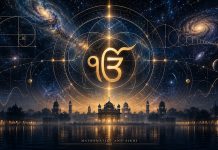
Sikhism carries a profound message of universal brotherhood and the oneness of humanity. Guru Nanak Sahib Ji taught us to look beyond superficial distinctions and recognise the divine light in every human being. The words “Na ko beri, nahi begana” (ਨਾ ਕੋ ਬੈਰੀ ਨਹੀ ਬਿਗਾਨਾ) remind us that no one is our enemy and no one is a stranger. The spirit of “Sagal sang ham ko baniai” (ਸਗਲ ਸੰਗਿ ਹਮ ਕਉ ਬਨਿ ਆਈ) speaks to a sense of kinship with all: the recognition that we belong to one another.
What, then, has happened to this beautiful vision?
How can a faith rooted in equality and universal acceptance allow divisions of caste, jathebandis, and jathas to become sources of suspicion and hostility? How can communities that share the same Guru, the same sacred teachings, and the same aspiration for spiritual growth become so divided? And why do smaller groups emerge within these groups, sometimes maintaining an outward appearance of civility while harbouring resentment beneath the surface?
These are uncomfortable questions, but they are questions we must have the courage to ask.
Perhaps we have become so attached to our identities that we have forgotten the values those identities were meant to serve. Perhaps we have confused loyalty with exclusivity, conviction with superiority, and unity with uniformity.
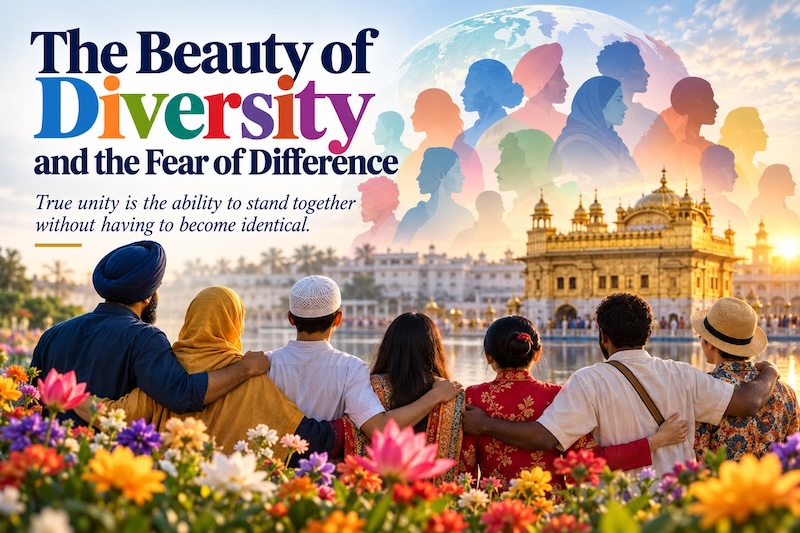
But unity does not mean sameness. True unity is the ability to stand together without having to become identical. It is the ability to disagree without hatred, to hold different perspectives without diminishing one another, and to celebrate our shared humanity without erasing our individuality.
The beauty of a garden lies not in every flower being the same, but in the colours, shapes, and fragrances that make each one unique. Imagine insisting that every flower must be a rose, or that every tree must bear the same fruit. We would not create a more beautiful garden; we would destroy the richness that made it beautiful in the first place.
Humanity is no different.
We do not need to abandon our traditions, beliefs, or identities to embrace diversity. We simply need to recognise that our identity does not have to come at the expense of someone else’s. There is room for different paths, different voices, and different expressions of faith within a world united by compassion and respect.
Perhaps the real question is not why diversity exists, but why we struggle so much to accept it.
What are we afraid of losing when we encounter someone different from ourselves? And what might we gain if, instead of responding with fear, we approached difference with humility, curiosity, and love?
If we truly believe in the teachings of Guru Nanak, then our challenge is to live those teachings, not merely recite them. To see beyond labels. To question our prejudices. To dismantle the divisions we have inherited or created. And to recognise that the person standing before us, however different they may appear, is not a stranger to humanity.
Imagine waking up tomorrow to a world filled with different colours, different voices, different cultures, and different ways of being—and feeling grateful for every one of them.
That would be a world worth living in.
Diversity is not a threat to our identity. It is a celebration of what it means to be human. And perhaps the greatest measure of our humanity is not how well we protect ourselves from difference, but how wholeheartedly we learn to embrace it.
Join the conversation on this story on Asia Samachar’s Facebook and Instagram pages.

Manjit Kaur, a UK-based therapist and counsellor, is a presenter at the 1 Show Live at Panjab Broadcasting Channel, UK. She can be contacted via email at manjitkaur1show@gmail.com
RELATED STORY:
Sikh identity under siege: Children, safety and racism in the UK (Asia Samachar, 12 June 2026)
ASIA SAMACHAR is an online newspaper for Sikhs / Punjabis in Southeast Asia and beyond. You can leave your comments at our website, Facebook, Twitter, and Instagram. We will delete comments we deem offensive or potentially libelous. You can reach us via WhatsApp +6017-335-1399 or email: asia.samachar@gmail.com. For obituary announcements, click here