




















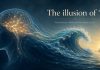
 By Gurnam Singh | OPINION |
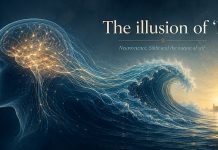
It is difficult to imagine a world devoid of religion. The Communists tried to erase religion by force, but ended up creating a violent dystopian world where religion was driven underground. Following the collapse of Communism, religion reasserted itself with a vengeance, demonstrating its popular appeal. Religion and religions have survived pogroms and, though allegiance to formal faith has gone down significantly, belief in spirituality and even a metaphysical deity is still strong. In short God is alive and well.
I love many of the cultural aspects of religion. I cannot imagine a world without the beautiful buildings, moving scriptures, the sublime poetry and stories of immense wisdom, associated with all religious traditions. However, I must accept that ultimately religion is made by human beings, and that, in spite of the good charitable work that is done by most faith groups, religion is a source of much conflict. And so the the question one must ask is, what is the purpose of religion and why is it seemingly so important to so many people?
One perspective is that, in a seemingly meaningless world, or a world of constant change, religion operates to give some meaning to life and, through faith group membership, it affirms our sense of identity and being. Religion, and by association God, serves as this one permanent feature of existence that is not subject to time and space. The act of worship, performance of rituals, worshiping of divine idols or other objects and symbols, all manifests this affirmation to remain attached to something bigger than ourselves, something that is all powerful and all knowing.
God has a fantastic appeal to us because he has the ability to transcend material existence; he is a supernatural force that can function in a metaphysical realm, where anything is possible. But most critically, what distinguishes us from God is that, unlike us mere mortals, he is not affected by worldly forces, including the human desires associated with ego. He is in short, the ultimate reality!
It makes perfect sense, therefore for God to live in an unchanging place, which is referred to as Heaven (or any number of variations amongst different faith groups). This is a paradise which we can achieve but with one condition, only after death! Suffer today and you will be rewarded with a place in paradise. What a perfect ideology for people to accept their lot in this world! No wonder the ruling classes patronise religion so much!!
The German philosopher Karl Marx has argued that this dependence on God and religion represents a state of inverted consciousness. For Marx, religion has a powerful appeal because of ‘its logic in popular form, its spiritual point, its enthusiasm, its moral sanction, its solemn complement, and its universal basis of consolation and justification’. In short, religion ‘provides’ the answers to the question that is almost impossible to answer, that is, what is the meaning of life and what happens when we die?
But Marx characterises this as a ‘fantastic’ realization. That is because of what philosophers refer to as a state of imminence, human essence is something that can never be realised. It’s like being on a long journey where you do not know where or when it will end. Along the way somebody comes up to you and tells you precisely what the purpose is and where it will end. And because religion serves to provide these ‘answers’, in the absence of an alternative, one can see why it would be attractive.
So, you may be thinking, what is wrong with religion, why do we need to move beyond it? Well, in some sense, religion is not the problem. What we really need to focus on is human suffering which makes people vulnerable to ‘fantastic’ explanations and the illusory function of religion.
As Marx famously noted, “Religious suffering is, at one and the same time, the expression of real suffering and a protest against real suffering. Religion is the sigh of the oppressed creature, the heart of a heartless world, and the soul of soulless conditions. It is the opium of the people.”
It is only by moving beyond religion and separating out religion, especially in its institutionalised form, and spirituality that we can begin to focus on reality and the actual state of mind and body, rather than illusion. But, because religion is a response to human suffering, it is only by addressing the suffering that we can ultimately move beyond religion. When we no longer feel the pain of poverty, oppression and injustice, then perhaps we will no longer have a need for the painkiller of religious rituals and dogma. And perhaps then religion is no longer perceived as a drug or escape but a utopian project to work towards building a better world, or perhaps even heaven on Earth.
[Gurnam Singh is an academic activist dedicated to human rights, liberty, equality, social and environmental justice. He is an Associate Professor of Sociology at University of Warwick, UK. He can be contacted at Gurnam.singh.1@warwick.ac.uk]
* This is the opinion of the writer and does not necessarily represent the views of Asia Samachar.
RELATED STORY:
Towards a more loving, sharing and caring world in 2021 (Asia Samachar, 22 Dec 2020)
ASIA SAMACHAR is an online newspaper for Sikhs / Punjabis in Southeast Asia and beyond. Facebook | WhatsApp +6017-335-1399 | Email: editor@asiasamachar.com | Twitter | Instagram | Obituary announcements, click here |




BEST START IN GURUMUKHI LANGUAGE, SIR
Comments are closed.