
















By Tennyson Samraj | Sikh Bulletin |
Abstract: This paper presents a bold, realistic plan for The Sikh’s aspiration for the Khalsa
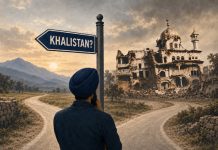
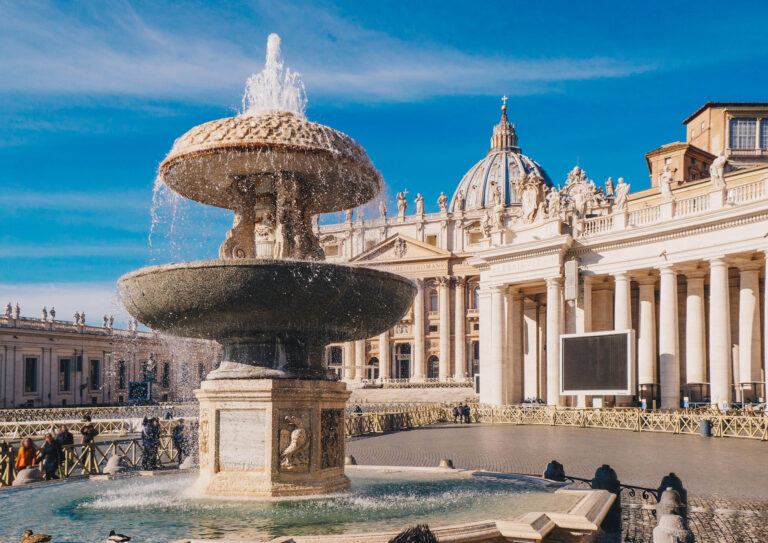
state. To this end, it is proposed: (1) to create the Khalsa State modeled after the Vatican state, where the Chief Guru, like the Pope, can be both the temporal head of the Khalsa State and the spiritual leader of the Sikhs in India and around the world. The Khalsa State is to be created from the area around the Harmandir Sahib Temple of Amritsar, modeled as the Vatican State created around St Peter’s Cathedral. (2) The Punjab state government continues and maintains the current relationship with India’s federal or central Government. (3) The Khalsa State accepts India’s sovereignty and consigns foreign policy to the Indian Government. The Khalsa State would create a religious Enclave for the Sikh people, similar to the Vatican State for Catholics.
INTRODUCTION
Guru Nanak stated that “there is no Hindu or Musalman.” His idea provided the basis for a new religion called Sikhism, a syncretism of two leading religions, Hinduism and Islam. The new faith was designed originally to end the conflict between Hindus and Muslims and bring interfaith dialogue. Interfaith dialogue is not about moving towards one world religion but appreciating our diversity. Not until the Muslim rulers and Hindu kings persecuted the Sikhs did they become self-defensively militant and political after and between Guru Arjan and Guru Govind Singh’s tenure as Gurus. The original intent was never intended to be a political power. The whole purpose of the origin of Sikhism was for the unity between Hindus and Muslims.
In light of the original idea related to the birth of Sikhism, it would be a welcome idea to revisit the background of how Sikhism as a religion came to fruition. Creating a Khalsa state based on the Khalsa Ideal to bring unity in India not only between Muslims and Hindus but unity between all faiths would be an ideal reason to envision a Khalsa state modeled after the Vatican State.
KHALSA STATE IS MODELED AFTER THE VATICAN STATE
The Vatican State was created to end the Papacy’s political power. The creation of the Vatican State reduced the Papacy to playing only a spiritual role. But to appease the church’s power, Mussolini agreed to give the church limited statehood but whose primary purpose was only spiritual. In this process, the Italian Government got land the church owned in Rome and made Rome the Capital of Italy. This model can serve as a precedent for other religious conflicts related to the Khalistan movement, the Plight of Dalia lama, or Muslims’ aspiration for a caliphate. The Vatican model can serve as a basis to settle at least two religious conflicts: (1) the Sikh’s quest for a Holy land and (2) the Tibetans’ hope of the Dalai Lama returning to the Potala Palace.
Creating a Khalsa State around the area of the Harmandir Sahib Temple Complex for the Sikhs would be ideal for the Sikhs (Amir Singh Bains suggests Nankana Sahib–the birthplace of Guru Nanak for the Khalsa state) where the Chief Guru could be the temporal ruler and spiritual leader for all who seek religious tolerance around the world.; creating a Potala state would be ideal for the Tibetans, where the Dalai Lama can be the temporal ruler of the Potala Palace and the spiritual leader of all who practice Lamaism.
The Sikh religion has adapted its core tenets from Muslim and Hindu beliefs. Sikhs’ faith in Monotheism is from Islam’s ideal that God is one. Yet, it holds many deeply religious convictions from Hinduism. Both Islam and Hinduism emphasize the oneness and ‘unborn’ nature of God. The role Sikhs can play in the subcontinent of India is immense. We can define and defend what belongs to both religions and yet remain in India. The Khalsa state would be created with the very goal of bringing unity and harmony not only between Hindus and Muslims but the unity of all religions in India. The oneness of God defined by the Sikhs clearly defines Monotheism as belief in one God, not one’s God. The emphasis is not on one’s God but on the importance that God is one and that God is God of us all. “We are all made of the same Clay.” No one has a monopoly over the truth about God. The belief in the oneness of God provides the Sikhs the basis for fraternity and equality of all humans. To this end, every Sikh temple advocates congregational worship, and every Gurdwara langar provides communal meals to enforce the idea of fraternity.
What does the oneness of God mean? The oneness of God is the basis of secularism–the idea being that all religions must be respected. State and religious laws should be separated. If, for some reason, we cannot distinguish between state laws and religious laws, or when there is no distinction between moral laws and legal laws, we end up with a fundamental state–where there is no separation between state laws and moral/religious laws. When this happens, punishment is extended to immoral behavior. In a secular state, punishment can be given only for illegal conduct. Punishing people for immoral behavior would become necessary if we merge state and religious or moral laws together. That is why, in fundamental states, there is a special wing of the police department called the morality police that executes punishment for immoral behavior. What must be noted is that laws are meant only to regulate behavior and never to legislate morality. However, if a fundamental state is created, the State must enforce both legal and moral laws. To legislate morality is to live in a police state.
Respect for all religions necessitates the need for the separation of state and religious laws. The Rule of law is the basis for the Government, not the Rule of God. If the distinction is not made, then which religious laws should the State include and which religious laws should be excluded would be a difficult task. For this reason, the Rule of law requires the separation of religious laws from state laws. The Rule of law is strictly limited and related to life between the womb and the tomb. State laws only deal with life associated with the existential limits between birth and death. Religious laws lead to both moral life and the afterlife. A secular state can only give its citizens the right to hold beliefs about one’s ethical conduct or convictions related to the afterlife. But, the State cannot make it part of the state laws or attempt to legislate morality. For those who insist on the necessity for the creation of a fundamental state where there is no distinction between state and religious laws, then the Khalsa state modeled after the Vatican State would appease those who insist on a limited sovereign state.
Can what was and is good for the Pope and his people be good for the Sikhs and Sikhism Historically, Sikhs have always been part of India, but the history of the Sikhs with their fellow Indians under both the Muslim rulers and the present Indian Government has had a checkered past. But, if a new relationship is to be had, we have to present their aspiration as the need for a holy land, where the land of the pure is to define and defend Sikhism as a religion within the context of a limited sovereign Sikh state. If the Khalsa state is created, the chief Guru would be able to maintain a temporal role but only within the Akal Takht and temple complex, while the rest of Punjab would be a secular state. In such a world, the Khalsa State can enjoy the same freedom with limited sovereignty if neutrality is maintained. Why would such a sovereign state have meaning? To the Sikh people, this would be a realistic goal to achieve. It would comply with the nature of Sikhism –which preaches, practices, and propagates pacifism to the world at large. Nothing would fit better than creating a limited sovereign state modeled after the Vatican State.
The Akal Takht—the supreme authority of Sikhism, and the Akali Dal, the political branch of the Sikhs, have, in contemporary times, advocated for both political and religious freedom. While the Akal Takht has been the supreme authority for the Sikhs from the early days of Sikhism, the Akali Dal, founded on December 14, 1920, has been seen as an Indian Sikh political party that defines the will of the Sikhs best. As a political party, they have ruled Punjab state for decades, and ever since its formation, has remained the political voice of the Sikhs. Realistically, they have political freedom within the homeland of India. What they need to do is to declare Akal Takht as the land of the pure by creating the Khalsa state, where the chief Guru is the temporal leader of the Akal Takht and the spiritual leader of the Sikhs at large. The Sikhs can negotiate with the Indian Government to create a Vatican-style state that allows Sikhs to define and defend their faith as they see fit. The neutrality of the Khalsa State understood in the context of sovereignty, would imply that the foreign and defense policy be in the hands of the Indian Government. The Vatican State enjoys security without any expense. Similarly, Sikhs can expect the same from the Indian Government. Sikhs can expect the same privileges of a limited sovereign state if they subject their foreign policy and defense to the Indian Government.
While it is argued that a limited sovereign state would make the chief Guru the head of the Khalsa state, the rest of Punjab can continue its federal relationship —”one sovereign spiritual country within one sovereign, secular Government, while the Khalsa State can write its constitution for its temporal State, Punjab can be an integral part of India and can share with the rest of India the same currency, passports, legal and parliamentary system of Government. India is a democratic state. The Sikhs can expect the same political freedom offered to all Indians to run for political office like any other Indian.
CONCLUSION
If the purpose of creating a Khalsa state is to bring unity not only between Hindus and Muslims but unity of all faiths and to engage in inter-faith dialogue, the following is suggested.
(1) Petition the Indian Government to create a new state called the Khalsa State (like the Vatican state) around the area occupied by the Akal Takht and the temple complex to create a holy land and not a homeland for the Sikhs.
(2) Declare Harmandir Sahib as an ‘abode of the pure.’ Declare the Akal Takht as the land of the pure’ as envisioned by the Sikhs community. This would allow the Sikhs to define and defend their faith as an enclave within the Punjab state (India) without demanding a sovereign state for all the Sikhs.
(3) Invite the Akal Takht to form the Khalsa State, where the Chief Guru would be the temporal head and the spiritual leader of all Sikhs around the world
(4) Request the Akali Dal to continue to elect their state government to preserve the Sikhs’ culture and tradition in the context of a secular state.
(5) Consign Foreign and Defense Under the Control of India. Acknowledge India’s continued claim that the Punjab state is an integral part of India by consigning foreign and defense matters to the Indian Government.
(6) Appeal to India’s Goodwill. Appeal to India’s goodwill and expect India to direct and dictate the results. This would provide fraternity for the Sikhs.

Author: Tennyson Samraj is the Chair of the General Arts Professor of Philosophy, Burman University. He can reached at tsamraj@burmanu.ca. This article appeared in the The Sikh Bulletin – 2024 Issue 1 (January-March 2024). Click here to retrieve archived copies of the bulletin.
RELATED STORY:
(Asia Samachar, x 2024)
ASIA SAMACHAR is an online newspaper for Sikhs / Punjabis in Southeast Asia and beyond. You can leave your comments at our website, Facebook, Twitter, and Instagram. We will delete comments we deem offensive or potentially libelous. You can reach us via WhatsApp +6017-335-1399 or email: asia.samachar@gmail.com. For obituary announcements, click here



Interesting proposal from the author. These are a few criticisms that come to mind.
1. Firstly unlike some organised religions, I believe Sikhism does not subscribe to the principle of ‘holy lands’. I would think the Khalsa ought to exist as a state of mind instead of a geographically linked sovereign entity. In this way, decentralisation of power remains a foundational characteristic of the Khalsa.
2. I agree with the author’s criticism of fundamental states. However, the proposal that ‘limited’ sovereign states can overcome the surveillance necessary of fundamentalism remains to be seen.
3. The distinction between religious and secular laws is a useful one. However I find it difficult to apply this dichotomy within the Sikh context, as Sikh principles emphasise the fusion between the two. To be a devotee is to be a well functioning contributor to society as opposed to securing insurance for a post death existence.
With religious values emphasising diversity, Sikhs ought to build inclusive communities rather than focusing on exclusive based sovereignty.
Comments are closed.