






















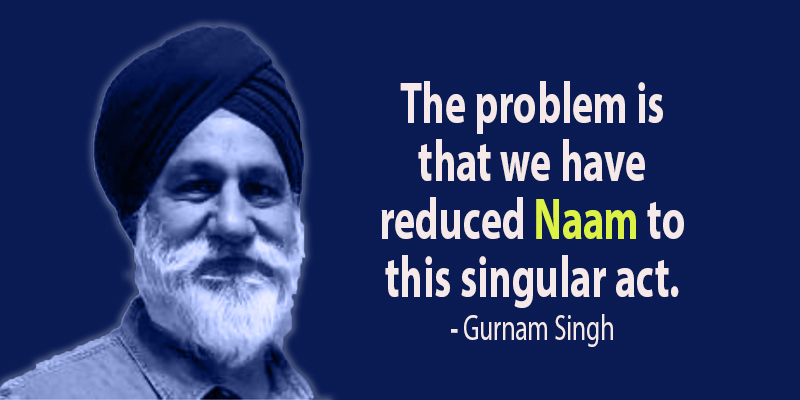
By Gurnam Singh | Opinion |
The aim of this article is to develop an expanded understanding of Naam. It argues that Naam is best understood a generic term reflecting a wide range virtuous actions, of which reflective meditation is one. The problem is that we have reduced Naam to this singular act. For this reason it is critical to understand the expansive nature of the concept of ‘Naam’ which is central to Sikh philosophy.
Though each faith tradition has its own word for the Divine entity, the most recognisable word is God. Though they have different etymologies, word ‘good’ in most religions, is associated with ‘good’ of ‘virture’.
Indeed, the phrase “good God” often rolls of the tongue when one witnesses some bad behaviours. Though the word ‘good’ has expansive meanings, within philosophy and religion, it is used to describe qualities that are morally excellent, righteous, or kind. Hence a ‘good person’ would be somebody who conforms to moral standards and good here represents the opposite of evil.
In a similar way, within Sikhi, the Divine Entity, which is popularly referred to as ‘Waheguru’, is depicted as a treasure of virtues or Gun Nidhan (ਗੁਣ ਨਿਧਾਨ).
As Guru Raamdas says; “ਤੇਰੇ ਕਵਨ ਕਵਨ ਗੁਣ ਕਹਿ ਕਹਿ ਗਾਵਾ ਤੂ ਸਾਹਿਬ ਗੁਣੀ ਨਿਧਾਨਾ ||Which, which of Your Glorious Virtues should I sing and recount, Lord? You are my Lord and Master, the treasure of excellence. (SGGS, 738)”
SEE ALSO: The true meaning of Naam in Sikhi: Much more than ritual chanting
One of the nouns that is used to describe this treasure trove of divine virtues Naam. However, in contemporary Sikh practice, there is a growing tendency to view Naam simply as an object or a specific word or mantra to be recited mechanically. While Naam Japna (the meditation on the Name) is a powerful tool to focus the wandering mind, reducing the concept of Naam to simple repetition risks missing its true, expansive purpose, which is the total transformation of the self.
To understand the depth of Naam as Divine virtues, one must first understand those things that can undermine this. Gurbani is explicit regarding the relationship between the Ego (Haumai) and the Name (Naam). Guru Amar Das Ji illuminates this fundamental incompatibility in the following assertion:
“ਹਉਮੈ ਨਾਵੈ ਨਾਲਿ ਵਿਰੋਧੁ ਹੈ ਦੁਇ ਨ ਵਸਹਿ ਇਕ ਠਾਇ ॥ Ego and the Name are opposed to each other; they cannot dwell in the same place.” (SGGS, 560).
This is not merely a philosophical difference; it is an ontological clash. The Ego creates a reality centered on the “I” and the “Mine,” while Naam centers reality on the Divine and the Infinite. Because they cannot coexist, the practice of Naam must be an active process of dismantling the Ego.
If the presence of Naam is the absence of Ego, then logic dictates that any action, whether internal or external, that dissolves the Ego is, in essence, the practice of Naam. When we reframe Japna (meditation) in this light, it ceases to be a repetitive exercise and becomes a lifestyle of virtue. Naam thus is understood as the broad spectrum of divine virtues, such as, truth, contentment, compassion, and humility. To “Jap” the Name therefore, is any action that helps to embody these virtues.
This perspective aligns with the Guru’s teachings that prioritize action over ritual. Service (Seva) and righteous living are not secondary to meditation; they are the physical manifestation of it. “ਵਿਚਿ ਦੁਨੀਆ ਸੇਵ ਕਮਾਈਐ ॥ ਤਾ ਦਰਗਹ ਬੈਸਣੁ ਪਾਈਐ ॥ In the midst of this world, perform service (Seva), and you shall obtain a seat of honor in the Court of the Lord.” (SGGS, 26)
When we approach the world with the intention of service, we are practicing Naam because we are acting from a place of humility rather than ego. While meditative reflection is a vital anchor to calibrate the mind, that calibration must inevitably flow outward.
Ultimately, the practice of Naam is a holistic commitment to life. It is the decision to act with integrity, speak with compassion, and serve without expectation. When the ego is silenced, every action taken in accordance with Divine Order becomes a prayer, and the entire life of the practitioner becomes a living Jaap.
Join the conversation on this story on Asia Samachar’s Facebook and Instagram pages.
Gurnam Singh is an academic activist dedicated to human rights, liberty, equality, social and environmental justice. He is a Professor of Sociology at University of Warwick, UK. He can be contacted at Gurnam.singh.1@warwick.ac.uk
* This is the opinion of the writer and does not necessarily represent the views of Asia Samachar.
RELATED STORY:
The Demise of the Akali Dal and the Badal Dynasty: What Next for the Panth? (Asia Samachar, 5 Aug 2024)
ASIA SAMACHAR is an online newspaper for Sikhs / Punjabis in Southeast Asia and beyond. You can leave your comments at our website, Facebook, Twitter, and Instagram. We will delete comments we deem offensive or potentially libelous. You can reach us via WhatsApp +6017-335-1399 or email: asia.samachar@gmail.com. For obituary announcements, click here