










By Rishpal Singh Sidhu | Opinion |
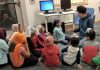
The Human Library Organization (HLO) is an international non-profit global movement founded in Denmark in 2000 and is today active in 85 countries globally. Its original aim was to create a safe space for people to challenge social prejudices, stigmas, and stereotypes by having direct and open conversations with individuals from diverse or marginalized backgrounds. However, its remit has since grown and evolved over the intervening years to include volunteer senior citizens and community elders with a wealth of knowledge who are willing to openly share their personal life stories and experiences to an interested audience, and also to answer any questions from them.
Some of our Sikh diaspora elders who migrated overseas from India in the late 19th and early 20th centuries in search of better lives overseas have passed on and those that are still with us have much to share in terms of the trials, tribulations, adversities and hardships, along with the achievements they would have experienced growing up, and eventually successfully establishing themselves in foreign lands.
They also established gurdwaras in whichever countries they settled as focal points of community cohesion and gatherings. Many of these elders today are regular visitors at our gurdwaras on most weekends and can also be seen gathering at neighborhood parks during weekdays.
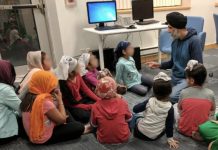
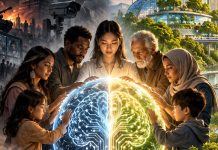
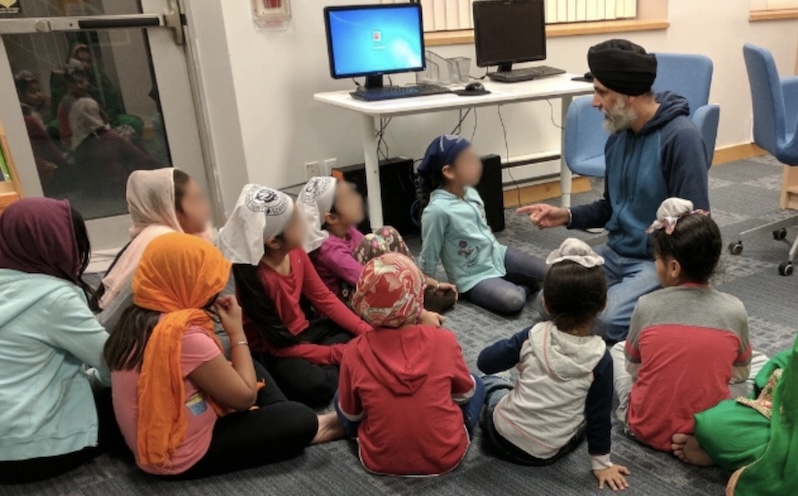
These elders have the potential to becoming living libraries whose stories, skills, wisdom, and life experiences can be tapped and “borrowed” by our younger generations and has the potential to serve as a most powerful and humane experience and knowledge-sharing model. It effectively blends oral tradition, community learning, and intergenerational connection into a single concept. Our gurdwaras and their management committees have the potential to play an important and coordinating role in fostering and establishing this concept.
Importance and relevance of human libraries
The concept of human libraries is essentially a modern, organized form of oral tradition. At its heart, a human library treats people as repositories of lived experience. Instead of borrowing a book, a person is “borrowed” for a conversation, and when applied to older folk, it translates into a system where life experiences are treated as valuable knowledge, and stories, skills, and lessons are preserved through conversations. More importantly, our younger generation learns directly from those who have lived through events, careers, successes, hardships, and cultural transitions.
At its heart, it preserves knowledge that is not written down anywhere. Our older generations carry practical wisdom, namely how communities worked, how families survived hard times, how jobs and professions evolved, and how values were shaped. This also builds empathy and reduces age segregation. Our younger generation often have limited contact with elders outside their immediate families. Human libraries create structured and respectful encounters. They also help to strengthen cultural continuity as stories about migration, identity, faith, work, and resilience become part of the community’s collective memory. It also supports wellbeing for older adults. Sharing of knowledge gives elders purpose, dignity, and more importantly, social connection.
Brief overview of global human library practices
There exists a wide variety in planning, organization, practical application, and affiliation of human library events around world. Some events take place in public libraries, whilst others are jointly organized and coordinated by community organizations, and still others operate as chapters run by volunteers.
In the United States, The Human Library Organization is active in multiple US regions, with some events held in partnership with local public libraries, universities, and high schools. The goal is to challenge prejudice, stereotypes, and discrimination by having open dialogues with individuals whose lived experience has been different.
Members of the Sikh community have been known to frequently volunteer as “Human Books” with book titles such as “Sikh or Freak” to challenge religious stereotypes, explain the significance of the Sikh articles of faith like the turban or dastar, and break down cultural prejudices. This concept has also been active in Canada since 2008 with events hosted in provinces like Ontario, British Columbia, and Alberta.
In Australia, various local events and programs are hosted regularly in cities like Perth, Hobart, Brisbane, and Sydney. Local councils, community groups, and libraries frequently host pop-up events and structured conversation sessions which allows visitors to “borrow” a human book—a person willing to share their lived experiences and personal stories—to have an open, respectful conversation that challenges prejudices and stereotypes.
It operates similarly in New Zealand where local events and trained “human “books” have participated in the global initiative to challenge prejudice and reduce discrimination. Multiple chapters and events of the Human Library Organization also operate across several capital cities in India including Patiala and Chandigarh in Punjab.
Human Library Singapore operates as a volunteer driven initiative that organizes human library events and community engagements in the country. It provides a safe platform for individuals to share personal stories, break down social barriers, and challenge stereotypes or prejudices. The Taman Tugu People Library is an interesting signature community sharing program in Malaysia with regular events held at the Taman Tugu Nursery urban forest park in Kuala Lumpur where human books are borrowed and diverse speakers ranging from military veterans to public historians and local community figures share real-life narratives, lived experiences, and respond to questions in efforts to breakdown social stereotypes.
Practical considerations for implementing human libraries in gurdwaras
The Sikh community is historically and culturally oriented towards reading, listening to, and preserving religious and historical literature. This observation is supported by the centrality of the Sri Guru Granth Sahib, the tradition of katha (exposition), sakhis (stories), and the large body of Sikh scholarship.
Sikh diaspora communities worldwide often maintain libraries, reading groups, and gurdwara-based educational programs. The establishment of human libraries would be a natural extension of these activities and initiatives. The first steps would be the identification of elders with rich stories, skills, and experiences to share. This would include retirees, early migrants, long-term residents, community leaders and volunteers. Curated human book themes could include examples of topics like “Growing up in post-war Singapore or Malaysia”, “Life as a doctor, nurse, army officer: Lessons from 40 years in business.”
Establishment of guidelines and training for both, human books and session facilitators will be important to ensure respectful dialogue and support participants. Facilitators will also need to be trained in basic listening skills, respectful questioning, time and sessions management, and support on both sides. It may also be helpful to record summaries or short videos to preserve this shared knowledge
Our community elders and leaders offer forms of knowledge that textbooks cannot provide such as skills learned through life experiences; contextual knowledge on how societies, workplaces, and families used to function; moral and reflective knowledge on what they learned about life, choices, and consequences; and cultural memories – traditions, languages, rituals, and community histories.
Human libraries in our gurdwaras can be much more than just the transferring and sharing of tacit knowledge and life experiences and correcting/reducing prejudices. They serve as a knowledge preservation system that captures lived experiences that would be lost. In this modern age, they also help to repair social fragmentation where our elders sometimes feel isolated and our youth feel overwhelmed by digital information. These human libraries model reintroduces human learning; slow, relational, and deeply meaningful.
CHECK OUT MORE FEEDBACKS FOR THIS REPORT AT FACEBOOK AND INSTAGRAM

Rishpal Singh Sidhu is a retired library and information services professional, now serving as a casual academic with the School of Information & Communication Studies, Charles Sturt University, Wagga Wagga, New South Wales, Australia. He can be reached at rishpal.sidhu@gmail.com
* This is the opinion of the writer, organisation or publication and does not necessarily represent the views of Asia Samachar.
RELATED STORIES:
Is langar meant to be taken home? (Asia Samachar, 24 July 2026)
Are these paintings of Sikh Gurus for real? (Asia Samachar, 22 July 2023)
ASIA SAMACHAR is an online newspaper for Sikhs / Punjabis in Southeast Asia and beyond. When you leave a comment at the bottom of this article, it takes time to appear as it is moderated by human being. Unless it is offensive or libelous, it should appear. You can also comment at Facebook, Twitter, and Instagram. You can reach us via WhatsApp +6017-335-1399 or email: asia.samachar@gmail.com. For obituary announcements, click here.