Niki Sharma appointed as British Columbia Deputy Premier and Attorney General in November 2024
By Asia Samachar | Malaysia |
Lawyer and lawmaker Niki Sharma has been appointed as the deputy premier of Niki Sharma after the New Democratic Party (NDP) managed to form the provincial government. She will also continue as the Attorney General for BC.
Premier David Eby unveiled yesterday the new cabinet consisting of 23 ministers and four ministers of state, and supported by 14 parliamentary secretaries.
The new provincial cabinet reflects the diversity and strengths of HC, with more women than men in cabinet, according to the official statement.
A record 14 winners can trace their roots to Panjab, up from nine in the previous assembly.
The NDP won 46 seats out fo the 93 seats up for grabs, one short for a simple majority. The Conservatives won 45 and the Green Party won two.
Among NDPs representatives with origins in the Indian sub-contionent to be re-elected were Harwinder Sandhu (Vernon-Lumby), Jagrup Brar (Surrey-Fleetwood), Niki Sharma (Vancouver-Hastings), Raj Chouhan (Burnaby-New Westminister), Ravi Kahlon (reelected Delta North), Ravi Parmar (Langford-Highlands).
The newly elected included Jessi Sunner (Surrey-Newton), Reah Arora (Burnaby-East) and Sunita Dhir (Vancourver-Langara).
Three of them were made minksters: Ravi Parmar (Forests), Ravi Kahlon (Housing and Municipal Affairs) and Jagrup Brar (Mining and Critical Minerals). Raj Chauhan is expected to continue as Speaker of the BC provincial legislature.
For parliamentary secretaries, BC now has Jessie Sunner as Parliamentary Secretary for Anti-Racism, Harwinder Sandhu (Agriculture) and Sunita Dhir (International Credentials).
NIKI SHARMA
Niki Sharma made history as the first South Asian woman to serve as the province’s top lawyer when she was appointed as BC’s Attorney General in 2022.
She was first elected to represent Vancouver-Hastings in 2020 and was later served as the parliamentary secretary for community development and non-profits.
Niki was called to the bar in 2005 after completing law school at the University of Alberta.
Her parents, Rose and Pal Sharma, immigrated from the Indian state of Uttar Pradesh in the 1970s to build a new life in B.C.’s Elk Valley. Sharma’s mom raised four daughters in the small community of Sparwood; her dad worked at a local coal mine for several years.
It’s been a remarkable rise for Sharma, who attended the University of Alberta law school before moving to Vancouver nearly two decades ago. She spent 12 years at the Donovan & Company law firm, often representing Indigenous clients. In 2011, she became the first woman of South Asian ancestry ever elected to the Vancouver park board, according to a 2023 report in Pancouver.
BC got its first Asian leader when it elected Ujjal Dev Dosanjh as the 33rd premier of BC from 2000 to 2001. Dosanjh, a Canadian lawyer from the Liberal Party of Canada, has been known to make disparaging remarks on the Sikhs.
ASIA SAMACHAR is an online newspaper for Sikhs / Punjabis in Southeast Asia and beyond. You can leave your comments at our website, Facebook, Twitter, and Instagram. We will delete comments we deem offensive or potentially libelous. You can reach us via WhatsApp +6017-335-1399 or email: asia.samachar@gmail.com. For obituary announcements, click here
ASIA SAMACHAR is an online newspaper for Sikhs / Punjabis in Southeast Asia and beyond. You can leave your comments at our website, Facebook, Twitter, and Instagram. We will delete comments we deem offensive or potentially libelous. You can reach us via WhatsApp +6017-335-1399 or email: asia.samachar@gmail.com. For obituary announcements, click here
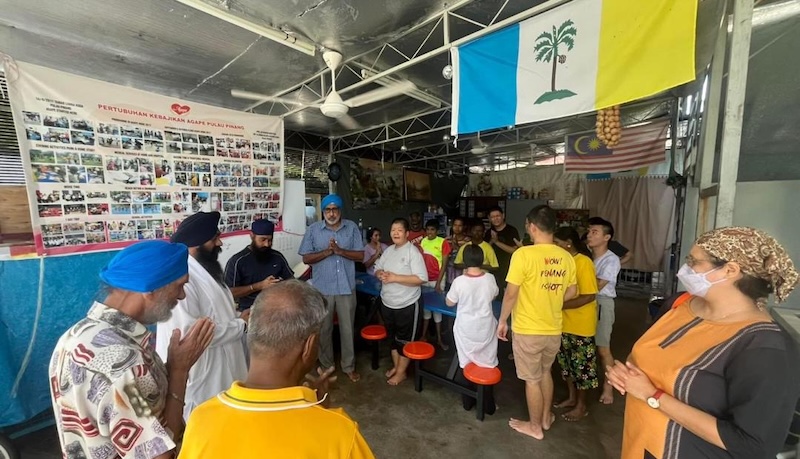
Gurdwara Sahib Bayan Baru visited a home for the differently-abled in Penang as part of Guru Nanak’s 555th birthday which ended on Nov 17, 2024
By Asia Samachar | Malaysia |
Gurdwara Sahib Bayan Baru visited a home for the differently-abled in Penang as part of Guru Nanak’s 555th birthday which ended today (Nov 17). For more photos, go here or here.
ASIA SAMACHAR is an online newspaper for Sikhs / Punjabis in Southeast Asia and beyond. You can leave your comments at our website, Facebook, Twitter, and Instagram. We will delete comments we deem offensive or potentially libelous. You can reach us via WhatsApp +6017-335-1399 or email: asia.samachar@gmail.com. For obituary announcements, click here
The recent resignation of the Archbishop of Canterbury, Justin Welby, over a sexual abuse scandal concerning John Smyth and 100’s of victims has once again drawn attention to the failure of religious Institutions to practice what they preach. Whether religious or secular—are entrusted with significant responsibility, particularly when it comes to caring for vulnerable people. But as we have seen in multiple high-profile cases of sexual abuse, a failure to safeguard and protect those in their care can be catastrophic, not only for the victims but for the very survival of these institutions.
In recent years, the world has been rocked by numerous abuse cases and the failure to safeguard. The scandal surrounding Jeffrey Epstein is one of the most shocking examples of this failure. Epstein, a financier with connections to powerful figures across politics, business, and entertainment, was revealed to have exploited and abused young girls for decades. His death in 2019 brought no closure to the victims or accountability for those who enabled his predatory behavior.
The Epstein case has exposed how systems of power, privilege, and corruption can shield perpetrators from justice for years, even as countless lives are destroyed. A more recent example of a powerful individual being allowed to get away with sytemic abuse for decades concerns the late Mohammed Alfaed who was the owner of the world famous Harrods department store in London and Paris. The scale of his abuse and the collusion of, amongst other agencies, the Metropolitan Police, remains to be fully exposed.
For sure there is no reason to single out religious institutions in particular; abuse takes place across the board. However, given their assumed role as upholders of divine and moral standards, they do carry a heavier burden of responsibility. Now, on top of the ongoing crisis of the Roman Catholic Church, we see the the Church of England grappling with its own scandal, with criticism directed squarely at Archbishop Justin Welby and the institution’s broader leadership. The failure to act in the face of evidence is creating a crisis of trust that threatens the Church’s very future. The criticisms are so severe that there is growing concern about whether the Church will survive this latest scandal.
But the truth is, this is not a unique problem. I believe that most, if not all, religious institutions—especially those that have historically ignored safeguarding issues—will eventually have to confront their own failures. Many institutions, including Mosques, Gurdwaras, Mandhirs, Synagogues and other faith based institutions have been slow to acknowledge or address abuse within their ranks, and this will only become more difficult to ignore as society demands accountability.
Repentance, reflection, and a commitment to change are the only ways forward. Institutions that truly want to survive and thrive in the future must recognize the gravity of their failures, make reparations, and put systems in place to prevent further abuse. Failure to do so will lead to their eventual demise—and, to be blunt, I won’t shed a tear if it happens. These institutions must choose the path of accountability and safeguarding, or face the consequences of their neglect.
In a world that increasingly values transparency and accountability, no institution—religious or secular—is immune from the consequences of failing to protect the vulnerable. The time for action is now, before more lives are damaged, and before these institutions collapse under the weight of their own inaction.
Gurnam Singh is an academic activist dedicated to human rights, liberty, equality, social and environmental justice. He is an Associate Professor of Sociology at University of Warwick, UK. He can be contacted at Gurnam.singh.1@warwick.ac.uk
* This is the opinion of the writer and does not necessarily represent the views of Asia Samachar.
ASIA SAMACHAR is an online newspaper for Sikhs / Punjabis in Southeast Asia and beyond. You can leave your comments at our website, Facebook, Twitter, and Instagram. We will delete comments we deem offensive or potentially libelous. You can reach us via WhatsApp +6017-335-1399 or email: asia.samachar@gmail.com. For obituary announcements, click here
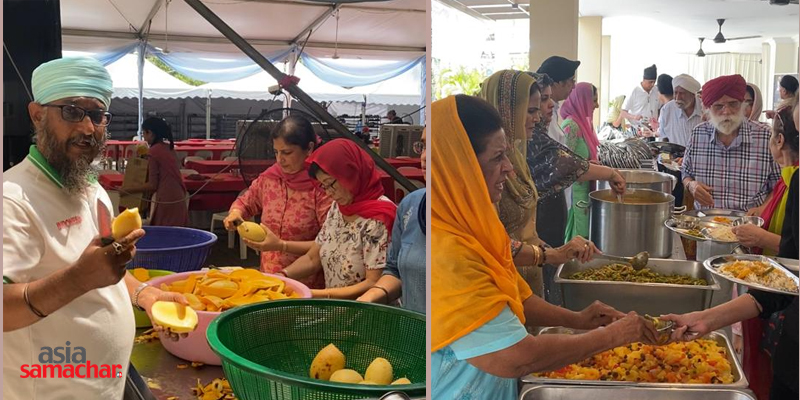
Preparing and serving food, Guru ka Langgar in action at Gurdwara Sahib Petaling Jaya on Nov 14, 2024 – Photo: Asia Samachar
By Amisha Syahira | NST | Malaysia |
PETALING JAYA: The Sikh community and people from diverse backgrounds gathered at Darbar Sri Guru Granth Sahib Ji, Malaysia in Petaling Jaya today to celebrate Gurpurab, the blessed day of Guru Nanak Dev Ji’s descendance on earth.
Over five days, from Nov 11 to 15, they gathered to honour his enduring legacy of love, compassion, and humility.
“Gurpurab is a celebration of Guru Nanak Dev Ji’s birth, embodying his message of love and unity,” said Harjit Singh, a 59-year-old Sikh priest, known as Giani.
“This occasion inspires us to internalise his teachings through meditation and mindful actions, fostering a spirit of compassion and service among our diverse communities.”
Harjit said that Gurpurab transcends mere words, offering a divine experience that evokes a profound sense of unity.
“It reminds us of Guru Nanak’s three golden rules, urging us to deepen our understanding and share these teachings widely. Through love and togetherness during our festivities, we strive to become better human beings, dedicated to serving humanity,” he added.
ASIA SAMACHAR is an online newspaper for Sikhs / Punjabis in Southeast Asia and beyond. You can leave your comments at our website, Facebook, Twitter, and Instagram. We will delete comments we deem offensive or potentially libelous. You can reach us via WhatsApp +6017-335-1399 or email: asia.samachar@gmail.com. For obituary announcements, click here
Donald Trump (left) at one of his rallies in the run-up to the 2024 US presidential election
By Gurnam Singh | Opinion |
Like many of my left leaning friends and colleagues, after recovering from the shock of on Donald Trump’s victory in the recent US election, I have been grappling with the question: How did Donald Trump — a man widely regarded as racist, misogynistic, a convicted criminal, and a serial fraudster — secure such a resounding victory in the most recent U.S. election? And more bewilderingly, why did so many of the very groups he has consistently demonised, Hispanics, women, African Americans, American Arabs and even poor whites, flock to him in droves?
The reasons behind Trump’s success are complex, and no doubt, future academic studies and books will attempt to provide comprehensive explanations. However, I wanted to offer some initial thoughts on why he won, and, more importantly, what lessons left-leaning and progressive movements must learn to address the rise of right-wing populism and oligarchy, both in the U.S. and around the world.
APPEAL OF THE “OUTSIDER” THE “COMMON MAN”
One of the most common explanations for Trump’s rise is his appeal as an outsider, someone who was not a career politician, but “one of us.” He successfully portrayed himself as the antithesis to the so-called “liberal elite”, the out-of-touch, self-righteous political class that had failed ordinary people for decades. For sure, Trump capitalized on dissatisfaction with the political establishment.
However, this explanation only scratches the surface. To understand Trump’s appeal, we must look deeper at the ideological contradictions within the electorate and the broader societal forces at play. Trump’s success is rooted in his ability to unify disparate groups under a common banner, often disregarding policy inconsistencies. The Trump movement brought together economic populists, religious conservatives, and nationalist factions, each driven by different grievances, but united by a collective dissatisfaction with the status quo. This coalition, which includes people from various social classes and political persuasions, reflects a feature of Trumpism: its capacity to unite seemingly contradictory forces under one broad, often incoherent, umbrella.
APPEAL TO “GOD”
Donald Trump’s ability to mobilise the religious vote, particularly White evangelical Christians, was a key factor in his political success, not least given well publicised lack of morality in his personal life! Evangelicals, who traditionally emphasised issues like abortion, religious freedom, and traditional family values, found a strong ally in Trump’s rhetoric. Trump’s political messaging positioned himself as a defender of religious liberty, particularly in the face of what many evangelicals saw as growing secularism and the erosion of Christian values in American society. His promises to appoint conservative judges, including his appointments to the Supreme Court, were particularly persuasive, as they offered evangelicals the potential for a long-term shift in the judiciary that could shape the country’s laws on abortion, marriage, and religious freedoms. Trump’s embrace of evangelical leaders as political allies, and his frequent appeals to their moral and cultural concerns, cemented his status as a champion for the religious right. Trump also understood the power of symbolism and used religious language and imagery to appeal to evangelical voters. He frequently invoked God, presented himself as a protector of Christian faith, and made a point of addressing the religious community directly through events like the National Prayer Breakfast and his public gestures of support for Israel, particularly his decision to move the U.S. Embassy to Jerusalem, garnered strong support from evangelical Christians who viewed such actions as fulfilling Biblical prophecy.
Donald Trump’s ability to appeal to religious minorities went beyond just white evangelical Christians. By positioning himself as a defender of traditional family values, an opponent of secularism, and a staunch critic of communism and opposition to extending rights for sexual minorities, he was able to attract support from conservative Muslims, Sikhs, Hindus, and other religious groups who shared similar concerns.
Trump’s rhetoric against the rise of Islamic extremism also played a key role in mobilising conservative Muslim communities, particularly those who opposed the radical ideologies associated with groups like ISIS and Al-Qaeda. While many Muslims were critical of his controversial travel bans and rhetoric about Islam, some conservative Muslim groups saw Trump as a protector of their faith against the perceived threat of radicalism. His “America First” foreign policy, which emphasized an end to endless wars and military interventions in the Middle East, particularly resonated with many Muslim voters who were weary of U.S. involvement in conflicts such as the wars in Iraq and Afghanistan.
Similarly, his appeals to nationalism and his positioning as a staunch critic of the Left and support for tax cuts and rolling back the state, found resonance among conservative Hindus and Sikhs. and other religious minorities. And despite criticisms of his personal life and controversial past, Trump was able to create the impression that he was a defender of traditional family values and cultural traditions that were under threat from the forces of liberalism and secularism.
MEDIA MANIPULATION AND THE AGE OF DISINFORMATION
Another cornerstone of Trump’s political success lies in his ability to manipulate the media, especially in today’s world of social media. In an age where the balance of power has shifted from traditional, regulated media outlets to a chaotic landscape of bloggers, YouTubers, and podcasters, Trump was able to take advantage of the unregulated, often chaotic nature of digital media.
Trump’s ability to spread disinformation and baseless claims, such as his narrative of a “stolen election”, was facilitated by a media ecosystem that thrives on sensationalism, partisan loyalty, and hostility toward traditional fact-based journalism. He built an alternative reality for his supporters, in which loyalty to the “movement” was more important than adherence to objective truth.
This culture of disinformation is not limited to the U.S. It’s a global phenomenon. Across the world, right-wing populist leaders are exploiting the breakdown of traditional media structures to sow confusion, distrust, and division. This represents a serious challenge for democracies everywhere, as the line between fact and fiction becomes increasingly blurred.
ECONOMIC ANXIETY
Despite the U.S. economy performing better than many other nations in recent years, Trump successfully tapped into deep economic anxieties that transcend partisan lines. The phrase “It’s the economy, stupid” became a rallying cry in 1992, coined by Bill Clinton’s strategist James Carville. In classic Trumpian fashion, he was able to capitalize on the frustrations of working-class Americans who feel left behind by rising inequality and stagnant wages.
Trump presented himself as the champion of the “forgotten” working class—those who had been left behind by globalization, technological disruption, and the growing concentration of wealth. By positioning himself as an outsider opposed to the political elite, he attracted significant support from voters who saw him as someone willing to fight for their economic interests. His rhetoric resonated deeply with those who felt their future was increasingly uncertain and who were searching for a scapegoat to blame for their struggles.
THE RISE OF OLIGARCHY
Trump’s victory also highlights a deeper shift in the political landscape, where wealth and celebrity are becoming increasingly intertwined with political influence. This shift reflects a broader, global trend of oligarchy, where extremely wealthy individuals are entering politics and using their fortunes to exert influence outside traditional democratic structures.
Figures like Elon Musk, who publicly supported Trump’s campaign and made large financial contributions, represent a new breed of political influencer. This growing concentration of wealth and power marks a shift toward a more oligarchic and authoritarian political culture. The influence of billionaires, celebrity figures, and media moguls is reshaping political dynamics not just in the U.S., but in many parts of the world, from Russia to India to Brazil.
Trump, in many ways, is a product of this shift. His rise embodies the convergence of political power and wealth, and his success underscores the increasing irrelevance of traditional forms of governance in the face of such concentrated influence. The spread of disinformation, celebrity-driven politics, and the growing influence of wealth are shaping a new kind of political reality—one where governance is increasingly defined by chaos, division, and the politics of personal loyalty rather than policy.
POLITICS OF CHAOS AND GRIEVANCE
At the heart of Trump’s strategy is his ability to thrive in a fractured media environment. He has expertly used the politics of grievance to unite different factions around a shared sense of dissatisfaction with the establishment. This, coupled with his manipulation of disinformation and his celebrity status, has created a political ecosystem where the truth is secondary to loyalty, and division becomes a powerful tool for mobilization.
Trump’s success lies not in policy consistency or rational debate, but in his mastery of narrative control. He understands the power of emotion, grievance, and division, and he’s used these tools to great effect. By framing the political establishment as the enemy of ordinary people, he’s been able to rally support from working-class voters, many of whom are disillusioned with traditional politics.
THE WAY FORWARD FOR THE LEFT LIBERALS
So, where does this leave the Left and Liberals who are rightly horrified by the rise of Trump and his ilk across the world? There are two paths forward.
The first option is to replicate the Trumpian strategy: adopt a populist politics of grievance, rallying working-class voters around a shared sense of frustration with the system. This approach risks alienating the broader left-liberal consensus, including those who oppose Trumpism. Moreover, one must ask: what’s the point of replacing one populist leader with another?
The second option is more difficult but ultimately more rewarding: the Left must regroup and move beyond the politics of identity, focusing on uniting most working people around a new movement for economic and environmental justice. This would involve forging a progressive coalition that is not divided by race, gender, or social identity, but unified by a shared commitment to tackling inequality, climate change, and the concentration of wealth and power.
If the Left is serious about resisting the rise of oligarchy and authoritarianism, it must find ways to create a politics that speaks to the real concerns of ordinary people, without resorting to the divisive tactics of the Right. This means finding common ground, emphasising solidarity, and building a platform that can transcend the chaos and disinformation that define modern politics.
CONCLUSION
Whether Donald Trump can fulfil the promises he made to those who elected him, remains to be seen. Given his track record of incompetence, corruption, and erratic leadership, it is likely that what many supporters envisioned as a transformative utopia could quickly descend into a nightmare. However, to dismiss his victory as a mere blip in history, an aberration that will soon be corrected and everything will “return to normal”, would be a grave mistake.
Trump’s rise is not just the story of one man’s ascent to power; It signals a seismic shift in the global political landscape. His victory is emblematic of broader trends that are reshaping democracies around the world, from the growing concentration of wealth and power in the hands of a few oligarchs to the erosion of traditional media structures and the rise of celebrity-driven politics. These changes are not confined to the quirks of U.S. presidential elections; they are part of a larger, more disturbing global trend that threatens the very foundations of democracy.
The rise of oligarchy, fuelled by the vast wealth of individuals like Trump, Elon Musk, and other billionaire political influencers, reflects a troubling shift away from the democratic ideals of equality and representation. The increasing influence of the super-rich, combined with the spread of disinformation through social media and partisan news outlets, has created an environment in which the line between truth and falsehood is becoming increasingly blurred. In this new reality, politics is no longer driven by rational debate or policy discussion but by emotion, division, and the manipulation of narratives.
For the Left, this moment presents both a significant challenge and an unprecedented opportunity. The challenge is clear: how do we respond to the rise of right-wing populism, oligarchy, and disinformation without falling into the same divisive traps? Should the Left resort to populist rhetoric and grievance politics in an attempt to match the appeal of the Right? That path may offer short-term electoral gains, but it risks deepening societal divisions and alienating the very voters we seek to unite.
The alternative path is more difficult, but it is the only sustainable solution: the Left must forge a new, inclusive vision for the future—one that goes beyond the politics of identity and focuses on the shared struggles of working people across class, race, and gender. It must build a progressive coalition that is grounded in solidarity, justice, and a commitment to dismantling the power structures that enable inequality and environmental degradation. By focusing on economic justice, climate action, and the restoration of democratic accountability, the Left can begin to offer a compelling alternative to the chaos and division of the Trumpian model.
Ultimately, the only way to counter the forces reshaping global politics is by offering a vision that is not just a reaction to the rise of the Right, but one that addresses the underlying issues of economic inequality, political corruption, and social disintegration. We must recognize that the forces behind Trump’s success are not isolated to the U.S., but reflects a broader, global shift towards the extreme right that will require an international response. The challenge for the Left must rebuild its foundation, unite across divisions, and work toward a more just, equitable, and sustainable world.
Gurnam Singh is an academic activist dedicated to human rights, liberty, equality, social and environmental justice. He is an Associate Professor of Sociology at University of Warwick, UK. He can be contacted at Gurnam.singh.1@warwick.ac.uk
* This is the opinion of the writer and does not necessarily represent the views of Asia Samachar.
ASIA SAMACHAR is an online newspaper for Sikhs / Punjabis in Southeast Asia and beyond. You can leave your comments at our website, Facebook, Twitter, and Instagram. We will delete comments we deem offensive or potentially libelous. You can reach us via WhatsApp +6017-335-1399 or email: asia.samachar@gmail.com. For obituary announcements, click here
ASIA SAMACHAR is an online newspaper for Sikhs / Punjabis in Southeast Asia and beyond. You can leave your comments at our website, Facebook, Twitter, and Instagram. We will delete comments we deem offensive or potentially libelous. You can reach us via WhatsApp +6017-335-1399 or email: asia.samachar@gmail.com. For obituary announcements, click here
Ajay Banga on the cover of Time 100 Cimate issue for 2024
By Justin Worland | Time |
Ajay Banga didn’t like the existing decor, so when he took over as World Bank president he gave his grand two-story corner office a makeover. Old-school leather furniture? Gone. Dark lighting that made the space feel like a dungeon? Replaced. And a depressing painting?
Swapped out for three framed motivational quotes: “Question everything always,” “Done is better than perfect,” and “Fail harder.” “They are kind of my philosophy of working,” he tells me only moments after my walking in the door.
My conversation with Banga at the World Bank’s Washington, D.C., headquarters dug into the wonkiest details of climate finance, from the role portfolio guarantees can play in reducing credit risk to the investment challenges posed by volatile currencies in emerging markets. But his quick office tour offered just as much insight about his approach to running the world’s most important development bank: seemingly small tweaks can make a huge difference.
Banga entered office in 2023 after his controversial predecessor, David Malpass, was forced to resign following controversial remarks that seemed to doubt the science of climate change. Many environmentalists called for a full-scale revamp of the 80-year-old World Bank and other international financial institutions. The bank’s most powerful members—including and especially the U.S.—have also pushed for a greater focus on climate while stopping short of endorsing some of the boldest efforts to remake the institution. Banga has approached the task judiciously.
ASIA SAMACHAR is an online newspaper for Sikhs / Punjabis in Southeast Asia and beyond. You can leave your comments at our website, Facebook, Twitter, and Instagram. We will delete comments we deem offensive or potentially libelous. You can reach us via WhatsApp +6017-335-1399 or email: asia.samachar@gmail.com. For obituary announcements, click here
ASIA SAMACHAR is an online newspaper for Sikhs / Punjabis in Southeast Asia and beyond. You can leave your comments at our website, Facebook, Twitter, and Instagram. We will delete comments we deem offensive or potentially libelous. You can reach us via WhatsApp +6017-335-1399 or email: asia.samachar@gmail.com. For obituary announcements, click here
Punjabis have been dominating figures in the world of hockey for many generations. Be it from the motherland of India or from the diaspora in Malaysia, we’ve been blessed with giants of the game like Aphthar Singh, Sarjit Singh and Maninderjit Singh, just to name a few. This website is a treasure trove of famous Punjabi Sikhs that have graced the game as fantastic players and leaders – www.SikhsInHockey.com. As I scroll down the names (in this website) that have donned the Malaysian jersey from 1964 to 2007, I noticed there’s now a gap of 17 years when we’ve not had a Singh in the national team.
I didn’t fret for long. I do know of an emerging star in the hockey turf at the national arena.
We are lucky that we’re a small community, and we’re bound to get hints of growing talents from our community that potentially make us very proud.
Over the past few years, a young turbaned boy has caught the eye of avid hockey fans in Malaysia, particularly amongst the older generation of Punjabi players.
Gagandeep Singh is tall and lanky, with a very cheeky smile. There’s a glint in his eyes that gives me the impression that he’s very confident of himself. He hides it with his smile.
The 17-year-old has been a normal fixture in the youth national teams since he was in primary school. The latest tournament where he was found in the yellow jersey of Harimau Malaysia was the Mirnawan Cup at the National Hockey Stadium in Bukit Jalil.
Playing for Malaysia Speedy against big names like South Korea, Austria and Queensland, the left winger made an impact in the tournament, helping his team finished third.
They lost to Malaysia Tigers in the semifinals in a penalty shootout leaving Gagan heartbroken. Getting to the semifinals was no easy feat beating Queensland from Australia and Austria.
Gagan scored 3 goals and had 3 assists in the tournament, 2 of the goals scored in the 3rd/4th placing game.
Fascinatingly enough, Gagan is the son of one name I mentioned earlier – Aphthar Singh. On one hand, it’s no surprise that Gagan inherited his wonderful talent from such an established player. On the other, the odds of a son carrying on his father’s legacy on the turf is immensely low.
Aphthar’s illustrious career has seen him in action, also as a left winger, in some major tournaments, inlcuding the Atlanta Olympic Games in 1996 and the Hockey World Cup in Utrecht 1998.
Aphthar planted the seeds of love for hockey early in Gagan’s life at 4 years of age. But the boy started taking things seriously as he entered his secondary school, which was the Bukit Jalil Sports School for elite athletes.
There is no doubt that Aphthar remains Gagan’s biggest inspiration in life, but Gagan insists his biggest supporters are his mother and his elder sister. “My mom’s encouragement inspires me every day, and my sister’s support keeps me grounded, helping me stay focused and giving my all in the game,” he tells me.
He’s also trying very hard to maintain a balance in life as a student and an elite athlete. This year is SPM year for the young man. He puts in the hours with the text books but has his eyes set on being in the biggest of stages – the Junior World Cup in 2027!
My knowledge of the intricate skills for hockey is limited but it doesn’t damper my appreciation for them. But I didn’t want to take my own word for it. I reached out to an old friend, a veteran of the game who is still active in the sport competitively. Harcharan Singh is currently playing in the 2024 WMH World Cup in Auckland in the 050 category as the Malaysian captain.
“He’s a top-class player. One of our only hopes to being in the national team,” Harcharan tells me over the phone. That’s good enough for me. The boy will be a star soon and we’ll have a Punjabi Sikh following the tradition of being a Hockey great again in Malaysia.
Jagdesh Singh, a Kuala Lumpur-based executive with a US multinational company, is a father of three girls who are as opinionated as their mother
* This is the opinion of the writer, organisation or publication and does not necessarily represent the views of Asia Samachar.
ASIA SAMACHAR is an online newspaper for Sikhs / Punjabis in Southeast Asia and beyond. You can leave your comments at our website, Facebook, Twitter, and Instagram. We will delete comments we deem offensive or potentially libelous. You can reach us via WhatsApp +6017-335-1399 or email: asia.samachar@gmail.com. For obituary announcements, click here