Malaysians will be granted 30-day e-tourist visa with double entry at no cost for travel to India from July 1 to June 30, 2025.
However, payment is not exempted for other types of visas, including e-business, e-conference, e-medical attendant, e-Ayush, e-emergency.
Those who wish to obtain normal paper visas from the outsourced service provider or the High Commission of India will continue to pay the prescribed visa fee, according to the High Commission of India in Kuala Lumpur in a statement.
The e-tourist visa was extended to Malaysians in August 2015.
ASIA SAMACHAR is an online newspaper for Sikhs / Punjabis in Southeast Asia and beyond. You can leave your comments at our website, Facebook, Twitter, and Instagram. We will delete comments we deem offensive or potentially libelous. You can reach us via WhatsApp +6017-335-1399 or email: asia.samachar@gmail.com. For obituary announcements, click here
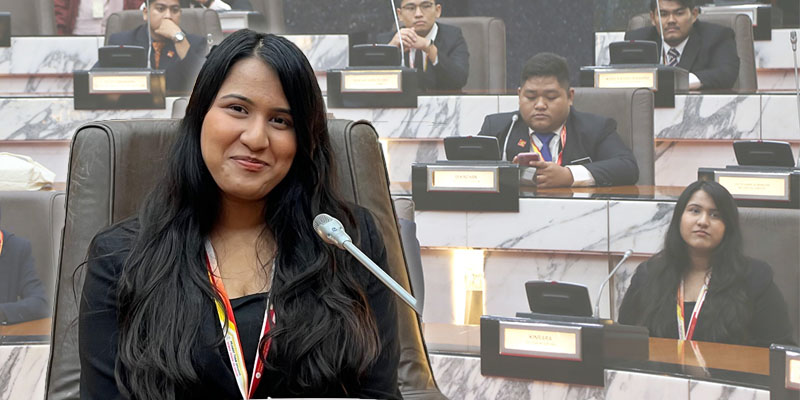
School debater Harsimren Kaur Gill took her passion for advocacy one notch up when she decided to try her luck to join the pool of young state assembly members called ADN Muda for the state of Selangor.
ADN stands for Ahli Dewan Undangan Negeri or the State Assemblyman.
When the opportunity to join ADN Muda Selangor came around, the 21-year-old first-year law student at the Universiti Malaya stepped forward.
“My passion for debating has been a significant part of my life, allowing me to engage in intellectual discussions and develop a keen interest in advocating for issues that impact our community. Through my legal studies and continuous involvement in debates, I aspire to contribute meaningfully to society and uphold justice within our community,” she tells Asia Samachar.
“I firmly believe that it is through political engagement that young people should voice out their opinions,” adds Harsimren who has been actively involved in various clubs and activities since her STPM days.
She was one of the 250 applicants from across Selangor, having succeeded to represent the Kinrara state constituency of N30. She turned out to be the only Punjabi participating in the state government initiative. At the same time, she was also also the youngest candidates in ADN Muda Selangor.
Her father Harnarain Singh Gill, who is involved in the information technology and media Industry, is also involved in a number of NGOs and is active with the local politics of the Subang Parliamentary Constituency. Her mother Saran Kaur is a dedicated homemaker.
Asia Samachar caught up with her to capture her experience.
How did you get involved as an ADN Muda?
I got involved in the ADN Muda Program because it aligns perfectly with my passion for debating and my commitment to addressing community issues. ADN Muda is an initiative run by the state government to empower youth to speak up and debate on matters concerning the people, providing a platform for us to voice our opinions. When I came across the application link on Instagram, I didn’t hesitate to apply. It was an exciting opportunity to step out of my comfort zone and try something new and different, something I had never done before.
Initially, I was a bit nervous, but having a supportive group of friends and fellow participants really helped me feel comfortable during the program. Given my enthusiasm for debating, joining this program was one of the best decisions I’ve made.
What is ADN Muda?
ADN Muda is an initiative by The Selangor State Government. Open to youths aged 18 to 35, the application period is open for a month. Speaker Lau Weng San said the program offers youths the chance to gain experience as state representatives and debate proposals, similar to the sessions in the Selangor State Assembly. The objectives of the program involve to educate and train youths on the actual processes of the Selangor State Assembly, provide a platform for youths to debate and exchange views on Selangor State Government policies formally and interactively. At the same time, it helps develop future leaders who think critically, understand legal processes, and care about current issues in Selangor.
What motivated you to join this initiative?
I am incredibly grateful to both of my parents (Harnarain Singh Gill & Saran Kaur) for their unwavering support throughout my journey of exploration and pursuit of my passions. Their boundless motivation and encouragement are the driving forces that keeps me going, filling me with gratitude and inspiring me to fearlessly embrace new challenges such as this one
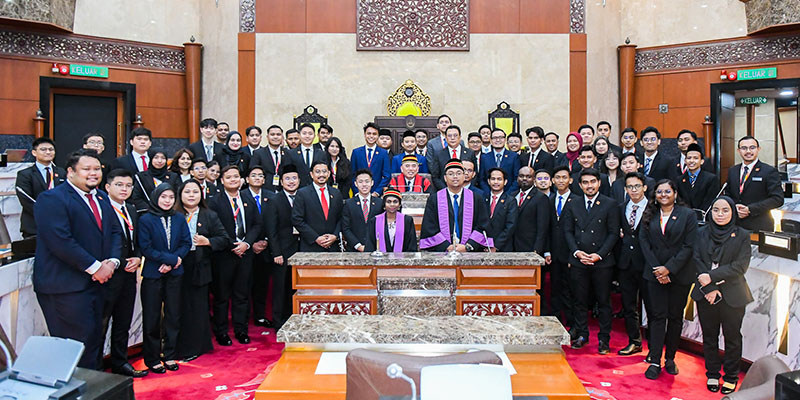
Can you spot Harsimren Kaur Gill? She’s part of the ADN Muds Selangor 2024 team
My motivation to join the ADN Muda Program stems from my passion for debates and a strong desire to step out of my comfort zone to try something different. I saw this program as a unique opportunity to gain knowledge and build valuable connections. The chance to experience what actual state representatives (YBs) go through was both exciting and fulfilling. Getting the opportunity to be a YB (Yang Berkhidmat) in the Selangor State Assembly was really fulfilling. It helped me grasp the ins and outs of the process, especially the challenges that come with it.
Let me use this chance to urge all young people to participate in initiatives like this organized by the state government. These opportunities not only help hone your skills but also allow you to contribute to the nation by expressing your concerns. Such initiatives are crucial and deserve our attention and support.
What did you gain from the programme?
Through my participation in the ADN Muda Selangor, I learned invaluable research techniques, allowing me to analyse various issues critically and form well-informed opinions and arguments.
I had the opportunity to learn a great deal from others. I debated on the importance of the public transportation system in Selangor, emphasizing that the state government should allocate funds to improve the existing system before introducing alternative transportation options. It is crucial to ensure that our current system is well-maintained and efficient before implementing new solutions. I firmly believe that it is through political engagement that young people should voice out their opinions. This involvement is crucial as it helps shaping the future of our nation.
Additionally, I gained insights into the intricate workings of government and public policy, understanding how policies are formulated and implemented. I’ve also had the opportunity to honed my skills in effectively advocating for public rights and addressing current state issues. The program instilled in me the confidence and proficiency needed, enabling me to articulate my advocacy message with clarity and impact. Most importantly, the programme provided me ample networking opportunities, connecting me with like-minded individuals and professionals in advocacy and public policy spheres, further enriching my learning experience.
ASIA SAMACHAR is an online newspaper for Sikhs / Punjabis in Southeast Asia and beyond. You can leave your comments at our website, Facebook, Twitter, and Instagram. We will delete comments we deem offensive or potentially libelous. You can reach us via WhatsApp +6017-335-1399 or email: asia.samachar@gmail.com. For obituary announcements, click here
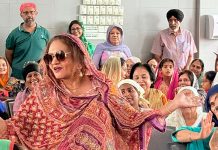
Dr Ajeet Kaur Gill recognised at the Senior Citizen’s Day organised by EKTA Club of Kuala Lumpur and Selangor on 22 June 2024
By Asia Samachar | Malaysia |
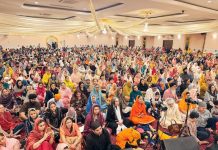
EKTA Club of Kuala Lumpur and Selangor celebrated 280 Sikh women at its maiden Senior Citizen’s Day on the 22 June 2024 in Kuala Lumpur on 22 June 2024.
The club recognised two prominent Sikh women, Dr Ajeet Kaur Gill and Preetam Kaur Gill, for their contributions towards the Sikh community and the community at large.
Dr Ajeet, 93, was present in present to receive her award but Preetam could not attend due to health reasons.
Organised by the club’s welfare sub-committee led by Dr Navin Kaur, the event aimed to celebrate, pay tribute and to honour Sikh women between the ages of 75 and above.
In her speech, EKTA Club president Kuldip Kaur said that the club wanted to not only honour their legacy but also to let them know that they were a relevant and intergral part of the Sikh community.
She said they had enriched many lives with their experience and wisdom, and acted as the living custodians of the history of the Sikh community and its transition over 80 to 90 years.
Senior Citizen’s Day organised by EKTA Club of Kuala Lumpur and Selangor on 22 June 2024
ASIA SAMACHAR is an online newspaper for Sikhs / Punjabis in Southeast Asia and beyond. You can leave your comments at our website, Facebook, Twitter, and Instagram. We will delete comments we deem offensive or potentially libelous. You can reach us via WhatsApp +6017-335-1399 or email: asia.samachar@gmail.com. For obituary announcements, click here
| Entry: 27 June 2024; Updated: 4 July 2024 | Source: Family
ASIA SAMACHAR is an online newspaper for Sikhs / Punjabis in Southeast Asia and beyond. You can leave your comments at our website, Facebook, Twitter, and Instagram. We will delete comments we deem offensive or potentially libelous. You can reach us via WhatsApp +6017-335-1399 or email: asia.samachar@gmail.com. For obituary announcements, click here
From the Petronas Twin Towers in Kuala Lumpur to the Darbar Sahib in Amritsar, what is on the minds of the Sikh youth? A survey reveals some interesting facts
By Asia Samachar | Malaysia |
Does the Sikh faith play a role in the day to day lives of the Sikh youth? Do they consider their faith when making decisions?
Apparently, Sikhi does play a role in the lives of the Sikh youth, according to a recent survey.
At least seven in ten consider Sikhi to be either ‘extremely important’ or ‘very important’ in their daily lives. Only 1% of the survey respondents stated that Sikhi was not at all important when it came to their daily lives.
The survey, conducted in June 2024, involved 254 respondents. It was a truly youth-driven survey, with 91% of the respondents aged between 18-35.
Gender-wise, females made up 58% of the respondents. Close to half of the respondents (48%) were employed while 38% were students.
On the level of education, the breakdown was undergraduate (33%), graduate (33%), secondary education (15%) and post graduate (15%).
The survey was undertaken by the organising team the one-day seminar – ‘Sikhi & Sikh Youth in the 21st Century: Challenges and Prospects’ – which will be held on June 30 (Sunday), from 9am to 3.30pm, at the Asia Pacific University (APU) in Kuala Lumpur. The group, individuals comprising university students, lecturers, and Sikh parcharaks, are working independently without any organisational affiliation.
The seminar will discuss challenges and prospects faced by the Sikh youth, and at the same time provide them space to share their thoughts and get answers to their burning questions. [To register for the seminar, click here].
Results of the survey were made available to Asia Samachar.
Less than one in ten (9%) described themselves as having a ‘very good’ level of Sikhi knowledge, with 31% giving themselves a ‘good’ score. Almost half of the respondents (48%) marked their Sikhi knowledge as ‘average’.
The survey seemed to have captured a decently Gurdwara-going crowd, with seven out of ten respondents connect to the Gurdwara.
When asked how much does the Gurdwara contribute towards their understanding of Sikhi, seven out of ten respondents collectively marked either significantly (26%) or moderately (44%). The rest 30% described it as either not much or not at all.
How often do they feel connected to your Sikh community? Only 42% answered ‘always’ or ‘often’, with the rest marking sometimes, rarely or never.
But when asked if they feel supported by family and the community in overcoming social challenges, 61% answered in the affirmative, with 17% saying they do not feel so.
SOME RESULTS OF THE SURVEY
How do you rate your level of Sikhism knowledge? Average (48%) Good (31%) Very Good (9%) Poor (9%)
How important is Sikhism in your daily life? Extremely important (39%) Very important (32%) Moderately important (19%) Slightly important (9%) Not at all important (1%)
How much does Gurdwara contribute to your understanding of Sikhi? Moderately (44%) Significantly (26%) Not much (25%) Not at all (5%)
To what extent does Sikhism practices influence your decisions in life (e.g career, relationships, lifestyle choices)? To a great extent (34%) To some extent (41%) Neutral (18%)
Do you participate in any Sikh community activities or organizations? Yes (61%) No (39%)
ASIA SAMACHAR is an online newspaper for Sikhs / Punjabis in Southeast Asia and beyond. You can leave your comments at our website, Facebook, Twitter, and Instagram. We will delete comments we deem offensive or potentially libelous. You can reach us via WhatsApp +6017-335-1399 or email: asia.samachar@gmail.com. For obituary announcements, click here
Guru Nanak Community Kitchen volunteers, with Deep Singh (seated, 4th from left) and Polo Singh (5th from left)
By Pola Singh | Malaysia |
The Guru Nanak Community Kitchen is a Sikh-based initiative that embodies the true spirit of Malaysia, uniting volunteers, donors, and beneficiaries from diverse backgrounds. This noble cause, started by retired Air Force officer Deep Singh Ji, has been serving warm vegetarian meals to the less fortunate for the past 25 years.
During the Covid-19 pandemic, operations were halted due to the Movement Control Order (MCO). However, as soon as the restrictions were lifted, the Soup Kitchen resumed its efforts with a modified approach to ensure safety.
As a volunteer, I am pleasantly surprised to see a diverse group of people coming together. Chinese, Malays, and Indians, including professionals such as doctors, accountants, engineers, teachers, university students, and academicians, travel from various parts of the city at their own expense to help.
The volunteers gather at the High Street Gurdwara Sahib dining hall near Petaling Street to pack and distribute food. Deep Singh, recognisable by his white shirt and turban, prepares home-cooked meals and brings them in large pots. Volunteers then pack the food, often supplemented by buns, muffin, ladu, jelebi, and bottled water provided by caring donors.
Feeding around 600 people each time, the cost of each meal is about RM6, totalling approximately RM3,600. Deep Singh relies on friends, well-wishers, and sometimes his own savings to cover these costs, with many donors choosing to remain anonymous.
Guru Nanak Community Kitchen volunteers at Pudu, Kuala Lumpur on one of their rounds. Deep Singh is seen on the left
Popular feeding stations include areas around Bangkok Bank, Chow Kit, Puduraya, and Medan Tuanku. When word spreads that the Nanak Community Kitchen will be serving meals, people from all walks of life, mostly the elderly, unemployed, and those with odd jobs, gather in orderly lines to receive food.
For the volunteers, this experience is both enriching and humbling. While many of us enjoy the comfort of our homes and well-stocked kitchens, the homeless must endure harsh conditions, often sleeping on makeshift beds of cardboard. Despite these challenges, their gratitude and dignity shine through when we arrive with meals.
The role of youth in this initiative is particularly impactful. Many members of the Sikh Youth Fellowship Alliance (SYFA) actively collaborate with the Nanak Community Kitchen. Their involvement not only sustains the programme but also teaches them valuable lessons about empathy, community service, and the importance of helping those in need.
This initiative is a testament to the spirit of unity and compassion among Malaysians. Seeing fellow citizens from different faiths come together to make it more bearable for the urban poor is truly uplifting.
For those inspired to support this cause, Deep Singh can be contacted at 014 699 9342. Donations can be made to: CIMB Bank Current Account No: 860-574-8768; Account Name: Nanak Kitchen and Catering.
Dr Pola Singh, who retired as Maritime Institute of Malaysia director-general in 2011, is also the author of ‘Uphill — The Journey of a Sikh-Chinese Kampung Boy’
ASIA SAMACHAR is an online newspaper for Sikhs / Punjabis in Southeast Asia and beyond. You can leave your comments at our website, Facebook, Twitter, and Instagram. We will delete comments we deem offensive or potentially libelous. You can reach us via WhatsApp +6017-335-1399 or email: asia.samachar@gmail.com. For obituary announcements, click here
Grandparents and the extended family – Illustration photo
By Mohan Singh Rendhawa | Opinion |
FINANCIAL CHALLENGES
Young couples have very poor personal financial management skills. This is also a major factor that contributes to break up of marriages. Many young individuals have been declared bankrupt due to over use of credit cards. In the 20th century we only spent money we had. Now we spend it in advance.
INDIVIDUALISM
We live in the 21st century armed with advanced technology. However, our human brain is still the same as it was when we were living in caves in tribes. People hunted together and defended themselves as group.
Up to the 20th century, living in extended families was very common and it met the needs of the caveman brain that we have. People were independent but also there was a strong feeling of wanting to be interdependent and helping members of the family and community in their times of need. This acted as a big safety net. People were less anxious and stressed as they always had help nearby.
Our Punjabi society has changed over the years. Today the trend is ‘Me, I and Myself’. Others can come later. This new trend of thinking is that, I have only one life and I want to make the most of it. This belief has created a selfish nature among some individuals in this 21st century. It is very difficult for such individuals to give. They take more than they give. They prefer to move out and live away from their parents and other close relatives.
This practice has deprived young children the company of their cousins and other family members resulting in many single-child families or families with a maximum of two children raised in isolation from other family members. This results in isolation and not having any opportunity of cooperation and support from family members due to self-imposed exile.
The lack of the presence of grandparents close to the young grandchildren has deprived the transfer of traditional cultural values and transfer of Punjabi language speaking skills. Grandparents, when they are around, also act as peacemakers for their grandkids and help to teach the art of conflict resolution.
The lack of an opportunity to resolve small conflicts as children have a compounded effect in adulthood. The attitude most common among such people is my way or the highway. So when there is a conflict in adult life they walk away.
MISSING COMMODITY: WARM HUGS OF GRANDPARENTS
The warm hugs given by grandparents was the comfort and a source of the love hormone oxytocin.
The traditional Punjabi way of giving a bear hug is also being practiced less often. People used to feel good after this bear hug because the bear hug tradition of the Punjabis has some scientific basis. According to science giving a warm hug produces beneficial hormones.
Hugs are supposed to lower blood pressure and heart rate, while improving cardiovascular function. Hugs decrease cortisol, making you less stressed and allowing for improved sleep. Hugs are supposed to boost oxytocin in our bodies which is associated with feeling happier.
In those days, when family members met, it was common to give a warm hug. Today, the practice is slowly giving way to a handshake or simply saying ‘hi’.
Grandparents used to be the people who were most generous with warm hugs. Modern mums and dads are too busy with their work and other work at home to be relaxed enough to share a hug.
Mental Health Issues
Mental health is a big challenge faced by young adults in Malaysia. Anxiety and depression are the most common mental health issues. Young Sikhs are also not spared of these as young lives are today very stressed. Due to the pressure to excel in school and in university, leisure time is limited.
Sleep deprivation is another cause. Long hours are spent on social media on devices. These are the contributory causes of mental health issues.
A study was carried out to identify the mental health level of Malaysian students. A total of 810 students were chosen at random. The Depression, Anxiety & Stress Scale (DASS) study was developed by the Ministry of Health. It was found that more than 68.9 % of the students had moderate to high levels of psychological distress. 72.7% faced anxiety and 60.6% were found to be depressed. It was also found that 42.8% had loss of emotional control.
The DASS developed by the Ministry of Health Malaysia is available online, our young people need to be encouraged to do a self-evaluation by completing the list of questions in this inventory and seek assistance to overcome their problems if their score is negative.
Author: Lt. Col. Rtd. Mohan Singh Rendhawa is a Fellow Institute of Personnel & Development UK and also a Fellow of the Institute of Public Relations Malaysia. He served the RMAF for 27 years and has been a corporate trainer for 28 years after he took his early retirement from the RMAF. The views of this article are the personal opinions of the writer.
ASIA SAMACHAR is an online newspaper for Sikhs / Punjabis in Southeast Asia and beyond. You can leave your comments at our website, Facebook, Twitter, and Instagram. We will delete comments we deem offensive or potentially libelous. You can reach us via WhatsApp +6017-335-1399 or email: asia.samachar@gmail.com. For obituary announcements, click here
ASIA SAMACHAR is an online newspaper for Sikhs / Punjabis in Southeast Asia and beyond. You can leave your comments at our website, Facebook, Twitter, and Instagram. We will delete comments we deem offensive or potentially libelous. You can reach us via WhatsApp +6017-335-1399 or email: asia.samachar@gmail.com. For obituary announcements, click here
Lawyer Parvinder Singh Doal has been voted to continue to lead SSU Kelab Aman for a second term, with veteran flight crew Avethar Singh joining him as the vice president.
Beefing up the team are media and IT practitioner Harnarain Singh Gill as secretary and lawyer Ravinder Singh Dhalliwal as treasurer. Both won unopposed.
Parvinder, first elected into the club’s committee in 2018, plans to enhance member engagement, infrastructure development, financial stability, community building, sports development and educational initiatives.
“We are committed to promoting sports programs and introducing educational initiatives that support personal and professional growth of members,” he said in a note shared with Asia Samachar.
In the election, Parvinder received 261 votes against Buljeet Kaur who received 178 votes. In the VP content, Avethar received 232 votes against 201 for Mender Singh.
Some 450 members took part in the election held under the club’s new constitution at its AGM on May 26.
ASIA SAMACHAR is an online newspaper for Sikhs / Punjabis in Southeast Asia and beyond. You can leave your comments at our website, Facebook, Twitter, and Instagram. We will delete comments we deem offensive or potentially libelous. You can reach us via WhatsApp +6017-335-1399 or email: asia.samachar@gmail.com. For obituary announcements, click here
Kirnal Singh (Tari MAS, Sri Sentosa) had passed away peacefully on 24 June 2024, surrounded by loving family.
Wife: Arajit Kaur (Jeeta) d/o Late Kerta Singh
Children:
Gurdip Singh (Deepa)
Parkash Kaur (Shindi)
Premjit Singh (Prem)
Late Bhim Singh (Papu)
Will be missed dearly by grandchildren and families.
FUNERAL: 25 June 2024 (Tuesday)
2pm: Cortege departs from residence (Address : Block 17-01-04, Taman Sri Sentosa Apt, Jalan Klang Lama, 58000, Kuala Lumpur) https://maps.app.goo.gl/gK96o5KHFEwzKddD9 or click here
3pm: Saskaar (cremation) at Shamshan Bhoomi Hall (Jalan Loke Yew Crematorium, KL) https://maps.app.goo.gl/qGKPmsKbtUVgNsLD7 or click here
ASIA SAMACHAR is an online newspaper for Sikhs / Punjabis in Southeast Asia and beyond. You can leave your comments at our website, Facebook, Twitter, and Instagram. We will delete comments we deem offensive or potentially libelous. You can reach us via WhatsApp +6017-335-1399 or email: asia.samachar@gmail.com. For obituary announcements, click here