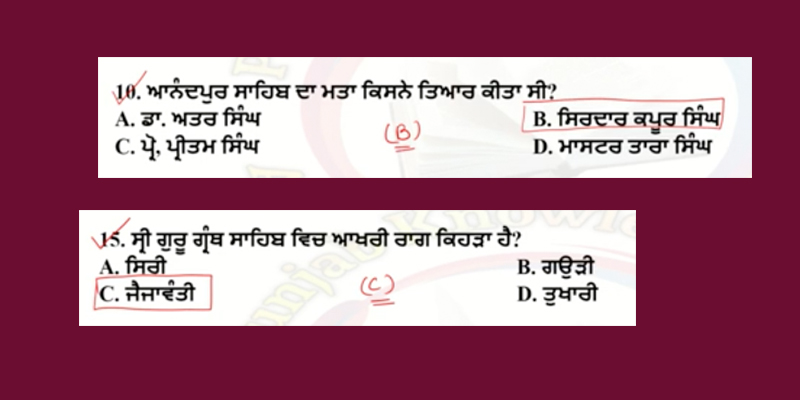
Sample questions for Punjabi Qualifying Test for PSSSB Clerk Exam
By Asia Samachar | Panjab |
Nearly 90% of the applicants who appeared for the Punjabi language eligibility test, mandatory for getting a government job in Punjab, flunked the examination conducted in March this year.
Only seven of the 69 who sat for the examination on March 10 had passed, reported the Hindustan Times. The results were declared on Tuesday (April 2).
The exam is conducted four times a year: March, June, September, and December. Clearing it is mandatory for those aspiring for Group C and D posts of the Punjab government if they have not studied Punjabi at matriculation-level.
The exam comprises two papers: grammar and technical, each of 75 marks, out which a candidate is required to secure a minimum of 25 marks to pass.
When asked about the reasons behind such a high percentage of candidates flunking the exam, Punjab language department director Harpreet Kaur told the the newspaper: “Majority of the applicants couldn’t write Punjabi properly. There were a lot of spelling mistakes. Therefore, they could not pass the exam.”
The report also quoted Sukhdev Singh Sirsa, an eminent Punjabi writer and a former professor at Panjab University, as saying: “The exam conducted by the language department is not that tough. Still, if nearly 90% of applicants have failed, it shows that Punjabi language is not taken seriously. Job aspirants are not taking Punjabi language as seriously as they should. I think the education system and parents are to be blamed for this downfall of the Punjabi language.”
The state Cabinet led by Chief Minister Bhagwant Mann agreed to amend Rule 17 of the Punjab Civil Services (General and Common Conditions of services) Rules, 1994, and the Punjab State (Group-D) Service Rules, 1963, to ensure that only those candidates are appointed in the Punjab Government who have knowledge of the Punjabi language, reported The Tribune in October 2022.
ASIA SAMACHAR is an online newspaper for Sikhs / Punjabis in Southeast Asia and beyond. You can leave your comments at our website, Facebook, Twitter, and Instagram. We will delete comments we deem offensive or potentially libelous. You can reach us via WhatsApp +6017-335-1399 or email: asia.samachar@gmail.com. For obituary announcements, click here
In a rapidly changing world where cultures collide and ideologies clash, it’s easy to feel the pull towards new beliefs and perspectives where exposures and information regardless of being positive or negative are at an easy reach to our millennium gens.
However, amidst the allure of novelty, it’s crucial not to forget the rich tapestry of traditions and values passed down through generations. Our inherited faith, be it religious, cultural, or spiritual, serves as a beacon which has beyond doubt successfully guided us through life’s complexities and provided a sense of belonging and purpose.
Understanding the value of our Inherited Faith is not merely a set of rules or rituals; it’s a connection to your heritage and ancestry. It carries the wisdom of our forebears, distilled through centuries of experience and reflection. By embracing, respecting and beholding our inherited faith, we honor the sacrifices and struggles of those who came before us, preserving a legacy that enriches our identity and shaped our worldview that prevails today.
Our Faith Grounded Us in Turbulent Times.
In times of uncertainty and upheaval, our inherited faith provided and will continue to provide stability and solace. Its timeless teachings offer guidance on navigating life’s challenges with resilience and grace. Whether through prayer, meditation, or community rituals, practicing your faith fosters a sense of inner peace and resilience, enabling us to weather the storms of life with strength and conviction.
Regrettably, in today’s era of influential societal pressures, a significant number of individuals are forsaking their cultural roots and relinquishing the solid foundations established by their ancestors through struggle and sacrifice. Instead, they gravitate towards mimicking the cultures and attire of different societies and forego connections and leaving their community.
It is important to delve deeper into the appreciation of the beauty of our inherited faith, as it possesses a natural ability to nurture connections and foster a shared sense of community through aspects such as language, culture, cuisine, music, and rich traditions. By embracing these shared beliefs and practices, we can establish bonds with others who share our heritage, creating a network of support and belonging that transcends geographical boundaries. These communities offer a profound sense of camaraderie, togetherness and solidarity, enhancing our lives with a multitude of perspectives and collective experiences from the social-entrepreneur aspect.
After considering the points mentioned above and gaining deep insights from reputable secular scholars of respective faith, particularly those who eschew or rather shun fundamentalism, we can then cultivate a balanced perspective and a constructive attitude towards remaining loyal and staying consistently connected to their inherited faith. It is through this process that we can truly embrace the principles of respecting diversity and engaging in positive and unbiased dialogue.
While it’s important to uphold your inherited faith, it’s equally crucial to approach others with respect and understanding. In a world marked by religious and cultural diversity, engaging in dialogue with people of different faiths fosters mutual respect and promotes peaceful coexistence. By appreciating the beauty in others’ beliefs while staying rooted in your own, you contribute to a more harmonious and inclusive society.
There are numerous cases where one faith may find itself subjugated by another, particularly when the former is in the minority within certain countries. In such situations, two outcomes tend to occur by default. The minority population may yield to subtle pressures and convert for convenience, or they may resist the continual dominance of the majority adherents of a different faith. This pattern appears to be prevalent among the Abrahamic religions, which have proliferated across the globe. This create tremendous pressure on the minority society and hence the harmony is distorted in the coexisting fabric.
This situation may navigate oneself into doubt and question the original faith especially certain temptation is instigated. While It’s natural to experience moments of doubt or questioning regarding our inherited faith one should not view these moments as a threat, rather see them as opportunities for growth and exploration. Engage in thoughtful reflection, seek guidance from trusted mentors or secular spiritual leaders, and draw strength from the wisdom of our faith tradition. Remember that doubt is not the opposite of faith but rather an essential aspect of it, leading to deeper understanding and conviction.
Embracing Change While Preserving Tradition
As the world evolves, so too must our understanding and interpretation of faith. Embracing change does not mean abandoning tradition but rather adapting it to suit the needs of the modern world. By infusing new insights and perspectives into our inherited faith, we ensure its relevance and vitality for future generations, preserving its timeless truths while embracing the challenges of the present.
In conclusion, our inherited faith is a precious gift that deserves to be cherished and nurtured. By embracing its teachings, staying grounded in times of uncertainty, fostering connection with others, respecting diversity, navigating doubt with grace, and embracing change while preserving tradition, we honor the legacy of our ancestors and pave the way for a brighter future rooted in faith and love.
Dr Balwant Singh Bains is a Malaysia-based kirtan enthusiast and a practicing physiotherapist with a chain of physiotherapy clinics.
ASIA SAMACHAR is an online newspaper for Sikhs / Punjabis in Southeast Asia and beyond. You can leave your comments at our website, Facebook, Twitter, and Instagram. We will delete comments we deem offensive or potentially libelous. You can reach us via WhatsApp +6017-335-1399 or email: asia.samachar@gmail.com. For obituary announcements, click here
Hadley Grange was the home of fraudster Narinder Sandhu
By Asia Samachar | Britain |
A mansion that was seized by British police investigating a £70m postal scam has gone on sale.
Hadley Grange, at Jordans in Buckinghamshire, belonged to Narinder Sandhu, 62, who was jailed in February for conspiracy to commit fraud, reported BBC.
He was the architect of a plan to cheat the Royal Mail by falsely declaring mail weights, classes and destinations, Southwark Crown Court heard. Prosecutors said he used the proceeds to fund a lavish lifestyle.
The property, valued at £2.75m, includes a separate pool house His wealth included the mansion, complete with a separate pool house, as well as Rolls-Royce and Bentley cars, the report added.
Prosecutors said the falsely categorised mail was sent through logistics companies in Berkshire and Buckinghamshire from 2005 to 2017. They said the scam cost the Royal Mail about £70m, although the defendants earned a smaller sum.
Sandhu, who pleaded guilty to the conspiracy along with his company Packpost International, was jailed for four years. His brother Parmjeet Sandhu, 57, of Iver, Buckinghamshire, admitted obtaining services dishonestly and was given a two-year suspended sentence.
The firms involved – including Tiger International Logistics, Worldwide Transport Express and Global Express Worldwide – are due to be sentenced in December.
ASIA SAMACHAR is an online newspaper for Sikhs / Punjabis in Southeast Asia and beyond. You can leave your comments at our website, Facebook, Twitter, and Instagram. We will delete comments we deem offensive or potentially libelous. You can reach us via WhatsApp +6017-335-1399 or email: asia.samachar@gmail.com. For obituary announcements, click here
Mahajoth Singh at the Fundamental Rights Forum 2024 in Vienna
By Mahajoth Singh | Letter to Editor |
On 12 March 2024, after attending the Fundamental Rights Forum 2024 held at Vienna, Austria, I rushed to the Vienna International Airport, to catch my flight to Amsterdam Airport Schiphol, Netherlands to attend a course organized by the Institute For International Legal and Advocacy Training (IILAT) at the ICC, The Hague, Netherlands.
As soon as I placed my bag on the tray, at the security checkpoint, I was informed by a security officer (“officer 1”) that I was to be subjected to an Explosives Trace Detection (ETD) test (“litmus test”), because I wore a turban.
Needless to say, I was shocked beyond belief as at this point, I had not even passed the Advance Imaging Technology (“AIT”) scanner. I repeatedly asked officer 1 for the reason or cause for such test to be conducted and further requested to be shown the purported law empowering officer 1 such rights. Officer 1 refused and repeatedly said that because I wore a turban, it is the law and after performing the litmus test, I will be shown the purported law.
The litmus test was then carried out in the presence of many others at the security checkpoint. It was humiliating. I was not brought into a separate room or cabin. I was singled out simply because I wore a turban. I was only asked to pass the AIT scanner after the litmus test was conducted. It is point worthy to note that the AIT scanner did not beep.
Thereafter, I was passed on to a different officer (“officer 2”) who was also unable to show me any such ‘law’ and instead told to write an email to the Security Ombudsman Service (“SOS”) to request for the purported law. Officer 2 further told me that the purported law is an ‘internal document’ and hence was precluded to show it to me.
Dissatisfied and acting on the advice of officer 2, I sent an email to the SOS on 15.03.2024, detailing the incident and requesting for the purported law. I received a reply on 19.03.2024.
In sum, the SOS confirmed the following:
– a. that the Austrian Ministry of the Interior is responsible for the security company that does the security check;
b. that the purported law relied upon has not been made public; and
c. that the check should have been carried out in a cabin.
SOS’s response is baffling and unacceptable. How is it possible for the security officers to rely on a purported law that has not been made public? What is this secret ‘law’? Even during the era of the Magna Carta, the law was known by all.
An Explosive Trace Detection (ETD) equipment may only be used as a supplementary means of screening as confirmed by Vienna Airport’s own document at page 15 wherein, it clearly states “when an alarm occurs…special paper strips can also be used to check for traces of explosives…”.
It is unfathomable that in 2024, a turban wearing Sikh is subjected to such discriminatory practices. I am unable to imagine what my fellow Sikh brothers and sisters that wear the turban or any kind of headgear face.
Until or unless the above is clarified and the purported law is shown to me, I take the position that the said incident was discriminatory, unlawful and in clear breach of Articles 9 and 14 of the European Convention of Human Rights.
At this juncture, I must also state that the irony of this incident is that Article 15 of the Vienna Declaration and Programme of Action, which was declared during the World Human Rights Conference at Vienna in 1993, referred to racial discrimination as an evil. For sake of completeness, Article 15 reads “Respect for human rights and for fundamental freedoms without distinction of any kind is a fundamental rule of international human rights law. The speedy and comprehensive elimination of all forms of racism and racial discrimination, xenophobia and related intolerance is a priority task for the international community. Governments should take effective measures to prevent and combat them. Groups, institutions, intergovernmental and nongovernmental organizations and individuals are urged to intensify their efforts in cooperating and coordinating their activities against these evils”
Premised on the above, I demand an apology from the Ministry of The Interior, Austria and Vienna International Airport and further demand that the secret ‘law’ be made public immediately.
ASIA SAMACHAR is an online newspaper for Sikhs / Punjabis in Southeast Asia and beyond. You can leave your comments at our website, Facebook, Twitter, and Instagram. We will delete comments we deem offensive or potentially libelous. You can reach us via WhatsApp +6017-335-1399 or email: asia.samachar@gmail.com. For obituary announcements, click here
On April 17, 2024, a decade will have passed since Karpal Singh departed, leaving an indelible mark on Malaysia’s legal and political canvas.
How can we even begin to describe the essence of this towering man? Lim Kit Siang’s portrayal of him captures it all – A legend in law, human rights and politics. In the courtroom, he commanded the stage and attention like no other. His individual contributions have nudged Malaysian society towards greater justice and democracy.
As a politician, Karpal was a Member of Parliament for Jelutong from 1978 to 1999 and later, for Bukit Gelugor from 2004 until his death in 2014. He was also the Chairman of the Democratic Action Party (DAP) from 2004 to 2014.
Karpal’s legal journey began at the National University of Singapore (NUS) where he read law and he was subsequently called to the Bar in 1969. His legal prowess was evident in high profile cases which included defending foreign nationals in drug trafficking cases.
Notably, he staunchly opposed the death penalty especially for drug-related offences and defended current Prime Minister, Anwar Ibrahim, in numerous court battles. His fearlessness in both the courtroom and political arena earned him the resounding name – ‘The Tiger of Jelutong’.
Yet, Karpal’s path was not without obstacles which included suspensions from Parliament, being charged under the Sedition Act, 1948 (which he was eventually acquitted of posthumously) and detention under Malaysia’s now repealed Internal Act, 1960. Despite these adversities, he persevered.
He was confined to a wheelchair following a motor vehicle accident in 2005 but continued his legal and political work. It was a very challenging time for the family. While he was a husband and father to them, he was also a people’s man. He belonged to the people and they needed him. His wife Gurmit Kaur’s unwavering support and love remained etched through their extraordinary journey together.
Karpal breathed his last following another motor vehicle accident in 2014.
Gurmit still feels the void. She reflects, “He was my one arm, my anchor and guiding force. Despite having five children and 12 grandchildren; no one can truly replace him. It’s just not the same. Karpal was a good man, a devoted father and doting grandfather who held women in the highest regard. Beneath his tough exterior, there existed a gentleness that touched those around him.”
——————
REMEMBERING KARPAL: 10th MITHI YAAD
In loving memory of the late YB Dato Seri Utama, Sardar Karpal Singh’s 10th Anniversary; Madam Gurmit Kaur and family invites all Malaysians to join them in the prayers.
Details of Sri Akand Path Sahib Programme
Tuesday 9th April: Akand Path Sahib, Arambh 9 am Thursday 11th April: Path Da Phog 10.30 am, followed by Guru Ka Langgar at 12 noon Venue: Wada Gurdwara Sahib, Jalan Gurdwara, Penang
——————
Recently, during a Chinese New Year gathering commemorating the opening of a DAP service centre in Penang led by their third son Ramkarpal Singh, a poignant moment unfolded. As the Chief Minister of Penang delivered his speech, a beautiful butterfly with its delicate wings alighted on Gurmit’s palms. “He is here”, she exclaimed, causing a brief pause in the speech.
It was a symbolic reminder of Karpal reaching out from beyond and reassuring his wife of his presence in spirit and their eternal connection. Also, an enduring soul woven into the fabric of the gathering. A silent witness to the battles fought and the ideals upheld.
How could he not be present? His family, his staunchest allies – carried forth this torch, their unwavering commitment kept his political struggles and calling alive. Emotions rippled thru the audience as a gentle echo waved through the air, lingering like a delicate memory, “Indeed, he is here with us.”
As the butterfly fluttered away, its wings whispered secrets of remembrance. Karpal’s legacy lives on in our hearts and in the winds that carry his name.
ASIA SAMACHAR is an online newspaper for Sikhs / Punjabis in Southeast Asia and beyond. You can leave your comments at our website, Facebook, Twitter, and Instagram. We will delete comments we deem offensive or potentially libelous. You can reach us via WhatsApp +6017-335-1399 or email: asia.samachar@gmail.com. For obituary announcements, click here
In our frenetic 24/7 lives, pausing seems like a luxury or a waste of precious time and money. How often do we hear people say that they are too busy to take time out or to reflect on their lives? In truth, across millennia and cultures, major worldviews, both religious and secular, have recognized the importance of pausing. Indeed, with a cursory look at nature, one can identify the critical importance of pausing for the survival of the natural ecosystems.
On the micro level, pausing allows us to reconnect with ourselves. The Buddhist parable of the runaway horse aptly illustrates this. We often exist in a state of perpetual motion, driven by anxieties and ingrained patterns. Pausing, as meditation teacher Tara Brach suggests, is the conscious act of stepping off this runaway horse. Through techniques like meditation and mindful breathing, we quite the mind and create space for introspection. This allows us to observe our thoughts and emotions with curiosity, rather than being controlled by them. By breaking the cycle of reactivity, we cultivate inner peace and make space for conscious choices, fostering a sense of control and well-being.
The benefits of pausing extend beyond the individual, impacting those around us and society more generally. When individuals are more self-aware and centred, their capacity for empathy and understanding towards others increases. This fosters stronger, more compassionate communities. Imagine a workplace where employees take mindful pauses throughout the day. These moments of reflection would likely lead to improved communication, reduced conflict, and a more collaborative environment. Similarly, in families, incorporating pauses for reflection could create a space for open communication and stronger bonds.
On the macro level, the power of pausing has the potential to ripple outwards, contributing to global peace. A world populated by individuals who are present, self-aware, and empathetic is a world inherently less prone to conflict. When we understand ourselves better, we are more likely to understand the perspectives of others, fostering tolerance and reducing the “us vs. them” mentality that fuels wars. This is not utopian idealism; studies have shown that mindfulness practices can reduce prejudice and promote social cooperation.
If we turn to nature, we can identify several key mechanisms where pausing plays a crucial role in the intricate functioning and sustainability of ecosystems. For instance, most living organisms, both animal and plant, exhibit periods of dormancy or reduced activity during certain seasons. Certain processes slowdown in response to environmental cues, and in these natural pauses ecosystems can conserve resources, adapt to changing conditions, and maintain balance. Hibernation is a form of pausing where animals, especially reptiles and insects, enter periods of dormancy or torpor. This pause in activity allows them to conserve energy during harsh conditions like winter or periods of scarce food. Even simple creatures take pauses. A bird might pause on a branch, scanning for food or potential threats before deciding its next move. This allows them to gather information and make informed choices.
Pauses occur in predator-prey dynamics. Predators may pause before hunting, assessing their surroundings and selecting optimal targets. Prey animals may freeze or pause their activities when detecting predators, employing strategies such as camouflage or mimicry. These pauses influence population dynamics, predator-prey relationships, and the overall structure of ecosystems. Predators, for example, often pause before striking. This allows them to assess the situation, gauge the prey’s awareness, and plan their attack.
One of nature’s seemingly miraculous properties is its capacity to regenerate, especially following disturbances caused by natural disasters or human activities. Following such disturbances, ecosystems undergo a period of recovery and regeneration, during which certain processes may slow down or halt temporarily. These pauses allow ecosystems to heal, rebuild, and restore their functionality over time. The power of pausing is not a new discovery; it is as old as humanity and arguably is a quality that has enabled the human species to flourish. One can imagine the pre-modern hunter-gatherers would have deployed a strategy of pausing or stillness to trap their prey or to protect themselves from dangerous animals.
RAHAO IN GURBANI
The concept of pausing finds resonance in the Sikh tradition through the “rahao” concept in Gurbani Shabad. In total, it appears 2,686 times in Guru Granth Sahib and has various literary functions. Literally, “rahao” translates to “pause” in Punjabi. But its significance goes beyond a simple break; the rahao line is considered to form the central theme of the Shabad. In this regard, it forms the crux of the Guru’s message or idea that necessitates deeper contemplation. The verses that precede the rahao in the Shabad often function to establish context, and the ones that follow elaborate on this core idea, providing examples and illustrations. Hence, in a very practical sense, the rahao instructs the reader or singer to take a moment. Reflect on the line before it, consider its meaning, and its connection to your life thus allowing the wisdom of the Shabad to become truly understood and internalized. While some interpretations suggest complete silence during rahao, the emphasis is more on internal reflection.
Pausing is not simply a break from life’s routines; It is a powerful tool that creates an opportunity to stop, reflect and contemplate the direction and purpose of life itself. But it is in this sense that pausing can be understood as a profoundly sacred act where one enters a state of timelessness; where one can forget about the past and future and focus all their attention on the present. And when we do this, just for a fleeting moment, in the stillness of time itself, we can feel fully alive. In this regard, pausing becomes a profound practice of engaged stillness and active engaged spirituality.
But unlike what the Yogis and aesthetics advocated, this does not require one to switch off from the world, but quite the opposite. The power of stillness as a form of meditation requires one to be in a state of elevated awareness. In this state we transcend the noise and distractions of our everyday lives, allowing ourselves to become completely attuned to our surroundings, indeed to nature itself. In this state of stillness, our senses become sharper, our perceptions clearer, and our understanding deeper. In this state for a fleeting moment, we can disarm the ego and see, hear, and feel things that may have otherwise gone unnoticed. It is through stillness that we can begin to tap into a reservoir of inner wisdom and intuition, guiding us towards clarity and insight.
As Guru Amardas notes in Guru Granth Sahib p775, gur pUry pUrI miq hY Aihinis nwmu iDAwie ] haumY myrw vf rogu hY ivchu Twik rhwie ]21] The Teachings of the Perfect Guru are perfect; so meditate on the Naam day and night. Egotism and self-conceit are terrible diseases; tranquillity and stillness come from within. ||21||
When the Guru chose to place pauses or rahaos throughout every Shabad of the entire 1,430 pages of the Guru Granth Sahib, we know this has much more significance than a literary device. As well as signalling the central theme of the Shabad, the rahao is also related to practice with deep philosophical significance. Embracing the practice of pausing is not merely a personal choice but a crucial societal imperative. The relentless pursuit of productivity and constant activity takes a toll on our health, relationships, and the environment. By integrating pauses into our lives and advocating for their importance, we can initiate transformative ripple effects for ourselves, others and ultimately the planet.
Gurnam Singh is an academic activist dedicated to human rights, liberty, equality, social and environmental justice. He is an Associate Professor of Sociology at University of Warwick, UK. He can be contacted at Gurnam.singh.1@warwick.ac.uk
* This is the opinion of the writer and does not necessarily represent the views of Asia Samachar.
ASIA SAMACHAR is an online newspaper for Sikhs / Punjabis in Southeast Asia and beyond. You can leave your comments at our website, Facebook, Twitter, and Instagram. We will delete comments we deem offensive or potentially libelous. You can reach us via WhatsApp +6017-335-1399 or email: asia.samachar@gmail.com. For obituary announcements, click here
EKTA Malaysia’s inaugural Treasure Hunt Walk on March 10, 2024 at Titiwangsa West Lake, Kuala Lumpur – Photo: Ekta Malaysia
By Asia Samachar | Malaysia |
The EKTA Club of Kuala Lumpur and Selangor met its target to raise funds to sustain some of its key community initiatives for the year 2024 through its inaugural Treasure Hunt Walk held in Kuala Lumpur on March 10.
Club president Dr. Kiranjit Kaur Ludher said the event was organised to replenish funds for the club’s community service programmes as well as to celebrate women through the commemoration of the International Women’s Day.
“EKTA is a registered NGO that runs projects under four sub-committees, namely, welfare, legal, medical and youth development.
“Besides collecting membership fees to run these projects, we had to find a creative way to top up our funds for us to continue to serve marginalised communities in need of education and other welfare-related aid – such as provision of computers, payment of school fees, and to meet certain medical expenses of marginalised individuals who we support,” she told Asia Samachar.
The unique charity event was a delightful adventure for members and friends around the Titiwangsa West Lake, which offered 140 participants a blend of excitement and camaraderie.
The event kicked off with a lively bhangra warm-up followed by the official flag-off at 8:30 am. Off went 35 teams of four participants each, consisting of members, friends and the public, who embarked on a 90-minute journey, solving very creatively-crafted clues and unlocking the secrets of the scenic park.
“Despite all of us being volunteers, we managed the planning and a successful execution of the event within a short time. We had a good turn-out,” she said.
The club was able to run the event without forking out any money as all expenses were covered through generous donors and sponsorships. Hence, all proceeds from participation fees went into its fund for its upcoming projects.
The grand prize was four return tickets to Amritsar courtesy of AirAsia. Other prizes included vouchers from Ranjit Skin Specialist, Tasty Chapati and Chapati Delicacies. There were 20 lucky draw gifts including Dry-Fit caps, shorts, socks, t-shirts and bath towels.
Asia-Pacific University (APU) provided participants with a survival kit bag each consisting of a water bottle and snack, a handy towel, pen and a raincoat, in case the weather turned wet. Omar Gill Associates sponsored delicious cha, samosas and nasi lemak for all present after the walk.
“We extend our heartfelt gratitude to all our sponsors, cash donors, participants, and our media partner Asia Samachar. We are also very grateful to all the gurdwaras and civic groups whose invaluable assistance in promoting our event ensured its success. Your generosity and support was instrumental in elevating the achievements of our women.”
More pictures of the event can be found at the EKTA Malaysia Facebook page or here).
EKTA Malaysia’s inaugural Treasure Hunt Walk on March 10, 2024 at Titiwangsa West Lake, Kuala Lumpur. The organising team gather at dawn to prepare for the event – Photo: Ekta Malaysia Some participants at EKTA Malaysia’s inaugural Treasure Hunt Walk on March 10, 2024 at Titiwangsa West Lake, Kuala Lumpur – Photo: Ekta Malaysia Some of the participants at the EKTA Malaysia’s inaugural Treasure Hunt Walk on March 10, 2024 at Titiwangsa West Lake, Kuala Lumpur – Photo: Ekta Malaysia Dr. Kiranjit Kaur Ludher (right, spectacles) looking at the registration process at EKTA Malaysia’s inaugural Treasure Hunt Walk on March 10, 2024 at Titiwangsa West Lake, Kuala Lumpur – Photo: Ekta Malaysia
ASIA SAMACHAR is an online newspaper for Sikhs / Punjabis in Southeast Asia and beyond. You can leave your comments at our website, Facebook, Twitter, and Instagram. We will delete comments we deem offensive or potentially libelous. You can reach us via WhatsApp +6017-335-1399 or email: asia.samachar@gmail.com. For obituary announcements, click here
At the heart of inquiry-based reciprocal learning is the principle of reciprocity. It means that learning is a two-way process, with both students and educators contributing to exchanging knowledge and ideas.
By Dr. Devinder Pal Singh| Opinion |
In today’s increasingly diverse world, fostering understanding and appreciation for different cultures and religions is crucial. For Sikh children, developing a strong sense of identity and knowledge about their faith, known as Sikhi, is essential. Inquiry-based reciprocal learning presents a promising approach to achieving this goal, promoting curiosity, critical thinking, and mutual respect among young learners.
Sikhi, the religion founded by Guru Nanak Dev Ji in the 15th century, emphasizes equality, compassion, and service to others. It is a vibrant and inclusive faith that encompasses rich traditions, values, and practices. However, ensuring that Sikh children have a comprehensive understanding of their religion can be challenging, especially in diverse educational settings where their faith may not be widely understood or represented.
Inquiry-based reciprocal learning offers a solution by placing children at the center of their learning journey. This approach encourages students to ask questions, investigate topics of their interests, and engage in meaningful dialogue with their peers and educators. By incorporating Sikhi in this framework, children can explore their faith in a supportive and interactive environment, fostering a deeper connection to their heritage and identity.
At the heart of inquiry-based reciprocal learning is the principle of reciprocity. It means that learning is a two-way process, with both students and educators contributing to exchanging knowledge and ideas. In the context of Sikhi, this reciprocity takes on added significance as it reflects the spirit of seva, or selfless service, central to the Sikh faith. By engaging in reciprocal learning, Sikh children gain knowledge about their religion and the importance of sharing their understanding with others, fostering a sense of unity and community.
One of the key benefits of inquiry-based reciprocal learning is its emphasis on critical thinking and problem-solving skills. Rather than simply memorizing facts, students are encouraged to question, analyze, and evaluate information, empowering them to participate in their learning actively. For Sikh children, this means exploring complex concepts such as the teachings of the Guru Granth Sahib, the significance of the Khalsa, and the principles of seva and simran (meditation) in a thoughtful and reflective manner.
Moreover, inquiry-based reciprocal learning promotes cultural competency and empathy by encouraging students to appreciate and respect diverse perspectives. In the case of Sikhi, this involves learning about the experiences and contributions of Sikhs worldwide, from historical figures like Sikh Gurus to contemporary leaders advocating for human rights and social justice. By gaining insight into the diversity within the Sikh community, children develop a broader understanding of their faith and its relevance to the world around them.
Another strength of inquiry-based reciprocal learning is its adaptability to different learning environments and contexts. Whether in a classroom setting, community center, or online platform, this approach can be adapted to meet the interests and needs of diverse groups of learners. For Sikh children living in diaspora communities where access to traditional religious education may be limited, inquiry-based reciprocal learning offers a flexible and inclusive alternative that can be integrated into existing educational programs or extracurricular activities.
Furthermore, inquiry-based reciprocal learning fosters collaboration and teamwork as students work together to explore and solve problems. In the context of Sikhi, this collaborative spirit reflects the tradition of sangat, or community, where individuals come together to support and uplift one another. By working collaboratively, Sikh children develop valuable interpersonal skills and learn to appreciate their community’s collective wisdom and strength.
Incorporating inquiry-based reciprocal learning into Sikh education requires collaboration among educators, parents, and community leaders. Educators play a central role in designing engaging and culturally responsive learning experiences that align with the principles of Sikhi. Parents can support their children’s learning by reinforcing Sikh values and traditions at home and actively participating in their educational journey. Community leaders can provide resources and guidance to ensure that inquiry-based reciprocal learning becomes an integral part of Sikh education initiatives.
In conclusion, inquiry-based reciprocal learning offers a robust framework for fostering understanding and appreciation of Sikhi among Sikh children. By placing children at the center of their learning and promoting curiosity, critical thinking, and mutual respect, this approach empowers young learners to explore their faith meaningfully and interactively. As Sikh communities navigate the challenges of an increasingly diverse world, inquiry-based reciprocal learning is a beacon of hope, guiding future generations toward a deeper understanding of their heritage and identity. Through collaboration and commitment, we can ensure that Sikh children have the knowledge, skills, and values they need to thrive in today’s global society.
Dr. D. P. Singh, M.Sc., Ph.D. is Director, Center for Understanding Sikhism, Mississauga, Ontario, Canada. He is a physicist by training, a teacher by profession and a writer by choice. He specializes in writing on Science, Religion and Environmental topics. Currently, he is working as Director, CanBridge Learning & Educational Consultant to various educational institutions in Canada. Email: drdpsn@gmail.com
ASIA SAMACHAR is an online newspaper for Sikhs / Punjabis in Southeast Asia and beyond. You can leave your comments at our website, Facebook, Twitter, and Instagram. We will delete comments we deem offensive or potentially libelous. You can reach us via WhatsApp +6017-335-1399 or email: asia.samachar@gmail.com. For obituary announcements, click here
Signed and sealed: L-R: Dr Sokhdave Singh (Consultant Obstetrics & Gynaecology, Bukit Tinggi Medical Centre), Dr Baskaran Arunasalam Pillay (Consultant Obstetrics & Gynaecology, BTMC), Dr Jasdev Singh (Fertility Specialist, Consultant Obstetrics & Gynaecology, BTMC), Dr Prashant Nadkarni (Medical Director, KL Fertility Centre), Ranjit Singh (CEO, Amden Capital), Jasmine Lau (CEO, BTMC), Dr Arun Kumar (Senior Medical Officer, BTMC) and Dr Priscila Rajah (Medical Director, BTMC) – Photo: Supplied
By Asia Samachar | Malaysia |
Bukit Tinggi Medical Centre (BTMC), KL Fertility Centre (KLFC) and Amden Capital have announced a strategic partnership aimed at enhancing fertility services and delivering patient care.
The collaboration will see KLFC’s fertility treatments more readily available to patients residing in Klang and its surrounding areas via the Klang-based BTMC, according to a statement released by BTMC.
BTMC’s alliance with Amden Capital, a specialised medical financing institution, will cater to the financial requirements of patients seeking fertility treatments and other medical services not covered by insurance.
The partnership brings together KL Fertility Centre’s extensive expertise in fertility treatment with BTMC’s commitment to patient care. Patients will have access to a comprehensive range of services, including In Vitro Fertilisation (IVF), Intracytoplasmic Sperm Injection (ICSI), Intrauterine Insemination (IUI), Egg Freezing (Fertility Preservation) and Genetic Testing.
ASIA SAMACHAR is an online newspaper for Sikhs / Punjabis in Southeast Asia and beyond. You can leave your comments at our website, Facebook, Twitter, and Instagram. We will delete comments we deem offensive or potentially libelous. You can reach us via WhatsApp +6017-335-1399 or email: asia.samachar@gmail.com. For obituary announcements, click here
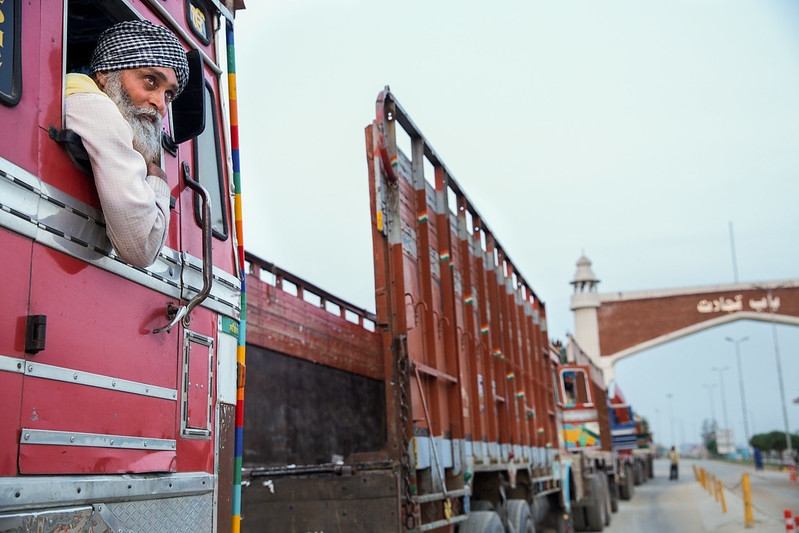
Indian truckers queue up to leave from Bab-e-Tijarat i.e. The Trade Gate on Pakistani side. Indian truckes queue up to leave from Bab-e-Tijarat i.e. The Trade Gate on Pakistani side. – Photo: ADB (2015)
By Tridivesh Singh Maini | Opinion |
Pakistan Foreign Minister Ishaq Dar, while addressing a press conference in London, on March 23, 2024, said that Pakistan businessmen are in favour of resumption of bilateral trade with India.
While the foreign minister said that he would “seriously” look into the matter, he said that several stakeholders were involved in this decision and it was not possible to give a ‘yes or no’ response.
Dar’s statement comes at an important time, when Pakistan faces serious economic challenges, and also has strained ties with its two other neighbours Afghanistan and Iran.
After the abrogation of Article 370 by India on August 5, 2019 – and the revocation of Jammu and Kashmir’s special status – Pakistan suspended trade ties with India — via the Wagah-Attari land-crossing and downgraded diplomatic relations with India. In April 2021, then-Prime Minister Imran Khan was favorably disposed towards the resumption of trade — in essential commodities like cotton and sugar — with India, but members of his cabinet opposed the decision saying that any normalization of ties with India was not possible until India reviewed the decisions it had taken on August 5, 2019.
In 2022, Pakistan was afflicted by devastating floods which impacted an estimated 33 million people. During these floods, 8 million people were displaced and crops were destroyed. Then Pakistan Finance Minister, Miftah Ismail (who served from April 2022-September 2022), had proposed the import of food items from India, though this proposal was turned down due to political opposition.
It would be pertinent to point out here, that while bilateral trade via Wagah-Attari may have been suspended, it is carrying on through third destinations like Dubai and Singapore.
Dar — who was Finance Minister in the previous Pakistan Democratic Movement (PDM), from September 2022-August 2023, also led by Shehbaz Sharif, and has also served as Finance Minister on three other occasions (1998-1999, 2008, and 2013-2017) – also highlighted this point in response to a question by a reporter during the press conference.
“Everyone’s [business community] appeal was the same – that our imports, which are still ongoing, arrive via Dubai or Singapore, [resulting in] extra freight, extra transshipment, transportation costs, etc,”
Should India and Pakistan follow the India-China model of engagement?
While in the Pakistani establishment, there are those who believe that Pakistan should be pragmatic and follow China’s model of engagement with India, where territorial disputes have not impacted the economic relationship – though this is not true post the Galwan clashes — there are others who believe that Pakistan should not budge from its position. Current Pakistan President, Asif Ali Zardari during his earlier stint as President had also highlighted the need for India and Pakistan to de-hyphenate economic relations from contentious issues.
Chairman of Nishaat Group (one of Pakistan’s largest business houses) Mian Muhammad Mansha in an interview with The Dawn in June 2023, stated: “…Trade with India will open up many business opportunities. If China can have vibrant trade and business ties with India despite its territorial disputes, why can’t we? I think there’s nothing better than having good relations with your neighbours. And you can’t change neighbours.”
The PML-N which is leading the current coalition has been a votary of economic ties with the neighbors, especially India. Current PM Shehbaz Sharif’s brother and PML-N supremo, Nawaz Sharif, has batted for better ties with India in all his tenures as PM. In his tenure from 2013-2017, Nawaz Sharif had said that he was a supporter of “trade not aid”.
Even before the current election, Nawaz Sharif had stated that it is imperative for Pakistan to improve ties with its neighbours. In December 2023, Sharif said: “We have to mend our relations with India and Afghanistan.”
In spite of the fact that the Pakistani consumer would benefit significantly by being able to purchase certain essential commodities – especially wheat — at much cheaper prices if trade with India were to resume, there are business lobbies in Pakistan that are worried that certain sectors in Pakistan will be unable to compete. That is why it has often been recommended that trade with India should be resumed in an incremental manner.
It would be pertinent to point out,that the US and Gulf countries – Saudi Arabia and UAE – have also been nudging Pakistan to normalize ties with India.
India’s stance and possible openings
On the Indian side, the Modi government has stated that it was Pakistan that first suspended trade via land, not India. It has also stated, that engagement with Pakistan can not be de-linked from India’s concerns regarding Pakistan-sponsored terrorism.
Any decision regarding the resumption of ties will only be possible post the elections. Here it would be important to point out, that in spite of tensions between both countries, two important developments have taken place; first, the inauguration of the Kartarpur Religious Corridor — in November 2019 — which has not only been a boon for religious devotees, but also promoted bonhomie at the people to people level between Indian and Pakistani Panjab’s and the second ceasefire between both countries along the Line of Control (LOC) in February 2021 between both countries which has sustained (UAE is supposed to have played an important role behind the scenes in brokering this agreement)
It would be pertinent to point out, that there is a growing demand in the border state of Panjab (India) for the resumption of trade via the Wagah-Attari land-crossing since the suspension of trade had an adverse impact on the border belt of the state (especially the tertiary sector). Several political leaders, business groups, and farmers groups have called for the resumption of trade not only via Wagah-Attari — but opening other land crossings as well — highlighting the benefits that would accrue to all sections. Not surprisingly, businessmen from Panjab (India) reacted positively to Dar’s statement on March 23, 2024.
Conclusion
In conclusion, while the Pakistan Foreign Minister’s statement is a positive development, it is important to be realistic. The resumption of trade – which will be a welcome step – depends not just upon the views of the business community of both countries, but several other stakeholders and the overall nature of relations between Islamabad and New Delhi.
Tridivesh Singh Maini is an Assistant Professor at OP Jindal Global University. His research interests include — India’s ties with its extended neighbourhood (with a focus on Gulf and Iran), Geo-economics in South Asia, The Belt and Road Initiative (BRI) and the role of India’s states in the country’s external relations. The article was first published here.