ASIA SAMACHAR is an online newspaper for Sikhs / Punjabis in Southeast Asia and beyond. When you leave a comment at the bottom of this article, it takes time to appear as it is moderated by human being. Unless it is offensive or libelous, it should appear. You can also comment at Facebook, Twitter, and Instagram. You can reach us via WhatsApp +6017-335-1399 or email: asia.samachar@gmail.com. For obituary announcements, click here
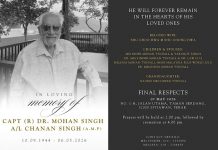
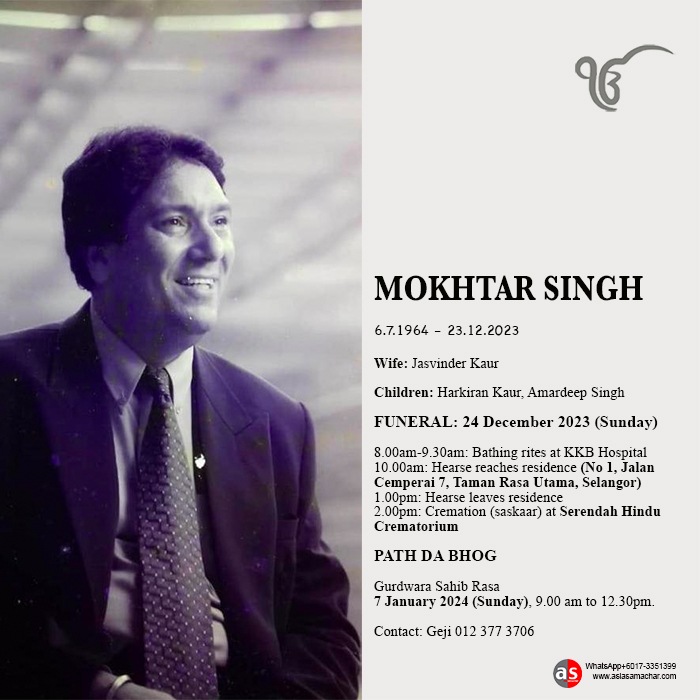
10.00am: Hearse reaches residence (No 1, Jalan Cemperai 7, Taman Rasa Utama, Selangor)
1.00pm: Hearse leaves residence
2.00pm: Cremation (saskaar) at Serendah Hindu Crematorium
PATH DA BHOG
Gurdwara Sahib Rasa
7 January 2024 (Sunday), 9.00 am to 12.30pm.
Contact: Geji 012 377 3706
| Entry: 23 Dec 2023 | Source: Family
ASIA SAMACHAR is an online newspaper for Sikhs / Punjabis in Southeast Asia and beyond. When you leave a comment at the bottom of this article, it takes time to appear as it is moderated by human being. Unless it is offensive or libelous, it should appear. You can also comment at Facebook, Twitter, and Instagram. You can reach us via WhatsApp +6017-335-1399 or email: asia.samachar@gmail.com. For obituary announcements, click here
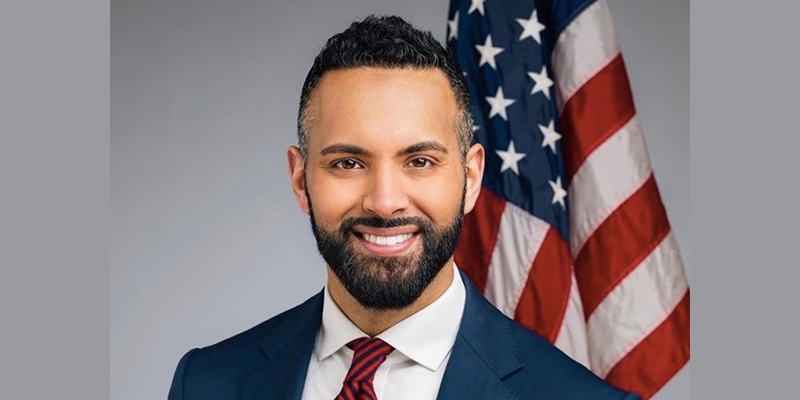
A law firm partner Vikram Singh Vilkhu has been elected as the Brighton Town Justice, making him the first Sikh judge to be elected in the state’s history.
Vik, as he is fondly called, is the lead trial attorney at Rochster-based law firm Relin, Goldstein, and Crane LLP.
“I am proud to be the first Indian American trial judge elected in upstate [New York]’s history and the first Sikh [judge] elected in New York State’s history,” he said in a statement issued by Senator Jeremy Cooney, an Indian American politician from the state of New York. Cooney represents the 56th district of the New York State Senate which covers the Town of Brighton.
Prior to joining the firm, Vik was an Assistant District Attorney at the Monroe County District Attorney’s Office where he prosecuted felony matters.
Vik graduated with a Bachelor of Science degree from Emory University in 2001 and a Juris Doctorate degree from Case Western Reserve University in 2005. While in law school Vik was awarded the prestigious William Wallace Award as the finest trial advocate in the graduating class and served as President of the school’s award winning Trial Team.
After graduating he worked for the American Civil Liberties Union creating a national hotline for victims of racial profiling and hate crimes following the devastating attacks of 9/11.
Born and raised in upstate-New York, Vik is the eldest son of Sarbjit and Ravinder Vilkhu, two Indian immigrants to the US who came to our country hoping that their children could have a better life, according to a write-up at his campaign website.
Sporting a turban and beard, as is Sikh custom, Vik’s father faced discrimination and bigotry. The family held fast to their traditions. His parents navigated America alone, worked grueling hours, and learned about each other and their new home one day at a time.
Vik is a lifelong Democrat actively aiding candidates running for judicial and political office. He lives in Brighton with his wife Abbie and two step-children Sammy and Sebby.
ASIA SAMACHAR is an online newspaper for Sikhs / Punjabis in Southeast Asia and beyond. When you leave a comment at the bottom of this article, it takes time to appear as it is moderated by human being. Unless it is offensive or libelous, it should appear. You can also comment at Facebook, Twitter, and Instagram. You can reach us via WhatsApp +6017-335-1399 or email: asia.samachar@gmail.com. For obituary announcements, click here
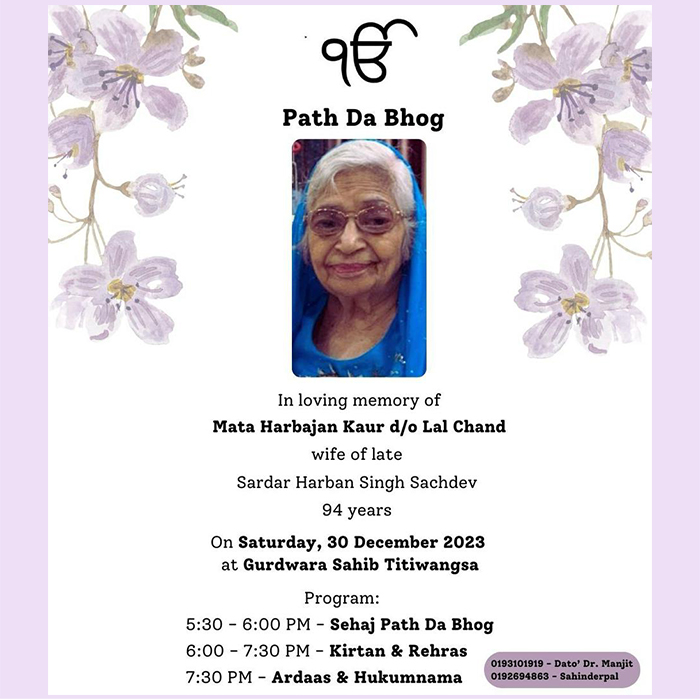
Contact: Dato Dr Manjit 019 310 1919 Sahinderpal 019 269 4863
| Entry: 22 Dec 2023 | Source: Family
ASIA SAMACHAR is an online newspaper for Sikhs / Punjabis in Southeast Asia and beyond. When you leave a comment at the bottom of this article, it takes time to appear as it is moderated by human being. Unless it is offensive or libelous, it should appear. You can also comment at Facebook, Twitter, and Instagram. You can reach us via WhatsApp +6017-335-1399 or email: asia.samachar@gmail.com. For obituary announcements, click here
With profound grief and sorrow, the family wishes to inform that Sukhdeep Singhs/o Mohinda Singh Boparai left us unexpectedly for heavenly abode on the 16th December 2023.
Leaving behind beloved:
Father: Mohinda Singh Boparai Mother: Simender Kaur Sister: Supinder Kaur / Harminder Singh Gill (Harry) (Kota Kemuning, Shah Alam) Niece & Nephews: Jasveen Kaur Gill, Harveen Singh Gill, Balveen Singh Gill And a host of relatives, friends and loved ones
PATH DA BHOG
Gurdwara Sahib Kuching 25 December 2023 (Monday), from 9.30am to 12.30pm Guru ka Langgar (vegetarian food) will be served thereafter.
ASIA SAMACHAR is an online newspaper for Sikhs / Punjabis in Southeast Asia and beyond. When you leave a comment at the bottom of this article, it takes time to appear as it is moderated by human being. Unless it is offensive or libelous, it should appear. You can also comment at Facebook, Twitter, and Instagram. You can reach us via WhatsApp +6017-335-1399 or email: asia.samachar@gmail.com. For obituary announcements, click here
Growing old is something we all must face; nobody can escape the ageing process, even though in our media-driven, cosmetic surgery culture, many try. However, what we fail to see is that old age is not just about physical appearance, but about your state of mind and inner beauty. Guru Amardas (SGGS, 1413) is right when he say’s: “Those who develop a realisation of inner divine wisdom never grow old”.
Historically, when average life expectancy was less than 40 years, there was no sense of middle age. You were a child, then an adult and that was it! However, as average life spans have increased to 70 years and over, we have seen the emergence of the idea of ‘middle age.’ Currently, this is considered to be between the ages of 30 to 45, but most importantly this is not just about the physical changes that come with ageing, it’s also about the cultural and psychological shifts we experience. In this article, I reflect on the so-called ‘midlife crisis’ and discuss my own experiences navigating this phase.
Middle age is often dubbed the ‘second adolescence.’ Just like when you were a teenager, it’s like going through another challenging period of rapid change. Comparing it to a second adolescence implies a time of self-discovery, exploring your identity, and re-evaluating your life goals—like what happens in the first adolescence. This suggests that middle age is a time when people may undergo significant psychological, social as well as physical changes.
The concept of the midlife crisis refers to that period in your life of intense emotional turmoil and questioning your accomplishments and life choices. This phase typically occurs when people realize they won’t live forever and feel like time is running out to achieve their dreams. This crisis can manifest in various ways, such as a sudden desire for significant life changes, including shifts in career, reassessment of relationships, or pursuing passions that were previously unexplored. While not everyone experiences a midlife crisis, for those who do, it can be a key moment in life for personal growth and self-discovery.
Navigating a midlife crisis involves struggling with big questions about the meaning of life and finding a balance between a commitment towards others and the search for personal fulfilment. It’s an opportunity for self-reflection, discovering new features of oneself, and potentially redefining priorities and values. Despite the negativity associated with the term “midlife crisis,” it can also be an opportunity for positive change and growth bringing a renewed sense of purpose and contentment with life; it’s almost like having a second life!
Different traditions have their unique perspectives on the ageing process and stages of life. Sikhi, divides life into three distinct stages with corresponding responsibilities and expectations, though most critically, the common thread for navigating all ages is to develop a reflective meditative mindset. As Guru Tegh Bahadur Ji states, ‘ Childhood, youth and old age – know these as the three stages of life. Says Nanak, without reflecting on the Divine, everything is useless; you must appreciate this.’ (SGGS, 1428).
Psychological theories provide quite detailed insights into life development. Eric Erikson, for example, proposed an eight-stage model where each stage represents a challenge that individuals must navigate from infancy to old age. This perspective differs from the person-centred theories of Carl Rogers and Sigmund Freud, which focus on the development of psychosocial identity. Both frameworks emphasise the significance of social and psychological factors in shaping human growth, which professionals tend to refer to in counselling therapy.
Reflecting on my journey through middle age, I faced a constant struggle against societal, community and family expectations. I encountered constant reminders to suppress my individuality and to conform to predefined roles. Trapped in this environment, I experienced a loss of identity and agency; at times it felt like being in a mental prison. Breaking free from such oppressive situations and thinking for yourself is not easy, especially as you are made to feel guilty, and a selfish and bad person!
The desire to rebel against the expectations that were imposed on me to be a ‘good woman’ was in a sense my midlife crisis. The transformation was profound, unlocking a sense of freedom and a deeper connection with spirituality and my purpose in life. Contrary to my initial fears, distancing myself from ‘group thinking’ did not diminish my connection with Sikhi; instead, it strengthened my bond with the teachings of Guru Nanak.
The journey was not without its challenges, and at times I can remember my partner struggling to comprehend the depths of my transformation. Nevertheless, it was my faith in Guru Granth Sahib, and the support of friends, who understood my struggle, that sustained me. The decision to reclaim control over my life brought forth a newfound sense of responsibility and purpose, though it was not easy.
For many years I had to deal with feelings of guilt, but I have come to realise that prioritising self-care and autonomy is not selfishness but a pursuit of balance. Taking charge of my life has been a liberating experience and I am convinced that Guru Nanak has been with me always on the journey. The support of fellow travellers on my path has been invaluable, and I extend my gratitude to them.
For many, navigating the challenges of midlife can be as daunting as adolescence, but it also brings the potential for new beginnings, creativity, and opportunities. To embrace this transformative phase, one requires the support of loved ones and the inner courage to break free from external and internal expectations. This journey may feel like a roller coaster, but for me now in my 60s looking back at my midlife journey, I can say without hesitation it has been the most fulfilling time in my life. Far from being a crisis, for me, midlife was a time for personal growth, self-discovery, and new adventures.
Manjit Kaur, a UK-based therapist and counsellor, is a presenter at the 1 Show Live at Panjab Broadcasting Channel, UK. She can be contacted via email at manjitkaur1show@gmail.com
ASIA SAMACHAR is an online newspaper for Sikhs / Punjabis in Southeast Asia and beyond. You can leave your comments at our website, Facebook, Twitter, and Instagram. We will delete comments we deem offensive or potentially libelous. You can reach us via WhatsApp +6017-335-1399 or email: asia.samachar@gmail.com. For obituary announcements, click here
Those who embrace spirituality as the true path to elevate themselves through the teachings of any holy scripture, holding the belief in the oneness of the Creator, and focusing on inner growth, religion becomes inconsequential. These individuals are beyond the realm of fear and worldly temptations. I refrain from labelling them as converts.
However, their purpose falters when they start comparing religions, fostering a sense of superiority, boosting their ego for being different, or seeking to increase their religious following. When such thoughts arise, conversion becomes a mere display for worldly recognition and loses its spiritual essence.
From my standpoint, we are initially born into a specific religious context, whether it be an ancient tradition or a contemporary faith. As a born Sikh, similar to adherents of other religions, I believe that the primary purpose of this life is not to harbour animosity towards others. Just as God does not harbour animosity towards any of his creations, none are considered cursed, and none are singled out as favourites. The one closest to the Divine is someone who sees everyone as human brothers without any reservation outwardly and inwardly in thoughts. A very difficult state to acquire.
It is only when this perspective is embraced that an individual can embody the attributes of the Almighty, recognizing the inherent truth in all of creation. This involves acknowledging the singular existence of The Creator, whose presence is eternal and unfading, unfettered by fear, and whose origin transcends human comprehension. Everything unfolds under His will, operating as a default course.
Only when an individual comprehends and puts this understanding into practice can they be considered close to the Creator. Guru Nanak explicitly outlined these attributes in his composition, which is inscribed in the opening lines of the sacred Sri Guru Granth Sahib.
Now, consider those without a specific faith, as commonly prevailing in today’s modern society. Perhaps due to cross-cultural or interfaith marriages. This situation can be perplexing and challenging. In my travels, I’ve observed that when parents avoid emphasizing superiority of one faith over the other, children naturally gravitate towards one. In such cases, it’s not about conversion but rather adopting the faith that is easier to practice and that leads to self-elevation.
This article explores the intricacies of individuals opting for conversion despite having a strong foundation in their original religious beliefs, often influenced by economic or social factors. The content is well-suited for this context, delving into the subtleties of such decisions.
As authored by Bhagat Kabir, a Muslim Sufi Saint whose profound universal insights into divinity are acknowledged and documented in Sri Guru Granth Sahib (SGGS). This compilation was curated in Amritsar besides the lake where the famous Golden Temple stands, by the 5th Sikh Guru Arjan Dev Ji, in 1604, who chose to assimilate the divine wisdom of enlightened saints from various backgrounds and sects. The intention was to broaden our perspective, fostering an appreciation for the unity in spirituality. Those who remain steadfast in their spiritual journey find resonance in this composition, emphasizing inner development and transcending duality for the benefit of all humanity.
Sooraa So Pehichaaneeai J Larai Dheen Kae Haeth || Purajaa Purajaa Katt Marai Kabhoo N Shaddai Khaeth ||2||2||
He alone is known as a spiritual hero, who fights for the meek and weak. Even if we face to be cut apart, piece by piece, never leaves the field in which you were fed and born into. ||2||2||
ASIA SAMACHAR is an online newspaper for Sikhs / Punjabis in Southeast Asia and beyond. When you leave a comment at the bottom of this article, it takes time to appear as it is moderated by human being. Unless it is offensive or libelous, it should appear. You can also comment at Facebook, Twitter, and Instagram. You can reach us via WhatsApp +6017-335-1399 or email: asia.samachar@gmail.com. For obituary announcements, click here.
Inderraj Singh Dhillon deadlifted 395.5 kilograms (871.9 pounds) raw for the world record at the 2023 European Powerlifting Federation (EPF) European Classic Championships (ECC) in December 2023 – Photo: The EPF
By Asia Samachar | Britain |
Inderraj Singh Dhillon is starting to roar. The British army veteran deadlifted a phenomenal 395.5 kilograms (871.9 pounds) raw for the world record at the 2023 European Powerlifting Federation (EPF) European Classic Championships (ECC).
The 32-year-old lifter secured a gold medal at the event held in the frozen and snowy environs of Tartu, Estonia, from Dec. 4-9, 2023, reportsBar Bend. Click here for the video.
Inderraj deadlifted in a conventional stance, using only a lifting belt to aid him. He stretched his arms wide, bent, and took hold of the barbell in a mixed grip. Once the barbell started moving, the pull appeared smooth to lockout without passing through much of a sticking point. Singh Dhillon stepped back from the bar and pounded his chest when he saw that the lift was good, bellowing back at the noisy crowd, according to the report.
In June, he set a new world record for the 120-kilogram weight class at the 2023 IPF World Classic Open Powerlifting Championships in Valletta, Malta.
Inderraj started powerlifting for rehabilitation after injuring his back during his six years of British Army service in electronic warfare and signalling with the Royal Corps of Signals. During the first 6 to 8 months post-injury, he was unable to run or even walk for long periods, the report added.
A powerlifting competition consists of three core lifts: squat, bench press, and deadlift (performed in that order). Using proper form, each athlete has three attempts (at each exercise) to lift as much weight as possible for one repetition, according to ISSA Online.
All competitors are divided into categories based on their age, gender, and body weight. The winner of a category is the lifter with the highest total weight (sum of the best of each of the three lifts) with any ties going to the competitor with the lower body weight.
In deadlift, the competitor will face the front of the platform. In one complete upward motion, the athlete will lift until the shoulders, knees, and hips are locked in a standing position. Once the bar is still, the referee will signal for the athlete to lower the barbell down to the ground.
Inderraj Singh Dhillon deadlifted 395.5 kilograms (871.9 pounds) raw for the world record at the 2023 European Powerlifting Federation (EPF) European Classic Championships (ECC) in December 2023 – Photo: The EPF
ASIA SAMACHAR is an online newspaper for Sikhs / Punjabis in Southeast Asia and beyond. When you leave a comment at the bottom of this article, it takes time to appear as it is moderated by human being. Unless it is offensive or libelous, it should appear. You can also comment at Facebook, Twitter, and Instagram. You can reach us via WhatsApp +6017-335-1399 or email: asia.samachar@gmail.com. For obituary announcements, click here
Dr Gottlieb Wilhelm (GW) Leitnerwas born in Budapest (1840) in a Jewish family. At the age of eight, he went to Constantinople to learn Arabic and Turkish. At ten, he was fluent in European languages and Arabic and Turkish. As a Linguist, he had acquaintance with fifty languages and could speak fluently many of these. He was appointed Professor of Arabic and Muslim Law in Kings College London at the age of twenty three.
Dr. Leitner was appointed the first Principal of the Government College, Lahore in 1864. He was the force behind the idea of setting up a university in Panjab. He founded Anjuman-i-Panjab in 1865, a propagandist literary society for promotion of education and himself became its Secretary. From the very outset, this society started a movement to get the colleges of the Panjab dissociated from the University of Calcutta and to secure the establishment of a University at Lahore. It established a free Public Library, compiled a number of treatises and translations in vernacular and classical languages, and opened an Oriental School at Lahore during the first year of its existence. Similar societies were founded at Amritsar, Gurdaspur and Rawalpindi. Dr Leitner prepared a plan for setting up “Oriental University” for promoting the study of vernacular literature and to impart knowledge of all sorts, including Science, in the vernacular. The proposal was not approved at the Govt. of India level due to shortage of funds.
The demand for a University in the Panjab had its genesis in a letter dated June 10, 1865, from Sir Donald McLeod, the then Lieutenant-Governor of the province, in which suggestions were invited for “the improvement of Oriental learning and the development of a sound vernacular literature“. The suggestions were warmly taken up by the Anjuman-i-Panjab, about 200 members of which deliberated upon them and proposed that an “Oriental University” be set up with headquarters at Lahore to achieve the goal. The movement was actively supported by a number of Englishmen who organized themselves into a ‘European Committee of Support’. Under the influence of this committee, the original character of the university was changed into an Anglo-Vernacular university.
In 1870, Panjab University College and its twin, Oriental College Lahore were born. The objective of setting up an Oriental University was to be achieved through this college. It was called Oriental School till March 1872, when its title was changed to Oriental College. Arabic, Persian and Sanskrit were taught as major languages in Oriental College along with study of Arithmetic, Algebra, Euclid, the History of India and Geography. After a few years, Hindi and Panjabi were also introduced in its curriculum.
According to a Report of 1879, Oriental College was running “in a flourishing condition” under the care of Dr. Leitner as a “guide, philosopher and friend”. He was Superintendent of Oriental College in addition to his duties as Principal of Govt. College, Professor of Arabic and Mohammedan Law there in, and Registrar of Panjab University College.
The Report by Dr. Leitner states the objects of the Oriental College as follows:
To give a high Classical Oriental education together with instruction in branches of general knowledge, and
To give a practical direction to every study. Oriental College was to train students in Entrance, Proficiency and High Proficiency in Arts; the Oriental Certificates of Pandit, Maulvi and Munshi; Oriental fellowships and Translatorships; Native Lawyers; Sub-Overseers; Teachers of Schools; Hakims and Veds in the native and prepared for the European medicine.
Dr Leitner was nursing the Oriental College to grow into the Oriental University. He was overjoyed over the conduct of students who hailed from Kabul, Hunza, Nagyr, Badakhshan, Bokhara, Kolab and Gabrial to become distinguished Oriental Scholars. The classes were run by Pandits, Maulvis and Munshis. The Report mentioned that the Engineering classes were taught by Ganga Ram (later Sir), the Mayo-Patiala Fellow, in vernacular (Urdu medium) in Oriental College. Law classes were also being held in Oriental College.
When Panjab University College was sanctioned by Govt. of India, its first object was “to promote the diffusion of European Science, as far as possible, through the medium of vernacular languages of the Panjab and the improvement and extension of the vernacular literature generally”. It was proposed to be achieved by offering monetary rewards to translators, editors and compilers. Dr. Leitner himself prepared four volumes under this scheme: “Sanin-i-Islam Parts I ⅈ and an Arabic grammar “Muqadamat-us-Sarf” in Urdu and Arabic”. Lala Bihari Lal wrote a treatise on psychology “Atam Tatwa Vidya” in Gurmukhi. Books of Chemistry, Mathematics, Physical Science, Philosophy and Physiology were translated into Urdu, the lingua franca of Panjab. So Academic Panjab was infected with the writer’s itch, one of the universal diseases of modern civilization, under the patronage of Dr. Leitner, the greatest Orientalist of his times.
The establishment of the Panjab University College was only a stepping-stone for the leaders of the movement to press forward their demand for the foundation of the Panjab University. Dr. Leitner, the Principal of the College, pleaded their case very effectively. Despite all efforts of Dr Leitner to push up the proposal in the both Houses of Parliament in England, it was not approved by the Government of India. The decision evoked great disappointment and there was complete lull for three years.
In 1877, Lord Lytton, on the occasion of the Imperial Darbar in Delhi, promised to introduce a Bill in the Legislative Council for endowing the Panjab University College with the status of a University, competent to confer degrees. During the next five years the torch of the University movement was kept burning by the people of the Panjab under the guidance of Dr. Leitner and letters were exchanged between the State Government and Government of India on the one hand, and between the Government of India and the Secretary of State on the other. Panjab University came into existence on October 14, 1882, by a Notification issued by the Lieutenant-Governor of the Panjab, in pursuance of the provisions of the Act of Incorporation. Mr. Baden-Powell was appointed the first Honorary Vice-Chancellor and Dr. Leitner, the Registrar of the new University.
He retired from Indian Civil service in 1886 and died in Bonn in 1899. The people of Panjab (both Indian and Pakistani) owe their debt and gratitude to Gottlieb Wilhelm Leitner for creation of Panjab University (Lahore & its sister at Chandigarh) and promotion of Oriental Learning in vernacular languages of Panjab. He was a pioneer of Urdu language as medium of instruction and he wrote several treatises on the dialects of the tribal belt of Hindu Kush area of United India.
WHY STEP-MOTHERLY TREATMENT FOR PANJABI
After the annexation of Panjab in 1849, the British Indian government started planning for introduction of modern European system of education in Panjab. Sikh Sardars were generally as innocent of letters as the medieval English barons of England. Persian was the court language of Maharaja Ranjit Singh. It was replaced by Urdu as the lingua franca of Panjab after annexation and also adopted as the medium of instruction. The Panjab Administration Report of 1851-52 states: “Panjabi is falling into desuetude, losing its currency as a spoken language, and degenerating into a provincial and rustic dialect whereas Urdu is gaining ground among the upper and middle classes in Punjab”.
The Sikh Sardars and Chiefs of States also gave preference to Urdu vis a vis Punjabi in the Gurmukhi script as medium of instruction. Sardar Dyal Singh, a scion of the Majithia family, was among the promoters of Western education in the medium of English. He was a philanthropist extraordinary and donated funds to several educational institutions in Lahore without any strings. He donated all his movable and immovable properties in Punjab to set up Dayal Singh Trust. Thus his wealth was used in funding The Tribune, Dyal Singh College & Library and activities of Brahmo Samaj in Lahore and Calcutta.
Ultimately, Panjabi was introduced in the curriculum of Oriental College, Lahore in 1877 through the efforts of Bhai Gurmukh Singh, a prominent leader of Singh Sabha movement, and Sardar Attar Singh Bhadaur, President of Khalsa Diwan, Lahore. Gurmukh Singh was appointed as first teacher of Panjabi. Later on, Panjab University, Lahore was not in favour of recognizing Panjabi as a subject for examinations on the plea that there is no worthwhile literature published in this language. Again, Sardar Attar Singh came to the rescue by providing a list of books from his library to the Senate of the university. However, Panjabi was being taught at the basic level (Budhimani, Vidwani and Giani) and MA in Panjabi was introduced in the University curriculum at Khalsa College, Amritsar in the academic session 1948-49, after the partition of India in 1947.
Scholar and scientist Hardev Singh Virk retired from Amritsar-based Guru Nanak Dev University in 2002 after serving as Founder Head Physics Department and Dean Academics. Ex-Professor of Eminence, Punjabi University, Patiala. He is the present Visiting Professor at SGGS World University, Fatehgarh Sahib (Punjab), India.
ASIA SAMACHAR is an online newspaper for Sikhs / Punjabis in Southeast Asia and beyond. When you leave a comment at the bottom of this article, it takes time to appear as it is moderated by human being. Unless it is offensive or libelous, it should appear. You can also comment at Facebook, Twitter, and Instagram. You can reach us via WhatsApp +6017-335-1399 or email: asia.samachar@gmail.com. For obituary announcements, click here.
COP28 has just concluded in Dubai and there at the very last minute, after an extended session a compromise agreement to “transition away from fossil fuels in energy systems” was ironed out. However, the deal doesn’t compel countries to take any concrete action, nor any timescale is specified. Still, it is a major step in the realization of the global warming issue and moving from the bickering in the previous conclaves. Phasing out of fossil fuels which is already causing drastic changes in the weather is essential, but a question remains are we adequately prepared?
Before going into our preparation to transition from fossil fuel, let us clearly understand what COP28 is. The COP stands for “Conference of the Parties”, where the “parties” are the countries that signed up to the original UN climate agreement in 1992. The number after COP is an indicator of the serial number of the annual conference. This year in their 28th conference there were over 80,000 delegates in attendance.
Everyone can clearly see that fossil fuels are causing climate change, except for the die-hard sceptics who refuse to believe it. But still our fossil fuel consumption and demands are ever increasing all the time. We have added many new gadgets, toys, TVs, devices, and now the electric cars (EV) are putting more demand on our energy supplies. Besides owning vehicles and driving more automobiles, airplanes, and ships are also fueled by fossil fuels such as gasoline, jet fuel, and diesel. The Carbon Dioxide (CO2) released from the burning fossil fuels and methane (CH4) leaking during their production are causing climate change.
In order to make a genuine climate impact we need to look into following:
Reduce demand for energy through conservation and education – At present we are taking energy availability for granted. As a result, we are leaving our rooms and homes with lights on and TV on. This is an unnecessary energy wastage, which we need to stop. We have become too dependent on our comfortable personal transportation vehicles such as automobiles and are driving those even when not essential. Their easy availability has resulted in easy options being picked over walking or biking. Lives have become sedentary as a result. We need to start grassroot level conservation education. This needs to be started at the elementary school levels so that it is firmly ingrained in our psyche. We celebrate World Environment Day, but we need to really double down on the ideas and schemes to be implemented.
Reducing dependence of fossil fuels for power generation – Our primary source of power generation is fossil fuel and coal; both of these are big contributors in global warming. The other sources of power generation includes wind, solar, hydro, and nuclear. All of these other sources of power generation also come with their own handicaps. For example, wind and solar are dependent on the weather, wind to generate wind power, hydro power generation is dependent on location and steady availability of flowing water. Nuclear energy has issues related to safe storage and disposal of spent nuclear fuel. So, we all need to reduce dependence on fossil fuels for power generation. Then for other sources of power generation we not only need to increase their share in power generation, but also implement plans to mitigate the handicap of these sources.
Increase the power generation from other sources of generation – The other sources of power generation have been discussed above. Those sources that do not contribute to global warming their power generation share should be enhanced through incentives, subsidies, and suitable location so that the transmission losses are minimized.
Reducing Power generation, transmission, and distribution losses – Some of the power generation plants are very old, based on technologies of the past that are not very efficient by today’s standards. Similar is also the condition of power transmission and distribution lines. So, we need to do upgrades to these existing infrastructure facilities to cut power losses. Also, some of these distribution lines are illegally tapped into and power being pilfered out can be stopped. This will help the power companies stop the drain and also help with their bottom line as well.
Restart of mothballed nuclear power Plants – Many nuclear power plants have been mothballed at the end of their plant life cycle or even earlier. Besides, some other plants were mothballed out of concern of accidental radioactive radiation after some plant accidental mishap. The concern is valid, but it has to be weighed against the industry safety records, which are very impressive. So, mothballing has not been a pragmatic solution and that decision not only needs to be reversed, but additional nuclear power capability needs to be added in order to meet power needs.
Discourage use of personal automobiles – Here the government policies and development of roads with pedestrian and bike lanes, plus tolls on their usage should be designed in such a fashion that single person usage of vehicles is discouraged. This can also play a significant role in abetting global warming.
Encouraging use of public transportation – This goes hand and hand with discouraging the single person automobile or vehicle. This also helps with tiding over parking problems and solving problems like road congestion besides easing air pollution. These public transportation vehicles get to use dedicated high occupancy lanes and can move faster than the regular bumper to bumper traffic moving at snail’s pace.
Use of alternative fuels for automobiles – Most of the world’s fleet is fossil fuel based which is not only causing global warming, but also causing air pollution. With the usage of alternative fuels as hybrid and electric vehicles (EV), the impact of global warming can be slowed. With EVs the issue of materials required to make them, availability of these special metals, mining, extracting, processing. life cycle, recharging range, are still the issues to be worked out. Besides, there are issues related to charging, availability of public charging stations, time required for recharging are some other challenges that need to be worked out.
Electrical grid reliability related issues – The rapid and increased demands of power on the electrical grids have made them very stress prone and vulnerable to trips during surges in peak power demands. This has been experienced in Texas where the consumers have been advised to avoid using power during the peak demand hours. So, the higher power demands necessitate upgrades and additional capacity needs.
Energy security – Energy has become an essential ingredient of modern lifestyle, so having an energy security which cannot be shuttled by enemies in a war situation is essential. We have seen this harsh reality recently unfolding in Germany during the Ukraine war when Russia stopped, and throttled the supply of natural gas, forcing Germans to scramble for power and keeping themselves warm during the winter months. So, energy security is essential in planning the power and energy strategy of cities and nations.
Planting more trees – Although these are not directly related to energy needs but indirectly they are very important, as the trees convert CO2 to O2. With human deforestation we have already significantly reduced the trees’ land coverage, and forests who were doing that job. Now this effort needs to become an essential part of fighting air pollution and climate change.
We can blame the fossil fuel industry for the precarious situation that we find ourselves in. But we need to look at who is fueling this fossil fuel demand? It is all of us and when we point the finger at them it is pointed at us as well. Our fuel consumption is growing at an unprecedented rate. They are trying to fulfill that demand and looking at it from a business angle at the cost of environmental concerns. The onus is on us as well as on them as this can determine if we all can survive in the changed environment or not. So, the need of the day is not just energy conservation, curtailing our ever ballooning demand for energy together with promoting alternatives.
One model pie chart with a fixed percentage for each energy source will not be pragmatic. The model and mix for each area, state, and nation will be unique based on their geographical location, availability of raw materials, national security concerns, natural resources such as sunshine, wind, flowing water (hydro) etc. will determine the pie chart. The past behaviors of corporations and nations will have to change. The new mantra needs to be cooperation, help, sincerity, support, and sharing of resources including expertise. One important ingredient is that the new model will have make the transition smoother, so that the population accepts the new model and adapts it. If the model is not compatible with the aspirations of the people it could result in a bigger mess than the one we are currently faced with. Let us all work together and make this transition a reality and avoid a disastrous outcome.
Bhupinder ‘Bo’ Singh, Houston. Born in Bhamo, Myanmar, he now lives in Houston, US, where he runs a manufacturing company formed with his son. A mechanical engineer by training, he has authored a number of books, including Connecting with the Master – A collection of essays on topics related to Sikhism (2006) and In Bully’s Eyes – An Illustrated Children’s book on Bullying (2019).
ASIA SAMACHAR is an online newspaper for Sikhs / Punjabis in Southeast Asia and beyond. When you leave a comment at the bottom of this article, it takes time to appear as it is moderated by human being. Unless it is offensive or libelous, it should appear. You can also comment at Facebook, Twitter, and Instagram. You can reach us via WhatsApp +6017-335-1399 or email: asia.samachar@gmail.com. For obituary announcements, click here.