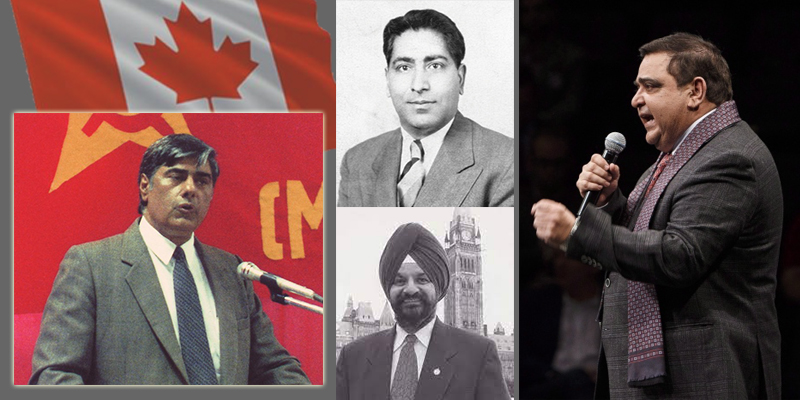
Gurbax Singh Malhi (right) earned the distinction of being Canada’s first turbaned Sikh MP in 1993. Other turban-bearing MPs to follow suit (L-R) Randeep Sarai, Darshan Singh Kang and Iqwinder Singh Gaheer
By Prabhjot Paul Singh | Opinion |
October 25, 1993 would go down in the annals of history of the Canadian House of Commons as a golden letter day. It was on this day that Canada earned the distinction of electing its first turbaned Sikh MP. The honor went to Gurbax Singh Malhi as he was declared successful from Bramalea-Gore-Malton riding.
Though two more MPs of Indian origin – Harbance (Herb) Singh Dhaliwal and Jagdish Bhaduria – also made their debut in the Canadian House of Commons simultaneously, but the spotlight was on Gurbax Singh Malhi. Since then, no Canadian Parliament has been complete without a turbaned Sikh represented on it.
Starting with three MPs in 1993, now the Indo-Canadian community has grown six times in its strength in the House of Commons. It represents all three major parties – the ruling Liberals, the main Opposition party the Conservatives, and the third major party NDP headed by an Indo-Canadian Jagmeet Singh. Incidentally, Jagmeet Singh is the lone Indo-Canadian NDP in the current House of Commons.
Of 42 MPs of Indian origin elected to House of Commons since 1993, Navdeep Singh Bains, Tim Uppal, Jagmeet Singh, Randeep Sarai, Harjit Singh Sajjan, Darshan Singh Kang, Raj Grewal, Jasraj Singh Hallan and Iqwinder Singh Gaheer, are among those who earned special limelight because of their colorful turbans.
Incidentally, Gurbax Singh Malhi has till date remained the longest serving Sikh MP representing the Liberals. He was elected five times starting in 1993 till he lost the 2011 elections. Otherwise, Deepak Obhrai, who was born in Tanzania, earned the distinction of longest serving Canadian MP of Indian origin. He retained his House of Commons seat for seven consecutive terms mostly as a nominee of Conservatives.
While Gurbax Singh Malhi, Jag Bhaduria and Herb Dhaliwal were the first representatives of Liberals in Canadian Parliament, the honor for giving representation to Indo-Canadians in the House of Commons on behalf of Conservatives went to Deepak Obhrai and Gurmant Grewal. Subsequently, Jasbir Singh Sandhu and Jinny Jogindera Sims were the first Indo Canadians to represent NDP in the Canadian Parliament.
Women of Indo-Canadian descent did not take along to reach Ottawa’s Parliament Hill. Ruby Dhalla (Liberal from Ontario) and Nina Grewal (Conservative from British Columbia) became the torch bearers. They were followed by Jinny Jogindera Sims (NDP).
Sonia Sidhu, Ruby Sahota, Kamal Khera, Bardish Chagger and Anju Dhillon created ripples when they all made their entry into the 42nd Parliament and are all continuing in the current 44th Parliament. In the 43rd Parliament they were joined by Anita Anand, the first Indo-Canadian woman politician to hold the important portfolio of Defense. Also a new entrant was Jag Sahota, the ninth woman of Indian origin to enter Canadian Parliament.
These Canadian MPs of Indian origins have several other firsts to their credit. For example, Gurmant Singh Grewal and Nina Grewal were the first couple to sit in the same House. Herb Dhaliwal was the first from the group to be inducted in the Canadian Cabinet as a Minister for Oceans. Many of them have remained Parliamentary Secretaries attached with important ministries.
In the previous Liberal Government, Harjit Singh Sajjan, became the toast of not only the Indo-Canadian community but also of the rapidly growing Indian Diaspora after he was named the Defence Minister of Canada.
Bardish Chagger hawked media headlines on becoming the first woman leader of the House of Commons. And late last year, Anita Anand stole the limelight as the first Indo-Canadian woman to hold the portfolio of Defence Minister. Incidentally, the last two Liberal Governments had an Indo-Canadian as Defence Minister.
There have been Indo-Canadians who created history both in provincial and federal politics. The shining example has been of Ujjal Dosanjh who after his phenomenal rise as the first Indo-Canadian Premier of British Columbia later held the portfolio of the Canadian Health Minister.
A couple of MPs, including Jinny Jogendra Sims and Parm Gill, later made their debut in provincial politics and held positions as Cabinet Ministers in British Columbia and Ontario, respectively.
Amarjit Sohi, who held an important cabinet portfolio in the previous Justin Trudeau government is now a Mayor of Edmonton in Alberta since last year.
Left ro right: Harjit Singh Sajjan, Bardish Kaur Chagger, Navdeep Singh Bains and Anita Anand.
MPs OF INDIAN ORIGIN
Gurbax Singh Malhi
Harbance (Herb) Singh Dhaliwal
Jag Bhaduria
Deepak Obhrai
Gurmant Grewal
Rahim Jaffer
Nina Grewal
Ruby Dhalla
Ujjal Dosanjh
Navdeep Bains
Sukh Dhaliwal
Tim Uppal
Jinny Jogindera Sims
Devinder Shory
Jasbir Sandhu
Bal Gosal
Parm Gill
Joe Daniel
Amarjit Sohi
Jagmeet Singh
Gagan Sikand
Sonia Sidhu
Jati Sidhu
Bob Saroya
Randeep Singh Sarai
Ramesh Sangha
Harjit Singh Sajjan
Raj Saini
Ruby Sahota
Kamal Khera
Darshan Singh Kang
Raj Grewal
Anju Dhillon
Bardish Chagger
Chandra Arya
Maninder Sidhu
Jag Sahota
Jasraj Sigh Hallan
Anita Anand
Iqwinder Singh Gaheer
George Chahal
Parm Bains
To be concluded.
Prabhjot Singh is a veteran journalist with over three decades of experience covering a wide spectrum of subjects and stories. He has covered Punjab and Sikh affairs for more than three decades besides covering seven Olympics and several major sporting events and hosting TV shows. For more in-depth analysis please visit probingeye.com or follow him on Twitter.com/probingeye
ASIA SAMACHAR is an online newspaper for Sikhs / Punjabis in Southeast Asia and beyond.Facebook | WhatsApp +6017-335-1399 | Email: editor@asiasamachar.com | Twitter | Instagram | Obituary announcements, click here
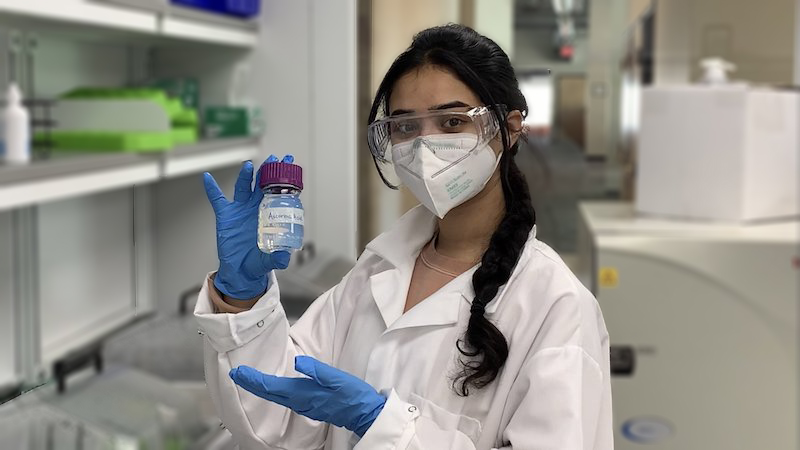
Like father, like daughter. Pria Sawhney emerged gold winner of the 2022 Young Edison Challenge for inventing verifiable hand sanitizer called Vizuell.
The award celebrates student innovators who bring to life Edison’s values by providing innovative solutions to problems displayed within their communities.
Pria’s invention is an alcohol-based, verifiable hand-sanitizer that decolorizes after initial application. Through temporary visual cues, health care workers can ensure total hand coverage, and the casual observer can verify proper sanitization. Vizuell works to tackle healthcare-associated infections and transmission of COVID-19, according to an entry at the award website.
She comes from Lexington High School in Massachusetts, US.
Her father, Amarpreet Sawhney, is a founder of a number of health technology related companies, according to his LinkedIn profile.
He is the chairman and CEO of Instylla Inc which is developing new liquid embolics for tumor embolization and hemostasis. He is also CEO of Rejoni Inc which is developing products to prevent adhesions following gynecological interventions. At the same time, he is also the founding partner and CEO of Pramand LLC, which is developing products for surgical sealing and hemostasis.
Amarpreet had also been selected as the five most innovative medical device CEOs’ by MassDevice.
ASIA SAMACHAR is an online newspaper for Sikhs / Punjabis in Southeast Asia and beyond.Facebook | WhatsApp +6017-335-1399 | Email: asia.samachar@gmail.com | Twitter | Instagram | Obituary announcements, click here
Indian-born are the largest overseas migrants to have moved to Australia in the last decade, overtaking the numbers coming from China.
India and China continue provide the highest number of permanent migrants to Australia. From 2011 to 2021, Indian-born migrants rose by 373,000, followed by 208,000 from China and 118,000 from the Philippines, Australian Bureau of Statistics data showed Tuesday. In the same period, 38,000 Malaysian-born moved to Australia.
England continued to be the birthplace of the largest group of overseas-born living in Australia, constituting 3.8% (967,000) of the population. They are followed by Indians (2.8%), China (2.3%), New Zealand 2.2% (600,000) and the Philippines 1.2% (311,000). Malaysian-born are at the eight spot (172,000).
Latest statistics show that 7.5 million people resident in Australia in 2021 were born overseas, making up 29.1% of the Australian population.
England (967,000) continued to be the birthplace of the largest group of overseas-born living in Australia.
Those born in India (710,000) were the next largest group but had decreased by 13,000 people during the year. Chinese-born (596,000) was the third largest, with an annual decrease of 52,000 people
Almost a third (29.1%) of Australia’s resident population were born overseas (7.5 million people) in 2021, down from 29.8% a year earlier (7.7 million people), according to data.
New Zealand (NZ) citizens also feature highly in the number of settler arrivals, but they are not counted under Australia’s Migration Program unless they apply for (and are granted) a permanent visa.
ASIA SAMACHAR is an online newspaper for Sikhs / Punjabis in Southeast Asia and beyond.Facebook | WhatsApp +6017-335-1399 | Email: asia.samachar@gmail.com | Twitter | Instagram | Obituary announcements, click here
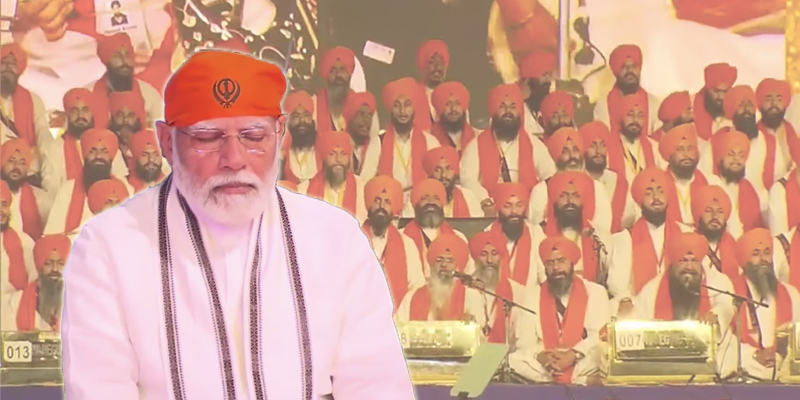
India state organised event bringing together 400 raagi on stage at Red Fort, New Delhi, to mark the birth of Guru Tegh Bahadur on 21 April 2022, with PM Narendra Modi as the guest of honour. -Photo: Videograb from video shared at Modi Facebook page
By Gurnam Singh | Opinion|
2024 marks the 40th anniversary of the declaration of war against the Sikh Punjabi nation by the forces of the Indian state. This began with the army assault on the Darbar Sahib in Amritsar and the deaths of thousands of civilians in what is infamously known as Operation Blue Star. This was followed by 10 years of state terror resulting in the extra judicial murders of thousands more of innocent people. The up shot of this oppression was a demand for a separate Sikh state in Northern India called Khalistan and a global Sikh liberation movement.
But tragically 38 years have passed and not only have we progressed little towards this ambition. Indeed, the dream of liberation is as elusive as ever, those guilty of extrajudicial killings of innocent Sikhs remain unpunished, the Sikh genocide of November 1984 remains acknowledged and Sikh political prisoners languish in jails despite having served many years in excess of their sentences. There are many reasons why we appear to have failed in our quest for justice. Sikhs have no shortage of courageous warriors prepared to sacrifice their lives and livelihoods, but I would suggest the most significant reason for our failure is our unique capacity to be co-opted by the opposition.
One such example is the U.K. based self-proclaimed President of Khalistan in exile, Sewa Singh Lalli. Whilst I respect his past contribution to the Sikh liberation struggle, I was extremely disappointed to read a recent Facebook post by him in which he showered praise on Narendra Modi, the Indian Prime Minister and Home Minister Amit Shah for their service to Sikhs.
This praise comes against the background of political manoeuvres by the Indian intelligence agencies where meetings between the so-called Khalistanis and the Indian state have been taking place. I do not doubt the initial intentions of those Khalistani leaders, such as Sewa Singh Lalli and Ripudaman Singh Malik, who have in the past given much to the struggle for justice, but sadly, like a venus fly trap, though I may be wrong, on the surface it seems like, having been enticed with warm words and hospitality from Delhi, they have been become co-opted into the bigger Hindutva project.
This and other recent events surrounding the demise of the Akali Dal, RSS takeover of the SGPC, the closeness of Haryana SGPC President Baljit Singh Daduwaal and the huge BJP sponsored events held at the Red Fort, Delhi and Panipat, Haryana to commemorate the 400 Anniversary of the birth of Guru Tegh Bhadur Ji, have left many Sikhs wondering what their political future is! And the real danger is that fragmentation and factional infighting amongst Sikhs is likely to increase; and this can only benefit the Hindutva Indian state, which, like all imperial powers, thrives on a divide and rule strategy.
But the highly symbolic sight of self-proclaimed Khalistanis praising Modi and the BJP has brought the whole Khalistan movement into disrepute. It has left many wondering if these pronouncements are part of a deeper strategy by the Indian state, as was the case with the British before them, to cement its hegemony within Sikh Panthic circles.
I have no hesitation in speculating that the BJP, facilitated by the discredited former DSGPC President Manjinder Singh Sirsa, has not suddenly become receptive to the demand for Khalistan, but is more concerned with undermining Sikh demands for sovereignty whilst simultaneously extending the reach of the Indian Hindutva nationalist project. It’s worth noting that Panjab and Delhi are two states that have consistently rejected the BJP and, along with Haryana and Western UP, as we saw with the farmer’s movement, have formed the backbone of opposition to the Hindutva project.
So, what lesson can those like me who have and continue to fight for freedom, justice and self-determination in India and elsewhere take from the current maliase? There are many but, in the context of the current political game playing, perhaps we need to reflect on the words of the Roman statesman Marcus Tullius Cicero whose political thoughts shaped the formation of the Roman Empire. An important lesson from history for us today: “A nation can survive its fools and even the ambitious. But it cannot survive treason from within. An enemy at the gates of the kingdom is less formidable, for he is known and carries his banner openly. But the traitor moves amongst those within the gates freely, his sly whispers rustling through all the alleys are heard and shared in the very halls of the government and hearts of the nation itself.”
Nothing changes, even today, but I can only pray and hope there are enough thinking Sikhs who can see and understand this game. And to those who want to pursue the path of dialogue with the Indian State, I say good luck; there is no harm in talking, our history teachers us to be strategic. However, please only offer praise when you have secured some meaningful concessions, otherwise, you simply disincentivise the Government from giving you anything at all and all our efforts will lead to nothing.
Gurnam Singh is an academic activist dedicated to human rights, liberty, equality, social and environmental justice. He is an Associate Professor of Sociology at University of Warwick, UK. He can be contacted at Gurnam.singh.1@warwick.ac.uk
* This is the opinion of the writer and does not necessarily represent the views of Asia Samachar.
ASIA SAMACHAR is an online newspaper for Sikhs / Punjabis in Southeast Asia and beyond.Facebook | WhatsApp +6017-335-1399 | Email: editor@asiasamachar.com | Twitter | Instagram | Obituary announcements, click here |
The granddaughter of the ’Father of Sabah Sports’ Gurbax Singh Kler is keeping the corporate wheels turning with her board appointment at Asia Digital Engineering Sdn Bhd (ADE), the engineering arm of AirAsia’s parent Capital A Bhd.
Suhnylla Kaur Kler was today (April 25) named as one of the members of the newly-formed board of directors at ADE as it commits to ‘deliver industry leading engineering solutions for AirAsia and other third party airlines in the region’, the company said in the statement.
Her grandfather Gurbax was a sporting legend in Sabah while her dad Jaswant Singh Kler also made his mark in the sporting arena before breaking into the corporate world.
Sabah-born Suhnylla brings extensive experience to ADE with her prior board experience in numerous publicly-listed agriculture, utilities and energy as well as consumer products and manufacturing companies.
The newly crafted ADE board of directors will be led by Hisham Othman, an independent non-executive director at Berjaya Corp Bhd, as well Sreesanthan Eliathamby and Natasha Kamaluddin. The two executive directors on board are AirAsia Aviation Group Limited (AAAGL) group CEO Bo Lingam and ADE CEO Mahesh Kumar.
Suhnylla, 54, is an independent non-executive director at Greenyield Bhd since 2019. The Kajang headquartered Greenyield develops, manufactures and markets agricultural systems, products and services based on agro-technology.
She is also a Capital Markets Services Representative Licence (CMSRL) holder and an executive director of SDB Asset Management Sdn. Bhd.
Suhnylla graduated with a Bachelor of Science (Economics) in Monetary Economics from the London School of Economics (LSE) and subsequently studied Japanese at the School of Oriental and African Studies (SOAS) also in London.
She is a Fellow (FCCA) of the Association of Chartered Certified Accountants (ACCA) as well as a member of the Global 100 women in Hedge Funds – an association of professional women who have built financial services careers in and around the hedge fund industry. She has previously worked with Rating Agency Malaysia Berhad (RAM) and FTC Kaplan Asia Pacific as Course Director in financial modelling.
She started her career as a senior auditor at KPMG Peat Marwick, Sabah in 1992 before joining AMMB International (L) Ltd, Labuan Offshore Bank in 1996. She also had stints at HSBC Bank Malaysia and ABN Amro Bank Berhad. In 2005, she served Sabah International Petroleum Sdn Bhd Group of Companies for five years.
On his part, Jaswant has served in various capacities including as the chairman of public-listed TSH Resources Bhd and chairman of the East Malaysia Planters’ Association for 16 years from 1985-2000. He currently sits on the board of Malaysian International Chamber of Commerce and Industry (MICCI) Sabah.
His elder brother, Balwant Singh Kler, was another sporting personality in Sabah.
ASIA SAMACHAR is an online newspaper for Sikhs / Punjabis in Southeast Asia and beyond.Facebook | WhatsApp +6017-335-1399 | Email: asia.samachar@gmail.com | Twitter | Instagram | Obituary announcements, click here
It was not easy. The early migrants from South Asia were not welcome to Canada. They not only suffered numerous hardships but were also denied the right for a decent living. They had no voting rights.
In fact, the concept of the nagar kirtan processions, or the Sikh Parades, proved to be an effective tool for the overseas Sikh community to introduce itself as a peaceful and hard-working group that had no qualms of making countries of their present abode as their homes.
The first ever-Sikh parade or nagar kirtan procession was organized on January 19, 1908, along Second Avenue in Vancouver.
It has been this commitment that has helped them to script an unprecedented success story the world over. Though the Punjabis – initially described as Hindus – started reaching Canada in early 1900s, they were denied voting rights in British Columbia from 1907 onwards. They had to wait for 40 long years to win back the right to vote. In 1947, the requirement to be a voter was changed to Canadian citizenship in addition to being a British subject. It was in 1950 that the first Sikh – Naranjan Singh Grewall – was elected to the City Council of Mission in British Columbia.
He became the first “Hindu” (the colloquial term for South Asians at the time) elected to any political position in Canada. Later, he became the first South Asian migrant to become Mayor of the Mission City Council in 1954. Grewall’s run for a seat in the BC Legislature as a member of the CCF surprised no one. He was first and foremost a man of the people. He lost the assembly election in a close battle.
The Indo-Canadian community was waiting for the break Naranjan Singh Grewall had provided. Once the process of its assimilation in mainstream politics started, the Punjabi migrant community set its goals high. And before the turn of the century, it had three of its nominees – Gurbax Malhi, HerbDhaliwal, and Jag Bhaduria – sitting in the House of Commons in Ottawa.
And long before their journey to Ottawa started, the beginning, though unsuccessful, was made in late 60s and early 70s. In 1970, a new party was born. It was headed by an Indo-Canadian. Called Communist Party of Canada (Marxist-Leninist), it was founded by Hardial Singh Bains, a trained bacteriologist. Born in Mahilpur in Hoshiarpur, Hardial moved to Vancouver when he was 19.
Much before Jagmeet Singh became the President of the NDP, Hardial Singh Bains had earned the distinction of leading a national political party in Canada.
After studying in Canada, England, and Ireland, Hardial Singh Bains returned to Canada and spearheaded the workers movement. Since Elections Canada does not allow the use of the word “communist” in the name of any party, Hardial Singh Bains got his party registered as Marxist-Leninist Party of Canada in 1974. Before his death in 1997, the Marxist-Leninist Party contested the 1974, 1979, 1980, 1993 and 1997 federal elections. Though the party has never succeeded in sending any of its members to the House of Commons, it fielded its largest number of candidates,177, in 1980. Many of these candidates were migrants, including those from India. Amarjit Dhillon, who was the party candidate from Vancouver South, both in 1979 and 1980, polled only 91 and 63 votes. Overall, though the party never aggregated 0.20 per cent of total votes polled, still it never gave up its fight and contested the last federal elections in 2021 by fielding 36 candidates.
It was in 1974 when Hari Singh, a teacher, contested on Liberal ticket from Okanagan-Kootenay. Though it was a Liberal stronghold, but Hari Singh lost. After his defeat, he accused the majority community of Liberals of voting against him. Subsequently, the Liberals retained the seat.
Ten years later in 1984, another teacher, Harkirpal Singh Sora, contested from Vancouver South. He too was unsuccessful.
Deepak Obhrai was the longest serving MP from Calgary East. Long before he emerged on the scene, in 1988 this riding had tried to elect Anil Giga, a Liberal, to the House of Commons. He, however, was defeated by Alex Kindy by 18,227 votes.
The Bramalea-Gore-Malton Riding has always remained a stronghold of the Punjabi migrants. The first attempt by the community to get into the House of Commons was in 1988, when the Liberals put up Gurjit Grewal, who lost by 2,185 votes to Harry Chadwik of the CP.
Palbinder Shergill, a young amritdhari Sikh and a practising lawyer, was one of the first Punjabi women to contest federal elections. She was unsuccessful along with another Punjabi Indo-Canadian candidate from the Surrey Central Riding. The other candidate was Charan Gill who had earlier made an attempt to get into the House of Commons in 1988 but was defeated by Benno Friesen of the PC. He represented the NDP.
To be concluded.
Prabhjot Singh is a veteran journalist with over three decades of experience covering a wide spectrum of subjects and stories. He has covered Punjab and Sikh affairs for more than three decades besides covering seven Olympics and several major sporting events and hosting TV shows. For more in-depth analysis please visit probingeye.com or follow him on Twitter.com/probingeye
ASIA SAMACHAR is an online newspaper for Sikhs / Punjabis in Southeast Asia and beyond.Facebook | WhatsApp +6017-335-1399 | Email: editor@asiasamachar.com | Twitter | Instagram | Obituary announcements, click here
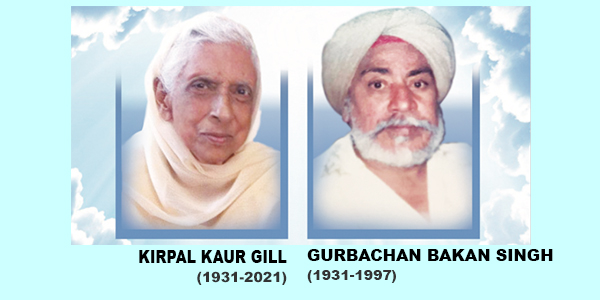
The family of the late Mata Kirpal Kaur Gill and the late Sardar Gurbachan Bakan Singh (Seremban Police), will be having a Jodh Mela in loving memory of our beloved parents on Saturday, 30th April 2022 at Gurdwara Sahib Seremban from 9.30 to 11.30am.
There will be a recital of The Sukhmani Sahib followed by a Sahej Path Da Bhog and Ardaas.
Guru Ka Langgar will be served thereafter. Kindly treat this as a personal invitation.
A gentle reminder to ensure compliance with applicable Covid -19 Standard Operating Procedures (SOP) while in attendance at the Gurdwara Sahib.
For further information, please contact: Paramijit Singh 012-6759552 or Navjeet Singh 019-2325400
Get ready for a whole day fun at SSU Kelab Aman in Kuala Lumpur Vaiskahi Mela 2022. There will live entertainment, bazaar, games and a dohl performance by the Punjabi Virsa. The event runs from 11am to 10pm.
Across the causeway in Singapore, a similar weekend filled with telemathces, games and cultural events will take place on April 30 and May 1.
Organised by the Singapore Khalsa Association (SKA), the event will also feature a Punjabi poetry competition for children and adults. They are seeking out the best orator, most original poem and the best Punjabi pronunciation.
Go to Asia Samachar social media platforms (Facebook and Instagram) for more details.
ASIA SAMACHAR is an online newspaper for Sikhs / Punjabis in Southeast Asia and beyond.Facebook | WhatsApp +6017-335-1399 | Email: asia.samachar@gmail.com | Twitter | Instagram | Obituary announcements, click here
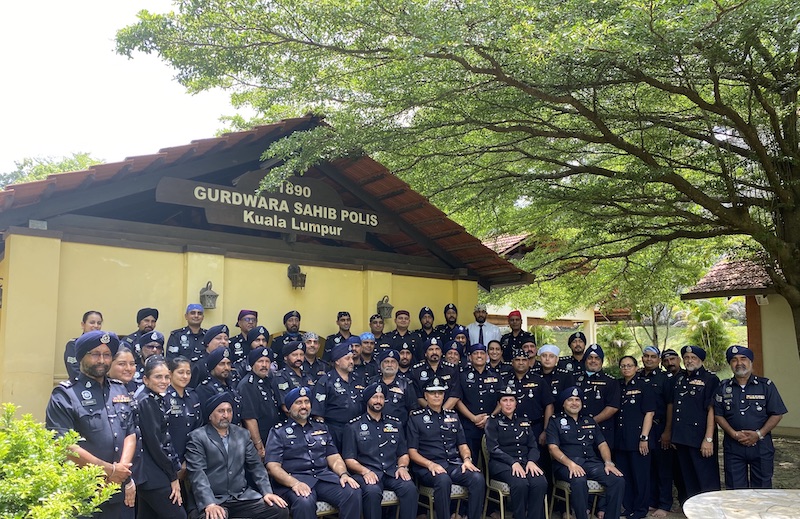
Sikh women currently serving in the PDRM at a gathering in Kuala Lumpur on 22 April 2022 – Photo: Asia Samachar
By Asia Samachar | Malaysia|
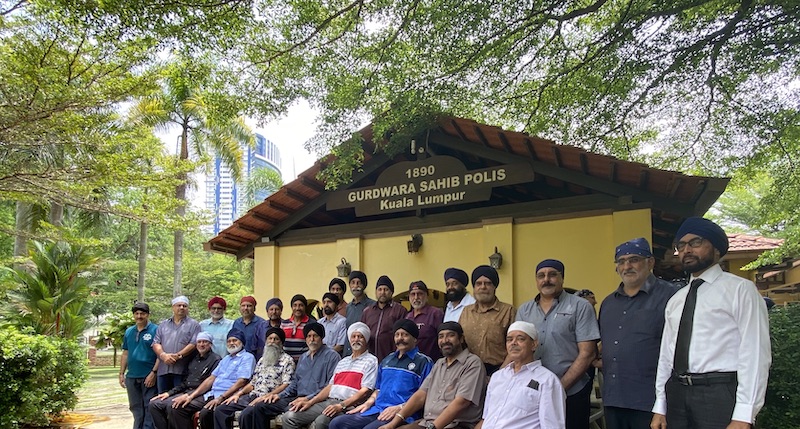
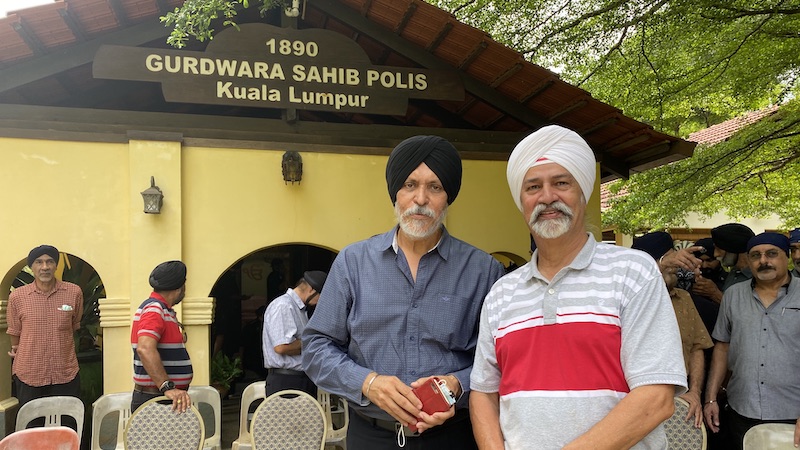
Sikhs serving the Malaysian police force are coming together for a prayer in Kuala Lumpur today (April 23) to mark the 215th Police Day celebrations.
Serving and retired members of the Royal Malaysian Police (PDRM) will join the prayer session at Gurdwara Sahib Parliament.
“Sikh police men and women from around the nation will join for the prayer meet,” ACP Ravindar Singh told Asia Samachar.
The 215th Police Day celebrations, themed ‘Police and Society Are Inseparable’, were held nationwide on March 25.
Sikhs serving in the PDRM gather for a photo shoot in Kuala Lumpur on 22 April 2022 as part of the 215th Police Day celebrations – Photo: Asia Samachar
Sikhs retired form the Malaysian police force gather for a photo shoot in Kuala Lumpur on 22 April 2022 as part of the 215th Police Day celebrations – Photo: Asia SamacharTOP GUNS: Former police commissioner Amar Singh (left) and retired Special Branch assistant director Hardev Singh joined fellow Sikhs in the police force, both serving and retired, for a photo shoot in Kuala Lumpur on 22 April 2022 as part of the 215th Police Day celebrations – Photo: Asia Samachar
ASIA SAMACHAR is an online newspaper for Sikhs / Punjabis in Southeast Asia and beyond.Facebook | WhatsApp +6017-335-1399 | Email: asia.samachar@gmail.com | Twitter | Instagram | Obituary announcements, click here
Many scholars and parcharaks have tried to answer this question. I am not a parcharak and neither am I a scholar. I will share with you the answer based on my understanding and from within Gurbani itself.
I hope, by the time you finish reading this article, you will have a clear picture as to who Guru Nanak’s GOD is and ask yourself the same question, who is YOUR God?
Most of the answers to this question you see on the Internet derives from Janamsakhis (life accounts), in particular, Bhai Bala Janamsakhi, which unfortunately is NOT authentic text and was likely written by the Hindu priests as they CANNOT be authenticatd and verified by Sikh historians.
These text and many other Janamsakhis and Teekas (translations) were written long after Guru Nanak and the other Gurus had left this world.
So a lot of it is based on hear-say. Some of the stories depicted in these texts even talks about Guru Nanak using miracles and super-natural powers (ridhi-sidhi/chamatkaar). Neither did Guru Nanak, 9-Gurus and Bhagats who have their baanis in SGGS ever used any miracles or super natural powers!
Why do I say this and how sure am I?
Because, IF the Guru(s) actually had super-natural powers as claimed by the Nirmalas and Dera Sants, then why did they (the Gurus and their families) and thousands of Gursikhs during and after Guru’s times suffer? Why did they endure so much torture and pain in the hands of the rulers back then? Why was there so much blood-shed in Sikh history?
If the Guru’s truly could do miracles, then why did Guru Arjan, Guru Tegh Bahadhur, Bhai Mati Das, Sati Das, Guru Gobind Singh, Chaar Sahibzaadey, 40 muktey not use the miracles and super natural powers to defeat their opponents, tyrants and rulers? Something to ponder upon, right?!
Was it because our Gurus were not strong enough (less powerful) to eradicate the tyrannical, monstrous rulers and regime, or the Guru’s only exercised small time miracles, as and when they saw fit or when it suited them? It doesn’t make any sense.
To my understanding, using miracles and super natural powers to change the course of natural progression or events is AGAINST the Law of Universe (Hukam) and obviously it is against the very teachings of Gurmat and Guru Nanak itself.
You see, the Gurus would NEVER preach something and do something else!
GURU NANAK’S SIKHI, GURU NANAK’S GOD
Guru Nanak (1469 – 1539 CE) introduced a unique path towards God realization which is meant for every human being with zero caste, gender and sex bias or discrimination. We suitably call this ‘Sikhi’ today. There were already many religions before and during Guru Nanak’s time. He created a revolutionary way of thinking and living. A way for us to elevate ourselves (our actions, our thoughts, our deeds (karam) using bebek-budhi (discerning intellect).
Guru Nanak taught us how to ignite LOGICAL THINKING and PRACTICAL REASONING.
He taught us how to truly live a fruitful and purposeful life. He showed us the importance of taking RESPONSIBILITY towards ourselves, our loved ones, our jobs, the society and all of God’s creation. We all have an important role to play in this world. Everyone! Guru Nanak taught us the concept of God and how to view God in His creation, in everything and in everyone. He taught us how to live our lives according to the Will of God hukam (universal cosmic law).
Guru Ram Das Ji puts it beautifully when he says…
ਏ ਸਰੀਰਾ ਮੇਰਿਆ ਇਸੁ ਜਗ ਮਹਿ ਆਇ ਕੈ ਕਿਆ ਤੁਧੁ ਕਰਮ ਕਮਾਇਆ ॥ Eh Sarira Mayrea, Is Jag Meh Aaye Ke Kya Tudh Karam Kamaiyaa||
ਕਿ ਕਰਮ ਕਮਾਇਆ ਤੁਧੁ ਸਰੀਰਾ ਜਾ ਤੂ ਜਗ ਮਹਿ ਆਇਆ ॥ Ke Karam Kamaiyaa Tudh Sarira Ja Tu Jag Meh Aaiya|| (SGGS: 817)
Translation: O body of mine, you’ve been granted this opportunity to be born in this world, what actions have you done? Think hard, what actions have you done while being granted this body in the form of a human?
As you can see from the Gurbani verse above, it is a question we should all ponder upon. Guru Ji has repeated the question twice putting strong emphasis. What are we supposed to do as human beings?
From the very beginning itself, Guru Nanak challenged the existing futile beliefs and ritualistic practices of the Hindus and Muslims. He challenged the ideas behind their version of God, reincarnation, idol worship, ritualistic singing of hymns and continuous recitation, yatra (pilgrimages), giving alms and sacrificial death.
Guru Nanak created a unique way of life that has never been presented before by anyone before Him and it took the Gurus 239 years to accomplish this goal.
WHAT WAS HAPPENING IN INDIA WHEN GURU NANAK WAS BORN
Before going further, we need to first understand what was happening in the society in India during the time when Guru Nanak was born. Guru Nanak and other Gurus and bhagats have shared quite a bit about the societal issues in contemporary India, within the verses of Gurbani itself.
During the 14th century in India, there was rampant moral degeneration that plagued the society: tyranny, injustice, cruelty, greed, corruption, exploitation, falsehood, hypocrisy, pretension, deception and self-conceit.
Guru Nanak was very saddened by the plight and ignorance of the masses and how the rulers, the clergy and the rich were exploiting the poor, by abusing their powers and oppressing the weak. Not forgetting the Brahmin class and pandits who had deliberately split the society into caste system and were plundering innocent devotees off their wealth, belongings and dignity.
The pandits were the ones who branded a large number of the Hindu society as untouchables and outcasts. Women were considered flesh for entertainment, restricting them to household chores, cooking and bringing up children only. They had literally ‘no say’ in society.
Guru Nanak aptly condemned the actions of these pandits by saying…
ਕਲਿ ਕਾਤੀ ਰਾਜੇ ਕਾਸਾਈ ਧਰਮੁ ਪੰਖ ਕਰਿ ਉਡਰਿਆ ॥ Kal Kati Rajey Kasaii, Dharam Pankh Kar Oodriaa ||
ਕੂੜੁ ਅਮਾਵਸ ਸਚੁ ਚੰਦ੍ਰਮਾ ਦੀਸੈ ਨਾਹੀ ਕਹ ਚੜਿਆ ॥ Koor Amaavas, Sach Chandarma, Diisey Nahi Keh Charia || (SGGS: 145)
Translation: It is a murderous age. The rulers are butchers, and righteousness has flown away. It is like the time of Amaavas (the darkest night in a month; usually the 15th night where the moon descends). A time of extreme falsehood (darkness) and where the moon (the Truth) is nowhere to be seen.
In Jap bani itself, Guru Nanak disclosed about the dark times like this…
ਨਾਨਕੁ ਨੀਚੁ ਕਹੈ ਵੀਚਾਰੁ ॥ਵਾਰਿਆ ਨ ਜਾਵਾ ਏਕ ਵਾਰ ॥ Nanak Neech Kahe Vichaar|| Varia Na Java Ek Vaar||
ਜੋ ਤੁਧੁ ਭਾਵੈ ਸਾਈ ਭਲੀ ਕਾਰ ॥ਤੂ ਸਦਾ ਸਲਾਮਤਿ ਨਿਰੰਕਾਰ ॥੧੮॥ Jo Tudh Bhawai Saii Phalee Kaar|| Tu Sada Salamat Nirankar||18|| (SGGS:4)
Translation: Countless are fools, totally ignorant. Countless are thieves, who without thinking twice would snatch others’ belongings. Countless are tyrants who impose their will upon others. Countless are cut throats committing murders. Countless are criminals who commit extreme crime. Countless are liars who go on lying. Countless are wicked and earn a dishonest living. Countless are slanderers who slander others. Nanak says, I am but just a lowly and humble servant, I’ve shared my views.
Guru Nanak was also shocked by the morale of the general masses. They seem so stuck and lost in the caste system, superstition, rituals and idol worship. Guru Nanak talked to them about how futile their efforts were when they worshipped ‘stone-made’ idols and were treating it like God.
Guru Nanak condemned the reading of scriptures that promoted such senseless beliefs. He emphasized that the so called “Gods” (devi-devteys) they were praying to, were nothing more than mortals who were afflicted with the same disease of Haumai (ego/ self centeredness) just as the rest of society.
ਹਰਿ ਪਦੁ ਚੀਨਿ ਭਏ ਸੇ ਮੁਕਤੇ ਗੁਰ ਕਾ ਸਬਦੁ ਵੀਚਾਰਾ ॥੪॥ Har Pad Cheen Phay Se Muktey, Gur Ka Shabad Vichaara||4|| (SGGS:1153)
Translation: Brahma, Vishnu and Shiva are afflicted with self centeredness (haumai) as the rest of the world. Only those are liberated who realize God by contemplating on Guru’s teachings (Truth).
Here is what Guru Nanak’s view was about the Hindus:
ਓਹਿ ਜਾ ਆਪਿ ਡੁਬੇ ਤੁਮ ਕਹਾ ਤਰਣਹਾਰੁ ॥੨॥ Oh Ka Aap Dubhey, Tum Kha Taranhaar||2|| (SGGS: 556)
Translation: Hindus are utterly mistaken and going on the wrong path. They worship whatever ‘Naarad’ (an ancient Hindu saint) told them to worship. They are spiritually blinded and they are dumb. They are lost in darkness. They are ignorant as they worship stones. They never think, “how can a stone which itself sinks in water, able to help them cross the world ocean (overcome their desires and worldly temptations)?”
I know, these are pretty sharp words, but they are the words of Guru Nanak himself.
The important thing we need understand is, the Guru did not condemn Hindus or Muslim religion but rather He condemned their rituals and futile efforts to make their God(s) happy so that He may grant them their wishes.
We are not to view Guru Nanak or the Gurus and Bhagats as arrogant beings but rather look at them as how a father would scold a child if the child refuses to listen to kind ways. That is how our Gurus are. Like a father who at times, has no choice but to scold harsh words to awaken the child and get him or her to do things right.
SIKHI IS NOT A REVEALED RELIGION
One thing to make clear is Guru Nanak should not be viewed as a prophet in the biblical sense either (ie. Prophet Muhammad or Jesus).
Let me explain.
These two prophets claim openly that they received their sermons and instructions from God, either they were directly or indirectly spoken to, or they were visited by an angel.
For example, in 610 A.D Prophet Mohammad had a revelation where he was visited by an angel called Jibril (Gabriel in English) who revealed to him verses by God Almighty (‘Allah’ as He later named God). These sermons would later be pen down by others to form what we know today as the Al-Quran, but baring in mind the Al-Quran was written and composed long after Prophet Mohammad had departed this world.
Guru Nanak was an ‘illumined soul’. When I say ‘soul’, I mean consciousness. Guru Nanak lived and experienced God consciousness throughout his natural life. It wasn’t a mysterious angel or some voice of God coming from the skies, speaking to Guru Nanak.
This point is revealed in the lines of Gurbani by Guru Arjan Dev Ji as follows:
Translation: ‘Dhur Ki Bani’ here simply means ‘Dhuro’ or ‘Dhura’ meaning from within, from the mind, from the very depths of Guru Nanak’s being. Not from the skies above or from an angel sent by God.
SIKHI IS NOT A COMBINATION OF HINDUISM OR ISLAM
One other misconception or confusion many writers and researches seem to have is, Sikhism stems from Hinduism and Islam. Some say, Sikhism is a combination of Hinduism and Islam as Guru Nanak was born in a Hindu family. Some have gone as far as to compare Guru Nanak’s philosophy with Judaism and Christianity. Totally absurd. Even though all these religions believe in One God, the problem is, each one believes in their own separate God!
Christians believe that Jesus, the son of God, was sent to this world to eradicate the sins of anyone who accepts Jesus as their saviour and embraces Christianity as their religion. Christians believe Jesus is the one and only true son of God. They believe Jesus will resurrect and come back into this world for the very last time and save the world, who are Christians. (Probably this is the reason why conversion is deemed a sacred act in both these religions.)
Muslims believe the same thing. Prophet Mohammed is a prophet of God and the true last prophet of mankind. He will save all Muslims and the human race BUT (there is a condition), you’ll have to be born as a Muslim or converted into one, to be saved. The rest (non-Muslims or kafirs) are deemed to go to hell.
Do you see the problem here? All believing in their very own version of God. A separate entity (living somewhere far up in the skies) and takes sides on whom He will save and whom He will not. What an irony! Where is the concept of oneness? Why segregate the whole humanity with their own version of Gods?
After all, when a Muslim, Hindu, Christian or Sikh dies, all are transformed into ash. Christians and Muslims bury their dead. Within 8-12 years, the dead body is totally decomposed. What ‘Resurrection’? Sikhs and Hindus cremate the dead. Within a few hours, (with ovens its even faster), the dead body turns into ash. Where is the superiority then? Where is the power?
GURU NANAK’S GOD IS…
Here is the thing. Guru Nanak’s God is not a separate God. Guru Nanak does not agree with any of the Hindu, Muslim or Christian doctrines, dogmas and claims. From a very early age itself, Guru Nanak challenged the status quo of the Hindus by refusing to wear the janeu (sacred thread). We all know this.
Guru Nanak brought about the realization of Ik Ongkaar.
ੴ Ik Oangkaar
Translation: There is only ONE Merciful, Universal Creator, who has created the entire world and the creation in it.
Just one God, not two, not three, not four. Guru Nanak’s God is pervading everywhere, in everything in this world, and out of it. It is Him only and no other! In another place, Guru Nanak describes it this way…
ਜੋ ਅੰਤਰਿ ਸੋ ਬਾਹਰਿ ਦੇਖਹੁ ਅਵਰੁ ਨ ਦੂਜਾ ਕੋਈ ਜੀਉ ॥ Jo Antar So Baahar Dekhou, Avar Na Doojaa Koee Jeeo || (SGGS: 19)
Translation: He is within – and outside as well; there is no other than Him.
Guru Nanak further says…
ਇਹੁ ਜਗੁ ਸਚੈ ਕੀ ਹੈ ਕੋਠੜੀ ਸਚੇ ਕਾ ਵਿਚਿ ਵਾਸੁ ॥ Eh Jag Sachai Ki Hai Kothri, Sachey Ka Vich Waas|| (SGGS: 463)
Translation: The world is the home of God. He resides in it. But he does not incarnate. Neither does he conform to birth and death. He is eternal (in the form of cosmic law; hukam).
WHY DID GOD CREATE THIS WORLD
Then, the next question arises, why did God create this world? Is there a purpose for this world and its creation? Guru Ji answers this question:
Translation: God created Earth and made it the seat of righteousness and set in motion; process of creation and destruction. God himself is detached and unattached. The element of air is created by God and is everywhere. Only He has the power to destroy it.
Translation: God created Earth for the sake of Gurmukhs (beings of high character). And in it, God placed the power of creation and destruction.
And last but not least, if we take a closer look at the way of the poojaris, pandits, Yogis (Hindu priests), they believe this world is an illusion. There is nothing real about it. That is probably why they can easily renounce their responsibilities and go into the jungle for years to look for their separate God.
But Guru Nanak’s God is not separate. In Asa-ki-vaar, Guru Nanak sheds light on this aspect:
ਨਾਨਕ ਸਚੁ ਧਿਆਇਨਿ ਸਚੁ ॥ ਜੋ ਮਰਿ ਜੰਮੇ ਸੁ ਕਚੁ ਨਿਕਚੁ ॥੧॥ Nanak Sach Dhia-yan Sach || Jo Mar Jamey, So Kach Nekach ||1|| (SGGS: 463)
Translation: True are Your universes (not one but many) and true are its parts. True are Your planets and the creation in it, true are Your creatures of various shapes. True are Your actions and true are Your decisions. True is Your authority and true is Your justice. True is Your law (Hukm). True is Your mercy and true are Your gifts. Hundreds of thousands, even millions call You True. In You is all the power and might. In You is all the authority. True is Your praise and true your adoration. O true King of Kings, true is Your creative power and creation. O Nanak, true are those who contemplate and practice Truth in their lives. Those who do not realize this truth will have wasted their lives in vein.
GORAKH NATH QUESTIONS GURU NANAK
We all have heard of the story where Guru Nanak and Bhai Mardana visited Sumer Parbat (Sumer mountains) in one of His Udaasis (travels) and had a discourse with Gorakh Nath, the leader of the Siddha yogis at that time.
Amongst the many stanzas as depicted in SGGS as well as in Sidh Ghost, two particular stanzas (43 and 44) puts a nail in the wood and vanishes all doubts about who is Guru Nanak’s God.
Translation: What is the root source of all? What teachings hold for these times? Who is your guru? Whose disciple are you? What is the way, by which you remain unattached? Oh young Nanak, listen to me. Tell me what is your opinion on what I’ve said. How can Shabad carry one across the terrifying world ocean, to overcome desires and temptations?
Translation: It all began from ‘air’. This is the times of the true Guru’s teachings. Shabad is the Guru, upon whom I lovingly focus my consciousness; my mind is the disciple (chayla). Sharing about the Unspoken God and His wisdom, keeps me detached. Nanak says, God (hukam/law) is my Guru as He has been true throughout the ages. I contemplate upon this One truth (ek shabad). By the teachings of the true Guru, one is able to realize this truth, but only by omitting ego first.
IN CONCLUSION
So pyareo!
Guru Nanak’s God is Shabad which means Knowledge, Wisdom and Law of Nature (Hukam) which is eternal and will never change. For example:- Fire will burn, day will change to night, the earth rotates on its axis around the sun, etc. No matter what we do, we can never change the laws of nature. This is the ‘Sach’ (Truth) and Hukm that the Gurus and Bhagats have talked about in Gurbani.
AND we need to learn how to bring Shabad (Gurbani Shabad from Sri Guru Granth Sahib Ji) into our lives! We need to recite the Shabad (with understanding) NOT doing blind recitation or countless ‘mool-mantars’ or Akhand Paaths. Nothing is going to happen except for some ‘I feel good!’ moments.
I’m not breaking your faith but I’m just telling you what the Guru has spoken (within Gurbani). We need to cultivate a REAL RELATIONSHIP with our Guru (Shabad) first in order to understand and reach GOD realization! (To be human).
ਬਾਣੀ ਗੁਰੂ ਗੁਰੂ ਹੈ ਬਾਣੀ ਵਿਚਿ ਬਾਣੀ ਅੰਮ੍ਰਿਤੁ ਸਾਰੇ ॥
Bani Guru, Guru Hai Bani, Vich Bani Amrit Sarey ||
Gurbani Kahey, Sewak Jan Maney, Partakh Guru Nistarey|| (Sggs: 982)
Meaning: Bani is Guru and Guru is bani. (There is NO difference, hence the repeated verse (underlined). Gurbani has ALL the answers towards mankinds problems, God realization and enlightenment. Whatever the Guru says (within Gurbani), and IF we accept, belief and inculcate in our own lives, the knowledge gained from the teachings of the Guru (Gurbani) will safe us (from doing wrong actions which only leads to pain and sorrow).
We need to believe the path to God Realization is by way of understanding, gaining Gurbani wisdom (tat gyaan) from our Guru.
Shabad destroys ignorance, ego and falsehood. The one who understands this is and makes an effort to apply in his or her life is called Gurmukh (the enlightened one). We should strive to become Gurmukh in this lifetime itself.
Question: If Guru Nanak’s God is Shabad, then what should ours be?
About the Author: Amarjit Singh Gulati, who runs a Malaysian-based blockchain academy and manages a software solutions company, blogs on Sikhiat JeevanJach.com.
ASIA SAMACHAR is an online newspaper for Sikhs / Punjabis in Southeast Asia and beyond.Facebook | WhatsApp +6017-335-1399 | Email: asia.samachar@gmail.com | Twitter | Instagram | Obituary announcements, click here