The aim of the so called blacklist of Sikhs kept by the various Indian state agencies, including Indian Missions abroad, is to discourage separatist Sikh political activism. However, the criteria for inclusion of individuals in this kaali soochi or Averse List and its legality in a true democracy, is questionable. Who decides what sort of political activism is averse to a democracy? Yet, the impression abroad is that this secretive blacklist of Sikh activists in the diaspora has been used to harass genuine community sevadars and human rights activists seeking visas to visit India.
Religious, social and political activism under the broad heading of seva is an integral part of Sikhi living. There are hundreds of community areas in which Sikhs can serve for the wellbeing and betterment of society. So, for example, Sikhs engaged in charity work can easily get into trouble for doing genuine Sikhi seva as did Bhai Ghanayia in the battles of Anandpur. We can say that Bhai Sahib was blacklisted by the Sikhs and reported to Guru Gobind Singh ji!
One can never be sure what exactly is anti-Indian State activism which risks inclusion in the blacklist criteria. Who are the gatherers of such intelligence about individuals? What sort of guidance do they have for reporting activism averse to state interests?
Next, it is a question about the honesty and work ethic of the intelligence gathering personnel who earn their keep by doing such important work, allegedly to defend the integrity of the Indian State. Do they put in the time and effort to get accurate information about individual activists? Regarding work ethic and accuracy of information, one Indian example comes to mind: the Europeans who climbed Mount Annapurna in the Himalayas in 1951, found that the Indian surveyors had drawn fiction maps of the higher altitude areas while sitting at home! The climbers found deep ravines where there were supposed to be mountains!
Someone wrote on a forum: In early 1950s to 1960s for any protests by the Sikhs, thousands of Sikh protestors were arrested illegally! Slowly few were released in many instalments! This list was created by the Congress administration illegally and pruning had been going on. A great good-will gesture []]by Modi administration] must be recognized but one should not forget the illegal creation of the list originally!
The point is that such a politically motivated and arbitrarily collated blacklist can be periodically shortened to please some gullible Sikhs. It becomes a political ploy which serves the interests of officials, the so called interlocutors (middlemen or vicholas!) and the State government.
An Indian reporter wrote that it is never too late to undo the wrongs of the past for the sake of a better future. Yes but the question is the extent to which the wrongs of the past are undone! It will take much more to right the wrongs of 1984 and the following ten or so years of extra-judicial killings of thousands of Sikh youth than the abolition of some doubtful Sikh black list. In any case, the harm done to relations between the Indian state and the Sikhs by keeping a blacklist far outweighs any perceived security advantage.
Gurmukh Singh OBE, a retired UK senior civil servant, chairs the Advisory Board of The Sikh Missionary Society UK. Email: sewauk2005@yahoo.co.uk. The article first appeared at The Panjab Times, UK. See here.
* This is the opinion of the writer, organisation or publication and does not necessarily represent the views of Asia Samachar.
ASIA SAMACHAR is an online newspaper for Sikhs / Punjabis in Southeast Asia and beyond.Facebook | WhatsApp +6017-335-1399 | Email: editor@asiasamachar.com | Twitter | Instagram | Obituary announcements, click here |
By Avtar Singh | DAILY EXPRESS | SABAH, MALAYSIA |
Jemadar (Warrant Officer) Ojagar Singh, is known to elder Sikhs in Sabah today as the “Lion of Sandakan.” A 6 foot 5 inch giant, Jemedar Ojagar Singh, in his distinct, traditional Sikh turban wrap, was a quiet, disciplined but proud man who served the North Borneo Constabulary Police Force loyally as a warrant officer.
The first Sikh to arrive in North Borneo was in early 1868 on the island of Labuan and that person was Bhagat Singh Sandhu, who arrived in North Borneo from Singapore, having being recruited by a coal mining company to act as a policeman in Labuan Island.
This means Sikhs have been present in North Borneo and Sabah for at least five generations for at least 150 years, working as policemen, government administrators, government officers, medical doctors or lawyers and prominent businessmen.
Ojagar was also blessed with a powerful sense of right and wrong; this sense came from his devoted parents who taught him to love thy neighbour, regardless of race or religion, and to defend those who could not defend themselves. Ojagar would take these lessons to heart and this would form the basis of his values as a human being till the very end of his life as a serving policeman.
Ojagar is fondly remembered within the community as a man who was a patriot with a deep sense of loyalty not only to the North Borneo flag, but also to the men he led and commanded in Sandakan in the North Borneo Constabulary.
His father, Pal Singh, also a constable with the North Borneo Constabulary, as was the case with his brother Chanda Singh and most of the Sikhs who arrived in Borneo in the late 1800s by ship from Calcutta to Singapore, to Labuan, and finally to Jesselton where North Borneo would not only be their home for decades to come but also ultimately, where many of them would also die as they would not go home to the Punjab after service in the constabulary as most would marry a local girl and settle down in North Borneo.
Moving from Jesselton to Beaufort, and then back to Jesselton before being posted to Sandakan, Ojagah was the father of eight children, five daughters and three sons.
The youngest survivor of the family of 8 is retired Chief Inspector Anup Singh, formerly of the Malaysian Police Force.
In Sandakan, Jemadar Ojagar Singh’s house was on top of a hill near the Police Headquarters at Bukit Metah, or where the current Sandakan Yacht club is located. He had a grandstand view of the harbour including Berhala Island.
But how and why were the Sikhs in Borneo and what was their legacy in India that made the British recruit them to serve in faraway lands as far as North Borneo and Sarawak?
When the Sikh’s were defeated in the First and Second Anglo Sikh Wars against the British in the mid-1800s, they were recruited, not only for their loyalty to the battle standard carried into battle for the Sikh army, but also to their commanders for whom, most died fighting alongside and to the end with.
They were noted for their courage and ferocity in battle as well as their size and build due to being descendants of Alexander the Great.
The most famous battle in Sikh history is not Saragarhi as many would think, but the Battle of Sabroan, in which the Sikh army was ultimately betrayed by one of their own commanders and then defeated with thousands fighting to the last man within their fortifications along the Sutlej River or drowning whilst attempting to cross the Sutlej River.
This was the Sikh’s version of the Battle of Thermopylae.
In 1942, Sandakan, being the administrative capital of North Borneo, contained most of the key European administrators and clerks who oversaw the administration of North Borneo
With the arrival of the Japanese in early 1942 and the surrender of the British in North Borneo including Labuan, Sarawak and Brunei, the island of Borneo saw many prison camps built to not only intern these European administrators but civilians as well. In Sandakan, Berhala Island became the primary staging area for prisoners before a larger camp was built Batu Lintang in Kuching , Sarawak and they were moved there in 1943.
The North Borneo Constabulary also saw them falling under the directions of the Japanese as the commander of the Constabulary, Major Rice Oxley, was interned by the Japanese on Berhala Island along with European civilian internees from Sandakan, Lahad Datu and Tawau.
With the absence of European officers, the leadership of the police force in Sandakan fell under the command of local policemen Inspector Samuel Guriaman, Sergeant Major Yansalang and Warrant Officer Ojagar Singh.
The Japanese allowed the local police force to maintain law and order, and appointed the three men to continue their roles of keeping the peace but under the directive of the Japanese leadership of Sandakan. However, unknown to the Japanese, whilst interned on Berhala Island, Rice Oxley, ordered the three junior officers to corporate with a Dr. James Taylor, the chief medical officer of Sandakan who worked at the Sandakan hospital. Once the new Prison of War camp at Mile 8 in Sandakan was built to house the 3000 strong prison of war prisoners captured in Malaya, Singapore and Java, Rice Oxley also instructed his three men to try to begin communicating with the leadership of the prisoners and to build a network of information and to assist them in whatever means possible.
Thus in mid-1942, began the “Sandakan Underground” activities of smuggling letters out of the camp as well as sending in food and what little medicine was available to the Berhala interns which included a large network of Dusun’s, Malays, Filipino, Chinese and European’s in Sandakan who became a part of this underground movement. Led by Dr. Taylor, the underground movement becomes active late 1942.
Aware that there existed Japanese informants within their ranks of the police force, Guriaman, Yansalang and Singh decided to limit the number of people who knew about the Sandakan Underground movement and to restrict all knowledge about their activities to a small group of policemen they knew they could trust.
Building a communication network into the Prison of War camp and to Captain Lionel Colin Matthews, an Australian who was tasked with carrying out underground activities on behalf of the prisoners in the Mile 8 prison camp.
The goal for the Sandakan Underground movement were initially for humanitarian purposes but slowly expanded into smuggling food and medicine, radio parts, collecting and distribution of money, the gathering and sharing of intelligence on the Japanese and eventually the smuggling of weapons into Sandakan and into the prison camp.
Part of the escape plan was the building of a transmitting radio; this would be used to contact Filipino guerrillas in the Philippines and submarines with a view to obtaining more arms and other support. This development was not just about escaping; it was a challenge to the Japanese position in North Borneo, and one that inevitably would invoke most violent Japanese response.
Matthews had the idea that because the Japanese presence in Sandakan was limited in numbers, there was a possibility of a successful prisoner’s insurrection to either seize the camp and town or undertake a mass escape of all prisoners and become guerrilla fighters.
It is from Berhala Island in June 1943 that we see the first two groups of prisoners successfully escape internment; these were not the first of many attempts by prisoners to escape. Several failed attempts prior to the Berhala escape had been attempted at the Mile 8 prison of war camp but all failed with all the escapees captured or betrayed. .
At this juncture, it is important to understand the Japanese views on prisoners and the treatment prisoners would receive from guards and soldiers of the Japanese Forces in Borneo; According to Lieutenant Colonel Suga Tatsuji, commanding officer of Borneo Prisoner of War Internment Area to his prison staff, “…rewards must be uniform and punishment relentless. Let there be no half-measures.”
He further adds “…to show Maudlin sympathy or to lapse into sentimental indulgence, thus creating the impression that you can be influenced like a little child, is extremely reprehensible.”
The underground movement was eventually betrayed to the Japanese; in mid July 1943, Singh, Matthews, Taylor and many police officers, agriculture and forestry staff as well as local businessmen, many who were members of the Sandakan Underground were arrested and brutally beaten and tortured by the Japanese secret police or “Kempetai.”
Ojagar Singh, being one of the senior members of the Sandakan Underground was pin pointed as the man most likely responsible for helping the Australian prisoners escape from Berhala Island and a man of great interest to the Kempetai.
He were taken to a bungalow house outside of Sandakan town near Jalan Tanah Merah where he was beaten and tortured for several days. During the violent interrogation, Ojagar’s jaw was broken and his elbow shattered.
Despite attempts by Dr Taylor to seek permission from his interrogators to treat Ojagar’s broken jaw and limb, these requests were denied; he could only watch as Ojagar stood alongside other prisoners, all beaten and tortured and all in severe pain and distress from either standing for hours or squatting for hours and staring down at the floor. In Ojagar’s case, he was also bleeding from the intense torture he had gone through with skin missing from his back and blood and infection from the wounds.
Eventually, like most prisoners, he was broken after days of torture and told the Japanese about secret letters he had smuggled out of the Mile 8 prison camp and hidden under a chicken cage at his home, was taken back to his home where he was forced to show the Japanese where he had hidden the letters. He did not reveal who had passed him the letters, except to say he collected them himself.
With his pregnant wife and young children watching, Ojagar’s last words to his wife were “take care of the children and look after yourself.” This would be the last time a young Anup Singh and his siblings would see their father ever again as he was then brought back to the house of torture and beaten some more.
Police officers from the nearby police station would also move her and the children to the Police Barracks as they did not feel it was safe for her to be on her own with the children, and being pregnant as the Japanese had also confiscated all her jewellery, personal belongings and money, leaving her and the children penniless and without any income.
After being transferred to Kuching on 19th October 1943, Ojagar and his colleagues underwent further interrogation before they were put on trial. Records show 52 civilians were arrested along with 20 prisoners of war and together were all shipped by sea to Kuching.
On the 29th February 1944, Warrant Officer Ojagar Singh alongside his men which included Sergeant Abin of Ranau and Detective Ernesto Lagan along with businessman Heng Joo Ming, Sandlewood trader Wong Mu Sing who was a lieutenant in the Philippine Guerrilla Force under the command of US Forces, Alex Funk, a member of the Borneo Volunteer Force, radio shop owner Felix Azcona, Dusun farm manager Matusup bin Gungau and Captain Lionel Matthews were sentenced to death by a firing squad.
The rest of the prisoners are sentenced to prison for terms ranging from 15 years to six months.
Matusup had been instrumental in smuggling information and medicines and food into the Sandakan prison camp at Mile 8 whilst Azcona and his brothers had smuggled radio parts to the camp. The dashing and handsome Alex Funk was the son of the first non-European magistrate of North Borneo and was a smart, intelligent young man and from a prominent family in Sandakan who was actively assisting the Sandakan Underground and was one of the key leaders.
Heng Joo Ming, sympathetic to the prisoners smuggled food to the prisoners and is betrayed by two friends over money and blackmail over the sale and purchase of rice on the black market.
He had previously assisted in the escape of the prisoners from Berhala Island and was betrayed because he refused to pay money as a bribe and was subsequently arrested along with his father, tortured and then sentenced to death.
Australian prisoner of war and radio operator Lieutenant Rod Wells, also arrested after transcripts of radio communications are found in his possession in the Sandakan prison of war camp recalls hugging the beaten and tortured Ojagar Singh in one final embrace before the Sikh policeman was led out of court limping from his injuries to face a firing squad on the 2nd March 1944.
The 8 men were led to a clearing in a jungle area some 5 kilometres from the prison at a rubber estate in the Batu Kawa area outside of Kuching where they are lined up in front of a Japanese firing squad before they were all shot to death without a chance to write a final goodbye letter to their families.
Hearing rumours of the death of one of their own, the local Sikh community in Kuching marched to the Japanese headquarters and demanded the release of Ojagar’s body so he could be cremated according to Sikh burial rites. This request was denied and the party were chased out of the headquarters by armed Japanese guards.
Anup’s eldest brother Hercharan Singh assumed the responsibilities at the age of fourteen years old as the sole breadwinner for the family including including that of his baby sister, born two months after Ojagar had been taken away to Kuching.
As Hercharan had a working knowledge of Japanese, he was employed for a while as translator, and as a fresh water fishmonger. The family grew their own vegetables and relied on tapioca as their staple diet till the end of the war and also sold oil extracted from coconuts to survive.
In late 1943, Ojagar’s brother-in-law, Sergeant Dial Singh from the Lahad Datu Constabulary arrived with his wife and two children with the intention to take the entire family back to his home outside of Lahad Datu. Their journey was however stopped by the Japanese who refused to let the family board a ship for Lahad Datu, allowing only Sergeant Dial to board the ship.
Dial returned seven months later with eight local porters to help the family move on foot to Lahad Datu, walking over land through virgin jungle. The adventure of escaping Sandakan was truly remarkable; after exiting Sandakan on foot with their porters, the family boarded sampans to get to Kampung Bikang, outside of Lahad Datu.
About sixteen kilometres from Lahad Datu the family left the vastly swollen Segama River and all perils of crocodiles behind and continued on foot along the road, wading through knee deep floodwater for the first three kilometres before reaching the Tengah Nipa Estate where relatives lived. It was during this time that the youngest sister of Anup passed away due to malnutrition and illness.
Arriving at Dial Singh’s property, he led them to a hut he had built secretly for them to hide and live in which was in the jungle to ensure their safety from the Japanese. There, the family remained in hiding until the end of the war, living off vegetables they grew and tapioca they planted, catching fresh water fish and crabs as well as salt extracted from sea water.
Unknown to the family at the time, Sergeant Dial Singh had been meeting Americans who came to Lahad Datu by submarine from Tawi Tawi to gather intelligence and to share information on Japanese forces in the area.
Dial Singh too was betrayed by a fellow police sergeant who learned about his clandestine activities with the American’s and seeking a reward from the Japanese, decided to write a letter for the Japanese secret police which he requested Dial Singh to personally deliver, unaware that Dial Singh had already been suspicious about this Sergeant’s loyalties and instead opened the letter given to him and read the contents. Dial Singh had doubts about the Sergeant loyalties and opened the letter and discovered he was to be betrayed.
He had no choice but to escape into the jungle and to hide out for the reminder of the war.
It was during this time that young Hercharan Singh fell ill and the two baby girls in the family, weakened by malnutrition and illness, died after accidently eating poisonous mushrooms.
Till today, there has been no acknowledgement by the Australian government nor the Sabah State government or Malaysian government of the bravery and courage of Warrant Officer Ojagar Singh, Sergeant Abin and Detective Ernesto Lagan contributions in saving the lives of prisoners of war or their bravery as North Borneo Constabulary officers.
In trying to preserve the lives of so many, they made the ultimate sacrifice not only for the prisoners of war at the Sandakan Prisoner of War camp but also for the people of Sandakan and were never remembered for their great sacrifices, even today.
The compensation paid via the Widow’s and families pension fund was very little and could not support Anup, his mother and brothers and sisters. Promises were made from the Australian government but those promises were never fulfilled and they were eventually all but forgotten about not only by the Australian’s, but also about by the North Borneo government and the Sabah government.
Their positions in the constabulary prevented the Australian government from providing financial compensation to the families of Singh, Abin and Lagan. There was an understanding after the war that the government of North Borneo would provide pensions for the families of its administrative staff who lost their lives during the war, based on their term of service.
The great sacrifice and courage of these men have all but been forgotten about. There is never any mention each year during the Sandakan Memorial services about “The Lion of Sandakan” and the men of the North Borneo Constabulary. If anything, the services are generally focused only on the sacrifices of Australian and British prisoners whilst the Sandakan Underground has all but been forgotten about, and this is a very sad aspect of the memorial services being carried out. No memorials exist in Sandakan to remember these fallen men either, except for a tomb in Kuching.
Author’s Note: During the course of my interviews with Inspector Anup Singh (Rtd), son of Ojagar Singh, one name that keeps coming up during the interviews is the name Koram bin Anduat, who was Ojagar’s most trusted aide on Berhala Island and who was part of the group of policemen who successfully carried out and assisted the escape of the Australian prisoners from Berhala Island on the orders of Ojagar Singh.
Not enough recognition has been given as well to the activities of Koram who not only suffered terrible torture by the Japanese secret police, but remained steadfast in protecting Ojagar and the rest of the policemen in the Berhala Island group arrestd.
The sad part of this story is that it was another prisoner who eventually broke during interrogation and torture and who told the Japanese everything which would lead to the trial in Kuching and the death sentences imposed on Ojagar and the Sandakan Underground members.
It is important to point out that no man (or woman) would have withstood the type of torture and brutality of interrogations carried out by the Japanese and that everyone, regardless of size, build and intelligence breaks during torture. It is not a question of how, but when.
The pain and suffering is unbearable and at some point in time, the Japanese would have eventually found out about who did what and what activities were going on within the Sandakan Underground and the group was doomed anyways once they were betrayed and arrested.
This article was co-authored together with Mr.Shari Jeffri in September 2019.
1. Prof. Danny Wong – Historical Sabah “The War” (2010)
2. Arkib Negeri Sabah – World War Two: “The Sabah’s Story (2010)”
3. Paul Ham – “Sandakan” (2012)
4. Interview with Inspector Anup Singh (Rtd), Son of Jemadar Ojagar Singh, August, 2019.
5. Avtar Singh Sandhu-”The Lions of North Borneo: The forgotten Sikhs of Malaysia.” (2020)
The article, Ojagar – the forgotten ‘Lion of S’kan’, was first published at Daily Express (22 Sept 2019).
ASIA SAMACHAR is an online newspaper for Sikhs / Punjabis in Southeast Asia and beyond.Facebook | WhatsApp +6017-335-1399 | Email: editor@asiasamachar.com | Twitter | Instagram | Obituary announcements, click here |
Autar Singh and wife Rajinder Kaur during their daughter’s wedding in 2014
By Autar Singh | OPINION | SHINING TURBAN |
I was 6 years old when my father tied a turban on my head for Vaisakhi at the Gurdwara Sahib Changkat, Batu Gajah. This is the one I remember, although there may have been earlier turban moments. It gave me a grown up feeling, for all my respected elders had distinguished turbans on their heads. I felt like them. This was my #TurbanOfHappiness.
I started wearing turban daily when I was 12 years old in Bidor. From then on there was no looking back. I wore my turban with pride. This was my #TurbanOfPride.
While doing my Professional Accountancy studies in UK, I was blessed with Khande dhi Pahul at Leeds. My turban took on a new meaning, as it now became my #TurbanOfBlessings.
On my return I joined the Sikh Naujawan Sabha Malaysia as an active member. My turban now became my #TurbanOfDuty. It continues as such as my involvement in various organisations, nationally and internationally, grew.
Then my father passed on. The family care and responsibility of my siblings, and my immediate family later, opened up another new role for my turban. It now became my #TurbanOfResponsibility.
As I grew in my role as an academician in UiTM, I used to be called Tuan Haji/Ustaz (probably due to my turban and flowing beard) by some of my Malay colleagues. My turban brought tremendous respect, not only in UiTM but everywhere. It now became my #TurbanOfRespect.
On being appointed to the 63 member worldwide Religious Advisory Committee of Sri Akaal Takht Sahib in 1995, I sat with the brains of the community. All my seniors. Being here taught me humility and my turban became my #TurbanOfHumility.
While pursuing a postgraduate course in the UK, I was first appointed to and after a year unanimously elected as the President of the World Sikh Council (WSC), European Zone made up of some illustrious Sikhs of Europe. In this capacity I spoke at the 1st AGM of the WSC at Anandpur Sahib in 1997 to an audience of dignitaries from all over the world. My turban now became my #TurbanOfService.
Over the years I have met and known many distinguished turban wearing gentlemen doing excellent work. One such is in the picture with me, Ravi Singh of Khalsa Aid. Their company makes me feel distinguished, making my turban my #TurbanOfDistinction.
When the call came for me to be a part of the Panj Pyare to initiate Sikhs into the Khalsa Panth, my turban became my #TurbanOfHonour.
Thus my #ShiningTurban has brought me feelings of Happiness, Pride, Blessings, a sense of Duty and Responsibility, Respect, Humility, Service, Distinction and Honour. I am truly blessed to wear this crown of a dastar on my head everyday.
GURU NANAK 550
This year we are celebrating the 550th birth anniversary of Guru Nanak ji. Guru ji gave us a spiritual treasure that liberates. It enlightens the mind and expels the darkness of ignorance. It sets the practitioner free. It gives spiritual and temporal sovereignty to those who live it.
With this freedom, one needs to break free from self, or society, imposed limitations and boundaries. Amongst these limitations is the choise of colours in our dressing.
My inspiration to break free from the imposition of turban colours is my son, Saheb Singh, and my wife, Rajinder Kaur. Both inspired and encouraged me to enjoy life and embrace all of creation in its multitude of colours. I now have no hesitation to wear my turban in any colour I want. I hope others will break free as well.
The turban is the crown of sovereignty that I am blessed with. Hence I wear it with dignity and honour, and I wear it in all colours…
Taken from the Facebook posting of Autar Singh, an active Sikh volunteer who is based in Kuala Lumpur. He was the former Jathedar of Sikh Naujawan Sabha Malaysia and Secretary-General of Coalition of Malaysian Sikh Organisation (CMSO). He composes the article at the request of Asia Samachar for the #ShiningTurban competition which ends on 30 Sept 2019. Join the challenge.
HOW TO JOIN THE COMPETITION:
1. Post a picture or a video of you in turban on your Facebook or Instagram page, with a caption or story (what turban means, something heartwarming incident involving the turban or anything that comes to mind).
2. Add these hashtags to your post:
#ShiningTurban2k19MalaysiaDay
#st2k19md
#ShiningTurban2019AsiaSamachar
3. You must tag 3 friends who might be interested in joining
4. Follow us @asiasamachar Facebook or Instagram & tag us
5. Like this post (at Facebook or Instagram)
6. For an extra chance, share Asia Samachar post on your Facebook or as story at Instagram
7. Make your Facebook and/or Instagram profile public
ROUND ONE: We will choose the top 30 entries based on the number of ‘Likes’ you get. (If you join at both Fb and Insta, we will take the higher number)
ROUND TWO: Our panel of judges will pick the winners based on number of ‘Likes’, photo or video and your story/caption. Results will be announced in October 2019.
ALL THE BEST. TIME TO TURBAN UP!
PRIZES:
iPhone 11
One return-ticket to Phu Quoc, Vietnam
One return-ticket to Can Tho, Vietnam
SUPPORTING PARTNERS:
Malaysian Gurdwaras Council (MGC)
Khalsa Diwan Malaysia (KDM)
Malaysian Punjabi Chambers of Commerce and Industry (MPCCI)
Sikh Naujawan Sabha Malaysia (SNSM)
SikhInside
Shining Turban 2019
RULES AND REGULATIONS
1. Prizes may not be redeemed for cash. They must be picked up from Kuala Lumpur.
2. All prizes are used/taken entirely at the risk of the winner in all things, and Asia Samachar excludes all warranties in connection with any prize to the extent permitted by law.
3. Asia Samachar, its agencies, affiliates, sponsors and representatives are not responsible for defective prizes or misuse of any prize, or for any claims, liability, loss or damage arising out of or in connection with any contest promoted by Asia Samachar
4. If a specified prize becomes unavailable due to unforeseen circumstances, Asia Samachar may substitute a similar prize or one of equivalent value.
5. The winner may also be required by Asia Samachar to participate in a photo, video and/or film session and acknowledges that Asia Samachar has the right to use such publicity photos, videos and/or films in any medium and in any reasonable manner it deems fit.
6. Contest entries and material submitted in connection with the Shining Turban 2019 Malaysia Day contest (whether in written, audio or visual form, or a combination of these) or any photographs, video and/or film footage or audio recording taken of the contestants become the property of Asia Samachar. Asia Samachar may use the material in any medium and in any reasonable manner it sees fit. Copyright in any such material becomes and remains the sole property of Asia Samachar
7. Asia Samachar may publicize, broadcast or otherwise disclose a winner’s or competitor’s name, character, likeness, statements or any recording of their voice in advertising or promotional activities concerning winning of the contest. Asia Samachar may promote or advertise that a winner won a competition. All winners hereby agree to the use of his/her name for the purpose of advertising, trade or promotion by Asia Samachar without additional compensation.
8. Winners are responsible for any and all taxes payable as a result of a prize being awarded or received.
9. Asia Samachar reserves the right at its sole discretion to disqualify any individual that it determines to be tampering with the entry process or the operation of the Contest or site, to be acting in breach or potential breach of these Rules and Regulations. No correspondence shall be entertained. Asia Samachar further reserves the right to cancel, modify, suspend or delay the contest in the event of unforeseen circumstances beyond its reasonable control
10. Disclaimers: By entering the contest, each contestant agrees that Asia Samachar subsidiaries and representatives (“Contest Sponsors”) shall not be liable or responsible for damages, losses, injuries, rights, claims or actions of any kind in connection with the contest, or resulting from acceptance, possession, use/misuse of prizes, or participation in the contest, including without limitation, personal injury, death, property damage and claims based on publicity rights, defamation or invasion of privacy. Each contestant further agrees that the contest sponsors will not be responsible or liable for any entries that are late (including delayed data transmissions), tampered with, garbled, incomplete, misdirected, lost, mutilated, delayed, corrupted, duplicated or otherwise not in compliance with these Rules and Regulations.
11. Please allow 90 working days from winning date for prizes to be processed.
12. Asia Samachar reserves the right to at any time, change, amend, delete or add to the Terms and Conditions and other rules and regulations including the mechanism of the Contest at its absolute discretion.
ASIA SAMACHAR is an online newspaper for Sikhs / Punjabis in Southeast Asia and beyond.Facebook | WhatsApp +6017-335-1399 | Email: editor@asiasamachar.com | Twitter | Instagram | Obituary announcements, click here |
YSA team with Sheena Phua at a Singapore gurdwara, with the Ek Oangkar (God is One) symbol in the background – Photo: YSA Facebook
By Young Sikh Association – Singapore | OPINION |
We first reached out to @sheenaphua after one of her posts on social media upset some within and outside of our community. They demanded an apology. We however feel that actions speak louder than words.
Sheena took us up on our offer to visit one of our Gurdwaras and learn more about our community. When we met, Sheena also shared about her community and some of her experiences growing up in Singapore.
By her own admission, she shared that she didn’t know much about the Sikh community. She didn’t have or know of any Sikhs who may have been at school with her. Now that we know her better, would it still be fair to say that she should have known better when she initially put up her post that some found offensive? We all have our own experiences that inform what and how much we know about others in our community.
Also, don’t we all hope that when we make a mistake and cause unintended offence or hurt, that others will show us empathy, be understanding and forgiving? Better yet, when we make mistakes, don’t we all hope that we can expect people will act on their convictions and reach out to us in friendship, as opposed to reacting based on emotions and pointing fingers to blame.
We are grateful @sheenaphua you made the time to meet us this weekend and hopefully enjoyed what we feel was a meaningful experience for all of us! ??
In addition to learning about the Sikh community, our Gurdwaras, we also did some Sewa together today and enjoyed some Langgar ❤
Sheena also gave us an idea for an initiative YSA could take on in future. She felt like her, many would also appreciate a less structured visit to a place of worship and learn through conversations and sharing our experiences. We think we just might take this up next year!
ASIA SAMACHAR is an online newspaper for Sikhs / Punjabis in Southeast Asia and beyond.Facebook | WhatsApp +6017-335-1399 | Email: editor@asiasamachar.com | Twitter | Instagram | Obituary announcements, click here |
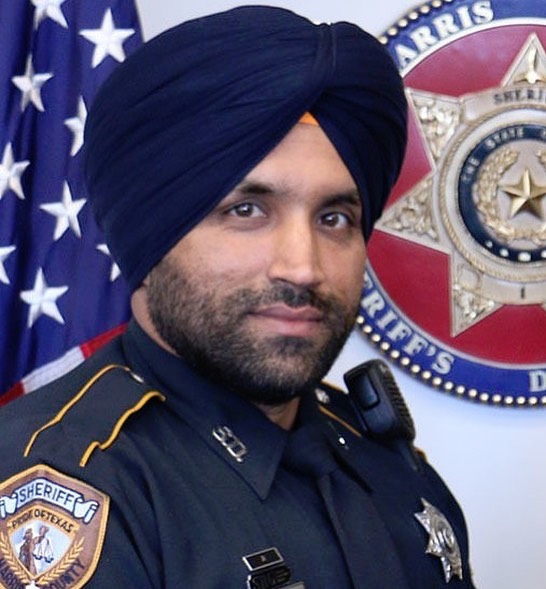
Lt. Sandeep Singh Dhaliwal, the first ever Sikh officer to wear a turban in Texas who doubled up as humanitarian warrior, was shot and killed in the line of duty today.
Dashcam video shows the Harris County Sheriff’s deputy walking back to his patrol unit when the suspect shot him in the back of the head while conducting a traffic stop on Friday afternoon (27 Sept), according to a local news report.
Harris County Sheriff Ed Gonzalez described Sandeep, a 10-year veteran of the department who leaves a wife and three children, as a ‘trailblazer’.
“He wore the turban. He represented his community with integrity, respect and pride. He was a leader,” he said, adding that they will continue his ‘legacy of service and a legacy of giving back’.
Sandeep also acted as the homeland security director of humanitarian agency United Sikhs.
“UNITED SIKHS fallen brother, Sandeep Singh Dhaliwal was a gift to the world. He is a legend, a hero, a devout #Sikh #American that spread #Seva (selfless service) in all walks of life. Sandeep Veerji was a wonderful role model to the community, the nation and a world ambassador of Seva. Wherever there was misery, a call for help, the need to give back – we would find Sardar Sandeep Singh Dhaliwal leading the way forward championing for all communities,” the agency shared in a social media update.
It noted that he had proudly served HarrisCounty Texas as a 10 year veteran, his country and the world as a sheriff and humanitarian.
In the wake of Hurricanes Harvey and Maria, United Sikhs said Sandeep had led a team of volunteers to provide disaster relief to those in need across Texas, Florida and Puerto Rico. In Punjab India, he led the effort to help the body to provide humanitarian aid for farmers working to survive a record drought.
UNITED SIKHS established this fund for Deputy Singh’s wife and three young children to help support their educational needs at this time. Go here.
ASIA SAMACHAR is an online newspaper for Sikhs / Punjabis in Southeast Asia and beyond.Facebook | WhatsApp +6017-335-1399 | Email: editor@asiasamachar.com | Twitter | Instagram | Obituary announcements, click here |
Sunjit Singh Rathour became the first Sikh airman to complete U.S. Air Force basic training and the Security Forces Apprentice Course with religious accommodations. – Photo: Grab from KSAT12
By Asia Samachar Team | UNITED STATES |
Sikhs serving in the United States (US) armed forces can hail yet another milestone when a Sikh airman passed with flying colours his training while retaining his turban and beard, a religious requirement for observant Sikhs.
Sunjit Singh Rathour of the U.S. Air Force became the first Sikh airman to complete U.S. Air Force basic training and the Security Forces Apprentice Course with religious accommodations.
“Went from #A1CRathour to #DefenderRathour today. Pops (BIG OG) has to pin my shield on me,” Airman First Class (A1C) Sunjit shared writes on his personal Facebook page, accompanied by some photographs.
Sunjit has become the first Sikh American to complete both Air Force basic training and advanced technical training while wearing a turban, beard, and unshorn hair, in compliance with his Sikh religious beliefs, according to a statement (dated 26 Sept 2019) released by American Civil Liberties Union (ACLU).
Rathour obtained a religious accommodation with assistance from ACLU and the Sikh American Veterans Alliance (SAVA), it said.
After successfully completing Basic Military Training in June, it said Rathour immediately enrolled in the Air Force’s Advanced Individual Training (AIT) School, where he studied to become part of the Air Force’s Security Forces.
“Today, after an additional three months of training, he graduates from that program,” it said.
Airman Sunjit Singh Rathour – Photo: Personal Facebook page
Rathour is the first recruit authorized by the Air Force to adhere to Sikh religious grooming and dress principles immediately upon enlistment, including during the Air Force’s rigorous training programs, the statement added.
“As Sunjit’s experience demonstrates, recruits with religious accommodations are able to undertake the same training as other airmen,” said Heather L. Weaver, senior staff attorney with the ACLU. “We hope that the other branches of the military will follow in the footsteps of the Army and the Air Force by granting similar accommodations to those who request them.”
Lieutenant Colonel Kamal Singh Kalsi (US Army Reserve), president of SAVA and one of the first Sikh service members to receive a religious accommodation from the Army, added: “Being able to serve your country is a point of pride for many Sikhs. It was an honor to attend A1C Rathour’s basic training and AIT graduation ceremonies and to see him make history as the first Sikh to complete basic and technical training in the Air Force while wearing a turban, beard, and unshorn hair.”
In the same statement, Sunjit said: “I’m thrilled that the Air Force gave me the opportunity to complete both basic and technical training with a religious accommodation. My fellow airmen and superiors have been nothing but supportive, and I look forward to continuing my service for years to come.”
The story was picked up by television station KSAT 12, see here.
ASIA SAMACHAR is an online newspaper for Sikhs / Punjabis in Southeast Asia and beyond.Facebook | WhatsApp +6017-335-1399 | Email: editor@asiasamachar.com | Twitter | Instagram | Obituary announcements, click here
Malaysian small business financier Knight Capital Sdn Bhd is opening an office in London, its maiden venture abroad after serving the Malaysian small businesses for more than two decades.
The expansion to the United Kingdom (UK) is in response to its observation that the UK economy is facing a huge funding gap for small and medium enterprises (SME’s). Its UK offshoot Knight Credit will begin operating on 1 Nov, the day after the Brexit deadline.
“Knight Credit will apply Knight Capital’s lending model in the UK to replicate the holding company’s success in Malaysia,” Knight Capital operations head Samreet Singh Randhay, who will be running the London office, said in an email to Asia Samachar.
Over the last 10 years, its turnover has been in excess of RM450 million, according to information at its website. It is led by Kiranjit Kaur as its CEO.
Incorporated in 1997 with a RM10 million paid up capital, Knight Capital is a licensed lending institution registered under Malaysia’s Ministry of Housing & Local Government. Its core business is the fast approval of short and mid-term loans to individuals, businesses and projects.
The Kuala Lumpur-based financier hopes to lend around £1.5m to around 15 to 25 small businesses in its first year in the UK with products like term loans, bridging loans and working capital with no minimum amount.
The implication is that it will be lending between £60,000-£100,000 a time to small businesses, although Knight Credit says it can go as high as £3m, according to a UK news report.
Kiranjit Kaur
Samreet noted that the challenges present in the UK lending scene was far less than Malaysia, hence the opportunities that present itself would be a better focus point.
“It’s really compliance based in the UK thus creating an environment that is fair to the lenders and the borrowers hereby mitigating any potential challenges faced by the lender. We at Knight Capital pride ourselves on transparency that adheres to the global standards,” he said.
He also added that the UK economy was facing a huge funding gap for SME’s that was increasing year on year coupled with low loan approval rates for SME’s.
“This provides ample of opportunity for us to positively impact the market as our business model is suited to address such challenges as faced by the UK SME market. This is where Knight Capital’s management experience and previous success cases will present to be a great asset.
“We will not immediately reject a loan application based on below acceptable levels of credit scoring and will in fact perform further due diligence on their business model to assist them with the best loan package to ensure their goals are met,” he said.
For the SME’s that do not consider other providers due to the hassle and time, he said Knight Credit will provide clients with an unparalleled customer services experience that ensures they do not face any hassle while also being able to disburse a loan in under 12 days.
Our goal is to seek a listing in the UK in due time as we have already been working on it for the past 12 months. On an ending note, Knight Credit will seek to give back to the UK economy by providing employment in every city we have a physical presence and also by injecting a substantial amount of liquidity into the SME markets,” he said.
ASIA SAMACHAR is an online newspaper for Sikhs / Punjabis in Southeast Asia and beyond.Facebook | WhatsApp +6017-335-1399 | Email: editor@asiasamachar.com | Twitter | Instagram | Obituary announcements, click here
“YOU ARE A PRINCESS, THAT IS WHY YOU CARRY THE TITLE KAUR WITH YOU.”
These were the words I was told when I was a child. True, indeed. I am a princess. And I am proud of it. However, what bothers me was the visibility of my crown on my head.
I had always believed that Sikhism is all about the beauty we had on the inside. Respect and care for every other human being, regardless the age, colour or gender. Sikhi is about learning to live and accepting the beauty of God’s creation, in its every unique way.
However, what confuses me is the enforcement on the outer look. As how I see it today, only those with the 5 Ks (kakkars) is given much respect in the community, regardless on how brutal that person could be towards those around him or her. What happened to the inner beauty of a human being?
I am not saying that our 5ks should be an issue here, but just that, I wished we would have cared more about us being human first from the inside.
I wished that every time I would step into a gurdwara, people would quit judging and accept me the way I am. I wished we give more importance on Kirt Karni, Wande Shakena, and Naam Japna. I wished all we do is learn, and accept the flaws around us.
Am I a Sikh? If you ask me that question, my answer is ‘yes’. I was born a princess, and would remain a KAUR for the rest of my breath. Because Sikhi does not define me who I am from the outside, but it loves me from the inside.
Amreet is one of the Ambassadors for #ShiningTurban2019. She was the Miss Earth Malaysia Penang and first runners-up of Miss Malaysia Earth 2015
Amreet Kaur – Photo: Sandeep Singh Pro
HOW TO JOIN THE COMPETITION:
1. Post a picture or a video of you in turban on your Facebook or Instagram page, with a caption or story (what turban means, something heartwarming incident involving the turban or anything that comes to mind).
2. Add these hashtags to your post:
#ShiningTurban2k19MalaysiaDay
#st2k19md
#ShiningTurban2019AsiaSamachar
3. You must tag 3 friends who might be interested in joining
4. Follow us @asiasamachar Facebook or Instagram & tag us
5. Like this post (at Facebook or Instagram)
6. For an extra chance, share Asia Samachar post on your Facebook or as story at Instagram
7. Make your Facebook and/or Instagram profile public
ROUND ONE: We will choose the top 30 entries based on the number of ‘Likes’ you get. (If you join at both Fb and Insta, we will take the higher number)
ROUND TWO: Our panel of judges will pick the winners based on number of ‘Likes’, photo or video and your story/caption. Results will be announced in October 2019.
ALL THE BEST. TIME TO TURBAN UP!
PRIZES:
iPhone 11
One return-ticket to Phu Quoc, Vietnam
One return-ticket to Can Tho, Vietnam
SUPPORTING PARTNERS:
Malaysian Gurdwaras Council (MGC)
Khalsa Diwan Malaysia (KDM)
Malaysian Punjabi Chambers of Commerce and Industry (MPCCI)
Sikh Naujawan Sabha Malaysia (SNSM)
SikhInside
Shining Turban 2019
RULES AND REGULATIONS
1. Prizes may not be redeemed for cash. They must be picked up from Kuala Lumpur.
2. All prizes are used/taken entirely at the risk of the winner in all things, and Asia Samachar excludes all warranties in connection with any prize to the extent permitted by law.
3. Asia Samachar, its agencies, affiliates, sponsors and representatives are not responsible for defective prizes or misuse of any prize, or for any claims, liability, loss or damage arising out of or in connection with any contest promoted by Asia Samachar
4. If a specified prize becomes unavailable due to unforeseen circumstances, Asia Samachar may substitute a similar prize or one of equivalent value.
5. The winner may also be required by Asia Samachar to participate in a photo, video and/or film session and acknowledges that Asia Samachar has the right to use such publicity photos, videos and/or films in any medium and in any reasonable manner it deems fit.
6. Contest entries and material submitted in connection with the Shining Turban 2019 Malaysia Day contest (whether in written, audio or visual form, or a combination of these) or any photographs, video and/or film footage or audio recording taken of the contestants become the property of Asia Samachar. Asia Samachar may use the material in any medium and in any reasonable manner it sees fit. Copyright in any such material becomes and remains the sole property of Asia Samachar
7. Asia Samachar may publicize, broadcast or otherwise disclose a winner’s or competitor’s name, character, likeness, statements or any recording of their voice in advertising or promotional activities concerning winning of the contest. Asia Samachar may promote or advertise that a winner won a competition. All winners hereby agree to the use of his/her name for the purpose of advertising, trade or promotion by Asia Samachar without additional compensation.
8. Winners are responsible for any and all taxes payable as a result of a prize being awarded or received.
9. Asia Samachar reserves the right at its sole discretion to disqualify any individual that it determines to be tampering with the entry process or the operation of the Contest or site, to be acting in breach or potential breach of these Rules and Regulations. No correspondence shall be entertained. Asia Samachar further reserves the right to cancel, modify, suspend or delay the contest in the event of unforeseen circumstances beyond its reasonable control
10. Disclaimers: By entering the contest, each contestant agrees that Asia Samachar subsidiaries and representatives (“Contest Sponsors”) shall not be liable or responsible for damages, losses, injuries, rights, claims or actions of any kind in connection with the contest, or resulting from acceptance, possession, use/misuse of prizes, or participation in the contest, including without limitation, personal injury, death, property damage and claims based on publicity rights, defamation or invasion of privacy. Each contestant further agrees that the contest sponsors will not be responsible or liable for any entries that are late (including delayed data transmissions), tampered with, garbled, incomplete, misdirected, lost, mutilated, delayed, corrupted, duplicated or otherwise not in compliance with these Rules and Regulations.
11. Please allow 90 working days from winning date for prizes to be processed.
12. Asia Samachar reserves the right to at any time, change, amend, delete or add to the Terms and Conditions and other rules and regulations including the mechanism of the Contest at its absolute discretion.
ASIA SAMACHAR is an online newspaper for Sikhs / Punjabis in Southeast Asia and beyond.Facebook | WhatsApp +6017-335-1399 | Email: editor@asiasamachar.com | Twitter | Instagram | Obituary announcements, click here
Remember the Panjabi baby that was badly scalded in a hot water accident at her home in Kuala Lumpur last year? Back then, Malaysians gallantly came forward to raise close to RM127,000 to provide her the medical assistance she required.
So, what had happened to Ravneet Kaur who was 11 months old when the accident took place in incident in February 2018?
On Sunday (22 Sept 2019), Ravneet and her mother finally returned to Punjab, India, to continue the next phase of their life. Baby Ravneet will seek the next stage of her medical needs in Punjab.
“Baby Ravneet and the mother will be staying with a family member in Amritsar. We will liase direct with the hospital where she will undertake her next surgery before disbursing the funds,” Sikh Welfare Society Malaysia (SWSM) secretary Charanbir Singh told Asia Samachar.
The society is holding some RM85,000 from the balance of the funds raised in a fund raising drive held along with Santana Riderz Mc and Asia Samachar. Within 48 hours, the Sanggat had raised close to RM127,000.
“We will continue to monitor her progress and pay the medical bills accordingly,” he said.
Ravneet and her mother visited the SWSM members who were holding their annual general meeting in Kuala Lumpur.
The baby underwent a number of surgeries, including a couple of rounds of round of skin grafting.
ASIA SAMACHAR is an online newspaper for Sikhs / Punjabis in Southeast Asia and beyond.Facebook | WhatsApp +6017-335-1399 | Email: editor@asiasamachar.com | Twitter | Instagram | Obituary announcements, click here
SASKAAR / CREMATION: 2pm, 26 Sept 2019 (Thursday), at Kalumpang Crematorium, Kalumpang. Cortege leaves No 15, Gurdwara Sahib Kalumpang, 44100, Selangor at 1pm | Malaysia
Jagar Singh (1914-2019), Kalumpang
ਘਲੇ ਆਵਹਿ ਨਾਨਕਾ ਸਦੇ ੳੁਠੀ ਜਾਹਿ।।
Ghalea Aave Nanka Sedheh Udhi Jayee.
JAGAR SINGH S/O LATE SDR JAGH SINGH
With grief we inform that Sardar Jagar Singh S/O Late Sdr Jagh Singh has passed away peacefully this Morning .
Cortege Timing: Cortege will be leaving the residence No 15, Sikh Temple Kalumpang 44100 Selangor at 1pm
Contact:
Senjit – 012 9137196
Karan – 010 7121074
Kerwin – 017 8727314
Arwin – 017 3210525
| Entry: 26 Sept 2019 | Source: Family
[ASIA SAMACHAR is an online newspaper for Sikhs / Punjabis in Asia. How to reach us: Facebook message or WhatsApp +6017-335-1399. Our email: editor@asiasamachar.com. For obituary announcements, click here]























 By Gurmukh Singh | OPINION |