






















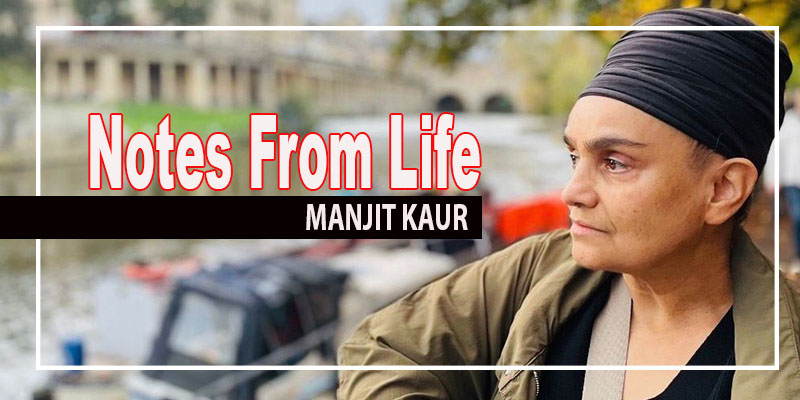
 By Manjit Kaur | Opinion |
How often do we think we know what the problem is, only to discover later that we were looking in the wrong place?
Over the years, I have noticed that when something goes wrong, whether in our relationships, workplaces, communities or even within ourselves, our immediate instinct is often to focus on what is right in front of us. We see the argument, the tears, the anger, the hurt, the complaint or the conflict, and we assume that is the problem.
But is it?
What if the thing that grabs our attention is not the problem at all? What if it is merely a symptom of something deeper? I have come to believe that the presenting problem often has its solution somewhere else.
Are we solving the right problem?
When something breaks down, our first reaction is usually to ask, “What’s wrong?” Yet we rarely stop to ask a more important question: “Are we looking at the right problem?”
As human beings, we all think differently. Some people approach problems analytically, while others respond emotionally. Some prefer facts and evidence, while others rely on intuition and experience. Men and women may sometimes approach situations differently, but it is important to remember that every individual is unique. We all learn differently, understand differently and make sense of the world through our own experiences.
That diversity of thinking is one of the gifts we have been given. I believe Waheguru created us this way for a reason. The challenge is that our individual perspectives can sometimes lead us to focus on what is obvious rather than what is true.
If someone appears angry, we may conclude that they are difficult or aggressive. If someone withdraws, we may see them as unfriendly. If someone reacts strongly to criticism, we might label them as oversensitive. But what evidence do we actually have that we are seeing the real issue?
What lies beneath the surface?
I often think about pain.
Physical pain is easier to understand. If your arm hurts, you naturally look at your arm. But even then, the source of the pain may not be where you feel it. The problem could be a trapped nerve elsewhere in the body.
The same is true emotionally. Someone may appear angry, but beneath the anger there may be fear. Someone may seem defensive, but underneath there may be shame. Someone may appear controlling, but hidden below the surface may be insecurity.
Many of us carry stresses that others cannot see. We may have experienced rejection, loss, disappointment, unfair treatment, loneliness, anxiety or grief. Sometimes we are affected by things we barely recognise ourselves.
A remark made in passing. A rude conversation. Being undermined at work. Being judged because of who we are. A hurtful comment from years ago. An experience of exclusion.
These things can remain beneath the surface long after the event itself has passed. When we focus only on visible behaviour, we risk missing the deeper causes that are driving it.
Why do we miss the real cause?
Part of the reason is that symptoms are easier to see than causes. It is much easier to point at an angry person than to understand the story behind their anger. It is easier to identify a conflict than to explore what created it.
And, if I am honest, it is often easier to see faults in others than to examine ourselves.
Why is that?
Perhaps because self-reflection can be uncomfortable. Perhaps because accepting responsibility can be painful. Or perhaps because it is easier to blame than to understand.
I have noticed how quickly people can label others. Sometimes we judge someone based on a single interaction, a rumour, a misunderstanding or an assumption.
Ten people can look at one individual and see ten different things. One sees confidence. Another sees arrogance. One sees strength. Another sees intimidation. One sees kindness. Another sees weakness.
The same person, yet completely different interpretations. What does this tell us? It tells us that our perceptions are not always reality. They are shaped by our own experiences, emotions, assumptions and prejudices.
When we rush to conclusions, we often end up solving the wrong problem.
The danger of passing the blame
One of the most damaging human tendencies is our habit of moving problems away from ourselves and placing them onto others.
We point fingers.
We blame.
We accuse.
We create a narrative in which someone else becomes the source of all difficulties.
Yet often, the blame itself becomes part of the problem.
Sometimes people use blame as a way to avoid looking inward. Sometimes it is about maintaining control. Sometimes it is about protecting their own image. Sometimes it is simply easier to make someone else responsible than to confront uncomfortable truths.
The result can be devastating. The person who is blamed may carry pain that does not belong to them. They may question themselves. They may lose confidence. They may feel isolated and misunderstood. And yet the original issue remains unresolved because attention has been diverted elsewhere.
Blame rarely heals. Understanding often does.
Lessons from everyday life
Life gives us many simple examples of this principle.
If a fuse keeps blowing, replacing the fuse again and again will not solve the problem if the wiring is faulty. The presenting problem is the blown fuse. The real problem is hidden elsewhere.
The same applies to relationships. Two people may argue about household chores, money or who forgot to make a phone call. Yet beneath those disagreements may be deeper feelings of being unappreciated, unheard or taken for granted. The argument is visible. The real issue lies underneath.
The same applies to conflicts within communities and societies. What appears to be a disagreement between groups may have roots in historical injustices, social inequalities, economic pressures or long-standing mistrust. Without understanding those deeper roots, attempts to solve the conflict often fail.
Looking beyond the symptom
So how do we become better at identifying real problems?
For me, it starts with asking better questions. Instead of asking, “Who is to blame?”, perhaps we should ask, “What happened to bring us here?” Instead of asking, “Why are they behaving like that?”, perhaps we should ask, “What might they be experiencing?” Instead of assuming we know the answer, perhaps we should become more curious.
Listening is also essential. Not listening simply to respond. Listening to understand. Listening beneath the words. Listening for what is not being said. Often, people’s deepest concerns are hidden between the lines.
When we create space for honest conversation, we begin to uncover what is really going on.
The courage to look deeper
Looking beneath the surface is not always easy. It requires patience. It requires humility. It sometimes requires us to confront truths about ourselves that we would rather avoid.
But when we find the courage to do this, something changes. We stop fighting symptoms and begin addressing causes. We stop blaming and start understanding. We stop winning arguments and start solving problems.
Most importantly, we become more compassionate human beings.
The next time a problem appears before us, perhaps we should pause before rushing to judgement. The presenting problem may not be the real problem. And the solution may be waiting somewhere else entirely.
After all, healing begins not when we discover who to blame, but when we discover what truly needs to be understood.
Join the conversation on this story on Asia Samachar’s Facebook and Instagram pages.

Manjit Kaur, a UK-based therapist and counsellor, is a presenter at the 1 Show Live at Panjab Broadcasting Channel, UK. She can be contacted via email at manjitkaur1show@gmail.com
RELATED STORY:
Sikh identity under siege: Children, safety and racism in the UK (Asia Samachar, 12 June 2026)
ASIA SAMACHAR is an online newspaper for Sikhs / Punjabis in Southeast Asia and beyond. You can leave your comments at our website, Facebook, Twitter, and Instagram. We will delete comments we deem offensive or potentially libelous. You can reach us via WhatsApp +6017-335-1399 or email: asia.samachar@gmail.com. For obituary announcements, click here