




















By Prabhjot Singh | Opinion |
Sikhs, like Sindhis and Gujjus, are universal communities, as they, like potatoes, are found everywhere in the world. Of them, the Sikhs are one of the most adjustable and hospitable communities and their Gurdwaras worldwide have not only been serving as spiritual centers for the community but also provide free board and lodging facilities to visitors and strangers alike. They also serve as community centres where various social functions, including weddings, are solemnised.
When a galaxy of hockey stars of Kenya and Malaysia met at a brief, solemn and rarest of rare reunion ceremonies in Kuala Lumpur in mid-December, the venue was the sacred premises of one of the oldest Sikh gurdwaras in Klang Valley (comprising of Kuala Lumpur and its neighbouring areas) Gurdwara Sahib Petaling Jaya (GSPJ).
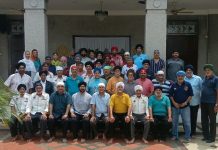
The management of the gurdwara organised a felicitation ceremony for six-time Olympian Avtar Singh Sohal, besides his one-time colleague, Harvinder Singh Sibia, and other members of the visiting Sikh Union Hockey Club.
The felicitation ceremony was organised at the instance of former Malaysian skipper Sarjit Singh. Sarjit Singh had in May taken two Malaysian teams, including one of veterans, to Nairobi in Kenya, to play in the Vaisakhi Hockey Tournament.
I his endeavour, Sarjit Singh had the support of his former colleagues and Olympians Avtar Singh Gill and Maninderjit Singh besides Junior World Cupper Surinder Singh. Also felicitated was Kenyan World Cupper Narinder Singh Nindi.

The Kenyan hockey delegation chose to pay a return visit that coincided with the 13th FIH Hockey World Cup for Junior Team held in Kuala Lumpur from December 3 to 16. Also, a part of the delegation was junior hockey team of Sikh Union Club are members of the junior team of the Club.
Avtar Singh, President of the gurdwara management committee, and other office-bearers, presented “siropas” to Olympian Avtar Singh, Harvinder Singh Sibia, Del Mudher, Narinder Singh Nindi, Manjit Singh Jhite, and Daljit Singh. GSPJ also runs a Punjabi school.
At present, its management committee comprises Avtar Singh (President), Baldev Singh (Vice-President), Keshminder Singh (Secretary), Manisha Kaur Badesha, Indarjit Kaur, Saran Singh, Kuldip Singh, Sarabmeet Singh, Jasbinder Singh, Ranjit Kaur, Pavandeep Singh, Harjinder Singh, Rajinder Singh, Balbir Singh and Avtar Singh.
The visitors also made some donations for the recently renovated kitchen of the temple. The felicitation ceremony was preceded by recitation of some slokas followed by the Ardas.
Almost all members of the visiting Sikh Union Club were turban wearing boys with 12-year-old Harwinder Singh as the youngest while two members of the Kenyan team that played in the Junior World Cup qualifier are also accompanying the delegation.
MALAYSIAN JOURNALIST
Aftar Singh is a Sikh journalist. Born and brought up in Seremban, the state capital of Negri Sembilan, he prides himself to be a Malaysian.
“My father Sukhdev Singh was in Army, and he also wore a turban. My mother Gurmit Kaur was a housewife,” he says recalling that his grand and great grandparents were Sikhs and Malaysians.
“Our last three generations have been Malaysian,” he asserts but maintains that he loves his roots. “We still have land in our ancestral village in Punjab. And I am proud of my rich cultural and religious heritage.
My maternal grandfather was Bachan Singh. He was in Singapore police. I still have many maternal relatives in Singapore. I have never faced any identity crisis. Outside Malaysia, I am invariably identified as a Sikh, a Punjabi and an Indian,” reveals Aftar Singh.
He is not an isolated case of his type. There are hundreds of thousands of expatriates like him who have been born and brought up in countries other than India. There are many people like him who have either never been to India or have visited the motherland of their grandparents may be once or twice.
KENYAN SIKHS
Same is the story with hundreds of Kenyan Sikhs who have never been to India, but their physical appearance makes their instant identity as “Indians”.
I had an opportunity to interact with many of them, not only in Malaysia or Kenya but elsewhere, including Canada, USA, England, Australia, and Chile.
“Identity crisis is an issue facing some of us as we are at times get confused about our roots, our heritage, religious backgrounds and social bearings,” said a young Central American who is born in Trinidad and his grandparents came from Uttar Pradesh.
He has “Singh” appended to his name for identifying his Indian roots.

“I want to go to India to see the land to which my great grant parents belonged,” says Tarrel Singh, a national hockey player of Trinidad. His grandfather, Satya Narayan Singh, moved to Trinidad in late 90s.
There are many expatriates who rue being labelled as “terrorists” or “militants”. “We are peaceful and hardworking people and have made immense contributions to the development of nations that we have made our new homes,” says Mr Jasbir Phlora of Nairobi in Kenya.
GURDIAL SINGH
Tan Sri Gurdial Singh Gill wanted to be a doctor. When the World War II broke out, he was taking exams of a medical school. His studies were disrupted. The family, that had moved from Dhamot village in Ludhiana to Malaysia in the early 20th century, was suddenly hit by poverty.
Milhan Singh, father of Gurdial Singh Gill, was a farmer and a freedom fighter. He was greatly influenced by the Ghaddar movement that started in the USA. He wanted to be part of it. The purpose of his trip to the US as to buy and bring back some arms and ammunition to fight the British.
His journey by ship to the US was disrupted. He had no choice but to make Malaysia his home and started farming there.
Because of World War II, returns from farm earning fell considerably as people lost their purchase power. These affected studies of Gurdial Singh Gill.
After Gurdial failed to get into medical school, he took to sports. He was very keen on tennis, golf, and cycling. He set up a sports goods business in late 40s and is credited for German sports brand, Adidas, not only in Malaysia but also adjoining countries like Indonesia, Singapore, and Thailand.
As a successful businessman, he started sponsoring sports and became active in sports association. Initially, he got into athletics and held key positions in the Malaysian Athletic Association.
His passion was reflected in his phenomenal rise as a key man in the Asian Cycling Association. Besides cycling, he was a regular sponsor of Malaysian women hockey since 2000.
In 2009, his contribution was recognised. The title of “Tan Sri” was conferred upon him in 2009.
Since Gurdial Singh was a family man and he had only two daughters, he built a 10-storey building and named it after his wife Wiswa Harwant.
I had an opportunity to visit GS Gill Sports and Wiswa Harwant and met Harvey Sidhu, a grandson of late Tan Sri Dato G S Gill.
SInce Golf and tennis were also very dear to him, he started his own brand names – McGill and Eider – and created a huge market for them. Soon he parted ways with Adidas.
“To commemorate memory of our grandfather, Tan Sri Dato GS Gill, we plan to start a local level hockey tournament next year,” says Harvey Sidhu, who like his grandfather, is Malaysian by birth.
The family is maintaining its Punjab connections. “I have some relatives, including my aunties in India. I keep visiting them though my last visit was about four years ago when I went to get my wedding dress as well as that of my wife from India,” recalls Harvey Sidhu, who did his master’s in business from a British School.
THE AVTARS
Besides Sikhism, hockey has been another strong connection between Punjabi Diaspora and countries like Kenya and Malaysia.
If Indian hockey is synonymous with Balbirs, so is Malaysian hockey with Avtars. The just concluded FIH Hockey World Cup for Junior Men was an occasion when I learnt about various Avtar Singhs who have remained integral part of Malaysian hockey.
Of course, six-time Olympian Avtar Singh Sohal of Kenya stands tallest of them all.
There was a time when three Balbirs represented India in an international tournament.
Interestingly, Avtars enjoy the same status as Balbirs enjoy in Indian hockey. Other than senior sports journalist Aftar Singh, who has been covering sports in general and hockey in particular for nearly three decades, I had an opportunity to meet or see at least three other players – all Avtars – who represented Malaysia in international hockey at different levels.
Interestingly several Avtar Singhs have remained associated with Malaysian hockey, both as players and officials.
When the GSPJ management invited visiting Kenyan Sikh Union Club for felicitation, one of the Avtars of Malaysian hockey turned up. He was Avtar Singh Gill who claims to have represented Malaysia men in international hockey for almost a decade from 1976 till 1984. He said he used to be the only winger belonging to Punjabi community who represented Malaysia in Olympic games.
He rued he missed 1980 Moscow Olympic games because of the boycott but went on to play in the 1984 Los Angeles Olympic Games.
Interestingly, the GSPJ function brought together Avtars of Kenyan hockey and Malaysian hockey. Avtar Singh of Kenya s perhaps the only Sikh to have gone to six Olympic Games – four times as a player, once as a coach of Kenyan team and sixth time as a judge. He would have been to eight Olympic games but boycotts of 1976 and 1980 deprived him of this distinction.
Other day I was told about another Avtar Singh, a deep defender, who played for Malaysia in various international tournaments. He is Avtar Singh Pandya. He represented security forces in domestic hockey. He had come to witness some of the matches of the Junior World Cup at Bukit Jalil National Hockey Stadium.
The third Avtar Singh of Malaysian hockey played in Junior World Cup. His association with the sport continues unabated as he represented Malaysia veterans in various international tournaments. He also played as a forward.
He told me that because of shrinking job market, youngsters in Punjabi community on Malaysia, are now focussed more on studies than sports.
“Kirandeep, the first Sikh girl to play for Malaysia, both juniors and seniors, is now a student of medicine. She wants to be a doctor. Her brother, Pawandeep, too is a good hockey player and was chosen to represent Malaysia. Their father, too, plays hockey. But when they think of their career, they prefer studies than continuing with sports,” adds Avtar Singh.
PALL SINGH
After attending a historic reunion of Sikh hockey Olympians of Malaysia and Kenya, a brief encounter with Pall Singh, a former national athlete of Malaysia, was like icing on cake.
Pall Singh, like many other eminent Sikhs, including Olympians, is a Malaysian born. He got a chance to visit the motherland of his forefathers in May this year.
“I am 60 now and went to India for the first time. My ancestors came from Baba Bakala. My father told me about our village in Majha. All he remembers is that our house in the village is close to the Sikh Gurdwara. And every time there is some programme, we would come to know of it through the loudspeaker.
“And believe me, when I went there this May, I could hear the morning and evening programmes at the Gurdwara Sahib through its loudspeaker. Some people in the village did recall some great moments with my ancestors. Overall, it was a good rewarding trip to our ancestral home,” recalls Pall Singh, who recently retired from security forces. Now he is in the transport business.
Things have changed drastically in Malaysia, he says.
“Sikhs have been in Malaysia for more than 100 years. Their numbers are decreasing now as many families have already migrated to North America, Australia, UK, and New Zealand. Some have even chosen Singapore for their relocation.
“Job avenues are shrinking. Earlier, many Sikhs would get into security forces, including police. But now, the rules and recruitment policies have changed,” he says.
While talking about Sikhs in Malaysia, Pall Singh mentions Ipoh as one of nerve centres. “Of 120-odd Gurdwaras in Malaysia, more than 40 of them are in Ipoh alone. But since the job avenues have dried up in Ipoh, most of Sikh families have either moved to Kuala Lumpur or even to Singapore. The Sikh population is now less than a lakh in Malaysia,” he adds.
Most of the Sikh families are maintaining their traditions and they follow “Rehyat Maryada” and follow all religious ceremonies besides celebrating Sikh festivals.
“I represented Malaysia in various international sporting events. My favourite event was 20 km walk. I met Brig Kuldip Singh Chandpuri during international athletic meets. I knew him as an official of the Amateur Athletic Federation of India,” he recalls.
He, however, has no memories of any other Indian athlete or walker. “Most of Punjabi or Sikh walkers like Zora Singh and Kuldip Singh Lall were perhaps much senior to me. So, I did not get a chance to compete with them. I was the only Sikh walker who represented Malaysia,” concludes Pall Singh.

(Prabhjot Singh is a veteran journalist with over three decades of experience of 14 years with Reuters News and 30 years with The Tribune Group, covering a wide spectrum of subjects and stories. He has covered Punjab and Sikh affairs for more than three decades besides covering seven Olympics and several major sporting events and hosting TV shows.)
RELATED STORY:
Punjab has to move on to a new economic model (Asia Samachar, 28 Jan 2023)
ASIA SAMACHAR is an online newspaper for Sikhs / Punjabis in Southeast Asia and beyond. You can leave your comments at our website, Facebook, Twitter, and Instagram. We will delete comments we deem offensive or potentially libelous. You can reach us via WhatsApp +6017-335-1399 or email: asia.samachar@gmail.com. For obituary announcements, click here