






















By Harmeet Shah Singh | Opinion |
London/New Delhi — Artificial intelligence (AI) has moved far beyond research labs. It now enters spaces once reserved for moral and spiritual counsel.
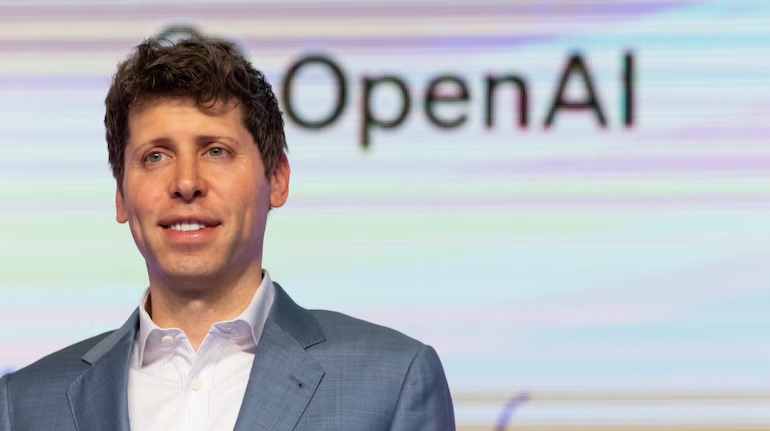
During the recent India AI Impact Summit in New Delhi, OpenAI CEO Sam Altman, widely credited with bringing AI into everyday use, reframed concerns about the massive energy demands of AI by comparing them to the resources required to raise a human being.
“People talk about how much energy it takes to train an AI model. But it also takes a lot of energy to train a human. It takes about 20 years of life — and all the food you consume during that time — before you become smart,” Altman told a media event.
The comparison places AI in the category of long-term societal investment.
The Danger of Concentrated Power
Altman has also cautioned against limiting advanced AI to a single company or nation. Wider access, he argues, allows individuals and institutions to question, test and refine these systems.
OpenAI’s approach releases evolving models in stages so societies learn through interaction as the technology grows.
For religious traditions, this openness presents a complex dilemma.
Expanded access supports creative communication. It also accelerates the production of persuasive content that appears authoritative without grounding in authentic sources.
Fabricated Scriptures
I recently encountered GPT-based tools generating scriptural material that closely mirrors the linguistic rhythm of Gurbani. For readers unfamiliar with the original texts, these outputs carry an appearance of authenticity.
In a tradition where the sanctity of the revealed word holds central importance, fabricated texts carry serious implications for theological understanding.
On behalf of UNITED SIKHS (UK), I brought these examples to the Sikh religious leadership. The Shiromani Gurdwara Parbandhak Committee (SGPC), headquartered in Amritsar, subsequently constituted a dedicated AI panel to examine the implications of emerging technologies for Sikh practice. I serve as a member of that panel.
Machine-Generated Spirituality
Generative AI now produces devotional reflections and engages with ethical dilemmas in seconds. It can draw upon religious literature to tailor responses to individual emotional needs.
A grieving individual may seek comfort from a chatbot trained on scriptural commentaries. A student exploring purpose might receive guidance from an app combining behavioural insights with sacred phrasing. Congregations could encounter AI-drafted sermons styled after historical traditions.
The Vatican’s January 2025 note, Antiqua et Nova, addresses this frontier directly. It observes that AI may simulate aspects of human reasoning while lacking the relational depth that defines human intelligence.
The distinction between imitation and genuine encounter carries importance for faith communities navigating technological change.
A Challenge for Faith Communities
AI advances through continuous iteration and integration across governance, finance and healthcare. Spiritual institutions now stand at a similar crossroads.
India’s position as an AI frontrunner lends urgency to this dialogue.
Home to diverse religious and cultural traditions stretching back centuries, the world’s most populous country faces a critical moment. The encounter between tradition and adaptive computation will influence global conversations on the role of technology in shaping belief and practice.
AI will remain a permanent feature of modern life. Religious communities that engage with foresight may preserve doctrinal coherence in an era of machine-generated guidance.
Ignore this shift, and the next sermon, the next katha or the next kirtan may come from a system that has already learned how to speak in the language of your faith — where, without guardrails, revealed word gives way to generated content, and the most sublime of creations, the human being, disappears from the act of guidance.
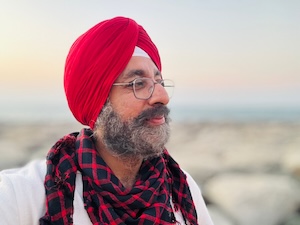
Harmeet Shah Singh is a career journalist currently serving as Communications and Advocacy Director at UNITED SIKHS (UK), a charity registered in England and Wales.
* This is the opinion of the writer and does not necessarily represent the views of Asia Samachar.
RELATED STORY:
‘Sikh GPT’ raises alarm after inaccuracies found in Gurbani content (Asia Samachar, 25 Jan 2026)
ASIA SAMACHAR is an online newspaper for Sikhs / Punjabis in Southeast Asia and beyond. You can leave your comments at our website, Facebook, Twitter, and Instagram. We will delete comments we deem offensive or potentially libelous. You can reach us via WhatsApp +6017-335-1399 or email: asia.samachar@gmail.com. For obituary announcements, click here