





















By Raag & Reel | Movie Review |
Released in 2022 and now streaming on Netflix, Jogi revisits one of modern India’s darkest chapters: the 1984 anti-Sikh massacre in Delhi. It is a subject that continues to weigh heavily on the Sikh community in particular, and on human rights observers more broadly.
The film offers a sobering glimpse into the terror that unfolded in the aftermath of Indira Gandhi’s assassination, when politically backed mobs systematically targeted Sikh families. While it carries the occasional trace of familiar Bollywood tropes, at its core Jogi is a restrained, performance-driven survival drama anchored in emotional realism.
SEE ALSO: 40 years after the Sikh Genocide of Nov 1984
Directed by Ali Abbas Zafar, the film avoids shrillness despite its volatile subject matter. Zafar opts for measured pacing and controlled storytelling rather than sensationalism. The violence is present and deeply unsettling, yet it is framed through the lens of personal relationships and moral choices rather than spectacle. Some critics have suggested that the treatment is deliberately softened—less politically incendiary and more focused on human bonds—but that restraint also makes the tragedy more intimate.
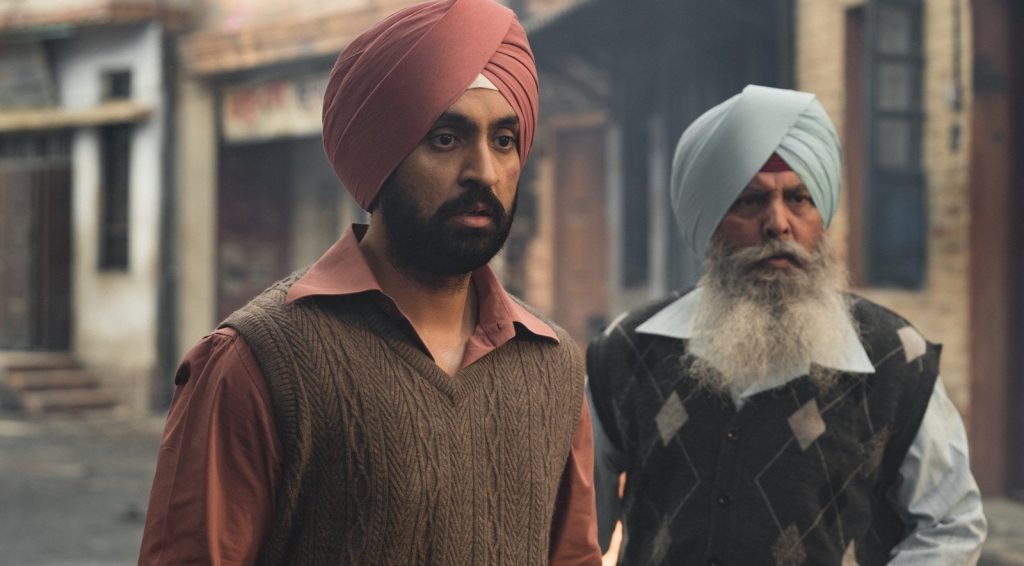
At the centre of the film is a sterling performance by Diljit Dosanjh as the titular Jogi. Dosanjh plays an ordinary man thrust into extraordinary circumstances, determined to save his family and neighbours as chaos engulfs his community. His portrayal captures fear, resolve and quiet heroism without slipping into melodrama.
“There are many untold stories from that time, pertaining to the Sikh community in Delhi, Punjab and Kolkata, and every time I mention that I was born in 1984, everyone has their own stories,” Dosanjh told Variety in an interview in 2022. “Stories from that era have not been told and if there is an opportunity to tell them with a good team and platform, I do it.”
The film also underscores a broader and more unsettling reality: how systems of power can enable brutality, sending a chilling message to those who dare to stand apart. Taking a step back from the narrative, one cannot ignore the enormity of what families endured—loved ones burned alive, abducted, tortured, women assaulted, entire households erased, and activists disappearing without trace. Decades later, some bodies remain missing, and the scars within the Sikh community are deep and enduring.
Co-starring Mohd. Zeeshan Ayyub and Kumud Mishra, Jogi ultimately emerges as a humane, accessible recounting of tragedy. It may not interrogate every political layer, but it compels viewers to remember—and to spare a thought for the families whose lives were irrevocably changed.
RELATED STORY:
Sardaar Ji 3 storms Pakistani theatres with record-setting opening (Asia Samachar, 29 June 2019)
ASIA SAMACHAR is an online newspaper for Sikhs / Punjabis in Southeast Asia and beyond. You can leave your comments at our website, Facebook, Twitter, and Instagram. We will delete comments we deem offensive or potentially libelous. You can reach us via WhatsApp +6017-335-1399 or email: asia.samachar@gmail.com. For obituary announcements, click here