



















By Manjit Kaur | Opinion |
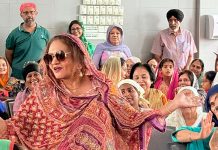
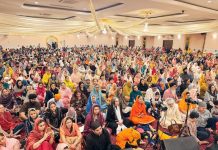
I recently attended a meeting in the UK Parliament in Westminster, London, which centred on values-based education. It was a space meant to inspire hope, compassion and shared humanity. It should have been uplifting, and in many ways, it was. I heard some very passionate speeches about a Sikh’s duty to serve and protect. But it also left me carrying something heavy.
During the meeting, one participant, a mother of a young Sikh boy at a local school in Westminster, speaking passionately while holding back her tears, spoke of her fear she had never felt in her entire life living in the UK. She shared that her young, turbaned son had been advised not to attend school for his own safety. Hearing that was deeply unsettling. That moment stayed with me.
As we stepped outside onto Parliament Square, the atmosphere reinforced that feeling. There was a strong police presence, and nearby, far-right protesters were gathered, shouting slogans in response to the recent tragic knife attack in Belfast. The anger, the generalisations, the sense of blame directed at entire communities; it was all there, in plain sight.
As a parent, I could not help but think of my own children and grandchildren. Not just about my own safety, but theirs and the safety of all children. What kind of world are they growing up in?
Looking Back: The Strength of Those Who Came Before Us
My thoughts often return to my childhood. I was born and bred in the UK. Growing up, I didn’t fully understand what my parents, and especially my father, must have faced when he first came to the UK alone in the 1960s, as a brown man entering a largely white society. He never spoke about his struggles. He never shared the racism that he must have endured. But now, as I reflect, I realise there must have been much he carried silently in his efforts to protect us.
All I saw was his strength. He worked hard, long days, and like many men of his generation, he found comfort and belonging within his own community. They lived together, supported one another, and gathered after work; not just to relax, but to find strength in shared identity. They held on tightly to who they were: their roots, their culture, their food, their values.
This was so even when that culture was mocked. I remember how comments like “you smell of curry” were thrown around. At the time, I didn’t fully understand whether those words were said in jest or with prejudice. But looking back, I recognise the weight they must have carried. I also wonder how my father and others responded, whether they laughed it off or simply chose silence as a way of coping.
Despite this, he engaged with people from all backgrounds with humour, warmth, and humanity. He never lost sight of who he was, and his Sikhi, and he found ways to live alongside others. That quiet resilience and pride in his Sikhi had a big impact on me.
Growing Up Between Worlds
As a young person, I always had an awareness that I was “different.” There was an unspoken sense that acceptance, particularly from white peers, mattered.
If I am honest, I didn’t experience overt racism growing up, but I was aware of tensions. It wasn’t always what was said; it was often body language, small reactions, subtle distancing. I had grown up mostly with Asian friends. I also had some Black friends, but if I am honest, I very rarely formed close friendships with white girls. There was always something unspoken.
And yet, despite those feelings, I never lived in fear. I travelled alone to school. I got on buses, and sometimes I walked freely. There was confidence in simply being able to exist without constantly looking over your shoulder. Yes, there were issues of class and racial discrimination, but there wasn’t this constant sense of threat. That, to me, is the biggest difference today.
A Different Kind of Exposure
We now live in a world where no one can escape what is happening around us. Social media platforms—from TikTok, Instagram, Facebook and X to YouTube—have made it possible for events, opinions, and misinformation to be constantly in our faces. Hatred does not stay confined to a locality; it spreads rapidly, widely, and often without accountability. What happens in Southampton or Belfast can instantly trigger responses across the UK and even abroad.
What concerns me deeply is how quickly narratives form, especially those that have little truth behind them. With the power of social media, one person’s actions and behaviours can easily be used to stereotype an entire community. Fear is fuelled. Anger grows. And suddenly, people who have nothing to do with an incident are made to feel responsible for it.
I want to be clear: I condemn the actions of Vikrum Digwa. The murder of Henry Nowak is a tragedy, and there is no justification for such violence. But to associate this act with Sikhi, a faith rooted in love, peace, justice, and the protection of human rights, is both wrong and dangerous. Within any community, there will always be individuals who do not fully understand or live by its values. That does not define the whole, but it feels like this is what has happened.
A Generation Carrying a New Fear
What troubles me the most is what I am now hearing from younger generations. I have never, in my lifetime, experienced this level of open far-right hostility. And yet today, I hear young Sikhs say they are afraid to step outside. They worry about how they will be perceived because of their turban, their identity, their visible faith.
Even older members of our community are expressing fear. This is deeply worrying. Every generation has its challenges, but this feels different. This is not just about opportunity or inequality; this is about safety, about belonging, about whether people feel secure simply being themselves.
We are a people with a long history of resilience. Sikhs are a peaceful, generous, and compassionate people. We believe in standing up for justice, not in an aggressive or ego-driven way, but with quiet strength and dignity. As a proud nation, we have endured much oppression, but we are strong and courageous, and we refuse to live in fear. But that does not mean fear does not exist around us, which means we must remain alert to the dangers around us.
The Weight on Young Minds
Young people today already face immense pressure, whether in education, work, mental health, or general expectations. To add the fear of being targeted because of who they are, and how they look is an extra burden they should not have to carry.
As a parent, this weighs heavily on me. No child should feel unsafe going to school. No young person should feel that their identity puts them at risk. No family should have to question whether they belong in the very society they call home. And yet, that is where we seem to be heading if we are not careful.
Choosing a Different Path
My recent experience in Westminster has stayed with me. It highlights a moment where we, as a society, both Sikh and non-Sikh, must choose carefully. We can allow fear to divide us. We can allow racism to win. Or we can use this moment to come together, to educate, to listen, and to build bridges and understanding.
Values-based education is an important part of a bigger strategy. In our schools and communities, we need to teach empathy, critical thinking, and respect for difference. Most of all, we need to challenge the thinking that blame entire communities, as we have seen happening in recent days in the media.
Join the conversation on this story on Asia Samachar’s Facebook and Instagram pages.

Manjit Kaur, a UK-based therapist and counsellor, is a presenter at the 1 Show Live at Panjab Broadcasting Channel, UK. She can be contacted via email at manjitkaur1show@gmail.com
RELATED STORY:
Valentine’s Day: A Sikh perspective on true love (Asia Samachar, 14 Feb 2024)
ASIA SAMACHAR is an online newspaper for Sikhs / Punjabis in Southeast Asia and beyond. You can leave your comments at our website, Facebook, Twitter, and Instagram. We will delete comments we deem offensive or potentially libelous. You can reach us via WhatsApp +6017-335-1399 or email: asia.samachar@gmail.com. For obituary announcements, click here