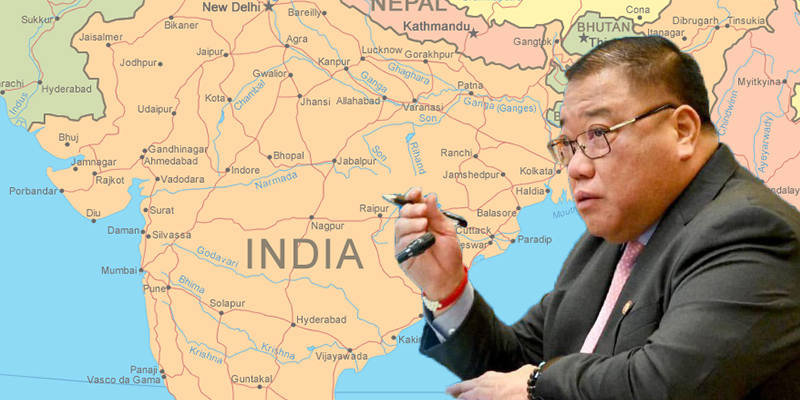
Malaysia has extended its visa exemption for Indian nationals until the end of 2026, allowing them to visit the country without a visa for up to 30 days.
The extension, first introduced in 2023, was announced by Awang Alik Jeman, the Secretary-General of the Malaysian Home Ministry.
The rules allow Indian nationals to stay in Malaysia for up to 30 days by presenting a return flight ticket and proof of sufficient funds for their stay, either in the form of a bank statement or credit cards, upon arrival.
The announcement comes on the heels of a surge in Indians visiting Malaysia. As of November 2024, Malaysia has successfully met its goal of attracting one million Indian tourists this year, with a total of 1,009,114 visitors from India recorded between January to November 2024.
Tourism, Arts and Culture Minister Tiong King Sing said the achievement reflects a significant 47% increase compared to the same period in 2019, before the Covid-19 pandemic, and represents a notable 71.7% growth from 2023, underscoring Malaysia’s growing popularity as a top destination for Indian travellers, according to Bernama.
“In response to the surge, 2024 also saw the launch of numerous new routes from India, including Indigo Airlines which introduced direct flights daily to Penang and Langkawi starting December 2024 alongside their existing routes to Kuala Lumpur.
“The increased connectivity from India helps to further strengthen Malaysia as a choice destination, especially in the lead up to the Visit Malaysia Year 2026,” Tiong said in a statement on Dec 15.
ASIA SAMACHAR is an online newspaper for Sikhs / Punjabis in Southeast Asia and beyond. You can leave your comments at our website, Facebook, Twitter, and Instagram. We will delete comments we deem offensive or potentially libelous. You can reach us via WhatsApp +6017-335-1399 or email: asia.samachar@gmail.com. For obituary announcements, click here
Event | Singapore: Naam Ras Kirtan Darbar, the biennial mega kirtan and katha event, is back. Check out the fun-filled and enriching events take it place at the sideline of the Naam Ras 2024. NaamRas2024 will be happening on 26-29th of December, at Singapore Expo Hall 6! Click here for more details.
ASIA SAMACHAR is an online newspaper for Sikhs / Punjabis in Southeast Asia and beyond. You can leave your comments at our website, Facebook, Twitter, and Instagram. We will delete comments we deem offensive or potentially libelous. You can reach us via WhatsApp +6017-335-1399 or email: asia.samachar@gmail.com. For obituary announcements, click here
The estimated cost is between RM250,000 and RM300,000, which include replacing the roof and the darbar at the first floor, gurdwara caretaker Jagjiwan Singh told Asia Samachar.
The other works include repairing the wooden floooring of the darbar sahib (prayer hall) and other parts of the building damaged by water from the rescue efforts. Also requiring work is the ground floor ceiling, ground floor tiles, a number of electrical items as well as furniture.
The gurdwara 104-year-old gurdwara was rebuilt in the 1960s.
For those intending to suport the rebuilding process, here are the relevant details: Account number: 17900 1001 1868; Bank: Am Bank; Name: Sibu Sikh Temple. Send transaction details to Jagjiwan Singh +6019-8597600 [number corrected] for a receipt.
Fire at Gurdwara Sahib Sibu, Sarawak, on Dec 14, 2024
ASIA SAMACHAR is an online newspaper for Sikhs / Punjabis in Southeast Asia and beyond. You can leave your comments at our website, Facebook, Twitter, and Instagram. We will delete comments we deem offensive or potentially libelous. You can reach us via WhatsApp +6017-335-1399 or email: asia.samachar@gmail.com. For obituary announcements, click here
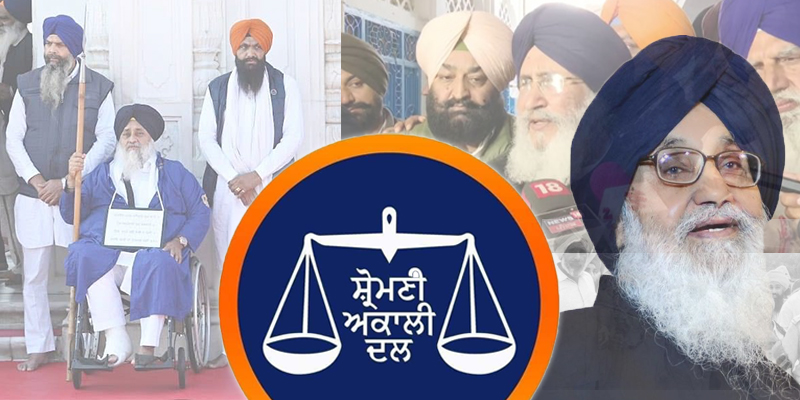
Future of Shiromani Akal Dal. Left: Sukhbir Singh Badal (son of Parkash Singh Badal, right) appearing at Harmandir Sahib for his tankah
By Gurnam Singh | Opinion |
December 2, 2024, marked a watershed moment in Punjab’s political and religious history. On this day, the Akal Takht, the supreme temporal authority of the Sikhs, decisively intervened in the affairs of the Shiromani Akali Dal (SAD), symbolically ending the decades-long dominance of the Badal family over the party and its ideology. The Takht’s five Jathedars, in an extraordinary move, summoned SAD’s leadership and demanded public atonement for the party’s alleged “gunaah” (crimes) committed during its time in power.
At the heart of these accusations lay the party’s inability to prevent the sacrilege of the Guru Granth Sahib during its tenure—a failure that deeply hurt Sikh sentiments. Former SAD President Sukhbir Singh Badal bore the brunt of the criticism, but the late patriarch, Parkash Singh Badal, was not spared. The withdrawal of the prestigious Panth Rattan Fakhr-e-Quam title previously conferred upon him underscored the gravity of the Akal Takht’s stance.
This public reprimand, coupled with the SAD’s years of political mismanagement, corruption allegations, and detachment from grassroots Sikh concerns, has brought the party to the brink of irrelevance. Once the bastion of Panthic values and Punjabi nationalism, the Akali Dal today finds itself at a crossroads.
The Challenges to Revival
For SAD or any reformed Panthic party to regain its lost stature, it must confront several formidable challenges:
First, there is the issue of erosion of trust amongst the Sikh masses: The Badal family’s hold over SAD transformed the party from a movement representing Sikh interests to a power-centric entity embroiled in controversies. The sacrilege incidents, coupled with poor governance, created a chasm between the party and its traditional voter base. Restoring trust will require more than apologies—it demands tangible action and visionary leadership.
Secondly the new party faces intense competition from AAP and Congress. The emergence of the Aam Aadmi Party (AAP) as a dominant political force in Punjab, combined with the Congress’s renewed focus on Sikh issues under leaders like Rahul Gandhi, has dramatically reshaped the state’s political landscape. Both parties are already capitalizing on the vacuum created by SAD’s decline.
Shooting incident in Darbar Sahib, Amritsar, on Dec 4, 2024 with Sukhbir Singh Badal seen seated on a wheelchair on the right – Photo: Grab from PTI video
And perhaps the greatest challenge is unifying the many factions that have emerged in the chaos left by the Akali Dal. Internal divisions within Sikh religious and political factions have further weakened the Akali Dal’s ability to unify the community. The lack of a cohesive Panthic agenda makes any revival effort significantly harder.
Last, given the shifting demographics, there is the question of how to inculcate broader Punjabi sentiments. SAD’s traditional focus on Sikh-centric issues may no longer suffice in a state where non-Sikh voters, particularly Hindus, Dalits and the increasing number of Christian converts, play a crucial role. A narrow Panthic approach risks alienating these key demographics.
The Path Forward: A New Vision for Punjab
While the odds are stacked against SAD, a resurgence is not entirely out of the question. For this to happen, however, the party—or a new formation—must reinvent itself.
The first priority will be to establish a new leader for a new era. The Akali Dal desperately needs a charismatic leader untainted by past controversies, and one that can hold their own on an international stage. This individual must bridge the generational gap, embody integrity, and inspire both Sikh and non-Sikh voters.
Another challenge is to reconstitute the political project of the new party which must be rooted in a broader nationalism. Building on the widespread alienation with the centrist policies of the Bharatiya Janata Party (BJP), the new party’s future lies in championing a Panjabi nationalist agenda that resonates across communities. Given the inclusive and broadly secular nature of Sikh philosophy, combining a Panthic agenda and a Panjabi nationalist agenda is perfectly possible. A modernized version of the Anandpur Sahib Resolution, focusing on religious freedom, federalism, human rights, social justice, and anti-Hindutva sentiment, could provide a fresh ideological framework.
The now defunct Akali Dal always prided itself as being a pro-farmer party. The issue of rights and economic justice for Punjab’s farmers remain at the heart of the state’s socio-economic fabric. Building on the momentum of the 2020-21 farmers’ protests, a Panthic party could reclaim relevance by advocating for agrarian reforms, fair pricing, and environmental sustainability.
If there is one issue that united the people, that is governance and corruption. A new party will need to institute social and institutional reforms on a radical scale. Indeed, one of the many failures of the AAP has been on the issue of corruption, which was one of their main manifesto pledges. To regain moral authority, any future Panthic party must prioritize transparency, accountability, and democratic functioning within its ranks. Partnering with civil society organizations to address issues like drug addiction, unemployment, and caste discrimination could help rebuild public trust.
The Road Ahead
The fall of the Badal dynasty offers a unique opportunity for introspection and reinvention. The Akali Dal, once a torchbearer of Sikh and Punjabi aspirations, can either fade into obscurity or rise phoenix-like from the ashes of its past mistakes.
Whether this resurgence comes from a reformed Akali Dal or a completely new Panthic movement, one thing is clear: it must move beyond narrow sectarianism and embrace a broader, inclusive vision for Punjab. This vision must honor the state’s pluralistic heritage while addressing the socio-economic challenges of the present.
The call for forgiveness issued by the Akal Takht is both a rebuke and a chance for redemption. Only time will tell if Punjab’s Panthic leadership has the humility to seek forgiveness and the courage to rebuild.
Gurnam Singh is an academic activist dedicated to human rights, liberty, equality, social and environmental justice. He is an Associate Professor of Sociology at University of Warwick, UK. He can be contacted at Gurnam.singh.1@warwick.ac.uk
* This is the opinion of the writer and does not necessarily represent the views of Asia Samachar.
ASIA SAMACHAR is an online newspaper for Sikhs / Punjabis in Southeast Asia and beyond. You can leave your comments at our website, Facebook, Twitter, and Instagram. We will delete comments we deem offensive or potentially libelous. You can reach us via WhatsApp +6017-335-1399 or email: asia.samachar@gmail.com. For obituary announcements, click here
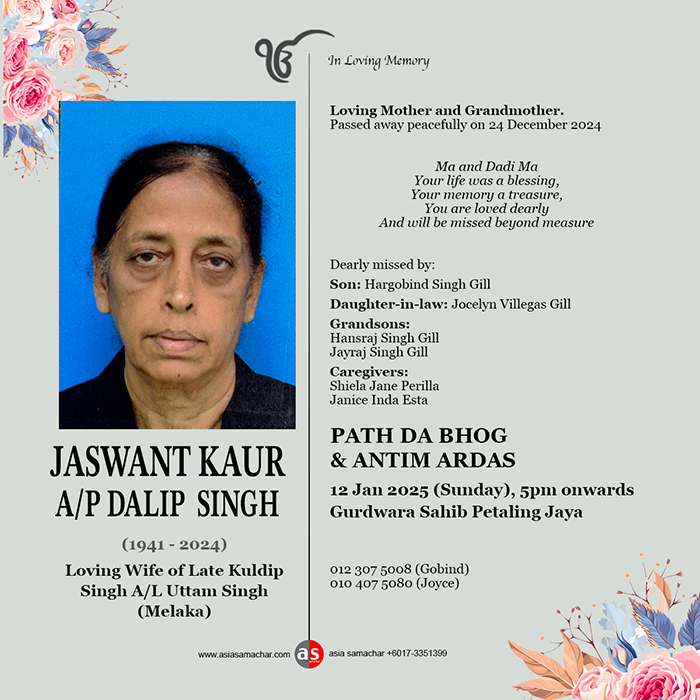
| Entry: 24 Dec 2024; Updated: 1 Jan 2025 | Source: Family
ASIA SAMACHAR is an online newspaper for Sikhs / Punjabis in Southeast Asia and beyond. You can leave your comments at our website, Facebook, Twitter, and Instagram. We will delete comments we deem offensive or potentially libelous. You can reach us via WhatsApp +6017-335-1399 or email: asia.samachar@gmail.com. For obituary announcements, click here
d/o Late Sdr. Gandha Singh Village: Chola Sahib, Amritsar
w/o Late Sdr. Amar Singh Pannu (Ipoh)
Deeply missed and fondly remembered by her Children / Spouses: Dato Dr. Mohan Singh Pannu / Datin Dr. Amrit Kaur Dr. Manjit Kaur / Late Ir. Harbhajan Singh / Dr. Narinder Singh Late Datuk Dr. Jasbir Singh Pannu / Datin Sarjit Kaur Dr. Kerpal Singh Pannu / Dr. Surinder Kaur Late Sdr. Patwinder Singh (Pat Pannu) / Sdrni. Sarjit Kaur (London) Sdr. Gurdev Singh / Sdrni. Baliet Kaur
Grandchildren, Great Grandchildren, Relatives and Friends.
We humbly invite you and your family to join us for Kirtan Darbar followed by Sahej Path Da Bhog.
ASIA SAMACHAR is an online newspaper for Sikhs / Punjabis in Southeast Asia and beyond. You can leave your comments at our website, Facebook, Twitter, and Instagram. We will delete comments we deem offensive or potentially libelous. You can reach us via WhatsApp +6017-335-1399 or email: asia.samachar@gmail.com. For obituary announcements, click here
In this technology-driven era, Sikh youth can leverage Artificial Intelligence (AI) to safeguard and promote their rich cultural heritage. By digitizing sacred texts, recreating historical sites virtually, preserving oral traditions, and enhancing cultural education, AI serves as a bridge between tradition and modern technology. This article explores the practical examples of AI-driven tools for translating scriptures, simulating historical events, and fostering global awareness of Sikhism. Through these innovative approaches, the youth are empowered to ensure their heritage thrives in an interconnected, digital world.
Introduction
Sikh heritage is a rich and profound tapestry of spiritual teachings, historical events, cultural practices, and linguistic treasures. As the world becomes increasingly digitized, the preservation of such heritage demands innovative approaches. Artificial Intelligence (AI), with its transformative capabilities, offers Sikh youth powerful tools to safeguard and promote their heritage. Leveraging AI not only ensures the continuation of Sikh traditions but also fosters global awareness of Sikhism in ways that are accessible, engaging, and enduring.
1. Digitizing and Translating Sacred Texts
One of the most significant components of Sikh heritage is the Guru Granth Sahib, the holy scripture of Sikhism, written in Gurmukhi script. AI-powered tools like Optical Character Recognition (OCR) can digitize historical manuscripts and rare texts, making them widely accessible. For instance, ancient manuscripts like the Kartarpuri Bir, an early version of the Guru Granth Sahib, or hand-written hukamnamas (edicts) issued by Sikh Gurus can be preserved digitally using OCR technology. Google’s Tesseract OCR can be trained to recognize Gurmukhi characters, enabling the creation of a comprehensive digital library of Sikh scriptures.
AI-based Natural Language Processing (NLP) models can also facilitate translations of Sikh scriptures into various languages without losing their original meaning. For instance, tools like DeepL or Google Translate, customized with Sikh-specific datasets, could help translate the Guru Granth Sahib into other languages such as Spanish or French, making Sikh teachings accessible to a global audience. Interactive platforms could provide word-by-word explanations and pronunciation guides for diaspora Sikhs.
2. Creating Virtual Experiences of Historical Sites
AI can help recreate significant Sikh historical sites and gurdwaras in virtual reality (VR) or augmented reality (AR). For example, platforms like Unreal Engine and AI-driven 3D modelling can reconstruct places like Harmandir Sahib (Golden Temple), Amritsar or Takhat Keshgarh Sahib, Anandpur. Virtual tours could include interactive narratives about the historical significance of these sites, such as the construction of Harmandir Sahib in 1581 or the founding of the Khalsa in 1699. These narratives could feature audio guides that explain each location’s cultural and spiritual relevance or user-driven exploration where visitors can interact with 3D models, listen to stories from historians, and uncover hidden details about artifacts and architecture. Such applications allow Sikh youth across the globe to connect deeply with their heritage.
3. Preserving Oral Histories
Oral traditions, such as kirtan (devotional music) and stories of Sikh Gurus, are integral to Sikh culture. AI tools with speech recognition and machine learning, such as Google’s Speech-to-Text API, can record and transcribe oral histories, converting them into searchable digital archives. For example, the stories of Partition survivors or elders narrating Sikh values could be preserved and made accessible for future generations.
Voice synthesis technology, like ElevenLabs or Descript, can recreate traditional kirtan performances by simulating the voices of famous kirtanis (musicians), such as Bhai Harjinder Singh Sri Nagar Wale or Bhai Nirmal Singh Khalsa. This technology can appeal to younger audiences by preserving authentic sounds while integrating them into modern formats, such as curated playlists or interactive apps, making the music more accessible and relatable. AI-driven platforms like Spotify could curate and recommend these performances, ensuring that the melodies and intonations are preserved authentically and reach a wider audience.
4. Enhancing Cultural Education through AI-Powered Applications
AI-powered mobile applications and chatbots can serve as personalized guides for learning about Sikhism. For example, apps like Duolingo could inspire the development of a Gurmukhi learning app tailored to Sikh youth. This app could teach users how to read and write in Gurmukhi, explain Sikh history, or offer interactive quizzes on Sikh traditions.
AI can also be utilized to develop immersive learning experiences. For example, an AI-driven timeline could allow users to explore events such as Guru Arjan Dev Ji’s martyrdom or the establishment of Langar (a community kitchen). Tools like Unity or Roblox could simulate key historical events engagingly, fostering active learning among young Sikhs.
5. Promoting Sikh Art and Music
AI tools can analyze and preserve Sikh art forms, such as phulkari embroidery or miniature paintings depicting Sikh history. For instance, AI algorithms like those in Adobe’s Sensei platform can identify patterns and techniques in phulkari designs, enabling artisans to adapt these traditional designs into modern products while preserving their cultural essence.
In music, AI tools like AIVA (Artificial Intelligence Virtual Artist) can analyze traditional Sikh kirtan compositions to create new renditions that respect classical styles. These renditions could be used in educational settings to teach the nuances of Sikh music or incorporated into religious gatherings to introduce innovative yet respectful musical expressions. Sikh youth can experiment with blending traditional kirtan melodies with contemporary music, ensuring innovation while staying true to their roots.
6. Fostering Global Awareness
AI can amplify the reach of Sikh heritage by creating digital campaigns highlighting its values of equality, service, and justice. For example, AI-driven tools like Hootsuite’s Amplify can optimize the distribution of educational videos on Sikhism’s principles across platforms like Instagram and YouTube. Campaigns could focus on universal Sikh values, such as the concept of “Seva” (selfless service), attracting global attention and strengthening Sikh identity.
7. Documenting and Addressing Challenges
AI can help document challenges faced by the Sikh community, such as discrimination or misrepresentation. For instance, sentiment analysis tools like IBM Watson could track online narratives about Sikhs, enabling advocacy groups to address biases effectively. AI-driven platforms could analyze data to identify patterns of hate speech, providing actionable insights for combating misinformation.
Additionally, predictive analytics could highlight declining trends in Punjabi language fluency among Sikh youth in specific regions, guiding tailored educational initiatives.
8. Building Collaborative Platforms
Sikh youth can leverage AI to create collaborative platforms for community engagement. For example, an AI-powered platform similar to Wikipedia could serve as a “Sikh Knowledge Hub,” allowing individuals to contribute expertise on Sikh history, language, or arts. This platform could feature AI moderation tools to ensure the authenticity and accuracy of uploaded content.
Mentorship programs powered by AI, such as LinkedIn’s Talent Insights, could connect older generations with younger Sikhs, facilitating the transfer of knowledge and cultural values. By fostering intergenerational collaboration, such initiatives ensure the preservation of Sikh heritage.
Conclusion
Artificial intelligence offers Sikh youth unprecedented opportunities to preserve and promote their heritage. By digitizing sacred texts, creating virtual experiences, preserving oral traditions, and fostering cultural education, AI serves as a bridge between tradition and technology. Furthermore, by promoting global awareness and addressing community challenges, AI empowers Sikh youth to become active stewards of their heritage in an increasingly interconnected world.
Preserving Sikh heritage is not merely a matter of safeguarding the past; it is about inspiring future generations with Sikhism’s values and wisdom. By embracing AI, Sikh youth can ensure that their rich cultural legacy continues to thrive in the digital age, resonating with hearts and minds across the globe.
Dr. D. P. Singh, M.Sc., Ph.D. is Director, Center for Understanding Sikhism, Mississauga, Ontario, Canada. He is a physicist by training, a teacher by profession and a writer by choice. He specializes in writing on Science, Religion and Environmental topics. Currently, he is working as Director, CanBridge Learning & Educational Consultant to various educational institutions in Canada. Email: drdpsn@gmail.com
ASIA SAMACHAR is an online newspaper for Sikhs / Punjabis in Southeast Asia and beyond. You can leave your comments at our website, Facebook, Twitter, and Instagram. We will delete comments we deem offensive or potentially libelous. You can reach us via WhatsApp +6017-335-1399 or email: asia.samachar@gmail.com. For obituary announcements, click here
FINAL RITES 24 Dec 2024 (Tuesday) 11.15am: Cortège leaves from No 2, Jalan KE 5/6, Kota Emerald, Rawang (Visitation can be done at the residence from today onwards) 12 noon: Cremation at Hindu Crematorium Serendah, Selangor
PATH DA BHOG 4 Jan 2025 (Saturday), 9am – 12noon Gurdwara Sahib Rawang
010 285 3897 Ronnie (Son) 0111 2418 002 Tdharshan (Grandson)
ASIA SAMACHAR is an online newspaper for Sikhs / Punjabis in Southeast Asia and beyond. You can leave your comments at our website, Facebook, Twitter, and Instagram. We will delete comments we deem offensive or potentially libelous. You can reach us via WhatsApp +6017-335-1399 or email: asia.samachar@gmail.com. For obituary announcements, click here
d/o Late Sardar Maggar Singh Gill & Late Sardarni Nihal Kaur;
w/o Late Gernail Singh Jatana
(10.01.1936 — 19.01.2024)
Those we love don’t go away; they walk beside us every day. In our hearts, you will always remain. You are deeply missed. In the midst of our grief, we find comfort in knowing that you are at peace. Your memory will forever be a blessing.
Forever loved and cherished by
Children /Spouses Jaswir Kaur Kartar Singh / Baldeep Kaur Kerpal Kaur / Late Lakhbir Singh Jaspal Kaur / Harbajan Singh Ranjit Kaur / Karam Singh
Grandchildren, Great Grandchildren, Relatives & Friends.
We humbly invite you and your family to join us for Kirtan Darbar, followed by Sehaj Paath Da Bhog on:
Sunday, 5th January 2025, 9:30 am – 12:00 pm Gurdwara Sahib Kampung Pandan Settlement, KL
Kindly treat this as a personal invitation from the family. Guru ka Langgar will be served thereafter.
For any further inquiries, please contact: 016 – 2066 114 (Guddi) 016 – 361 7313 (Parveen)
ASIA SAMACHAR is an online newspaper for Sikhs / Punjabis in Southeast Asia and beyond. You can leave your comments at our website, Facebook, Twitter, and Instagram. We will delete comments we deem offensive or potentially libelous. You can reach us via WhatsApp +6017-335-1399 or email: asia.samachar@gmail.com. For obituary announcements, click here
Husband to late Amrit Kaur Gill and devoted and loving father to Ravi and his wile Anita, Ritu and her husband Sukhdeep, a proud and doting grandfather to Anisha, Amal, Maya and Aaron. Caregiver – Betsy joy Cantila
“Your life is a blessing and your memory a treasure. You are loved beyond words and missed beyond measure. Wherever you maybe, you are always in our hearts.”
Cremation will be held on 21st, December 2024 (Saturday) at 12 noon at Kek Look Seah Crematorium (Bercham). Cortege leaves 6, Laluan Canning, Ipoh Garden, Ipoh at 11:30am
Path da Bhog will be held on 29th December, 2024 (Sunday) from 10am – 12 noon at Gurdwara Sahib Ashby Road (Greentown), Ipoh
ASIA SAMACHAR is an online newspaper for Sikhs / Punjabis in Southeast Asia and beyond. You can leave your comments at our website, Facebook, Twitter, and Instagram. We will delete comments we deem offensive or potentially libelous. You can reach us via WhatsApp +6017-335-1399 or email: asia.samachar@gmail.com. For obituary announcements, click here