They say rain is a necessary evil. You cannot survive without it as your entire economy is dependent upon it. And when it comes, it makes your survival difficult. If the rains and subsequent floods are becoming increasingly devastating, both people and governments are responsible for it.
Rains are natural but not all floods. Some are man made.
Rains are a major weapon in the armory of nature. And whenever nature retaliates, it, at times, uses rain to send down a message. This time, too, nature has reminded mankind of its might besides cautioning it against exceeding its limits.
A careful analysis of the extent of damage caused by floods has been more in areas where the courses of natural water channels were changed to meet the growing needs of human habitation. Rivers in spate forced their way to their original courses while wreaking havoc on their changed courses. For example, if Beas became devastating in parts of Himachal Pradesh, it was primarily because of its science induced changed course.
Punjab is an agrarian economy where farmers pray for a good monsoon. Depleting water table and thinning water line of natural rivers have been forcing the cultivators to depend upon tube wells for meeting their irrigation requirements. Since the focus has moved from canal or river irrigation to tube well irrigation, maintenance of natural water channels is not getting the attention it deserves. As a result, they are getting choked, silted and covered with thick vegetation thus reducing their carrying capacity year by year.
For decades together, there used to be an annual exercise a couple of weeks before the start of Southwest Monsoon. It used to be part of the Flood Control measures where the State Irrigation Department would alert the district administrations about the impending rains. Flood control machinery at district headquarters would be put in active mode. Since each district was given boats for flood relief measures, the District Magistrate or his nominee would get these boats checked, repaired and make them operational.
Emergency relief measures would be rehearsed. Simultaneously, the drainage department would get busy in clearing the water channels of their silt and vegetation so that flow of rainwater was not obstructed. The Irrigation department, as a part of its routine exercise, would undertake strengthening of “dhussi bundhs” with earth filling and sandbags to prevent overflow from rivers.
But of late, this traditional exercise was almost discontinued as “wasteful”. Emergency boats usually stacked outside offices of Deputy Commissioners were rendered “useless” for lack of upkeep and maintenance.
Repair of damaged water channels, too, have not been getting the attention they deserved. Even the State level flood prevention meetings have either been discontinued or mere formalities are met.
It is why the authorities, both at State and district levels are caught unawares soon after southwest Monsoon picks its vigor. Villages, towns and cities get flooded and the rescue and relief operations start without ever fixing responsibility as to why a particular area or locality has been flooded more. Most of these floods are man made.
I still remember I had written a piece in the Sunday Tribune after devastating floods raved Punjab and the State machinery was caught napping. Excuse given was that most of the senior officers were on holiday because rains plundered the State on a weekend.
Even after 30 years, the State has not learnt its lessons. The State may have claims on its engineering and technology marvels. But when it comes to the might of nature, those marvels, including reclamation of natural water channels, take no time to vanish leaving behind a tale of destruction.
Same is true of Chandigarh. Flooding and damage are more in areas that have been reclaimed from erstwhile chaos and other natural water channels.
It is time for the governments and the administrations to have a relook at their policies and plans, especially those related to flood protection and people welfare measures, that are in conflict with nature. Go green, stay clean and do not finger nature should be the slogan that can minimize the damage of furious Monsoons.
(Prabhjot Singh is a veteran journalist with over three decades of experience of 14 years with Reuters News and 30 years with The Tribune Group, covering a wide spectrum of subjects and stories. He has covered Punjab and Sikh affairs for more than three decades besides covering seven Olympics and several major sporting events and hosting TV shows.)
ASIA SAMACHAR is an online newspaper for Sikhs / Punjabis in Southeast Asia and beyond. When you leave a comment at the bottom of this article, it takes time to appear as it is moderated by human being. Unless it is offensive or libelous, it should appear. You can also comment at Facebook, Twitter, and Instagram. You can reach us via WhatsApp +6017-335-1399 or email: asia.samachar@gmail.com. For obituary announcements, click here.
Transgender Hannah Mouncey from Melbourne Handball Club
ByJagdesh Singh | Opinion |
My heart dropped a beat. For just short of a second. I’ve witnessed my eldest girl rough it out on the football pitch with boys who can be as robust as you can imagine. She’ll pick herself up, brush it off and carry on playing. But this was one of the first few games after a long period recovering from a torn PCL ligament, and she didn’t seem any more careful than before her injury. Naturally, as her father, I can’t bear to see her getting injured again. She got up, looked at me with her eyes conveying a little worry without uttering a single word.
I’m extremely proud of my girl. I consider her an elite sportswoman, her having trained with boys most of her life. I’ve been advised before by many that playing with boys at the later stage of her footballing development was a risky gamble. To a certain extent, it was always risky, but it made her stronger and quicker than most girls her age. She is now a young woman, a teenager no more, her mental capability on the pitch is as sharp as ever. But her strength is no more as strong as the young male footballers her age. The physicality between her and male teammates is a chasm that takes a lot to bridge. It’s not impossible though. Training with them enables her to practice sharper reflexes that avoids her getting injured, quicker thinking to make the right decision at the right time, and better reading of the game in front of her.
Everybody knows that playing in a competitive game is far more intensive than normal training with teammates. The physicality and speed more than doubles. The emotions and ego soar higher. When a girl outperforms the boys on the field, things can get ugly fast. My daughter and I have made the conscious decision to avoid playing competitive football with boys for now until she gets stronger and faster. The point is that we recognize and acknowledge the dangers of intensive physical games that can potentially hurt a player for a long time, sometimes for years.
There is a raging debate for many years in the western countries regarding equal treatment of transgenders, particularly in the field of sports. The more liberal argue that every human, no matter background or sexual preferences, should be treated equally and allowed to live as how each identify their selves. So, a transgender person, who was male before but now identifies herself as female should be given opportunity to participate and compete in sports meant for females. On the other side of the argument, conservatives argue that humans are strictly and naturally either male or female, not acknowledging the struggles of the LGBTQ+ community, of which transgenders belong to.
I’ve written a few articles stating my support for the LGBTQ+ community having many personal and emotional experiences around them. I inherently and strongly believe in the fundamental principle of equality among all humans, and that our differences in culture and background shouldn’t matter to us being kind to each other. This is, in my understanding, the core teachings of all ten of our True Kings.
While I believe all this, the fact that I’ve experienced with my own being, is that the difference in physicality (when in competitive and intensive situations) can be dangerously harmful.
While I want to be as liberal as possible, and want to practice what I preach about equality, the safety of my daughter is paramount. The safety of everybody’s daughter or sister is paramount.
This puts me in a sticky situation, and more in the grey area between being liberal and being conservatively cautious.
If I’m forced to take a stand, I’m of the believe that safety of our loved ones trump everything else including philosophical ideals. While it doesn’t keep me awake at night grappling with internal debates within my mind, it does bother me that I cannot unequivocally support the transgender community. I have caveats, of which do not help the ever-struggling community that are being hounded and treated as second class citizens in most countries in the world. I still believe they should be afforded more equality, at least not be demonized as non-humans. But I draw the line when I see my daughter getting tackled by a larger, stronger, rougher person that really should be competing in a fairer competition.
Jagdesh Singh, a Kuala Lumpur-based executive with a US multinational company, is a father of three girls who are as opinionated as their mother
* This is the opinion of the writer, organisation or publication and does not necessarily represent the views of Asia Samachar.
ASIA SAMACHAR is an online newspaper for Sikhs / Punjabis in Southeast Asia and beyond. When you leave a comment at the bottom of this article, it takes time to appear as it is moderated by human being. Unless it is offensive or libelous, it should appear. You can also comment at Facebook, Twitter, and Instagram. You can reach us via WhatsApp +6017-335-1399 or email: asia.samachar@gmail.com. For obituary announcements, click here.
d/o Late Bachan Singh (Johor Baru) w/o Satwant Singh (Taman Bukit Maluri)
With heavy hearts, we announce the passing of our beloved Harbans Kaur (Banko) on 19th July 2023. Fondly remembered and dearly missed by family, a host of relatives & friends near and dear.
Sehaj Paath Da Bhog Saturday, 29th July 2023 9:30am – 12:00 noon Gurdwara Sahib Titiwangsa, Kuala Lumpur
ASIA SAMACHAR is an online newspaper for Sikhs / Punjabis in Southeast Asia and beyond. When you leave a comment at the bottom of this article, it takes time to appear as it is moderated by human being. Unless it is offensive or libelous, it should appear. You can also comment at Facebook, Twitter, and Instagram. You can reach us via WhatsApp +6017-335-1399 or email: asia.samachar@gmail.com. For obituary announcements, click here
Rajwant Kaur, an active volunteer at Gurdwara Sahib Subang, presenting a gift to Pyara Singh, one of the senior Sikh residents in Subang at a Father’s Day celebration on July 7, 2023 – Photo: GSS
By Asia Samachar | Malaysia |
Rajwant Kaur, an active volunteer at Gurdwara Sahib Subang (GSS), is seen in the photo above presenting a gift to Pyara Singh, one of the senior Sikh residents in Subang.
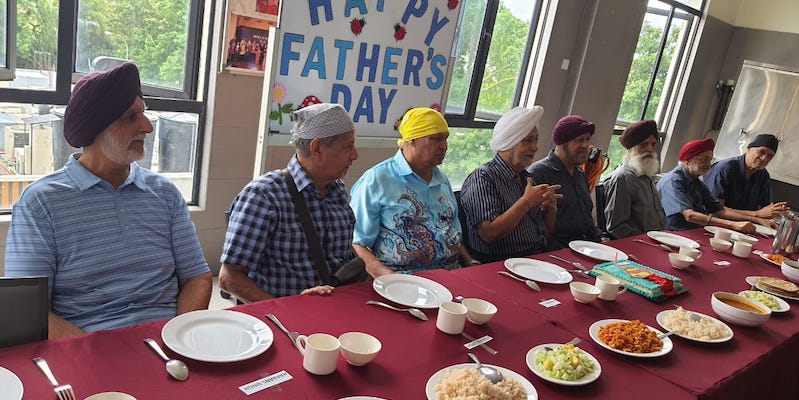
The Sanggat of GSS held their annual Father’s Day celebration recently with kirtan from the Rababi Kirtankari duo of Bhai Yodhbir Singh and Bhai Harmandeep Singh from Amritsar on July 7.
The centrestage at the festivities was when elders were honoured with a gift each of a colourful turban before the feasting began.
Father’s Day celebration at Gurdwara Sahib Subang on July 7, 2023 – Photo: GSS
ASIA SAMACHAR is an online newspaper for Sikhs / Punjabis in Southeast Asia and beyond. When you leave a comment at the bottom of this article, it takes time to appear as it is moderated by human being. Unless it is offensive or libelous, it should appear. You can also comment at Facebook, Twitter, and Instagram. You can reach us via WhatsApp +6017-335-1399 or email: asia.samachar@gmail.com. For obituary announcements, click here
A senior lawyer, who was called to the Singapore bar in 1981, misappropriated nearly S$480,000 three clients had entrusted to him.
Gurdaib Singh Pala Singh, who used to be a lawyer at Gurdaib Cheong & Partners (GCP), committed the offences between 2011 and 2016, reported the Straits Times.
Even though he was struck off the rolls in 2018, he continued to act as an advocate and solicitor for a man the following year.
Singh, 70, pleaded guilty on July 19 to two counts of criminal breach of trust involving nearly $459,000 and an offence under the Legal Profession Act. A third criminal breach of trust charge involving another $21,000 will be considered during sentencing, according to the report.
ASIA SAMACHAR is an online newspaper for Sikhs / Punjabis in Southeast Asia and beyond. When you leave a comment at the bottom of this article, it takes time to appear as it is moderated by human being. Unless it is offensive or libelous, it should appear. You can also comment at Facebook, Twitter, and Instagram. You can reach us via WhatsApp +6017-335-1399 or email: asia.samachar@gmail.com. For obituary announcements, click here
Terbinderjeet Kaur receiving the Outstanding Leadership Award at the Health 2.0 International Healthcare Conference 2023 Spring Edition in July 2023 in Dubai, UAE.
By Asia Samachar | Malaysia |
Ipoh-hailing Terbinderjeet Kaur made the nation proud for being the first Malaysian Sikh female from a nursing background to receive the Outstanding Leadership Award at the healthcare conference held recently in Dubai, UAE.
She was one of the award recipients and speaker at the Health 2.0 International Healthcare Conference 2023 Spring Edition which recognises individuals who have made impactful contributions and led change in the healthcare sector.
The forum is designed for healthcare professionals and business leaders who hope to drive change and improve the quality of life of millions by revitalising patient care and healthcare delivery models worldwide.
The award recognises Terbinderjeet as the author and developer of numerous nursing policies, procedures and competencies, and working to improve nursing care standards.
Terbinderjeet is the eldest daughter of the late Arjan Singh Dhillon and the late Pretam Kaur. She started her nursing career at Pantai College of Nursing & Health Science, now known as International Medical College, and proceeded to study for her Bachelor In Nursing from Curtin University in Perth, Australia. She obtained her master’s degree majoring in leadership and change after completing her residency in Zurich, Switzerland, from York, United Kingdom.
“The days pursuing education while working were back-breaking,” she tells Asia Samachar. “I held on to my father’s golden advise: ‘The sky is the limit, nothing on earth can stop you.'”
She also acknowledged the encouragement and support from her adopted mother Jagjit Kaur Jassal and fellow family members.
Terbinderjeet is the nursing quality head at Prince Sultan Military Medical City in Riyadh, Saudi Arabia.
ASIA SAMACHAR is an online newspaper for Sikhs / Punjabis in Southeast Asia and beyond. When you leave a comment at the bottom of this article, it takes time to appear as it is moderated by human being. Unless it is offensive or libelous, it should appear. You can also comment at Facebook, Twitter, and Instagram. You can reach us via WhatsApp +6017-335-1399 or email: asia.samachar@gmail.com. For obituary announcements, click here
ASIA SAMACHAR is an online newspaper for Sikhs / Punjabis in Southeast Asia and beyond. When you leave a comment at the bottom of this article, it takes time to appear as it is moderated by human being. Unless it is offensive or libelous, it should appear. You can also comment at Facebook, Twitter, and Instagram. You can reach us via WhatsApp +6017-335-1399 or email: asia.samachar@gmail.com. For obituary announcements, click here
Primitive humans worshiped just about everything as religious practice, including sun, moon, fire and animals. With the progression of civilization, humans began to believe in one BEING, the God. This God was believed to be an external supernatural human-like deity that fulfilled all human desires and answered all prayers. This belief began to wane when this supernatural external God failed to answer prayers on demand and protect humans from dangers or cure disease. Long ago spiritual teachers began to ask questions as to the very existence of this external God. Today over a billion people have walked away from such mythical beliefs.
There are many verses in the text of Sri Guru Granth Sahib ji (SGGS) that explain that God, the DIVINE, dwells within humanity, within every heart. Guru says ਪੁਹਪ ਮਧਿ ਜਿਉ ਬਾਸੁ ਬਸਤੁ ਹੈ ਮੁਕਰ ਮਾਹਿ ਜੈਸੇ ਛਾਈ Pushap Madh Jio Bass Basat Hai, Sooker Mahe Jese Chhae meaning as the fragrance is within the flower, and our reflection within the mirror: ਤੈਸੇ ਹੀ ਹਰਿ ਬਸੇ ਨਿਰੰਤਰਿ ਘਟ ਹੀ ਖੋਜਹੁ ਭਾਈ ॥੧॥Tese Hee Har Wase Nirantar Ghat Hee Khojo Bhae (SGGS, 684) meaning the GOD, DIVINITY dwells within every human. Do not search for GOD outside, externally, search within.
A friend on the social media asked that it is difficult to comprehend the concept of God within; what is that divinity that dwells in every heart. GURU says ਨਾਨਕ ਨਾਮੁ ਵਸੈ ਘਟ ਅੰਤਰਿ ਗੁਰ ਕਿਰਪਾ ਤੇ ਪਾਵਣਿਆ ॥੮॥੩੧॥੩੨॥ Nanak Naam Wase Ghat Untar (SGGS, 129) meaning it is the divine wisdom, the spiritual enlightener NAAM that dwells within. GURU says ਤਿਸੁ ਵਿਚਿ ਗਿਆਨ ਰਤਨੁ ਇਕੁ ਪਾਇਆ ॥ Tis Wich Gian Rattan Ik Paya (SGGS, 129) meaning the jewel of divine wisdom is in our consciousness. This divine consciousness is the seat of awareness of the self and the world around us. It is the consciously aware entity within that experiences bliss and inner peace. GURU says true nature of every human being is basic goodness. This is the divinity within. This treasure of divinity was within GURU NANAK, who found it within and connected with it, being divine himself. This is like a dormant seed that needs nurturing to grow into a tree.
Nature has given humans intellectual faculty that humans have used to achieve tremendous successes in the temporal world. Nature has also given humans spiritual intellect to experience peace, happiness, bliss and ecstasy in life. This comes from connecting with and becoming divine.
The connection with the divine within does not happen automatically. As I said it needs nurturing for the seed to grow as a tree. Gurbani is the spiritual guide and pathway to nurture the divinity within. For this we need effort. GURU says ਆਪਣ ਹਥੀ ਆਪਣਾ ਆਪੇ ਹੀ ਕਾਜੁ ਸਵਾਰੀਐ ॥੨੦॥Apan Hathi Apna Ape Hee Kaj Swariai (SGGS, 474) meaning we need to do meditation, contemplation to connect and become divine of compassion, kindness, tolerance, love, humility, contentment and service. This connection does not happen as long as our focus of religious practices is outward. Realization of divine within is all about transformation of our thought process, our habits.
A word of caution here. Spirituality is an inward journey, connecting with the divine within. In the text of SGGS many metaphorical words are used to illustrate the message. Literal explanation could lead us to external focus.
When GURU says ਮੈ ਬਿਨੁ ਗੁਰ ਦੇਖੇ ਨੀਦ ਨ ਆਵੈ ॥ Mai Bin Gur Dekhe Neend Na Awai (SGGS, 94), literally interpreted as without seeing my GURU sleep does not come. This takes our focus to worship GURU as human like idol. This outward focus would mean no connection with the divinity within. The spiritual message of this line is that without divine wisdom of the Guru, there is no connection with divinity. As humans we continue suffering stress, depression, anxiety, worries and pain.
Now the big question. When GOD, DIVINE is within each one of us, ਘਟ ਘਟ ਅੰਤਰਿ ਰਵਿਆ ਸੋਈ ॥੨॥Ghat Ghat Untar Rawia Soee (SGGS, 387) meaning God resides in every heart, then why is that divinity, goodness not reflected in our daily actions and behaviors? Spiritual philosophy of Guru Nanak is that we as humans have complete freedom to realize, connect with the divine within, or to follow the mind dominated, egoistic self-perspective of life. One has the choice of spiritual path or egoistic path. GURU says ਆਪੇ ਬੀਜਿ ਆਪੇ ਹੀ ਖਾਹੁ ॥Ape Beej Ape Hee Khah (SGGS, 4) meaning, consciously we must face consequences of our actions here and now. This is the law of nature. Modern society has achieved tremendous successes in the temporal world but little success knowing our true nature, who we are. Unfortunately, as humans we believe we are our physical body and mind. This is the INNESS, EGO. Our life goes on with this identification. We miserably fail to realize our spiritual identity, who we are. GURU says ਮਨ ਤੂੰ ਜੋਤਿ ਸਰੂਪੁ ਹੈ ਆਪਣਾ ਮੂਲੁ ਪਛਾਣੁ ॥Mann Tu Jot Sarup Hai Apna Mool Pachhan ( SGGS, 441) meaning spiritually you are divine, part of GOD. We know almost everything about our physical beings but little about our spiritual beings. This separation from spirituality, divine within is the cause of mental health problems, suicides, violence and hatred in the world.
Guru Nanak in conversation with ascetics was asked that as a family man the life ocean is very difficult to swim across. There are ten thousand things to do. What is the way out? How can human society find peace, happiness and joy among these challenges? GURU answered. ਜੈਸੇ ਜਲ ਮਹਿ ਕਮਲੁ ਨਿਰਾਲਮੁ ਮੁਰਗਾਈ ਨੈ ਸਾਣੇ ॥Jaise Jal Mahe Kamal Niralam Murgee Nai Sannai (SGGS, 938). NANAK says as the lotus flower has its roots in the muddy water but manages to float above it, as the duck swims in the ocean but keeps its feather dry. ਸੁਰਤਿ ਸਬਦਿ ਭਵ ਸਾਗਰੁ ਤਰੀਐ ਨਾਨਕ ਨਾਮੁ ਵਖਾਣੇ ॥ Surat Shabad Bhaw Sagar Tariai Nanak Naam Wakhannai (SGGS, 938). NANAK says it is possible while living among challenges of life ocean here and now to rise above attachment to everything around us. GURU gives us the spiritual path of enlightenment. Through contemplation and meditation we can connect with and become the divine within. Guru says this awakening is the pathway to happiness, bliss and world peace.
Harbans Singh Kandola. Born in Ludhiana, Punjab, he read Ph.D. in Agriculture from Punjab Agriculture University in 1972. He moved to Canada in 1973 and retired as senior bank manager in 2005. He reads Gurbani passionately to understand its spiritual message and how it matters in his daily life. He read Prof Sahib Singh’s ‘Sri Guru Granth Sahib Darpan’ (SGGS translation) in five years, with complete notes. In the past two decades, Harbans has engaged in Gurbani discussion in radio and television programmes, as well as newspapers and the Sikh Bulletin. He believes that we now have literature with the true and real message of Gurbani which has to be presented to Sikhs and non-Sikhs. This article is from his unpublished book ‘Renaissance of Sikhi’.
ASIA SAMACHAR is an online newspaper for Sikhs / Punjabis in Southeast Asia and beyond. When you leave a comment at the bottom of this article, it takes time to appear as it is moderated by human being. Unless it is offensive or libelous, it should appear. You can also find us atFacebook, Twitter and Instagram. You can reach us via WhatsApp +6017-335-1399 or email: editor@asiasamachar.com. Forobituary announcements, click here.
Left: Painting of Guru Nanak purportedly done by Kamal-uddin Behzad. Source unknown. Right: Guru Tegh Bahadur. Source: Page 26, Dr. Trilochan Singh’s book Guru Tegh Bahadur: Prophet and Martyr (A biography). The caption in the photo states that it is the original painting prepared by a painter of Shaista Khan’s court at Sangat Tola Gurdwara, Dacca
By Rishpal Singh Sidhu | Opinion |
Do artists’ sketch drawings and paintings of our Sikh Gurus allegedly done during their lifetimes really exist? If so, how real are they and has their authenticity been established and independently verified by art historians beyond any reasonable doubt?
Sikh scholar, the late Dr. Trilochan Singh, travelled throughout India and Pakistan in 1957-1959 to do research on the lives of Guru Nanak and Guru Tegh Bahadur and claimed to have discovered a painting of Guru Tegh Bahadur in 1958 and published this painting in his book Guru Tegh Bahadur: Prophet and Martyr (A biography).1The frontispiece of his book bears a replication of this painting. There are conflicting dates of Guru Nanak’s travels to Arab countries. However, sufficient evidence exists that Guru Nanak visited Baghdad and a painting of him was allegedly done by Persian miniaturist painter Kamal-uddin Behzad (c. 1455/60 – 1535) of Baghdad.
Our Sikh Gurus could easily have commissioned paintings of themselves during their lifetimes, but they did not do so as this is contrary to the philosophy of the Sikh faith and goes against the very essence of Sikh teachings. Sikhism considers the worship of paintings and illustrations of our Sikh Gurus as ‘manmat’ (contrary to our Sikh faith). It begs the question of how it is possible to give a human form to God, especially to our Gurus who never once themselves claimed to be a God. Yet, we have counter-intuitively ended up creating such paintings as objects for deification. What is the power of such paintings? Of all the paintings of the Sikh Gurus, S. Sobha Singh’s paintings are the most well-known and likely to be found in most Sikh homes, some langar halls, and possibly even in the darbar sahib of some gurdwaras around the world. Sobha Singh’s work has tended to focus exclusively on the faces of our Gurus and in the mind’s eye, his paintings of Guru Nanak, Guru Arjan Dev and Guru Gobind Singh today dominate the global Sikh community’s perception of these three Gurus.
Concerned with the proliferation of varying images of Guru Nanak and the Sikh Gurus that came after him, the then Shiromani Gurdwara Parbandhak Committee (SGPC) Publications Secretary wrote to renown Sikh scholar Prof. Sahib Singh on 4 January 1951 to seek his views on their proposal for uniform representative images of the Sikh Gurus. These depictions were essentially at the whims of the various artists. He proffered that these artists be invited to take account of which features to consider in their depictions and to submit their visual representations for an SGPC panel to moderate on a uniform image of the Sikh Gurus. In his considered reply, Prof. Sahib Singh, while commending the SGPC for raising this important matter, expressed dismay at the SGPC’s willingness to even consider the acceptance of this imagery. He reproached that such consideration would be a retrogressive step in the Sikh faith and questioned how such images would be used in homes alongside other non-religious photos. Rather, he strongly advocated display and acceptance of the Guru’s shabad in homes, and drew particular attention to Bhai Gurdas Ji’s Vaar 24 pauri 11.2
Gur Moorati Gur Sabadu Hai Saadhsangati Mili Anmrit Vaylaa |
Only the Guru’s word is the idol of Guru and this word is received in the holy congregation in the ambrosial hours of the day.
ਵਾਰਾਂਭਾਈਗੁਰਦਾਸ : ਵਾਰ੨੪ਪਉੜੀ੧੧ਪੰ. ੩
The SGPC has not been entirely consistent in its approach and deliberation on this important matter. Harinder Singh Sikka produced the Punjabi film Nanak Shah Fakirbased on the life of Guru Nanak and it was first screened at the Cannes Film Festival in 2014. The SPGPC initially applauded the film for making the younger generation aware of Sikh history, and later changed its mind following objections from some quarters, declaring that the picturisation of Guru Nanak in human form is against Sikhi. The film was then modified in compliance with the demands of the SGPC and Guru Nanak’s character, originally played by actor Harish Khanna, was converted to animation. The film was subsequently released for screening in India on 13 April 2018.
Not unlike the Sikh faith, many Muslims believe that the depiction of images of prophet Muhammad can give rise to idolatry, where an image rather than the divine being it symbolises, can become the object of worship and veneration. A 1976 epic film titled The Message and also known as Mohammad, Messenger of God attracted controversy, and a light bulb on the camera was used during the scenes of characters with prophet Muhammad to represent his immanence. Islamic tradition or Hadiths strictly prohibits images of Allah, Prophet Muhammad, and all other prophets of the Christian and Jewish traditions. Chapter 42, Verse 11 of the Koran signifies that “Allah is the originator of the heavens and the earth and there is nothing like a likeness of Him.” 3 It appears that Sunni and Shia Muslims differ on this issue because these two branches of Islam ascribe to different Hadith collections. Shia scholars have taken a more liberal view, suggesting that it is permissible to depict Muhammad on TV or movies if done with respect.
In the Christian and Buddhist faiths, there are no known contemporary images of Jesus and Buddha from their lifetimes, and they were never once depicted in human form. As with Sobha Singh’s paintings of our Sikh Gurus, some of the best-known depictions of Jesus Christ today are from Leonardo da Vinci’s “Last Supper” to Michael Angelo’s “Last Judgment” in the Sistine Chapel. Of late, the portrayal of Jesus as a white European man has come under renewed scrutiny during this period of introspection over the legacy of racism in society.4
In his research, Dr. Trilochan Singh records that Guru Tegh Bahadur visited Eastern India sometime between 1666-1668 and stayed in Dhaka from December 1666 to May 1667. The sangat in Dhaka had a dharamsal specially built for Guru Tegh Bahadur’s stay. This building of than 350 years now lies abandoned in Dhaka, Bangladesh.
It is alleged that just before leaving Dhaka, Guru Tegh Bahadur consented to a request by the mother of Bhai Bulaki Das (masand of the Sikh sangat in Dhaka at the time of Guru Tegh Bahadur’s visit) to have his portrait painted by Ahsan, the Royal Painter of Shashta Khan, the Governor of Bengal in 1668AD, so as to have a glimpse of the Guru’s divine personality. It has been reported that “the painter successfully painted every detail of Guru Tegh Bahadur’s body and dress on the canvas, but that he could not paint the face of the Guru for his portrait as the resplendence of the Guru’s face dazzled his eyes. Ultimately Guru Tegh Bahadur (himself) gave finishing touches to the self-portrait by preparing his face with the brush of the painter.” 5 This historical fact is said to have been recorded by Sarup Das Bhalla, a descendant of Guru Amar Das in Mehima Prekash (1773 AD) and Kavi Santokh Singh in his Suraj Prakash (1842 AD).6 Dr. Trilochan Singh “discovered’’ this painting in 1958 and published it in his book together with photographs of other relics of this period. He further noted that the original painting was handed over to the Victoria Memorial Museum in Calcutta (now Kolkata) and is said to have “been badly mauled” by the authorities and is now no longer on display.
Dr. Trilochan Singh dedicated his book to his son Anurag Singh. Bhai Anurag Singh claims to have the original of a contemporary painting of Guru Gobind Singh at the age of 10 in his personal library, and has drawn comparison to the likeness in the eyes, turban, and postures of Guru Tegh Bahadur and his son.7
Some controversy exists regarding the number of udasis undertaken by Guru Nanak during his lifetime and before settling in Kartarpur in 1522. Guru Nanak was in Baghdad from November 1519 to January 1520. It is claimed that Kamal-uddin Behzad made a painting of Guru Nanak when he was returning from Haz on his way accompanying Jiwan Qazi of Uch (in Multan Division), and that this painting was brought to Multan in 1521. The present whereabouts of this painting, if indeed it does really exist, remains a mystery. Kamal-uddin Behzad also known as Kamal al-din Bihzad or Kamaleddin Behzād (c.1455/60-1535) was a miniaturist Persian painter and head of the royal ateliers during the late Timurid and early Safavid Persian periods, and he used paint, ink, and gold for his illuminations. Five miniatures he contributed to a manuscript of Saʿdī’s Būstān, copied in 1488 are now preserved in the Egyptian National Library at Cairo. Strangely enough, the alleged painting of Guru Nanak does not bear mention in a listing of his 37 artworks. This really begs the question if he indeed did do a painting of Guru Nanak.
Sikhism is the world’s fifth largest and youngest religion and probably has the greatest number of existing artefacts associated with our Sikh Gurus, and clearly, man-made paintings of our Sikh Gurus does not count among them. Carbon-14 scientific dating can be used for dating organic materials such as canvas, wood, and paper with an 80 years range of accuracy.8 It would be interesting to see if the ‘badly mauled’ alleged painting of Guru Tegh Bahadur currently held at the Victoria Memorial Museum in Calcutta stands this test of authenticity as does the alleged painting of his 10 years old son Gobind Singh currently held in Bhai Anurag Singh’s personal collection.
None of our Sikh Gurus claimed to be Gods or descended from God. It is unlikely that any of them would have commissioned or agreed to have paintings made of themselves. Such purported paintings or images that have appeared on the Internet have not really authoritatively been verified as genuine. Information about paintings and images of our Gurus has surfaced on many blogs, and on the Internet, and has not really been rigorously tested for authenticity by Sikh scholars or historians, let alone tested by scientific dating. There is no quality assurance when it comes to posting information on the Internet and anyone can post anything these days.
Finding it difficult to fasten their thoughts on the invisible, intangible beings, men, at the beginning probably sought to aid their worship by selecting some object (or painting) to represent the being worshipped. This object was not to be in and for itself, but simply as an aid to devotion, representing the being worshipped.9 Grewal (2009) asserted that “the mortal mind cannot comprehend the immanence and transcendence of the nameless, formless, infinite, unfathomable, and incomprehensive version of Akal Purkh.10 The final word on this subject must surely belong to eminent Sikh scholar Prof. Sahib Singh for advocating the acceptance and display of the Guru’s shabad in our homes in preference to unverified depicted images of our Sikh Gurus.
With the vast resources at its command, it behoves the SGPC as the peak body on Sikhi matters to thoroughly investigate the purported existence and authenticity of the images of our Sikh Gurus and finally and firmly put this matter at rest.
REFERENCES
Singh, T. 1965. Guru Tegh Bahadur: Prophet and Martyr (A biography). Delhi Sikh Gurdwara Parbhandak Committee.
This writer’s paraphrasing of a video clip by Daas Harjit Singh discussing the then SGPC Publication Secretary’s letter to Prof. Sahib Singh and his reply to the SGPC.
BBC News, 4 October, 2021. Why does depicting the Prophet Muhammad cause offence?
Dobbins, F. False Gods or the idol worship of the world. Whitefish, Montana, United States, Kessinger Publishing, 2001, pp.57-58 (Facsimile reprint, first published 1881?).
Grewal, V.S. 2009. Idol worship of the AGGS. Williamston, Michigan (soft copy shared with the writer).
Rishpal Singh Sidhu is a semi-retired casual academic at the School of Information and Communication Studies, Charles Sturt University, Wagga Wagga, Australia. He has a passion for research, writing, and teaching and is the compiler and editor of the book, Singapore’s early Sikh pioneers; Origins, settlement, contributions, and institutions, published by the Central Sikh Gurdwara Board in Singapore in 2017. He is currently based in Sydney, Australia. He can be reached at rishpal.sidhu@gmail.com
* This is the opinion of the writer, organisation or publication and does not necessarily represent the views of Asia Samachar.
ASIA SAMACHAR is an online newspaper for Sikhs / Punjabis in Southeast Asia and beyond. When you leave a comment at the bottom of this article, it takes time to appear as it is moderated by human being. Unless it is offensive or libelous, it should appear. You can also comment at Facebook, Twitter, and Instagram. You can reach us via WhatsApp +6017-335-1399 or email: asia.samachar@gmail.com. For obituary announcements, click here.
Deputy minister Ram Karpal Singh posing with Subang Sikh Youth Club member Hashvinderjit Kaur at the club’s fund raising dinner on June 24, 2023 – Photo: SSYC
By Asia Samachar | Malaysia |
Subang Sikh Youth Club (SSYC) is now up and running.
Hashvinderjit Kaur (photo) who is pursuing a foundation programme is one of the members of the youth group planning a series of activities in the coming weeks and months.
The 20 -year-old student and her palls were in action at the club’s fund raising dinner on June 24 with Malaysia’s deputy law and institutional reform minister Ramkarpal Singh as the guest of honour.
The club is the youth wing of the Gurdwara Sahib Subang. Keep a lookout for more action coming your way from Subang.
Subang Sikh Youth Club members at the club’s fund raising dinner on June 24, 2023 – Photo: SSYCSubang Sikh Youth Club members posing with deputy minister Ramkarpal Singh at the club’s fund raising dinner on June 24, 2023 – Photo: SSYCDeputy minister Ramkarpal Singh (seated, 3rd from left) and Subang Sikh Youth Club advisor Kuldip Singh (seated, 2nd from left) with committee members of the Gurdwara Sahib Subang at the club’s fund raising dinner on June 24, 2023 – Photo: SSYC Best dressed winners at the Subang Sikh Youth Club’s fund raising dinner on June 24, 2023 – Photo: SSYC
ASIA SAMACHAR is an online newspaper for Sikhs / Punjabis in Southeast Asia and beyond. When you leave a comment at the bottom of this article, it takes time to appear as it is moderated by human being. Unless it is offensive or libelous, it should appear. You can also comment at Facebook, Twitter, and Instagram. You can reach us via WhatsApp +6017-335-1399 or email: asia.samachar@gmail.com. For obituary announcements, click here